

Nighttime bathroom trips can leave you tired before the day begins, especially when swollen or achy legs make sleep less comfortable. Compression socks can add graduated pressure around the lower legs, but they do not address the causes of frequent nighttime urination. They may, however, provide welcome comfort during daytime work, travel, exercise, or long periods of standing.
The right pair depends on compression strength, fit, intended activity, and how much bulk you can tolerate under your shoes or compression garments.
An Overview Of The Picks

Nurse Mates 12-14 mmHg Calf Socks, 1 Pair
Iambamboo 15-20 mmHg Socks
CircAid 25-35 mmHg Under Sock

Core-Sport 15-20 mmHg Athletic Socks

hello momoya Compression Socks 8 Pairs
Iambamboo Merino Wool Socks 20-30 mmHg
A Deeper Look At The Lineup
A nurse finishing a twelve-hour shift rarely needs dramatic compression. These Nurse Mates calf socks use a gentler 12-14 mmHg range, making them a practical starting point for long hours on your feet, especially when you want support without the feel of a heavy medical wrap.
The comfort welt is designed to stay above the ankle rather than slide downward, while the heel and toe pockets help limit bunching. Moisture-wicking fabric, novelty prints, and classic solids also make the pair easy to live with outside a medical setting. One size fits most, though that broad sizing still deserves a quick fit check.
A Few Highlights
- The 12-14 mmHg pressure feels suited to ordinary workdays rather than highly structured compression routines.
- Breathable, moisture-wicking fabric helps manage perspiration during extended wear.
- Reinforced heel and toe construction adds comfort where walking socks often create pressure points.
- The welt top and one-size design reduce the need for a precise size match.
Worth Noting
- One size fits most, so the cuff and foot length may not feel equally comfortable on every foot shape.
- The lower 12-14 mmHg range offers less structured support than the 20-30 mmHg options in this lineup.
Quick Facts
Made For
You benefit most from this pair during long clinical shifts, office days, or other routines that call for moderate leg support without heavy compression.
Where Another Pick Suits Better
The Iambamboo 15-20 mmHg Socks suit travelers who want a softer, moisture-managing construction and firmer graduated pressure.
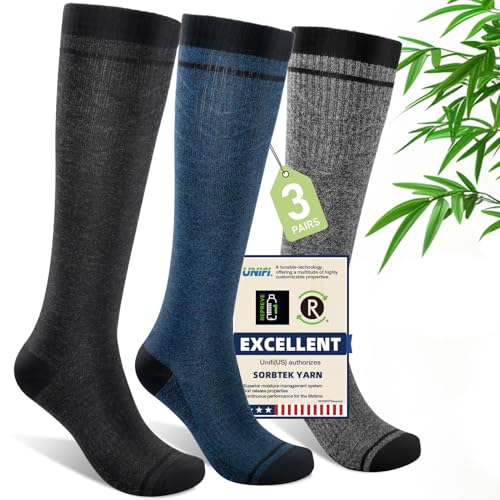
Travel days create a different kind of lower-leg fatigue, particularly when a flight or train journey is followed by hours of walking. These Iambamboo socks raise the pressure from 20 mmHg at the ankle to 17 mmHg at the calf and 15 mmHg below the knee, creating graduated support that feels more substantial than the Nurse Mates pair.
The blend of bamboo viscose, Sorbtek yarn, and Lycra spandex places softness at the center of the design. Grooved fibers are intended to move moisture away from the skin, while the lightweight construction makes the socks less noticeable during a long transit day. You may still notice the firmer pressure after several hours, especially on a long flight.
What Pays Off
- Graduated compression gives the lower leg more structured support than the 12-14 mmHg Nurse Mates socks.
- Bamboo viscose and grooved fibers combine a smooth feel with moisture management.
- The manufacturer states a 60% improvement in moisture wicking, a useful consideration during extended wear.
- Lightweight fabric remains suitable for travel, standing, and office work without obvious bulk.
Small Caveats
- The 15-20 mmHg range may feel more pronounced than a mild compression sock during your first wear.
Feature Snapshot
Who It Suits Best
You benefit most from this pair during flights, long train rides, and destination days involving considerable walking.
A Better Fit Elsewhere
The Nurse Mates 12-14 mmHg Calf Socks suit you better when mild support and a looser daily feel matter more than travel-focused compression.
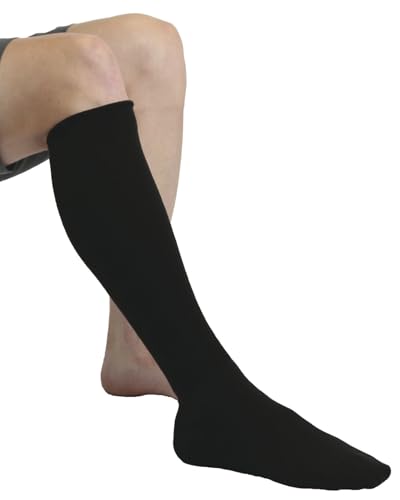
The CircAid 25-35 mmHg Under Sock is built for a more specialized job than the travel and athletic pairs here. You wear it beneath compatible lower-leg compression wraps, where it serves as a close-fitting layer over the foot and ankle while the upper section protects skin from the outer garment.
Its low-profile closed toe is designed to fit inside shoes without excessive bulk, and the flexible polyester, nylon, and elastane construction is easier to manage than a conventional full stocking. Compared with the Iambamboo 15-20 mmHg Socks, this is a dedicated component of a compression system, not a general-purpose pair for every outfit.
Useful Highlights
- The 25-35 mmHg foot and ankle support offers much more structured pressure than the travel-oriented socks.
- A low-profile toe makes the liner practical beneath compatible shoes and compression devices.
Points To Note
- Its main purpose is layering beneath compression wraps, so it is not a direct substitute for a standard fashion sock.
- Compatibility with the outer wrap matters; the liner and compression system are designed to work together.
- The closed toe adds coverage that some low-cut shoes or sandals may not accommodate comfortably.
Built With In Mind
You benefit most from this liner when a healthcare professional has already recommended a compatible lower-leg compression system.
Reach For A Different Pick When
The Core-Sport 15-20 mmHg Athletic Socks suit you better for ordinary exercise without an outer compression garment.
A run or strength session gives the Core-Sport socks a clearer purpose than a standard workday. Their 15-20 mmHg graduated profile applies the most pressure near the ankle and gradually decreases up the leg, matching the familiar design used in many athletic compression socks.
Core-spun yarns give the fabric stretch, which makes the socks easier to pull on and helps them follow the foot during movement. Moisture-removing fibers also keep the interior drier than an ordinary cotton sock can. Unlike the CircAid liner, these are standalone athletic socks, so you do not need a separate wrap system.
Noteworthy Benefits
- Graduated 15-20 mmHg compression supports a more athletic purpose than mild workplace socks.
- Stretchy core-spun yarn makes the socks easier to put on and comfortable during movement.
- Moisture-removing fibers help manage perspiration during longer sessions.
Practical Considerations
- The compression is firmer than the Nurse Mates option, so your calves may need time to adjust.
- Machine washing is supported, but the wash and drying method on the product label remains the deciding factor for garment care.
At A Glance
Right Fit For
You benefit most from these socks during running, gym sessions, and active recovery periods when graduated lower-leg support is your priority.
Look Elsewhere When
The hello momoya Compression Socks 8 Pairs suit you better when keeping several pairs in rotation matters more than an athletic-focused design.
Eight pairs solve a mundane problem exceptionally well: keeping clean compression socks ready for a demanding schedule. The hello momoya set gives you enough pairs to rotate through nursing shifts, running, travel, and athletic days without handling the same damp pair every evening.
These are knee-high compression socks intended for several active routines, which makes the eight-pair format the central decision. Compared with the Core-Sport socks, this set emphasizes quantity and rotation rather than a stated athletic construction. For a shared household or someone who changes socks several times a week, that distinction can be meaningful.
Points In Its Favor
- Eight pairs make daily rotation and regular washing simple.
- The knee-high design suits work, travel, running, and athletic routines in one package.
Some Limits To Know
- Eight pairs require enough drawer or laundry space, and you may need to distribute them across home and work bags.
Who Will Love This
You benefit most from the set when frequent work shifts, regular workouts, or travel make a large sock rotation more useful than highly specialized construction.
Consider Something Else When
The Iambamboo Merino Wool Socks 20-30 mmHg suit you better when a wool blend and firmer travel compression matter more than having eight pairs at once.
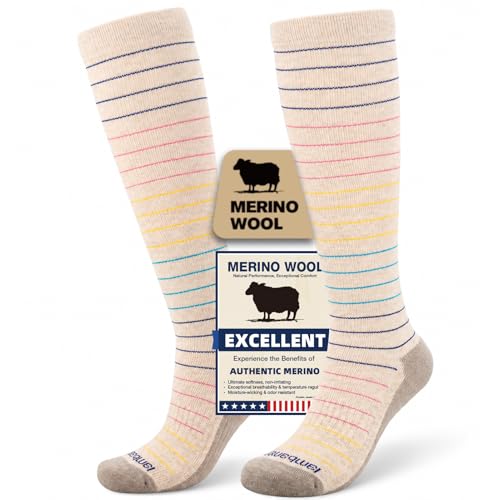
Travelers who want more compression than the Iambamboo 15-20 mmHg pair can look here. These knee-high socks place the listed pressure range at 20-30 mmHg, creating a firmer fit for long journeys and days with more walking. The merino wool construction adds a different material character from the smooth bamboo viscose blend used by the other Iambamboo option.
That stronger pressure and longer knee-high coverage can feel more substantial, so fit deserves attention before a long flight. You may also need to compare room in your shoes, since 20-30 mmHg socks generally occupy more space than a mild 12-14 mmHg calf sock. The trade-off is firmer support rather than the lightest possible travel construction.
Standout Benefits
- The 20-30 mmHg range offers stronger graduated pressure for substantial lower-leg support.
- Merino wool gives the socks a material profile suited to travel-focused use.
- Knee-high coverage extends the compression area farther up the lower leg.
- The design specifically targets flying and travel routines.
Details To Watch
- Firmer compression may feel crowded in narrow shoes or restrictive after long periods of wear.
- The listed pressure is noticeably higher than the 15-20 mmHg Iambamboo travel socks, so a gradual adjustment period is sensible.
Key Specs
Whose Shelf It Belongs On
You benefit most from these socks when frequent travel and a preference for firm, wool-based compression outweigh the need for a lightweight everyday pair.
Another Choice May Suit
The Iambamboo 15-20 mmHg Socks suit you better for long journeys where softer bamboo viscose fabric and lighter pressure are your priorities.
What Matters Before You Buy
Pressure Level And Purpose
Graduated compression means pressure varies along the sock, usually with greater support near the ankle. The lineup ranges from 12-14 mmHg for mild daily support to 25-35 mmHg for a specialized compression liner. Higher pressure is not automatically more useful, so match the sock to your activity and any compatible compression system.
Fabric And Moisture Comfort
Bamboo viscose, merino wool, and athletic core-spun yarns offer different textures and wear characteristics. Moisture management matters during long shifts, workouts, and flights, while a smooth fabric can make a close fit feel less intrusive. Read the material description and care instructions before committing to a pair.
Fit And Compatibility
Calf socks usually fit more easily into everyday shoes, while knee-high models cover more of the leg. The CircAid liner must work with compatible compression garments, and a broader one-size design still needs a quick size check. Consider cuff placement, toe coverage, shoe space, and the length of your planned wear.
Practical Details That Shape Your Choice
Common Shopping Slip Ups
Choosing compression by pressure alone can lead to an uncomfortable fit, especially when a structured wrap is already part of your routine. Check the intended layer, compression range, shoe clearance, and care requirements before buying. A sock that seems supportive but bunches or pinches will not be comfortable through a full workday.
The Upgrade Payoff
A more specialized option can justify itself through targeted construction, such as the CircAid liner’s compatibility with compression wraps or the wool blend and firmer pressure of the Iambamboo travel socks. Pay more only when those details match your routine. For ordinary daily wear, the Nurse Mates pair offers the simpler route.
Frequently Asked Questions
Can Compression Socks Reduce Nocturia?
Compression socks do not treat frequent nighttime urination or its underlying causes. They may improve lower-leg comfort during the day, which can make your overall routine more comfortable, but persistent nocturia deserves discussion with a healthcare professional.
Which Compression Level Is Best For Everyday Wear?
The 12-14 mmHg Nurse Mates pair offers the mildest support in this lineup. The 15-20 mmHg options provide firmer graduated compression for travel or activity, while the CircAid 25-35 mmHg Under Sock serves a more specialized purpose.
Are Any Of These Socks Designed For Overnight Wear?
None of these products is described as sleep-specific. Choose based on the intended daytime activity, and remove compression garments before sleep unless a healthcare professional gives different guidance.
Which Pair Works Best For Flights?
The Iambamboo 15-20 mmHg Socks emphasize lightweight comfort and moisture management for travel. The Iambamboo Merino Wool Socks 20-30 mmHg provide firmer support for travelers who prefer stronger compression and wool-based construction.
Should Compression Socks Be Used With Compression Wraps?
Only use a liner beneath a compression wrap when the manufacturer identifies the garments as compatible. The CircAid 25-35 mmHg Under Sock is specifically designed for that role.
Final Verdict
For ordinary daytime comfort, the Nurse Mates 12-14 mmHg Calf Socks are the easiest starting point. Travelers gain more choice from the Iambamboo 15-20 mmHg Socks, while the CircAid 25-35 mmHg Under Sock serves compatible wrap routines. Choose based on pressure, fit, and activity rather than expecting compression socks to resolve nighttime urination itself.
