

A long shift at work, a flight with limited legroom, or an afternoon spent walking can leave your feet feeling heavy and puffy. Compression socks add graduated pressure that can make swollen feet feel more supported, while breathable materials and a close fit help you stay comfortable through long hours of standing, sitting, or moving. These options suit different needs, from discreet ankle socks to stronger knee-high support.
A Snapshot Of The Selections

IRAMY Ankle Compression Socks 3/5 Pairs

Benirap Compression Socks 15-20 mmHg

IRAMY Women’s Ankle Compression Socks 3/5 Pairs

IRAMY 15-20mmHg Knee High Compression Socks

FootJoy ProDry Low Cut Socks
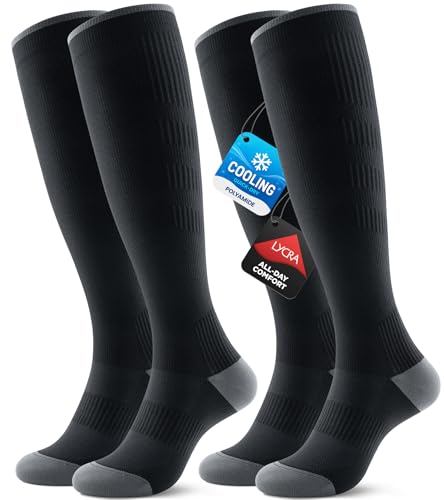
Benirap 15-20 mmHg Knee High Compression Socks
What Each Pick Brings To The Table
The ankle-high shape keeps these socks practical with sneakers, work shoes, and casual footwear, while six compression rings provide a concentrated supportive feel around the ankle. Reinforced arch support adds structure where tired feet often need it most, making this pair useful for retail workers, walkers, and anyone who spends much of the day on their feet.
Breathable mesh across the instep and a quick-drying stretch fabric help manage perspiration during workouts or long shifts. Compared with the Benirap Compression Socks 15-20 mmHg, this design focuses more on ankle rings and arch support than on a clearly stated numeric pressure range.
Where It Excels
- Six ankle rings create focused support without the bulk of a knee-high sock.
- Reinforced arch structure suits long periods of standing and walking.
- Mesh ventilation at the instep encourages airflow during active use.
- The 3/5-pair format gives you convenient options for rotation.
Worth Noting
- Sizes run from Small through X-Large, so compare measurements with your usual sock size.
- Ankle coverage gives less calf support than a knee-high compression sock.
Key Specs
Made For
You benefit most from these socks during active workdays, walks, or workouts when ankle-level support and a low profile matter more than full-calf coverage.
A Better Fit Elsewhere
The IRAMY 15-20mmHg Knee High Compression Socks suit you better when longer calf coverage and a stated pressure range are priorities.
Calf measurement takes center stage with these socks, giving you a more deliberate way to select a snug fit. The stated 15-20 mmHg pressure is graduated, meaning the compression is strongest near the ankle and eases toward the calf, which can feel more comfortable than uniform tightness.
A wide-calf construction, targeted mesh vents, and seamless toes make this pair appealing for runners, long-shift workers, and frequent travelers. Unlike the IRAMY Ankle Compression Socks 3/5 Pairs, these socks extend farther up the leg and provide clearer sizing guidance tied directly to calf measurements.
Practical Pluses
- The 15-20 mmHg range gives you a clearly defined level of graduated pressure.
- Calf-specific measurements reduce guesswork when ordering your size.
- Mesh vents and seamless toes improve comfort during extended wear.
- Moisture-wicking fabric suits commuting, workouts, and long journeys.
Trade Offs
- The close, intentionally snug fit may feel firm during the first wear.
- Borderline measurements call for sizing up according to the listed guidance.
Feature Snapshot
Right Fit For
These socks suit runners, cyclists, office workers, and travelers who value measured sizing and firmer ankle-to-calf support.
Another Choice May Suit
The IRAMY Women’s Ankle Compression Socks 3/5 Pairs fit you better when you want less fabric around the calf and a more discreet everyday shape.
These ankle socks make a strong case for people whose footwear leaves little room around the ankle. Six compression rings stabilize the area while targeted arch support gives the foot a more structured feel, which can be useful during long shifts in work shoes, boots, or sneakers.
Strategically placed mesh panels release heat and moisture, helping you manage comfort through extended wear. The design overlaps with the IRAMY Ankle Compression Socks 3/5 Pairs, but this listing places greater emphasis on everyday wear for nurses, teachers, warehouse staff, and walkers.
Everyday Wins
- The ankle-high cut stays discreet inside low-profile shoes and boots.
- Targeted arch support adds structure without extending above the ankle.
- Mesh zones release heat around the instep during long workdays.
- Multiple-pair availability makes rotation through the week easy.
Points To Note
- Support is concentrated around the ankle and arch rather than the full calf.
- You may prefer the Benirap Compression Socks 15-20 mmHg for a firmer, clearly specified pressure level.
Who Will Love This
You will appreciate these socks most during long workdays, casual walks, or travel days when discreet ankle support and ventilation matter.
Swap It Out When
The IRAMY 15-20mmHg Knee High Compression Socks suit you better when extended calf coverage is worth the extra fabric.
Long flights and full days on your feet call for support that extends beyond the ankle, and these knee-high socks deliver a stated 15-20 mmHg pressure from the ankle through the calf. Ankle rings and targeted arch support add structure at the foot, while the longer design gives the lower leg broader coverage.
Calf mesh and performance-oriented fabrics create a breathable, dry-fit feel for travel, work, and running. Compared with the IRAMY Women’s Ankle Compression Socks 3/5 Pairs, these offer more coverage and a specific pressure range, so they appeal more to people seeking fuller graduated support.
Everyday Perks
- Stated 15-20 mmHg pressure offers a clearly defined compression level.
- Knee-high coverage supports both the ankle and lower calf.
- Calf mesh promotes airflow during long journeys and shifts.
- Arch support adds structure beneath the foot.
Practical Considerations
- The longer cut adds more fabric and may not fit every low-cut shoe.
- The firmer stated pressure may require time to adjust for sensitive feet.
The Numbers That Matter
Built With In Mind
These socks suit frequent travelers, nurses, teachers, runners, and office workers who want firmer support across the foot and calf.
Where Another Pick Suits Better
The Benirap Compression Socks 15-20 mmHg suit you better when calf-based measurements and a wider-calf fit are central to your selection.
The FootJoy ProDry Low Cut Socks bring a different kind of practicality to the list: a clean athletic profile for men who wear low-cut golf or walking shoes. Their low ankle height sits comfortably within a shoe rather than adding compression fabric around the calf, which makes them easy to pair with flexible footwear.
These socks do not present themselves as compression socks, so the swollen-foot use case remains secondary. They are more useful as an everyday athletic option, and that distinction is worth noticing before expecting the same graduated support from the other picks.
Features That Help
- The low-cut design stays discreet inside close-fitting athletic shoes.
- The men’s ProDry model offers a straightforward option for everyday sportswear.
Things To Consider
- You will not get the ankle-to-calf compression offered by the dedicated compression socks.
- These socks suit ordinary athletic wear more closely than prolonged swelling support.
- The prior-generation name may matter to you only as a model reference rather than a performance feature.
The Right Fit
These socks suit men who prioritize a discreet, low-profile athletic sock and already have separate support for swollen feet.
Look Elsewhere When
The IRAMY Women’s Ankle Compression Socks 3/5 Pairs suit you better when structured ankle support and ventilation are your main requirements.
Two pairs make these knee-high socks easier to keep on hand for travel, workouts, and demanding days away from home. The stated 15-20 mmHg compression provides a defined pressure range, while the breathable construction and knee-high coverage target long periods of walking, sitting, or flying.
The practical advantage is continuity: you can keep one pair in a carry-on and another at your destination. Compared with the FootJoy ProDry Low Cut Socks, these provide the ankle-to-calf compression that the category calls for, at the cost of a fuller sock that may not fit every low-cut shoe.
Useful Highlights
- The two-pair format supports convenient travel and daily rotation.
- A 15-20 mmHg range gives you a clearly stated level of support.
- Breathable fabric suits warm travel conditions and active routines.
- Knee-high coverage supports the ankle, foot, and lower calf.
Minor Gripes
- The knee-high cut is less discreet than an ankle sock beneath low-cut footwear.
- You may need time to adjust to the firmer stated pressure.
Quick Facts
Whose Shelf It Belongs On
These socks suit frequent travelers, active adults, and households that want a spare pair ready for workouts or long journeys.
Reach For A Different Pick When
The IRAMY Ankle Compression Socks 3/5 Pairs suit you better when discreet footwear compatibility matters more than full-calf coverage.
What To Prioritize Before You Order
Pressure And Coverage
Compression pressure is commonly expressed in millimeters of mercury, or mmHg, which measures the force applied by the fabric. Higher figures generally mean a firmer squeeze, so your tolerance and the length of your day matter. Ankle socks suit shoes that leave little room around the ankle, while knee-high socks cover more of the calf and often suit travel, long shifts, or extended standing.
Fit Comes Before Pressure
A close fit helps the fabric apply pressure where intended, but too much tension can feel uncomfortable. Measure your ankle, calf, and foot, then compare those numbers with the product guidance before ordering. The Benirap Compression Socks 15-20 mmHg goes further by listing calf ranges and corresponding shoe sizes, which can reduce sizing guesswork.
Materials And Daily Use
Breathable mesh and moisture-managing fabrics help you stay comfortable when your feet remain warm for hours. Quick-drying material makes more sense for workouts than for desk-bound wear, while seamless toes can reduce irritation around sensitive areas. Consider how often you will wear the socks and whether drying time between uses matters to your routine.
Rotation And Care
Rotating two or more pairs gives each sock time to dry and helps you maintain a dependable rotation during the week. Follow the garment care instructions, especially for compression fabrics, because high heat can affect elastic fibers. Your shoe choice also matters, since bulky calf support can sit awkwardly inside low-cut footwear.
Mistakes Worth Dodging
Wrong Turns To Avoid
Do not choose compression level by number alone, since a firm sock can feel too restrictive if the fit is wrong. Check the cuff, toe, and calf proportions before ordering. Also consider whether the intended shoes can accommodate the height, because a supportive sock cannot work well when its fabric is compressed into a crowded toe box.
What Separates Premium From Basic
Paying more may buy more precise gradation, advanced venting, stronger arch construction, or a more carefully mapped size range. Those details matter most for daily wear, demanding activity, or hard-to-fit calves. For occasional use, a well-fitted basic pair may already provide the support you need.
Frequently Asked Questions
Are Compression Socks Good for Swollen Feet?
Compression socks can add graduated pressure and a supportive feel to swollen feet, especially during long periods of standing or sitting. Persistent or recurring swelling deserves attention from a qualified healthcare professional.
How Tight Should Compression Socks Feel?
The fit should feel snug and supportive without creating painful pinching or numbness. Socks that pull uncomfortably at the cuff or bunch around your toes may be the wrong size or compression level.
Are Ankle Socks Better Than Knee-High Socks for Swelling?
Ankle socks are more discreet and fit many everyday shoes, while knee-high socks provide broader lower-leg support. Your footwear, activity level, and preference for stronger calf coverage should guide the choice.
What Does 15-20 mmHg Mean?
The 15-20 mmHg figure represents the stated compression range used by these socks. Firmer ranges can feel more substantial, so gradual wear and accurate sizing can make the adjustment easier.
When Should You Wear Compression Socks?
Compression socks are most useful during activities involving prolonged standing, sitting, walking, or travel. Many people wear them during work, exercise, flights, and recovery periods, while removing them at night gives their feet a break.
Final Thoughts
The right pair depends on where you spend your time and how much coverage your shoes allow. Ankle styles favor discretion and arch support, while knee-high options suit stronger graduated pressure and travel days. Match the compression level, height, and measurements to your routine rather than choosing from appearance alone.
