

A long shift, a flight, or a weekend on your feet can leave your lower legs feeling heavy and uncomfortable. Compression stockings 15 20 mmHg apply graduated pressure, meaning the squeeze is strongest around the ankle and gradually eases toward the knee. These six options cover daily wear, travel, sport, pregnancy, and firmer 20-30 mmHg support, with each design suited to different feet, calves, and routines.
The Essentials At A Glance

Benirap 15-20 mmHg Compression Socks
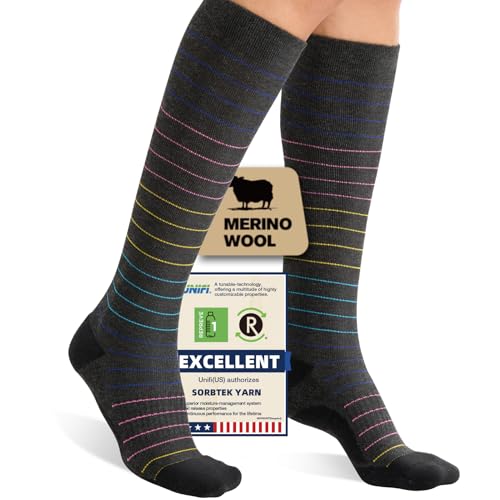
Iambamboo Merino 15-20 Socks

JOBST Relief 20-30 mmHg Open Toe Socks

JOBST Relief 15-20 mmHg Closed Toe Socks, Black X-Large

JOBST Sport 15-20 mmHg Socks, Small

PULIOU 20-30 mmHg Knee High Socks, 2 Pairs
Inside Each Recommended Option
The Benirap socks put calf measurement ahead of a loose size label, which matters because a compression sock needs to sit correctly from ankle to knee. Their wide-calf construction should suit long workdays, long runs, and flights, while 80% polyamide, mesh ventilation, and seamless toes keep the fit practical during extended wear.
Compared with the more structured JOBST options later in the list, these socks feel aimed at active daily routines. The snug profile may feel firmer than a conventional sock, so your first sizing decision matters more than usual.
Benefits That Matter
- Calf-based sizing supports a more accurate fit across a wide range of body types.
- Mesh ventilation and moisture-wicking fabric help manage heat during long shifts or workouts.
- Seamless toes reduce rubbing in shoes used for running, cycling, and travel.
- The unisex design covers workdays, exercise, flights, and prolonged standing.
Trade Offs
- The close fit may feel restrictive during the first wear, particularly around the calf.
- Borderline measurements are better sized up for comfort according to the listed guidance.
Key Specs
Who Will Love This
You benefit most from these socks during long workdays, frequent flights, or active routines that make calf fit and moisture control especially important.
A Better Fit Elsewhere
JOBST Relief 15-20 mmHg Closed Toe Socks suit anyone who prefers a roomier toe and a more structured compression-knit construction.
Softness takes priority in the Iambamboo socks, combining merino wool with viscose from bamboo for a lighter feel than the denser JOBST knits. That makes them a sensible option for flights, long periods of sitting, and daily wear where you want support without a heavy-looking fabric.
Benirap emphasizes mesh ventilation and activity use, while this pair centers softness, arch support, and year-round temperature regulation. The blend of moisture-management fabrics also gives it a more refined feel for office wear, though the exact feel will depend on your sensitivity to wool.
A Few Strong Suits
- Merino wool and bamboo viscose create a soft, breathable wearing experience.
- Four-zone graduated pressure supports the ankle, calf, and lower leg.
- Arch support and a seamless toe closure improve comfort during long wear.
- Reinforced foot areas add cushioning where repeated use creates wear.
- Machine washing and pre-shrunk construction simplify regular care.
Points To Note
- Multiple fibers make the feel different from a single-material technical sock.
- Pregnancy suitability depends on your personal comfort and the pressure level recommended for you.
Made For
You get the most benefit from these socks during flights, warm-weather travel, and workdays that call for softer compression fabric.
Where A Sibling Pick Shines
BENIRAP 15-20 mmHg Compression Socks offer more explicit mesh ventilation for runners and people who regularly wear closed athletic shoes.
The JOBST Relief pair delivers a firmer 20-30 mmHg pressure range, stepping above the 15-20 mmHg choices in this roundup. It is worth considering for pronounced full-calf support, especially during extended periods of standing, while the open toe leaves your toes visible and less confined.
Compared with the smaller JOBST Sport socks, this model is built more around sustained support than athletic styling. The beige color also gives it a practical appearance with work trousers or travel outfits, although the listed large, full-calf version may not suit smaller legs.
What Pays Off
- The 20-30 mmHg range provides stronger support than moderate 15-20 mmHg socks.
- Open toes reduce enclosure and work with footwear that does not need full toe coverage.
- The knit is designed for regular wear rather than occasional activity only.
- The unisex construction suits a broad range of daily routines.
Practical Considerations
- This listing specifies a large, full-calf fit, so calf measurement deserves attention.
- Firmer compression may feel less comfortable than the moderate range during first-time wear.
- Open toes can look out of place with closed shoes that require a complete toe box.
Core Details
Best Suited To
You benefit most from this version when you want firmer compression, a knee-high profile, and an open-toe construction for all-day support.
Another Choice May Suit
JOBST Sport 15-20 mmHg Socks, Small feel more appropriate for moderate support during walking, golf, or tennis.
The JOBST Relief Closed Toe Socks use a soft, air-covered spandex knit to balance compression with an easier everyday feel. Their roomy toe area reduces the cramped sensation associated with narrow footwear, while the black finish works neatly with office clothing, travel outfits, or walking shoes.
Unlike the JOBST Relief Open Toe Socks, this version uses a 15-20 mmHg pressure range, placing it closer to the moderate support in the Benirap and Iambamboo pairs. The listed X-Large size makes accurate calf measurement the most important purchase check.
What Makes Sense
- The 3-D knit structure provides a soft surface for extended wear.
- A roomy toe provides more space than a standard enclosed toe.
- Closed toes suit work shoes, trainers, and other footwear needing full coverage.
- The knit is latex free for people avoiding latex in everyday garments.
Things To Consider
- The listed X-Large version requires a matching calf measurement.
- Black may show lint or lighter marks more readily than a neutral shade.
Feature Snapshot
Made With In Mind
You benefit most from this pair when your day combines moderate compression, closed shoes, and a preference for a roomier toe.
Look Elsewhere When
Iambamboo Merino 15-20 Socks suit anyone placing greater importance on soft merino and bamboo-blended materials for travel or office wear.
JOBST Sport brings moderate compression to an active format, with a nylon and spandex construction designed to remain soft, lightweight, and breathable. That combination makes more sense for walking, golf, tennis, and other active pursuits than for the dressier use cases represented by some JOBST Relief models.
The royal blue and grey color adds a sportier appearance than the beige JOBST Relief Open Toe Socks, while the 15-20 mmHg range keeps support moderate. This listing is specifically marked small, so check the calf measurement rather than relying on your ordinary sock size.
What It Does Well
- The lightweight fabric suits walking and recreational sports.
- Breathable construction helps manage heat during movement.
- Graduated 15-20 mmHg compression adds support without reaching the firmer 20-30 range.
- The color scheme works naturally with athletic shoes.
Minor Gripes
- The specified small size may not suit a larger calf.
- Its sport-focused styling is less discreet for formal workwear.
The Right Fit
You benefit most from this pair when your priorities are lightweight fabric, moderate graduated support, and an athletic look.
Reach For A Different Pick When
BENIRAP 15-20 mmHg Compression Socks fit runners and cyclists who place greater importance on targeted mesh ventilation and seamless toes.
The PULIOU socks combine a 20-30 mmHg pressure range with a two-pair pack, giving you a spare pair for travel, workouts, or rotation between wears. Their knee-high profile is intended for circulation support during flights, athletic activity, and extended journeys where firmer graduated compression may be your preferred starting point.
Unlike the JOBST Relief 20-30 mmHg Open Toe Socks, this pair targets travel and athletics rather than an open-toe, full-calf design. The firmer range can feel substantial, so a gradual introduction and careful size check are sensible for first-time wearers.
The Upside
- Two pairs make it easy to keep one available while another is in use.
- The 20-30 mmHg range offers firmer support than the 15-20 mmHg options.
- Knee-high coverage supports the ankle, calf, and lower leg.
- The stated travel and athletic focus suits active journeys.
Possible Compromises
- Firmer compression may feel more noticeable than moderate daily support.
- Accurate sizing is essential because the fit determines how evenly the pressure is distributed.
Quick Facts
Who Should Grab It
You benefit most from this option when you want firmer knee-high support and value having two pairs for travel or rotation.
Swap It Out When
JOBST Relief 15-20 mmHg Closed Toe Socks suit anyone seeking a softer, roomier toe and moderate compression for daily wear.
What Matters Before You Buy Compression Socks
Pressure level
Millimeters of mercury, or mmHg, describe the pressure applied to the leg. Most of this roundup sits at 15-20 mmHg for moderate support, while the JOBST Relief Open Toe Socks and PULIOU socks use 20-30 mmHg for a firmer profile. Choose the gentler range for everyday wear and a more familiar compression feel, or discuss stronger pressure with a healthcare professional when you have specific circulation concerns.
Calf measurement
Your calf measurement is often more useful than a conventional sock size. A compression sock must fit closely enough to place pressure where intended without bunching at the ankle or digging into the calf. Measure both calves and compare them with the listed range before ordering, especially for the Benirap, JOBST Relief, and JOBST Sport pairs.
Toe and fabric preferences
Closed toes suit shoes requiring full coverage, while open toes leave more room around your feet. Merino, bamboo viscose, mesh panels, and air-covered spandex each feel different against the skin and manage heat differently. Your climate, sensitivity, footwear, and planned duration of wear should guide that choice.
Where Basic And More Refined Socks Differ
Common Shopping Slip Ups
Choosing by shoe size alone can produce a loose cuff or a tight calf, so measure before ordering. Another common mistake is assuming every 15-20 mmHg sock feels identical; fabric, toe construction, and the shape of the knit affect comfort. Check the listed pressure level too, since several options in this roundup actually use the firmer 20-30 mmHg range.
What The Higher Tier Buys
A more refined construction may add softer yarn, reinforced foot areas, arch support, or a roomier toe rather than simply raising the compression level. That extra construction can matter during extended wear, but it does not replace correct sizing. Your calf measurement and intended routine still carry more weight than decorative details.
Frequently Asked Questions
What does 15-20 mmHg compression mean?
It represents moderate graduated pressure measured in millimeters of mercury. The pressure is strongest near the ankle and decreases up the calf, making this level a common choice for everyday support.
Are 15-20 mmHg compression stockings suitable for travel?
They suit many long flights and travel days because the graduated support can feel more comfortable during prolonged sitting. Choose a breathable fabric and confirm that your size follows the listed calf measurements.
Should you choose 20-30 mmHg instead?
Firmer 20-30 mmHg compression may suit people seeking a stronger pressure profile, particularly for extended standing. First-time wearers should consider their comfort level and obtain clinical guidance for specific circulation concerns.
Are open-toe compression socks better than closed-toe pairs?
Open toes provide less enclosure and suit footwear without a full toe box. Closed toes offer complete coverage, and models such as the JOBST Relief Closed Toe Socks add extra room around the toes.
How should compression socks fit?
They should feel snug without restricting movement, without leaving deep marks, bunching, or pinching. The fit should remain even from the ankle through the calf, so compare your measurements before choosing a size.
Final Verdict
Your best choice depends on the pressure, fit, and fabric: Benirap handles active daily wear, Iambamboo prioritizes softness, and JOBST provides structured options for moderate or firmer support. PULIOU adds two pairs and a stronger 20-30 mmHg range. Measure your calves, compare the toe construction, and choose the level that suits your routine.
