

Compression stockings can make a long shift, flight, or workout feel easier on your feet, but choosing the wrong pressure or size often leaves the experience disappointing. You need a pair that fits your calves, shoes, and daily routine without feeling unnecessarily restrictive. These six options cover lighter everyday support, firmer graduated compression, athletic use, travel, and medical-style garments for men and women.
Your Options, Compared
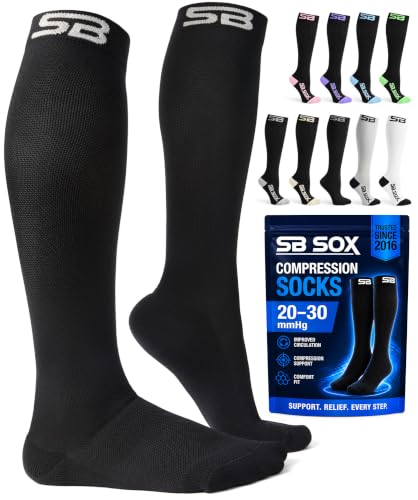
SB SOX 20-30mmHg Socks

COOLOVER Copper Compression Socks 6 Pairs
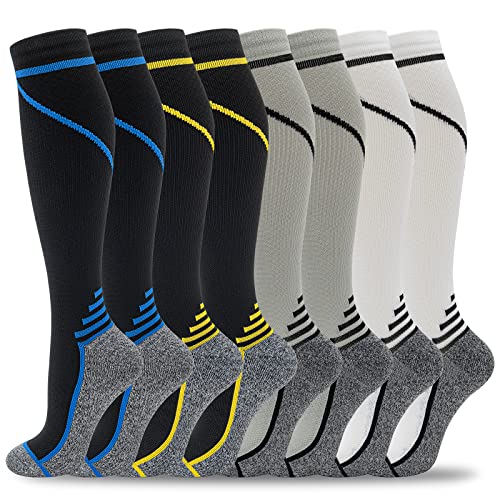
fenglaoda 8-Pair 20-30mmHg Compression Socks

SB SOX 3-Pair 15-20mmHg Socks

JOBST Activewear 30-40mmHg Knee-High Socks, Large

Mediven Plus Open-Toe 30-40mmHg Socks
A Closer Look At Each Pick
A 20-30mmHg range gives these SB SOX socks firmer support than lighter 15-20mmHg models. That makes them a practical choice for men who spend long periods standing, traveling, or moving through a demanding workday.
The fabric combines 80% nylon with 20% spandex for a close, flexible fit, while reinforced heel and toe areas add cushion where your foot meets your shoe. Fit depends heavily on calf measurement, so the size chart deserves more attention than the style selection.
A Favorable Mix
- Graduated compression supports the lower leg during prolonged standing and activity.
- The nylon-spandex blend remains flexible while holding its shape close to the calf.
- Cushioned heels and toes improve comfort in frequently worn work shoes.
- Lightweight, breathable construction suits long daily wear.
Trade Offs
- The 20-30mmHg level may feel firm during your first wear, particularly on a long flight.
- Shoe sizes can exceed a chart row, so measure your calf and follow the stated sizing guidance before ordering.
Feature Snapshot
Made For
These socks suit commuters, hospitality workers, and travelers who want firmer compression than the 15-20mmHg range.
Consider Something Else When
Choose SB SOX 3-Pair 15-20mmHg Socks instead when you prefer gentler support for desk-based days.
Six pairs make COOLOVER a convenient choice for travel, training, and work rotations. The copper-infused fabric is designed to move moisture away from the skin while retaining warmth in cold conditions and feeling cooler as temperatures rise.
Graduated compression applies different pressure along the leg, with stronger support nearer the foot. Compared with SB SOX’s nylon-spandex blend, COOLOVER places more emphasis on copper infusion, moisture control, and odor management for active settings.
A Strong Showing
- Six pairs support easy rotation and reduce the need to wash one pair nightly.
- Moisture-wicking construction suits running, gym sessions, and long travel days.
- Copper-infused fabric adds temperature regulation and odor control.
- Graduated pressure provides structured support without relying on a bulky design.
Points To Keep In Mind
- The six-pair format takes more space than a smaller multipack in a dresser or carry-on.
- Copper-infused fabric may not appeal to you even though its moisture-management focus is useful during exercise.
The Right Fit
Active adults, frequent travelers, and people who alternate between work, training, and recovery will get the most from this multipack.
A Better Fit Elsewhere
fenglaoda 8-Pair 20-30mmHg Compression Socks offer a larger rotation for anyone who prefers stronger graduated pressure.
Eight pairs make this fenglaoda set useful for people who cycle through compression socks every day. Its 20-30mmHg graduated pressure is positioned for standing shifts, running, travel, and other activities where your legs remain active or stationary for long stretches.
Non-slip ribbing helps the knee-high socks stay in place, while the thickened heel, reinforced toe, and arched support add structure around high-wear areas. The lightweight fabric is also machine washable and can be line dried, which simplifies care between uses.
The Good Stuff
- Eight pairs create a substantial rotation for work, exercise, and travel.
- Graduated 20-30mmHg compression offers firmer support for demanding schedules.
- Non-slip ribbing helps reduce bunching around the calf.
- Arch support and reinforced heel and toe areas add targeted structure.
- Machine washing and line drying keep maintenance straightforward.
Practical Considerations
- Eight pairs require more storage space than the smaller multipacks in this list.
- Choose S/M or L/XL by checking both calf measurement and shoe size rather than relying on height alone.
Technical Highlights
Who It Suits Best
Shift workers, nurses, runners, and frequent travelers benefit from the large selection and firm graduated compression.
Where A Sibling Pick Shines
SB SOX 20-30mmHg Socks are a simpler choice for shoppers who want firm support without an eight-pair rotation.
For men who want compression without the firmer feel of a 20-30mmHg sock, this three-pair SB SOX set offers a gentler 15-20mmHg range. It works well for desk days, ordinary walking, and lighter activity where all-day comfort matters more than intense support.
The difference from SB SOX 20-30mmHg Socks is straightforward: this model uses less pressure while retaining a lightweight, breathable construction. Calf and shoe measurements still determine the size, so use the chart rather than carrying over the size chosen for a different SB SOX model.
Where It Delivers
- Lighter 15-20mmHg compression suits extended daily wear.
- Three pairs provide a practical starting rotation.
- Lightweight, breathable fabric balances support with comfort.
- Graduated pressure supports the foot and lower leg.
Worth Noting
- The three-pair count is smaller than the multipacks from COOLOVER and fenglaoda.
- A shoe size above the listed range may require moving up a size according to the sizing guidance.
Built With In Mind
Office workers, casual walkers, and anyone easing into compression stockings benefit from this lighter pressure range.
Reach For A Different Pick When
JOBST Activewear 30-40mmHg Knee-High Socks, Large suit active users who want substantially firmer support and cushioned feet.
JOBST Activewear targets people who expect compression socks to work as hard as they do. Its 30-40mmHg pressure is among the firmest ranges here, while the large full-calf sizing and wide comfort band focus attention on a secure, steady fit.
Dri-Release technology provides moisture wicking, odor control, and fast drying, which matters during exercise or physically demanding work. A cushioned foot and seamless toe add comfort where repetitive movement creates the most pressure.
The Upside
- Firm 30-40mmHg compression provides substantial support for active routines.
- Dri-Release technology moves moisture away and dries quickly.
- A wide comfort band helps keep the knee-high sock from shifting.
- The cushioned foot feels suited to walking, work, and exercise.
- A seamless toe reduces bulk at a common source of shoe irritation.
Areas To Watch
- The Large full-calf version requires checking your leg measurements carefully.
- The pressure level may feel too firm for desk-based wear or first-time compression users.
Key Details
Who Will Love This
Physically active professionals, athletes, and walkers benefit from the firm compression and moisture-managing construction.
Look Elsewhere When
Mediven Plus Open-Toe 30-40mmHg Socks suit shoppers who prefer an open-toe medical compression design.
Mediven Plus takes a focused approach with a knee-high, open-toe design and 30-40mmHg compression. That combination suits men who want firm medical-style support while leaving the toes exposed, which can make the socks easier to accommodate with footwear that favors a roomier toe area.
The listing places these socks within medical compression garments, so the product is clearly aimed at structured support rather than casual fashion socks. Compared with JOBST Activewear’s cushioned foot, the open toe offers a more exposed, less bulky finish at the front.
Notable Upsides
- The firm 30-40mmHg range suits men seeking substantial graduated support.
- An open toe leaves the toes exposed for footwear with a roomier front.
- The knee-high design covers the calf and lower leg.
Small Limitations
- The open-toe construction may not suit every enclosed shoe.
- Firm compression can require a gradual adjustment period, particularly for first-time wearers.
Quick Facts
Whose Shelf It Belongs On
Men seeking firm medical compression and an open-toe fit benefit most from this focused design.
Swap It Out When
SB SOX 20-30mmHg Socks are a gentler alternative for shoppers who want graduated support below 30mmHg.
What Matters Before You Choose Compression Stockings
Match The Pressure To Your Routine
Compression strength is measured in millimeters of mercury, written as mmHg. Lower ranges around 15-20mmHg generally feel lighter, while 20-30mmHg provides a firmer sensation and 30-40mmHg suits more demanding routines. Your desk schedule, walking pace, and tolerance for pressure should guide the choice.
Use Calf And Shoe Measurements
Calf circumference determines how the upper sock sits, while shoe size affects the foot section. Measure both before ordering, especially because the same sock size can cover different combinations of calf and shoe dimensions. Upsizing can prevent a tight fit when your shoe size exceeds the listed range.
Build A Practical Rotation
A three-pair set covers several workdays, while six or eight pairs suit people who wear compression socks daily. Rotation also gives damp socks time to dry between uses. Choose a pack size based on your laundry schedule rather than the largest available option.
Consider Construction Alongside Compression
Breathable fabric, moisture management, cushioning, and arch support affect the overall experience. Toe construction also matters: closed and seamless designs can work well in conventional shoes, while open toes offer more room for roomier footwear. Features like ribbed cuffs can also help the sock remain stable.
Getting Compression Socks Right
Mistakes Worth Dodging
Choosing by shoe size alone can leave the calf section poorly fitted. Measure both dimensions, read the size chart, and avoid selecting a smaller size merely to reduce the sensation of compression. Starting with moderate pressure may also make the fit easier to understand.
What Separates Premium From Basic
Higher compression levels often suit more demanding activity, while specialized fabrics manage moisture and odor. The upgrade is most useful when your schedule calls for firm support or long wear. For lighter routines, construction and fit can matter more than a higher mmHg number.
Frequently Asked Questions
Which Compression Level Should Men Choose?
Men starting with compression generally find 15-20mmHg more approachable for everyday wear. Firmer 20-30mmHg or 30-40mmHg ranges suit people who spend more time standing, traveling, or exercising.
Should You Size Up Compression Socks?
Size up when your shoe size falls above the range listed for your calf measurement. Measuring your calf and checking the complete chart gives you the most accurate starting point.
How Many Pairs of Compression Socks Are Useful?
Three pairs cover a typical workweek, while six or eight pairs simplify rotation for daily wear. More pairs are useful for people who exercise, travel frequently, or wash their socks each evening.
Are Knee-High Compression Socks Suitable for Walking?
Yes, their coverage extends from the foot through the calf. The 20-30mmHg and 30-40mmHg options in this list offer firmer support for active routines.
When Is an Open-Toe Design More Comfortable?
An open-toe design can feel roomier around the toes, particularly inside shoes with extra front space. Closed-toe options may suit footwear with a narrower or more conventional shape.
Final Thoughts
The right compression stocking balances pressure, fit, and construction rather than simply choosing the highest mmHg number. Start with your daily routine, measure your calf and shoe sizes, then compare the three-, six-, and eight-pair options based on how often you expect to wear them.
