

Putting contacts on for the first time is easier when the storage, cleaning, and handling tools feel familiar. Your first setup should match your lens type, fit into your daily routine, and stay easy to manage at home or while traveling.
That matters because cases, automatic cleaners, and applicators solve different parts of the routine. A small case keeps lenses covered between wear periods, while a powered cleaner targets deposits that need a separate cycle. Manual tools help during insertion and removal without taking over the entire process.
The six options below cover those different needs, from colorful replacement cases to compact electronics for soft or rigid gas permeable lenses. Each one fits a particular routine, so your strongest starting point depends on how you wear and store your lenses.
Your Options, Compared

QVVQ 12PCS Colorful Mini Contact Lens Storage Cases

3n ReO2 Mini Pro Cleaner

3n ReO2 Contacts Cleaner, 2 Capsules

3n ReO2 RGP Lens Cleaner for 11.5mm Lenses
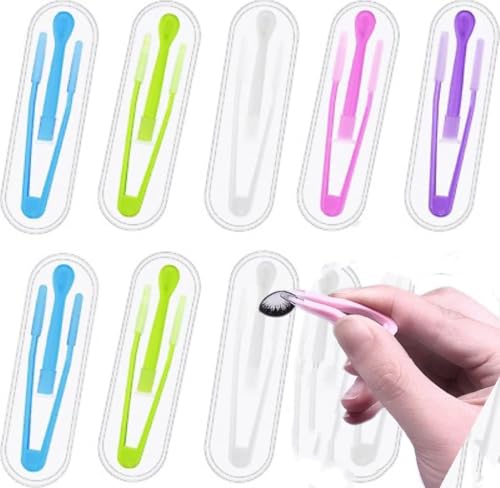
Jowxsx 5Pcs Colorful Soft-Tip Contact Lens Tool Cases

Aoutrow 16 Pack Contact Lens Case Set
More On The Choices That Made The List
A contact lens case has a deceptively important job, and this 12-piece set makes the basic storage step easier to organize. Each mini case measures 2.58 by 1.22 by 0.67 inches, so it can slide into a pocket, laptop bag, desk drawer, or travel pouch without demanding much room.
The set includes three cases each in purple, green, pink, and blue with white accents. For a new wearer, the clearly marked left and right lids reduce the need to check orientation every time, while a monthly replacement schedule keeps case rotation manageable.
What It Does Well
- Twelve cases cover roughly a year at one per month.
- Left and right markings make the lids easy to distinguish.
- The compact dimensions suit small bags, pockets, and desks.
- Multiple colors make separate cases easy to identify.
Worth Noting
- These are storage cases rather than powered cleaning devices.
- A regular replacement habit matters, especially when cases travel between bags and homes.
Key Specs
Made For
This set suits first-time wearers who want inexpensive, compact storage and a simple monthly replacement routine.
A Better Fit Elsewhere
Travelers who want an automated cleaning cycle may prefer the 3n ReO2 Mini Pro Cleaner.
The ReO2 Mini Pro adds an active cleaning step that the QVVQ storage cases do not provide. At 40 grams and a stated 35 decibels, a measurement of sound level, it looks suited to a commute, overnight bag, or compact vanity where noise and bulk would be distracting.
Its 30-minute cycle uses electrophoresis, an electrically driven cleaning process designed to remove deposits from soft lenses. The stated removal rate reaches 70 percent, while the included mirror and tweezers cover both cleaning and handling.
Benefits That Matter
- The pocket-sized body simplifies travel and overnight storage.
- A 30-minute cycle fits around a normal morning or evening routine.
- Up to 70 percent protein-deposit removal targets buildup on soft lenses.
- Mirror and tweezers keep handling supplies together.
Points To Note
- Do not use hydrogen peroxide-based solutions with this cleaner.
- It is designed for soft lenses rather than rigid gas permeable lenses.
Who Will Love This
This cleaner fits wearers who travel regularly and want a timed routine for their soft lenses.
Another Choice May Suit
The QVVQ 12PCS Colorful Mini Contact Lens Storage Cases may suit someone who only needs simple, replaceable storage.
Where the ReO2 Mini Pro favors one quick cycle, the ReO2 Soft Contacts Cleaner offers both a 10-minute standard mode and a four-hour deep mode. That flexibility can suit students, shift workers, or anyone whose schedule changes from day to day.
Two self-cleaning capsules form part of the care routine and are listed for replacement every six months. The manufacturer also claims up to 94.7 percent protein-buildup removal and the restoration of up to 94 percent of oxygen transmissibility affected by deposits.
What Helps Most
- Standard and deep cycles suit different cleaning schedules.
- Two capsules provide a planned six-month replacement interval each.
- A built-in mirror supports handling at home or during travel.
- A dedicated light provides a place for tool care.
- The cleaning performance claims target persistent protein buildup.
Trade Offs
- The four-hour mode requires more advance planning than the Mini Pro cycle.
- Hydrogen peroxide-based systems are not compatible.
Right Fit For
This model suits soft-lens wearers who want several cycle lengths and a defined capsule replacement schedule.
Where A Sibling Pick Shines
The 3n ReO2 Mini Pro Cleaner is easier to carry for someone who values a smaller 30-minute device over multiple cycle options.
Unlike the ReO2 Soft Contacts Cleaner, this model is built for rigid gas permeable and orthokeratology lenses. RGP lenses are rigid rather than flexible, and their size and care requirements make lens-type compatibility the most important check before purchase.
The device combines a 10-minute deep-clean cycle with automatic cleaning and rinsing. Its electrophoresis approach removes deposits without ultrasonic action, and the stated protein-removal rate reaches 95 percent for compatible lenses.
The Value In It
- Automatic cleaning and rinsing reduce manual routine steps.
- The 10-minute cycle fits a daily care schedule.
- Up to 95 percent protein removal targets stubborn buildup.
- Non-ultrasonic cleaning suits the stated RGP use.
Some Limits To Know
- It is not suitable for scleral lenses.
- RGP lenses larger than 11.5 millimeters are outside the stated range.
At A Glance
Built With In Mind
This cleaner fits wearers of rigid RGP or orthokeratology lenses up to 11.5 millimeters in diameter.
Consider Something Else When
Soft-lens wearers should choose the 3n ReO2 Mini Pro Cleaner instead of this RGP-specific model.
Learning to handle a soft lens often comes down to grip, control, and keeping your fingers away from the lens surface. The Jowxsx set provides five color-coded tools with both inserter and remover functions, making it a straightforward choice for building that routine.
Soft tips give the applicators a gentle contact point, while the shaped handles are designed for a controlled grip. Each tool also has its own compact case, so you can keep a pair in a bathroom, desk, or travel bag instead of leaving loose applicators lying around.
Practical Pluses
- Five sets provide useful options for multiple locations.
- Soft tips support controlled lens handling.
- Ergonomic shapes offer a clear place to grip.
- Different colors help identify stored tools.
Practical Considerations
- The tools do not replace a separate storage case or powered cleaner.
- Five individual cases take more space than a single combined organizer.
The Right Fit
This set suits first-time wearers who want dedicated applicators for learning insertion and removal.
Swap It Out When
The QVVQ 12PCS Colorful Mini Contact Lens Storage Cases are more useful when regular lens storage is your main need.
The Aoutrow set expands on the QVVQ option by providing 16 cases instead of 12. Each one measures 2.4 by 1.1 by 0.6 inches and comes in green, pink, blue, or purple, which can make regular rotation easier for households with more than one lens wearer.
ABS plastic gives the cases a rigid, shatter-resistant construction, according to the listing. Wash each case several times with hot water before first use, and you have a compact storage option that does not need power or a long cleaning cycle.
Practical Advantages
- Sixteen cases support regular rotation or multiple users.
- The compact shape fits drawers, desks, and small bags.
- Four colors make separate cases easier to recognize.
- ABS construction offers a rigid alternative to thin plastic.
Details To Watch
- Sixteen cases need more storage room than a smaller set.
- The cases require hot-water washing before initial use.
Core Details
Whose Shelf It Belongs On
This set suits households that want several replacement cases ready in a drawer, office, or travel kit.
Where Another Pick Suits Better
The QVVQ 12PCS Colorful Mini Contact Lens Storage Cases take up less space for a single wearer.
Building a Contact Lens Routine That Feels Manageable
Start With Your Lens Type
Soft, rigid gas permeable, and orthokeratology lenses use different care tools. The 3n ReO2 RGP Lens Cleaner is intended for rigid lenses up to 11.5 millimeters, while the Mini Pro and two-capsule cleaner target soft lenses. Confirm the lens type, diameter, and replacement guidance with your eye care professional before choosing equipment.
Separate Storage From Cleaning
A contact lens case covers and stores lenses between wear periods. It does not replace a cleaning cycle, and a powered cleaner does not necessarily serve as a storage case. Many routines are easiest to understand when each tool has one clearly defined job.
Think About Where the Tools Live
A case that stays beside your sink handles home use, while a separate travel case prevents a damp pair of lenses from remaining in your luggage. The QVVQ and Aoutrow sets offer several units, making it easier to keep a case in more than one location.
Keep Insertion and Removal Simple
Applicators can help new wearers grip a soft lens without touching its surface. Look for soft tips and a handle shape that feels comfortable, and practice on a clean surface. The Jowxsx set provides five individually cased options for this part of the routine.
Avoiding Common Contact Care Mistakes
Mistakes Worth Dodging
Do not assume every cleaner fits every lens or solution. The ReO2 Mini Pro and two-capsule cleaner exclude hydrogen peroxide-based systems, while the RGP model has its own diameter and lens-type limits. Check those details before adding solution or lenses.
What The Higher Tier Buys
A more elaborate setup may add multiple cleaning times, replacement capsules, lighting, mirrors, or automatic rinsing. Those extras help when your schedule or lens type calls for them, but a simple case and reliable applicator can still form a sensible starter setup.
Frequently Asked Questions
Do I need both a contact lens case and a cleaner?
Yes, because they perform different jobs. A case stores lenses between wear periods, while a cleaner provides a separate deposit-removal cycle.
Can I use hydrogen peroxide with the ReO2 cleaners?
Do not use hydrogen peroxide-based solutions with the ReO2 Mini Pro or two-capsule soft-lens cleaner. The product descriptions explicitly exclude those systems.
Which case is easiest to pack for travel?
Both the QVVQ and Aoutrow sets use compact cases that fit small bags and pockets. The Aoutrow set offers more units, while the QVVQ set takes up less storage space overall.
Are the ReO2 cleaners suitable for RGP lenses?
Only the 3n ReO2 RGP Lens Cleaner is made for rigid gas permeable and orthokeratology lenses. The other ReO2 models in this roundup are intended for soft lenses.
What tools help a first-time lens wearer?
A storage case, soft-tip inserter and remover, and a cleaner appropriate to your lens type cover the main parts of a routine. The Jowxsx set focuses on handling, while the ReO2 models focus on cleaning.
Final Thoughts
Your first contact lens setup should be small enough to understand and matched to the lenses you actually wear. Start with the storage and handling basics, then add an electronic cleaner only when your lens type and routine call for one. A clear, consistent routine matters more than having every accessory at once.
