

At one, milk rarely stays in the cup for long. Your child may tilt it, squeeze the handle, or knock it against a high chair, making the right drinking vessel matter more than a matching design. These options cover early straw practice, spill control, and the transition from bottle to cup, with sizes and materials suited to different stages.
A one-year-old benefits most from a lightweight cup with a secure lid, an easy-to-hold handle, and a drinking method they can manage without constant assistance. Check the capacity, cleaning requirements, and compatibility with your child’s current routine before making the final decision.
A Fast Comparison Of The Options

Evorie Tritan Sippy Cup 10 Oz

Evorie Weighted Straw Cup 7 Oz

Evorie Tritan Bottle 13 oz

UBMOM PPSU No-Spill Learner Cup 9.47 oz

Cute Character Plastic Cups with Handles, Set of 3
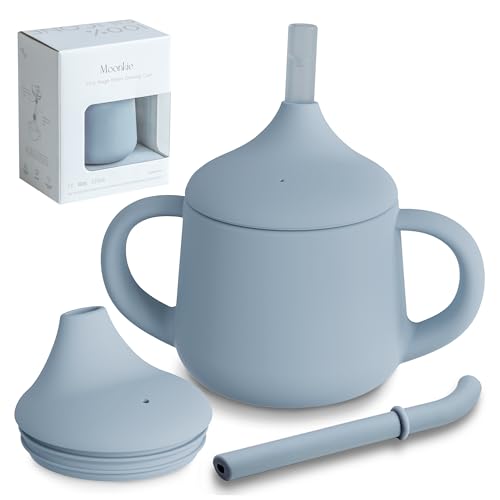
Moonkie Silicone Training Cup 4 oz, 1-Pack
A Closer Look At Each Pick
Milk rarely stays still around an active toddler, and this 10-ounce Evorie cup is shaped for that reality. Its flip-top lid covers the cross-cut straw until your child is ready to drink, while the handles give small hands a more secure hold than a plain rim.
For daycare, car rides, and playground visits, the 10-ounce size feels like a practical middle ground. Your child can practice sipping without moving to a larger bottle too soon, and the clear Tritan body makes the remaining liquid easy to see.
The Helpful Details
- The protected straw stays covered between drinks, reducing the chance of contact with counters or bags.
- All parts separate for cleaning, which helps with the dried milk residue that quickly builds around a straw.
- Scratch- and impact-resistant Tritan suits a cup that will be dropped, squeezed, and carried around.
- The cross-cut straw supports steady sipping while limiting the entry of food debris.
Things To Consider
- The lid must be closed carefully to gain the strongest spill protection during movement.
- At 10 ounces, the cup may be larger than necessary for children who only drink small amounts at once.
Key Specs
Who It Suits Best
This cup suits toddlers who already grasp a handle and are ready for protected straw sipping during daily outings.
Where Another Pick Suits Better
The Evorie Weighted Straw Cup 7 Oz offers a smaller format for children still learning how to draw liquid through a straw.
A child learning to sip often holds a cup at an angle, and the weighted straw in this 7-ounce cup follows that movement. It allows drinking from different positions while the soft silicone section provides a gentle surface for developing mouths.
Your child can begin with small amounts and build confidence before moving to a larger cup. The secure-grip handles make it easier to practice without a caregiver continually repositioning the cup.
The Practical Payoff
- The weighted straw reduces the need to keep the cup perfectly upright, which is useful during early practice.
- A vent system supports smoother sipping while managing excess air and liquid moving back toward the straw.
- The flip-top lid and cross-cut valve help contain minor spills around a high chair or play area.
- Separating the parts for washing makes it easier to clean the narrow straw passage.
Worth Noting
- Pressure can cause slight dripping from the straw while the lid remains open.
- The 7-ounce capacity may require more refills than the larger Evorie Tritan Sippy Cup 10 Oz.
Made For
This cup works well for infants and toddlers who are transitioning from bottle feeding toward independent straw drinking.
Consider Something Else When
The UBMOM PPSU No-Spill Learner Cup 9.47 oz suits families wanting one container that can change from bottle to sippy cup.
This is less of a one-year-old’s cup and more of a bottle for a child ready for school routines. The 13-ounce capacity reduces refill frequency, while the locking lid and fitted straw help protect a backpack or lunch box from spills.
Your child must open the one-push flip lid without assistance, so the design favors children with more developed hand control. Compared with the Evorie Tritan Sippy Cup 10 Oz, it carries more liquid and uses a larger, school-oriented format.
Real Benefits
- The locking closure adds a second layer of protection when the bottle is carried or tipped.
- The compact 13-ounce body fits small hands while reducing how often milk needs replacing.
- The flip-back lid stays out of the way during drinking, which helps with an active routine.
Trade Offs
- The stated age starts at three years, making it unsuitable for a typical one-year-old.
- The one-touch opening requires more coordination than a caregiver-operated lid.
Quick Facts
Best Suited To
This bottle fits children aged three and older who can manage a locking lid and carry a larger drink to school or daycare.
Look Elsewhere When
The Evorie Tritan Sippy Cup 10 Oz is the more practical fit for a one-year-old still developing straw-sipping skills.
The UBMOM design adapts as your child moves away from a conventional bottle. Removing the internal disk and straw turns the 9.47-ounce container into a bottle, then adding them back creates a straw cup for continued drinking practice.
That flexibility is valuable during a gradual transition, particularly for families alternating bottle and cup use. The PPSU body is also intended to resist holding onto the color or smell of milk and juice.
The Upside
- One container serves both bottle-feeding and straw-drinking stages.
- The rubber-edged internal disk helps reduce liquid escaping under pressure.
- Rotating handles remain comfortable as your child changes grip or wrist position.
- PPSU is temperature resistant and less likely to absorb beverage odors than ordinary plastic.
Points To Note
- Converting between bottle and cup requires removing and replacing the internal parts.
- The beige color is a matter of preference, and the rotating handle adds more structure than a simple side grip.
Technical Sheet
Built With In Mind
This learner cup suits families managing a gradual bottle-to-sippy-cup transition with one adaptable container.
Swap It Out When
The Evorie Weighted Straw Cup 7 Oz offers a simpler setup for a child already focused on independent straw practice.
Colorful character designs give this three-cup set a lighter feel than the clear training cups elsewhere in the list. Each 7.8-ounce cup has a side handle, so a one-year-old can practice gripping while drinking milk or water at a table.
The set works best for stationary meals, snacks, and access to several cups during the day. Without a lid or straw, though, it offers less control for a child who walks, crawls, or frequently tips the cup.
What Helps Most
- Three colors and character prints make the cups easier to distinguish and more engaging at mealtimes.
- The 7.8-ounce capacity suits small drinks and snack portions.
- Lightweight plastic makes each cup easier for a young child to carry around the table.
- The handle provides a secure alternative to holding the cup by its rim.
Practical Considerations
- There is no lid or straw, so spilled milk remains a possibility during movement.
- Hand washing is recommended, and the cups are not suited to microwave or dishwasher use.
- Three cups create more items to store and wash than a single training cup.
The Right Fit
This set suits families who value colorful tableware and want open handled cups for milk, water, or snacks at home.
Another Choice May Suit
The Evorie Tritan Sippy Cup 10 Oz is a stronger fit for travel because its covered straw and flip-top lid contain spills.
Soft silicone makes this 4-ounce cup a gentle starting point for children moving away from a bottle. The small first-stage format supports short drinking sessions, and its 1-pack format keeps the initial setup straightforward.
For a one-year-old who is still building confidence, the smaller volume may be less intimidating than a full-sized bottle. The honest trade-off is capacity, since most cups in this list hold roughly twice as much liquid.
Features That Help
- Silicone provides a soft surface for a child still adjusting to cups.
- The 4-ounce size supports small amounts during initial drinking practice.
- The compact single-cup format is easy to introduce at home or during a short outing.
Small Caveats
- The 4-ounce capacity means milk may need to be added more frequently.
- A one-year-old who already handles a larger handled cup may find this training size less convenient.
Core Details
Who Should Grab It
This cup suits a young child beginning first-stage drinking practice with small amounts of milk or water.
Reach For A Different Pick When
The Evorie Weighted Straw Cup 7 Oz offers a larger capacity and handles for a child ready to practice independent sipping.
What Matters In A One-Year-Old’s Milk Cup
Capacity And Drinking Style
A 7-to-10-ounce cup generally gives a one-year-old a practical serving without becoming difficult to handle. Smaller 4-ounce cups suit early practice, while the 13-ounce Evorie bottle is better suited to children aged three and up.
Your child’s current drinking method matters just as much as capacity. A bottle-fed child may benefit from the convertible UBMOM design, while a child already sipping from a straw can choose between the 7-ounce and 10-ounce Evorie options.
Spill Control And Lid Design
A flip-top lid protects the straw and reduces accidental spills around a high chair. Locking lids add another layer of protection for bags, car seats, and playground trips, although no lid removes the need for careful closure.
Pressure from warm drinks can affect valve performance. The UBMOM cup includes a rubber-edged internal disk, while the Evorie cups rely on their lids, straws, and vents to manage liquid movement.
Cleaning And Materials
Tritan offers a clear, impact-resistant body, while PPSU is designed to resist heat and beverage odors. Both materials provide a noticeable change from ordinary plastic, particularly when a cup handles repeated washing.
A wide cross-cut straw is easier to clean than a narrow tube. Complete disassembly matters even more, because trapped milk residue is easier to remove before it dries.
Handle Shape And Portability
Side handles support small-hand grip, while rotating handles may feel steadier for a child who changes wrist position frequently. Open handled cups work well at a table, but a covered straw cup offers better control during crawling and walking.
Before You Settle On A Milk Cup
Mistakes Worth Dodging
Choosing by color alone can hide important differences in capacity, cleaning, and spill control. Match the drinking method to your child’s current skills, and check that the cup fits comfortably in small hands.
What Separates Premium From Basic
Higher-cost models often add impact-resistant materials, locking lids, or removable straw systems. Those upgrades matter most for daily travel, active toddlers, and cups that need to move between bottle and straw stages.
Frequently Asked Questions
Which cup is best for a one-year-old drinking milk?
The Evorie Tritan Sippy Cup 10 Oz offers the strongest balance of protected straw sipping, handles, and manageable capacity for a typical one-year-old. Smaller babies still developing straw skills may prefer the 7-ounce training cup.
Do spill-resistant sippy cups stop every leak?
Spill-resistant cups greatly reduce leaks but cannot prevent every drop. Lid closure, liquid temperature, movement, and valve design all affect how much liquid escapes.
Is Tritan or PPSU better for milk cups?
Tritan provides a clear, impact-resistant body, while PPSU is particularly suited to cups that will hold warm drinks or frequently carry milk and juice. Either material works well when the remaining parts and cleaning method suit your routine.
How much milk should a one-year-old’s cup hold?
A 7-to-10-ounce cup commonly fits a one-year-old’s serving size. A 4-ounce cup remains useful for small practice sessions, while a 13-ounce bottle is more practical for children aged three and up.
Can one cup work for both a bottle and a sippy cup?
The UBMOM PPSU No-Spill Learner Cup 9.47 oz converts into a bottle by removing its disk and straw. Reassembling those parts creates a straw-drinking setup for the next stage.
Closing Remarks
The Evorie Tritan Sippy Cup 10 Oz fits a one-year-old who is ready for protected straw drinking and needs manageable spill control. A younger child still learning to sip may find the smaller Evorie or Moonkie option easier, while the UBMOM cup makes more sense for a gradual bottle-to-cup transition. Match the design to your child’s current ability rather than choosing on appearance alone.
