

A digital pH meter helps you track how acidic or alkaline a sample is, but choosing the wrong tool can make fermentation, calibration, and food measurements frustrating. You may need a meter with a replaceable probe for sourdough, a blade for solid food, or a complete calibration kit for frequent use. This lineup covers those needs, along with buffer solutions for keeping your measurements on track.
The Lineup, Simplified

ACME pH 7 Buffer Solution, 1 Gallon

ACME pH 4 Red Buffer Solution, NIST, 1 Gallon

ACME pH 10 Blue Buffer Solution, NIST, 1 Gallon

YINMIK Food pH Meter with Extra Probe and Calibration Kit

Apera PH60-VS Kit with LabSen 855 ATC Electrode
EZTOCH Food pH Meter

YINMIK Smart pH Meter Blade
The Details Behind The Selections
A pH 7 buffer is a reference liquid used to adjust a meter’s calibration around the neutral point. ACME’s gallon container suits labs, kitchens, and hobby workshops that want enough solution for repeated checks without preparing a concentrate.
The ready-to-use phosphate formulation removes dilution from the routine. Its yellow color gives you a quick visual check, while traceability to NIST ties the stated value to a recognized standards chain. Compared with a complete buffer set, its role is narrower, but that focus makes it useful for routine meter maintenance.
Where It Helps
- Ready to use, so calibration does not require preparing the solution.
- The 3.8-liter capacity suits frequent calibration or shared workshop use.
- Yellow color coding helps distinguish it from other buffer points.
- Each container carries a lot number and expiration date for inventory control.
Trade Offs To Consider
- The one-gallon container takes more storage space than a small bottle.
- A pH 7 buffer does not cover every point needed for multi-point calibration.
Key Specs
Who It Suits Best
You benefit most from this buffer if you regularly calibrate meters for liquid samples and need a ready-to-use pH 7 reference.
Where Another Pick Suits Better
YINMIK Food pH Meter with Extra Probe and Calibration Kit is a better fit when you also need a meter, spare probe, and three calibration points together.
Acidic samples need a calibration point closer to their expected readings, and this pH 4 buffer provides that reference. The red color coding makes it easier to distinguish from the yellow pH 7 solution in a busy food or laboratory workspace.
You receive a ready-to-use phosphate solution in a 3.8-liter container, so routine calibration involves no dilution. Its stated tolerance is ±0.02 at 25°C, with NIST traceability supporting the documented reference value.
What It Does Well
- Supports calibration for acidic foods, drinks, and other low-pH samples.
- Red color coding reduces confusion around the bottle.
- Ready-to-use liquid saves preparation time at the bench.
Small Caveats
- Its one-gallon format needs dedicated shelf or floor space.
- It works best alongside a pH 7 reference and any alkaline buffer required by your meter.
At A Glance
Made For
This solution fits home fermenters, food creators, and lab staff who regularly measure samples in the acidic range.
Consider Something Else When
ACME pH 10 Blue Buffer Solution, NIST, 1 Gallon suits you better when your calibration routine needs an alkaline reference instead.
Moving up from pH 7 calibration gives you access to the alkaline side of the scale. This blue pH 10 solution is a useful companion for meters used with alkaline cleaners, alkaline foods, or samples that sit above the neutral point.
Like the other ACME buffers, it comes ready to use in a substantial gallon container. The liquid uses potassium phosphate and sodium-based phosphate components, while blue color coding helps separate it from the red pH 4 reference. For a complete three-point routine, pair it with the pH 4 and pH 7 solutions.
The Value In It
- Adds an alkaline calibration point to a multi-point setup.
- Blue labeling makes the buffer point easy to recognize.
- The large volume suits shared equipment and repeated calibration.
Practical Considerations
- You need a meter and electrode designed to work across the relevant range.
- The gallon container requires more storage than compact travel bottles.
Right Fit For
You will find this most useful with a multi-point calibration routine that includes alkaline samples or related cleaning solutions.
Not Your Match When
YINMIK Food pH Meter with Extra Probe and Calibration Kit is more suitable when you need a complete food-focused setup rather than one additional buffer.
A fermentation dashboard can become frustrating when the probe wears out or the calibration bottles run low. This YINMIK kit addresses both sides of that routine with a digital meter, a replacement spear probe, and the supplies needed to keep measurements moving.
The spear-shaped probe is intended for dough, meat, cheese, and other food samples, covering a 0–14 pH range. Three 50 ml calibration solutions cover pH 4.00, 7.00, and 10.01, while two 10 ml bottles of KCl electrode storage solution support probe care. Compared with the ACME buffers, this package gives you the instrument as well.
Practical Advantages
- An extra probe gives you a replacement after accidental damage.
- Three calibration points support measurements across a broad pH range.
- The spear probe suits direct checks of dough and other food samples.
- Two storage-solution bottles support routine electrode maintenance.
- Everything needed for basic calibration arrives in one package.
Details To Watch
- Calibrate the replacement probe before using it with food samples.
- The spear design is intended for pierceable foods rather than every liquid workflow.
Technical Sheet
Best Suited To
This kit fits home bakers, fermenters, and food makers who want calibration supplies and a spare probe in the same purchase.
Look Elsewhere When
Apera PH60-VS Kit with LabSen 855 ATC Electrode makes more sense for viscous cosmetics, paints, coatings, honey, or resin.
Ordinary liquid electrodes can struggle with thick materials because they may not contact the sample evenly. The Apera PH60-VS pairs its handheld meter with a LabSen 855 electrode designed for viscous liquids, including cosmetics, paint, glue, slurry, honey, and resin.
The electrode uses a pre-pressurized reference system intended to reduce junction clogging in demanding samples. Its HA membrane targets alkaline error in salty or complex liquids, while automatic temperature compensation adjusts readings as temperature changes. For most product-development benches, that specialized electrode is the reason to look beyond a basic food meter.
Notable Upsides
- The specialized electrode suits samples too viscous for routine food probes.
- The pre-pressurized reference system targets resistance to junction clogging.
- The HA membrane is designed for alkaline error in complex or salty liquids.
- Automatic temperature compensation supports changing sample conditions.
- Calibration buffers, soaking solution, and a CalPod organizer are included.
Factors To Consider
- This specialized setup may be more than your needs require for plain water and simple foods.
- Calibration and electrode soaking add care steps to the measurement routine.
Quick Facts
Who Will Love This
You will appreciate this kit if you regularly measure thick formulations, coatings, adhesives, honey, or resin with a handheld meter.
A Better Fit Elsewhere
YINMIK Food pH Meter with Extra Probe and Calibration Kit is the more natural choice for sourdough, bread, meat, and home cheese projects.
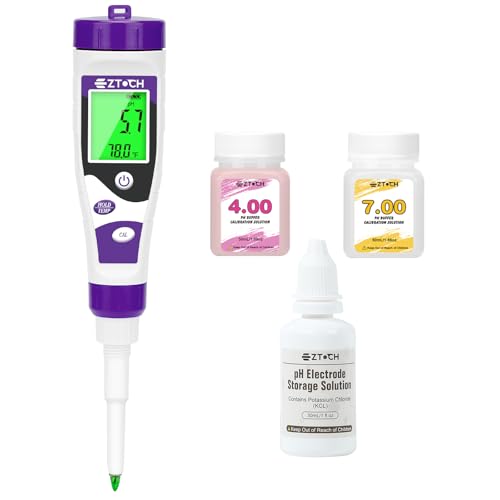
Canning season brings a specific measurement question: how acidic is the fruit, vegetable, sauce, or meat entering the process? EZTOCH positions this digital meter around that decision, including checks for tomato sauce and hot sauce before processing.
The practical reference is pH 4.6, the level cited for identifying foods suited to water-bath canning. This makes the meter most relevant to home canners and fermentation cooks who want a clearer picture of acidity than color or aroma can provide. A validated recipe and established process should still guide the final decision.
Practical Pluses
- Focuses on the pH checks made during home canning.
- Supports measurements for fruits, vegetables, meat, and sauces.
- The pH 4.6 reference point gives cooks a concrete comparison for canning decisions.
Where It Is Less Suited
- Its stated use case centers on food projects rather than specialized viscous liquids.
- You may need separate calibration and storage supplies beyond the meter itself.
Built With In Mind
This meter fits seasonal home canners who want a straightforward tool for checking acidity in foods before processing.
Skip It When
Apera PH60-VS Kit with LabSen 855 ATC Electrode serves you better when your samples include honey, paint, coatings, cosmetics, or resin.
Most liquid pH probes need a sample that can be placed in a cup or container. A blade changes that approach by piercing suitable solid foods, giving you direct access to pH in meat, fruit, and plant material.
The stainless steel blade is designed to help protect the glass probe during these insertions. That construction makes this model interesting for gardeners, butchers, cooks, and home food processors who need measurements from foods a standard spear probe may handle less conveniently. Your sample still needs to be firm enough for a clean puncture.
Features That Help
- The blade reaches pH inside pierceable solid foods.
- Stainless steel construction supports the blade’s food-contacting purpose.
- Meat, fruit, and plants are the most obvious application groups.
A Few Limitations
- Soft or highly fluid samples are better handled with another electrode style.
- Very fibrous or irregular foods may not accept a straight blade cleanly.
- It does not replace a dedicated electrode for highly viscous formulations.
The Right Fit
This blade-style meter suits home processors and growers who regularly need pH readings from solid meat, fruit, or plant samples.
Another Choice May Suit
YINMIK Food pH Meter with Extra Probe and Calibration Kit may suit you better for mixed food projects, liquid samples, and sourdough dough.
What Matters Before You Choose a Digital pH Meter
Start With The Sample
Your sample should determine the electrode design. A spear probe suits dough and pierceable foods, a blade reaches into solid products, and a viscous-liquid electrode handles honey, paint, resin, or thick sauces. Choosing for the material avoids paying for features your workflow will never use.
Match The Range
A 0–14 pH range covers the broad category from strongly acidic to alkaline, but the usable accuracy also depends on the meter and electrode. Check the stated tolerance and the intended samples before buying. A wider range is useful for mixed work, while focused calibration can fit a narrow workflow.
Think About Calibration
Calibration solutions are known reference liquids used to adjust the meter against expected values. Multi-point work benefits from pH 4, 7, and 10 references, while a single-point routine may focus on pH 7. The YINMIK kit includes all three points, and the ACME gallon containers are useful for building a more complete buffer set.
Account For Electrode Care
The electrode is the part that contacts the sample, and each design has specific care needs. Probe storage solution helps preserve a glass electrode between uses, while specialized reference systems address difficult samples. You also need room for the electrode, storage liquid, and calibration bottles near the work area.
A Practical Look at Meter and Buffer Choices
Common Shopping Slip Ups
A common mistake is choosing by display features while ignoring the sample. Another is treating pH 7 buffer as a complete calibration set. Match the electrode to the material, confirm the calibration points, and check the available storage space before checkout.
What Separates Premium From Basic
The added cost often pays for a specialized electrode, automatic temperature compensation, or a complete care kit. Those details matter for viscous samples or frequent work. For occasional water measurements, a basic setup may be enough.
Frequently Asked Questions
What type of digital pH meter works best for food?
A spear-probe meter works well for dough and pierceable foods, while a blade-style model suits solid meat, fruit, and plants. Choose according to the physical form of your samples.
Do you need calibration solution with a digital pH meter?
Regular calibration helps keep readings aligned with known reference points. Your meter’s instructions should identify the required point or points and explain the calibration procedure.
What is the difference between pH 4, pH 7, and pH 10 buffer?
Each solution provides a reference at a different point on the pH scale. Multi-point calibration uses more than one point to cover acidic, neutral, or alkaline sample ranges more closely.
Can one pH meter measure both liquids and solids?
Some specialized models handle both, but the electrode and insertion method matter. A liquid-oriented probe may not enter a firm food, while a blade may not work well in a thin liquid.
Which pH meter is best for sourdough?
A food-focused meter with a spear probe and pH calibration solutions is the practical choice for dough. The YINMIK Food pH Meter with Extra Probe and Calibration Kit also includes a replacement probe and storage solution.
Final Verdict
The right digital pH meter depends less on the display than on the material you measure. Choose a spear probe for dough, a blade for solid foods, and a viscous-liquid electrode for honey, coatings, or cosmetics. Match your calibration points and care supplies to that routine, and your setup will fit the task rather than force the task into a generic tool.
