

You want quinoa that cooks reliably and tastes great, and you’ll appreciate options that bring color, texture, and nutrition to your table. Start with a reliable white for everyday dishes, add a red or tricolor for salads and bowls, pick a bulk bag for value, and choose organic or sustainably grown labels whenever you can. Rinse to remove bitterness, toast for nuttiness, and use a 1 to 2 water ratio so you get fluffy grains that hold up in soups, pilafs, and meal prep-keep scrolling to see the top five picks and practical tips that make cooking feel effortless.
| Pride of India Royal Red Bolivian Quinoa (3 lb) |
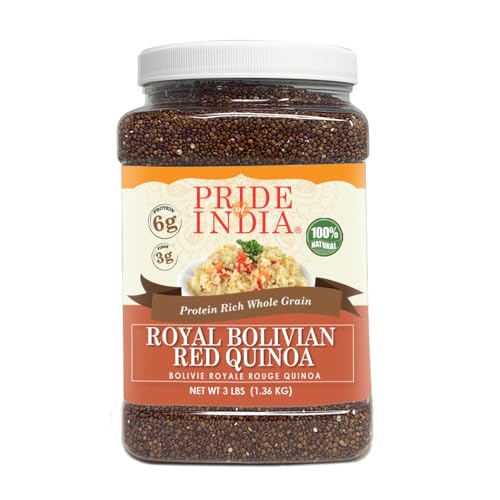
| Flavorful Superfood | Diet / Suitability: Vegan, Vegetarian, Gluten-free | Protein / Amino profile: Rich source of protein | Fiber & Micronutrients: Good source of fiber and iron | VIEW LATEST PRICE | Read Our Analysis |
| Bob’s Red Mill Organic White Quinoa (26 oz) |

| Trusted Classic | Diet / Suitability: Vegan, Gluten-free, Non‑GMO, Organic | Protein / Amino profile: Complete plant protein | Fiber & Micronutrients: Good source of fiber and iron | VIEW LATEST PRICE | Read Our Analysis |
| Food to Live Organic Red Quinoa (5 lb) |

| Bulk Protein Power | Diet / Suitability: Vegan, Kosher, Non‑GMO | Protein / Amino profile: Higher protein; complete amino-acid profile | Fiber & Micronutrients: Very good source of dietary fiber; manganese, magnesium, iron, copper, phosphorus | VIEW LATEST PRICE | Read Our Analysis |
| BetterBody Foods Organic Quinoa (3 lb) |

| Versatile Tricolor | Diet / Suitability: Vegan, Vegetarian, Gluten-free, Non‑GMO, Organic | Protein / Amino profile: Contains all nine essential amino acids (6 g protein/serving) | Fiber & Micronutrients: 3 g fiber/serving; nutrient-dense (minerals implied) | VIEW LATEST PRICE | Read Our Analysis |
| McCabe Organic Multicolor Quinoa (2 lb Pack of 2) |

| Gourmet Blend | Diet / Suitability: Vegan, Gluten-free, USDA Organic, Non‑GMO | Protein / Amino profile: Plant-based protein (whole grain) | Fiber & Micronutrients: Rich in fiber, magnesium, potassium, iron, folic acid | VIEW LATEST PRICE | Read Our Analysis |
More Details on Our Top Picks
Pride of India Royal Red Bolivian Quinoa (3 lb)
Should you want a hearty, nutrient-packed quinoa that fits plant-based, gluten-free, and active lifestyles, Honor of India Royal Red Bolivian Quinoa is a great pick. You’ll find rich protein, fiber, and iron that support energy, immunity, and muscle maintenance. It cooks fluffy with a nutty taste, so you can swap it for rice in salads, bowls, and baking. Grown high in the Andes, it’s cultivated with sustainable care, helping communities and the environment. Because it has a lower glycemic index, you can use it to steady blood sugar and add dependable nutrition to daily meals.
- Diet / Suitability:Vegan, Vegetarian, Gluten-free
- Protein / Amino profile:Rich source of protein
- Fiber & Micronutrients:Good source of fiber and iron
- Culinary Uses / Versatility:Salads, main dishes, baking, breakfast/lunch/dinner
- Preparation / Cooking:Cooks like rice; fluffy texture (implies standard rinse/cook)
- Certification / Sourcing Claims:Grown at high altitude in the Andes; sustainable farming practices
- Additional Feature:Grown at 12,000 ft
- Additional Feature:Royal red variety
- Additional Feature:Sustainable farming focus
Bob’s Red Mill Organic White Quinoa (26 oz)
Whenever you want a reliable, everyday quinoa that’s ready for weeknight dinners and meal prep, Bob’s Red Mill Organic White Quinoa fits the bill. You’ll appreciate its organic, vegan, gluten free, and non GMO profile. It’s rinsed and air dried to remove bitter saponins while keeping whole grain integrity and a light nutty flavor. That makes it a complete plant protein, with fiber and iron to enhance meals. Use it instead of rice or couscous in pilafs, salads, soups, stir fries, or in baked goods and veggie burgers. It’s easy, versatile, and respectful of quinoa’s ancient heritage.
- Diet / Suitability:Vegan, Gluten-free, Non‑GMO, Organic
- Protein / Amino profile:Complete plant protein
- Fiber & Micronutrients:Good source of fiber and iron
- Culinary Uses / Versatility:Pilafs, salads, soups, stir-fries, baked goods
- Preparation / Cooking:Rinsed and air-dried to remove saponins (preserves whole grain)
- Certification / Sourcing Claims:Organic, Non‑GMO, Whole Grain (heritage/Ancient grain)
- Additional Feature:Rinsed and air-dried
- Additional Feature:Non-GMO certified
- Additional Feature:Pack size 26 oz
Food to Live Organic Red Quinoa (5 lb)
In case you want a filling, protein-packed pantry staple that cooks fast and plays well with lots of recipes, Food to Live Organic Red Quinoa (5 lb) is a smart pick for busy cooks and plant-based eaters alike. You’ll appreciate its complete protein profile and higher protein than most grains, so meals feel satisfying and supportive of repair and growth. It’s quick-cooking and bulk-packed, so you can swap it for rice or pasta in salads, bowls, and sides without fuss. You’ll also get fiber plus manganese, magnesium, iron, copper, and phosphorus for steady nutrition. It’s Non-GMO, kosher, and vegan.
- Diet / Suitability:Vegan, Kosher, Non‑GMO
- Protein / Amino profile:Higher protein; complete amino-acid profile
- Fiber & Micronutrients:Very good source of dietary fiber; manganese, magnesium, iron, copper, phosphorus
- Culinary Uses / Versatility:Replacement for rice/pasta; salads, side dishes, bowls
- Preparation / Cooking:Quick-cooking (convenient meal prep)
- Certification / Sourcing Claims:Organic, Non‑GMO, Kosher; marketed as Sirtfood
- Additional Feature:Quick-cooking grain
- Additional Feature:Marketed as Sirtfood
- Additional Feature:Bulk 5 lb pack
BetterBody Foods Organic Quinoa (3 lb)
Should you want a pantry staple that supports clean eating and feeds a family without fuss, BetterBody Foods Organic Tricolor Quinoa is a smart pick. You’ll find USDA organic, gluten-free, non-GMO, and kosher credentials that make it easy to trust. Cooked quinoa gives 6 g protein and all nine essential amino acids, plus 3 g fiber to keep you full. You can swap it for rice, stir it into soups, build grain bowls, or stuff vegetables. Rinse initially, then simmer one cup quinoa with two cups water for 15 to 20 minutes. It fits vegan and many restricted diets, and it tastes lightly nutty.
- Diet / Suitability:Vegan, Vegetarian, Gluten-free, Non‑GMO, Organic
- Protein / Amino profile:Contains all nine essential amino acids (6 g protein/serving)
- Fiber & Micronutrients:3 g fiber/serving; nutrient-dense (minerals implied)
- Culinary Uses / Versatility:Rice replacement; grain bowls, salads, porridge, baking
- Preparation / Cooking:Rinse before cooking; stovetop ratio and cook time provided
- Certification / Sourcing Claims:USDA Organic, Non‑GMO, Kosher
- Additional Feature:Tricolor blend
- Additional Feature:170 calories/serving
- Additional Feature:Instant Pot compatible
McCabe Organic Multicolor Quinoa (2 lb Pack of 2)
Choose McCabe Organic Multicolor Quinoa provided you want a reliable pantry staple that brings color, nutrition, and easy cooking to your meals. You’ll notice a lively blend of red, white, and black quinoa that brightens salads and bowls. It’s USDA Organic, CCOF certified, Non GMO Project Verified, and gluten free, so you can cook with confidence. Rinse to remove saponins, then use one cup quinoa to two cups water, simmer 15 to 20 minutes and fluff. You get fiber, magnesium, iron, and plant protein with low fat and sodium. It’s packed in the USA and sourced from Southern California.
- Diet / Suitability:Vegan, Gluten-free, USDA Organic, Non‑GMO
- Protein / Amino profile:Plant-based protein (whole grain)
- Fiber & Micronutrients:Rich in fiber, magnesium, potassium, iron, folic acid
- Culinary Uses / Versatility:Salads, soups, baking, side dishes, grain bowls
- Preparation / Cooking:Rinse before cooking; standard 1:2 ratio, simmer 15–20 minutes
- Certification / Sourcing Claims:USDA Organic, CCOF certified, Non‑GMO Project Verified, certified gluten-free
- Additional Feature:CCOF certified organic
- Additional Feature:Packed in USA
- Additional Feature:Multicolor blend (red/white/black)
Factors to Consider When Choosing Dried Quinoas
As you pick dried quinoa, consider its nutrition and protein profile so it fits your health goals and meals. Also check cooking time and texture alongside flavor and culinary uses so you know how it will perform in salads, bowls, or side dishes. Don’t forget dietary certifications and labels like organic or gluten free since they affect trust and suitability for your family.
Nutritional Composition
Because your body needs steady fuel and essential nutrients, looking at quinoa’s nutritional makeup helps you pick the best dried options for everyday meals. You’ll get 6 to 8 grams of protein per cooked half cup, which supports energy and keeps meals satisfying. You’ll also gain 2.5 to 5 grams of fiber per half cup, so digestion and fullness improve. Minerals like iron, magnesium, manganese, phosphorus, and copper show up in useful amounts, helping bones, energy, and recovery. Quinoa’s lower glycemic impact and balanced carbs mean it won’t spike your blood sugar like some grains. Keep in mind to rinse labeled grains well, because natural saponins on the outer coating can be bitter and affect taste or digestion should they not be removed.
Protein And Amino Profile
Provided you care about getting solid plant protein without fuss, quinoa has your back with a complete amino-acid profile that most grains don’t match. You’ll get all nine essential amino acids, and quinoa stands out with higher lysine and arginine than many grains. That matters whenever you’re building meals for strength or everyday energy. A half cup cooked gives about 4 to 6 grams of protein, so it beats white rice and many wheat options. Protein scores like PDCAAS and DIAAS show quinoa digests well and supplies balanced essentials. It’s wise to combine quinoa with seeds or nuts because it’s a bit lower in methionine and cysteine. For vegans and vegetarians, that simple mix helps meet protein needs and support muscle.
Cooking Time And Texture
Should you want quinoa that cooks quickly and still tastes great, you’ll want to contemplate variety, processing, and how you plan to cook it. White quinoa usually cooks in 12 to 15 minutes, while red needs 15 to 18 minutes, and tricolor blends often take longer. In case you rinse the grain initially, it absorbs water and becomes fluffy faster; un-rinsed quinoa can stay slightly bitter and could require a minute or two more to cook evenly. Quick cooking or pre-steamed versions can be ready in 5 to 8 minutes, while whole kernels take 15 to 20 minutes. Use a 1 to 2 quinoa to water ratio for separate grains. More water or longer simmering gives a softer, porridge style texture. Higher altitude slows cooking, and pressure cookers speed it up.
Dietary Certifications And Labels
Whenever you pick dried quinoa, check the labels so you know what you’re buying and feel confident about how it was grown and processed. Look for organic certification like USDA Organic whenever you want quinoa grown without synthetic pesticides or GMOs and farmed to set soil standards. Should you or someone in your home have celiac disease, choose gluten free labeling that meets limits under about 20 ppm. Non GMO or Non GMO Project Verified tells you the seeds were not altered, based on supplier checks. Kosher and vegan or vegetarian marks show processing and ingredients meet religious rules or exclude animal products. Prefer third party seals so an independent group verifies claims and you can trust the package beyond marketing.
Flavor And Culinary Uses
Now that you know what labels mean, let’s talk about how quinoa actually tastes and how you’ll want to use it in the kitchen. White quinoa is mild and slightly nutty with a fluffy, rice like texture, so you’ll reach for it in pilafs, porridge, and light salads. Red and black quinoa keep a firmer bite and earthier notes, so they hold up in cold salads, grain bowls, and reheated dishes. Tri color blends mix those textures and flavors, adding visual contrast and a richer mouthfeel in soups and mixed grain dishes. Toasting quinoa initially wakes up its nutty aroma and deepens flavor for savory recipes and baked goods. Because quinoa soaks up dressings and broths, pair it with lemon, vinegar, bold spices, or concentrated sauces to avoid blandness.
Sourcing And Sustainability
Provided you care about the story behind your quinoa, start out checking the labels and the brand’s supply details so you know who grew it and how. Look for USDA Organic, Fair Trade, or other third party sustainability marks to verify low impact farming and fair labor. Then notice where it was grown. High altitude rain fed systems usually use less water and fewer chemicals than irrigated monocultures. Also prefer producers who report crop rotation and soil conservation and avoid heavy synthetic fertilizer use to protect soil long term. At the same time pick suppliers that disclose traceability, harvest region, and cooperatives to see community benefits. Finally weigh packaging and transport choices like bulk bags, local hubs, or carbon offset info to lower the footprint.
