

A crowded bathroom sink can make choosing an electric toothbrush surprisingly difficult. You may be replacing a worn manual brush, adding a charging base, or looking for features that make a two-minute routine easier to follow. The right fit depends on pressure guidance, brushing modes, travel needs, brush-head supply, and how much room you have for the charging setup.
The eight options below range from mode-rich models with app support to simpler rechargeable brushes. Several prioritize sensitive gums and pressure feedback, while others focus on included accessories and convenient daily use.
The Choices Worth Comparing
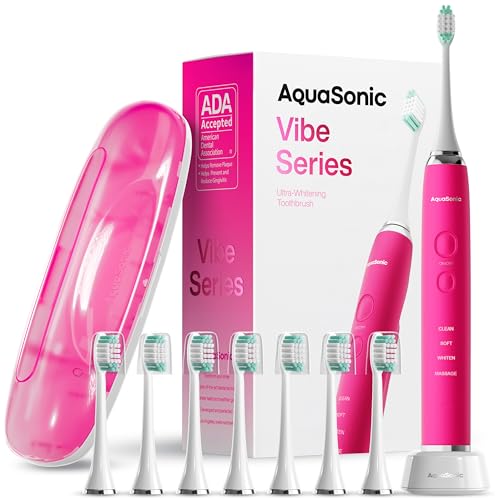
Aquasonic Vibe Series Ultra-Whitening Toothbrush, 8 Heads, Electric Pink

Philips Sonicare 7300 Rechargeable Electric Toothbrush, Black

Philips Sonicare 5950 Rechargeable Electric Toothbrush, Black

JTF Electric Toothbrush for Adults, 5 Modes

Phillips Sonicare ProtectiveClean Electric Toothbrush, White/Grey
Aquasonic Black Series Ultra-Whitening Toothbrush, 8 Heads

Aquasonic Vibe Neutrals Electric Toothbrush, Matcha

Philips Sonicare DiamondClean 9500 Toothbrush, 3 Heads, White
Why These Options Stand Out
The Aquasonic Vibe Series sets a useful baseline for this list, combining eight replacement heads, four brushing modes, and a charging case in a slim electric-pink handle. Its 40,000-vibrations-per-minute motor targets a brisk everyday clean, while the IPX7 waterproof body suits a humid bathroom and a quick trip away from home.
For a household that keeps toothbrushes in a shared drawer, the eight-head supply is the standout detail. Each head is described as lasting about three months, so you can rotate them without placing a constant reorder on the household list. The included hard-shell case also provides space for two heads, which makes packing less fiddly.
Where It Helps
- Eight DuPont brush heads reduce the need for frequent replacement shopping.
- Four modes cover everyday cleaning, polishing, whitening, and gum-focused routines.
- Wireless charging removes the need to align a cable with a charging port.
- A vibration timer helps mark brushing intervals and the full two-minute session.
- The waterproof case and four-week stated battery life suit frequent travel.
Minor Gripes
- The eight heads and hard case require enough drawer and luggage space to stay organized.
At A Glance
Who It Suits Best
You benefit most from this model in a shared home or on a budget-conscious plan to maintain replacement heads without buying them separately.
Where Another Pick Suits Better
The Philips Sonicare 7300 suits adults who need more detailed pressure guidance and intensity control than this model provides.
Compared with the Aquasonic Vibe Series, the Philips Sonicare 7300 places more emphasis on coaching and pressure awareness. The A3 Premium All-in-One head uses longer, angled bristles with triangular tips, while the handle offers four modes and three intensity levels for adjustments to your daily routine.
That combination works well for an adult who tends to brush too firmly or misses sections of the mouth. A pressure-sensor ring signals when you are pressing hard, and the app adds guidance, timing prompts, and head-replacement reminders. The stated 21-day battery life and charging travel case also make this a practical choice for business trips.
A Favorable Mix
- The illuminated pressure ring provides clear feedback without replacing the handle.
- Four modes and three intensity levels suit different comfort preferences.
- BrushPacer divides the session into 20-second sections to encourage even coverage.
- App-based coaching helps establish a consistent two-minute habit.
- The charging travel case keeps the brush and heads together on longer trips.
Practical Considerations
- The power adapter is not included, so your outlet kit needs to accommodate the charging stand.
- App-based guidance may feel unnecessary for adults who already have a reliable routine.
- Three replacement heads are included, fewer than the Aquasonic Vibe Series supply.
Feature Snapshot
Made For
This toothbrush fits adults who want a gentle routine, visual pressure guidance, and structured coaching during each session.
Consider Something Else When
The Aquasonic Vibe Series is a better fit when a large supply of replacement heads matters more than app guidance.
The Philips Sonicare 5950 narrows the focus to two practical ideas: fluid-assisted cleaning and pressure feedback. Sonicare Fluid Action uses the brush’s movement to direct fluid between teeth and toward the gumline, an approach designed to reach spaces that can be easy to miss with a manual brush.
Its pressure sensor provides haptic feedback, meaning you feel a gentle pulse when you press too firmly. That makes the 5950 appealing to adults moving away from manual brushing, particularly anyone who has noticed sore gums after vigorous brushing. It is less elaborate than the Sonicare 7300, but the core routine stays pleasantly direct.
Well-Handled Touches
- Fluid Action adds water movement to the brush’s cleaning motion.
- Tactile pressure feedback helps you reduce force without watching a screen.
- Two brush heads support a shared bathroom or planned replacement.
A Few Limitations
- The two-head supply is smaller than the eight-head bundles offered by the Aquasonic models.
- The 5950 offers less visible routine guidance than the app-equipped Sonicare 7300.
Right Fit For
This model suits an adult who wants sonic-style cleaning and pressure feedback without a large collection of modes or screens.
Look Elsewhere When
The Philips Sonicare 7300 fits you better when detailed coaching, three intensity levels, and a charging travel case take priority.
The JTF Electric Toothbrush for Adults centers on choice, with five modes and a smart timer wrapped around a 40,000-bristle-movements-per-minute cleaning system. That high movement rate resembles the Aquasonic models more closely than the 62,000 figure used by the Philips Sonicare 7300 and DiamondClean 9500.
For you, the useful part is not the raw speed alone but how easily you can adapt the routine. Multiple modes let you move between a standard clean and different cleaning preferences, while the timer supports a consistent two-minute session. The compact feature set keeps the decision straightforward, particularly in a busy shared bathroom.
Notable Upsides
- Five modes provide more routine variety than a single-setting design.
- The smart timer helps structure a consistent two-minute session.
- A 40,000-movement motor supports efficient everyday cleaning.
- Multiple modes let you keep a preferred cleaning option separate from occasional variations.
Factors To Consider
- Five modes can feel excessive if you prefer one predictable cleaning pattern.
Quick Facts
Best Suited To
This brush suits adults who enjoy switching modes and want a high-speed motor without a large app-based routine.
Another Choice May Suit
The Aquasonic Vibe Series suits you better when a charging case, eight replacement heads, and a four-week stated battery life are central to the purchase.
The ProtectiveClean model puts charging convenience ahead of app-based coaching. Its stated four-day battery life gives you a useful buffer between charging sessions, which matters during a business trip or a week away from your bathroom outlet.
The included plaque-control brush head and three intensity settings support a gentler adjustment process. The manufacturer also presents comparisons showing stronger plaque and gumline results than manual brushing. Compared with the Sonicare 7300, this is the more traditional rechargeable setup, with fewer visible coaching features but less added complexity.
A Few Highlights
- Three intensity settings help you find a comfortable brushing force.
- The four-day battery reduces charging interruptions during travel.
- Two plaque-control brush heads support regular replacement.
- The white and grey finish fits a light, understated bathroom setup.
Less Ideal Details
- The included charger supports 110–220V, so you should consider the voltage used at your destination.
- No charging travel case is listed, so you need a separate way to protect the brush while packing.
Who Will Love This
This model fits frequent travelers and adults who want adjustable power with a long stated battery life between charges.
Reach For A Different Pick When
The Philips Sonicare 7300 suits you better when a pressure ring, app coaching, and a dedicated charging travel case matter more than a four-day battery.
The Aquasonic Black Series shares much of the Vibe Series foundation, including a 40,000-vibrations-per-minute motor, four operating modes, a vibration timer, wireless charging, and eight replacement heads. The defining difference is visual: the dark finish suits a black, charcoal, or metallic bathroom better than the brighter electric-pink Vibe model.
You still receive a broad accessory package, including a travel case and brush-head caps. That makes the Black Series a sensible coordinated choice when you want a more understated countertop look without giving up the large replacement supply. It also carries ADA acceptance in the same broad plaque-removal and gingivitis-reduction category.
Strengths Worth Knowing
- Eight replacement heads make it easy to keep spares available.
- Four modes support standard, whitening, and gum-care preferences.
- Wireless charging gives the handle a cleaner visual profile.
- The travel case helps separate the brush and spare heads.
Possible Compromises
- The long brush-head supply takes more space than the two-head Sonicare 5950 bundle.
- Its feature set is close to the Vibe Series, so the finish may be the main reason to choose this version.
Technical Highlights
Built With In Mind
This toothbrush suits adults who prefer a dark, coordinated bathroom style and want several replacement heads included.
Swap It Out When
The Aquasonic Vibe Series fits you better when a brighter finish and pink color suit your bathroom better.
The Matcha version places color at the center of the decision, softening the technical look of the Vibe Series with a muted neutral finish. The underlying toothbrush still carries a 40,000-vibrations-per-minute motor, four brushing modes, a smart vibration timer, wireless charging, and eight brush heads.
That combination works well when you want a practical electric brush without the visual weight of black or the brightness of pink. The long replacement supply suits shared bathrooms, while the mode selection gives you room to adjust the routine. For a bathroom where the toothbrush stays visible, the finish can be just as important as the motor.
What Works In Its Favor
- The Matcha finish suits calm, neutral bathroom color schemes.
- Four modes provide flexibility without an app-dependent setup.
- Eight brush heads reduce frequent replacement shopping.
- Wireless charging keeps the daily charging process simple.
Where It May Fall Short
- The understated color may be harder to spot in a busy shared bathroom.
- The Vibe Series Electric Pink includes a clearly defined travel case, giving you a more complete travel bundle.
The Right Fit
This model suits adults who want a neutral-toned toothbrush and a generous head supply for a shared home.
Where A Sibling Pick Shines
The Aquasonic Vibe Series Electric Pink suits you better when brighter color, a dedicated travel case, and a four-week stated battery life are priorities.
The Philips Sonicare DiamondClean 9500 shares the 7300’s A3 Premium All-in-One brush head and 62,000-bristle-movements-per-minute motor. Its emphasis shifts toward a polished brushing experience, with multi-angle bristles and Fluid Action designed to move water around teeth and along the gumline.
That makes it a refined fit for adults who care closely about technique and want a white handle to match a modern bathroom. The manufacturer lists substantial plaque, gum, and stain-removal comparisons for this model, but the practical attraction for you is the combination of angled bristles, high movement rate, and a premium head design.
Where It Excels
- The A3 head reaches around teeth with its multi-angle bristle layout.
- Fluid Action supports cleaning between teeth and along the gumline.
- A 62,000-movement motor provides high-frequency daily brushing.
- Three included heads give a shared bathroom useful rotation options.
- The white finish creates a clean, coordinated countertop appearance.
Small Caveats
- Its three-head supply is smaller than the Aquasonic bundles.
- Advanced brush-head design may be difficult to distinguish from simpler models without considering the angled bristles and fluid-assisted cleaning.
Key Product Details
Whose Shelf It Belongs On
This model belongs on the counter of an adult who values an angled premium brush head, fluid-assisted cleaning, and a coordinated white design.
A Better Fit Elsewhere
The Philips Sonicare 7300 suits you better when app-based coaching and a visible pressure ring are more useful than the DiamondClean styling.
What Matters Before You Make the Switch
Pressure Feedback for Tighter Gums
Pressure sensors show or signal when your brushing force is excessive. That feedback can be useful for adults who tend to scrub hard, although sensitivity or persistent gum discomfort also warrants advice from a dentist.
Modes Versus Simplicity
A mode changes the brushing pattern or intensity to suit a particular preference. More modes add flexibility, while fewer controls can make a routine easier to maintain.
Heads, Charging, and Counter Space
Brush heads need regular replacement, and the included count affects your restocking schedule. Charging cases and stands also take room, so measure your available counter and outlet space before choosing a complete set.
Travel Requirements
Battery life matters more when you travel regularly. A stated 21-day battery gives you more freedom between charges than a four-day model, while a matching travel case keeps the brush protected and organized.
What Separates Premium From Basic
The Useful Upgrade
Advanced models tend to add more than stronger vibration speeds. Pressure guidance, timed section prompts, replacement reminders, and multiple intensity levels can make technique easier to maintain, but a simpler brush may suit a routine you already perform consistently.
Where The Extra Money Goes
Premium pricing often reflects brush-head engineering, app support, polished materials, and bundled accessories. Those features matter most when you value coaching, a coordinated design, or a generous replacement supply enough to justify the additional expense.
Frequently Asked Questions
Are Electric Toothbrushes Better Than Manual Toothbrushes?
Electric toothbrushes can make timed brushing and controlled movement easier for many adults. Technique still matters, so use a light touch and follow the guidance of your dental professional.
How Often Should You Replace an Electric Toothbrush Head?
Replace the head regularly, commonly around every three months, or sooner when the bristles become frayed. The Aquasonic models include heads described as lasting about three months each.
What Does a Pressure Sensor Do?
A pressure sensor signals when you are pressing too hard, often through a light, sound, or vibration. Slowing down helps you reduce unnecessary force against your teeth and gums.
Do I Need an Electric Toothbrush With Many Modes?
You do not need many modes for an effective routine. One comfortable setting may be enough, while several modes benefit people who want separate options for gum care, polishing, or sensitivity.
Which Option Is Best for Travel?
The Philips Sonicare 7300 stands out for its stated 21-day battery and included charging travel case. The ProtectiveClean also offers strong travel value through its four-day battery, though its listed accessories are less complete.
Closing Thoughts
The Philips Sonicare 7300 offers the most complete guidance system, while the Aquasonic models provide larger brush-head supplies and distinct finishes. Your best fit depends on whether you value coaching, accessories, battery life, or countertop style more in your daily routine. Choose the features you will actually use, and keep the brushing force gentle.
