

A teenager brushing before school needs a toothbrush that makes good technique easier without adding clutter to the bathroom counter. The right model also fits family schedules, school bags, braces routines, and the likelihood that a teenager will keep using it without reminders.
The Choices Worth Comparing
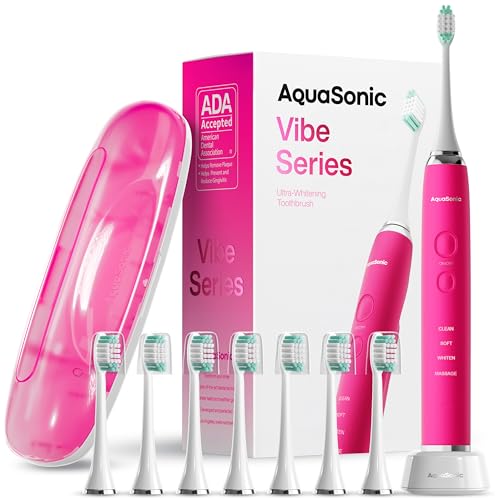
Aquasonic Vibe Series Electric Toothbrush, 8 Heads, Travel Case, Pink, 4 Modes

Philips Sonicare 7300, Black

Philips Sonicare 5950, Black

Philips Sonicare 4100, Deep Pink

AURAGLOW Electric Toothbrush, 40,000 VPM, 5 Modes, Travel Case

Aquasonic Black Series Electric Toothbrush, 8 Heads, Travel Case, 4 Modes

H2ofloss Electric Toothbrush and Water Flosser

Philips DiamondClean 9500, White
What Each Pick Brings To The Table
A pink handle and slim shape can make an electric toothbrush feel less like dental equipment to a teenager. The Aquasonic Vibe Series adds a useful accessory bundle, so it suits someone who moves between school, sports practice, and family travel without wanting to pack a separate charger.
Its 40,000 vibrations per minute give it visible power on paper, while four modes let users vary their routine. Compared with the Philips Sonicare 7300, this model emphasizes included accessories rather than app-guided coaching, which may matter more in a busy household.
The Upside
- Eight replacement heads cover a long stretch of regular use.
- The hard travel case offers a protected place for the handle and spare heads.
- Four operating modes support different cleaning preferences.
- Wireless charging removes the need to connect a charging cable.
- The IPX7-rated body is suited to humid bathroom use.
Things To Consider
- Four modes may be unnecessary for a teenager who benefits from one consistent routine.
- The included case adds another item to pack and store.
Key Specs
Who Will Love This
Busy teens who value colorful design, spare accessories, and less frequent charging will find this model especially appealing.
Another Choice May Suit
Teens who respond better to app prompts and visual pacing should consider the Philips Sonicare 7300 instead.
The Philips Sonicare 7300 gives a teenager several ways to understand the brushing session. A pressure ring, 20-second pacing prompts, a two-minute timer, and app-based coaching make this a strong fit for someone still learning how long and how firmly to brush.
It has more guidance than the Aquasonic Vibe Series, although fewer replacement heads in the box. That distinction favors a teen who values feedback over a large collection of spare parts.
The Good Stuff
- The pressure ring gives a visible signal to ease off.
- BrushPacer divides the session into manageable intervals.
- Four modes and three intensity levels offer broad control.
- The app supplies personalized guidance for routine building.
- The charging travel case simplifies vacations and school trips.
Minor Gripes
- The charging stand requires a separate power adapter, which is not included.
- App setup adds another step for users who prefer a simple routine.
The Right Fit
This model suits teens who respond well to visible cues, guided pacing, and personalized brushing feedback.
Look Elsewhere When
A teenager who travels lightly and values the largest head supply may favor the Aquasonic Vibe Series.
The Philips Sonicare 5950 keeps the focus on two habits that matter during a hurried morning: cleaning between teeth and controlling pressure. Sonicare Fluid Action moves fluid around the tooth surfaces, while the pressure sensor provides a gentle physical cue when the handle is pushed too firmly.
Compared with the more elaborate Philips Sonicare 7300, this model appears easier to adopt. A first-time electric brush user may appreciate the direct haptic feedback, though the two-head set calls for earlier replacement planning.
Positive Takeaways
- Haptic pressure feedback works without checking the handle.
- Fluid movement supports cleaning in tight spaces.
- The straightforward setup suits a new electric toothbrush.
Practical Considerations
- Only two brush heads are included.
- Teens wanting timed pacing or app guidance need a more advanced model.
Feature Snapshot
Made For
Beginning electric brush users and teens who prefer simple physical cues benefit most from this model.
Reach For A Different Pick When
Families that prioritize app coaching and detailed timing guidance should consider the Philips Sonicare 7300.
Deep pink makes the Philips Sonicare 4100 easier to spot in a crowded bathroom or shared sink. Its two intensity settings, pressure sensor, and brushing-time prompts cover the core needs of a teen establishing a regular routine, without requiring a phone-based coaching system.
The claimed plaque-removal figure makes a direct comparison with manual brushing, but the more useful daily distinction is its battery indicator and replacement reminder. Unlike the Philips Sonicare 5950, the 4100 adds more visible routine guidance while keeping the setup approachable.
Practical Advantages
- Two intensity levels accommodate different brushing preferences.
- The pressure sensor helps maintain a controlled touch.
- QuadPacer divides the session into equal time sections.
- A battery light makes charging status easy to check.
- The replacement reminder reduces the chance of an overdue head change.
Small Caveats
- Two intensity settings offer less adjustment than the Philips Sonicare 7300.
- The deep pink finish may not suit a bathroom with neutral décor.
Built With In Mind
This toothbrush suits teens who need basic timing, pressure, and replacement reminders without a complex app routine.
A Better Fit Elsewhere
Teens who want more intensity choices and app-based coaching are better served by the Philips Sonicare 7300.
The AURAGLOW offers more mode choices than the Aquasonic models in this group: Clean, Soft, Strong, White, and Polish. That range can help a teenager match the toothbrush to a changing routine, although the Soft setting is the more conservative starting point for a light touch.
Its 40,000-vibration motor matches the Aquasonic Vibe Series, while the 30-day battery claim and IPX7 rating strengthen the travel proposition. The included travel case and two heads make it a practical choice for a teen who alternates between home, school, and trips.
The Case For It
- Five modes provide more choices than most models here.
- The travel case supports use away from home.
- A long stated battery interval reduces charging interruptions.
- IPX7 construction suits a wet bathroom environment.
- Two included heads allow a spare to remain available.
Possible Compromises
- Its adult positioning may not feel as natural to a younger teen.
- Two heads are fewer than the Aquasonic bundles provide.
Technical Highlights
Who Should Grab It
Teens who enjoy changing settings and want extended battery life between charges suit this model well.
Swap It Out When
A household wanting a larger replacement-head supply may prefer the Aquasonic Vibe Series.
The Aquasonic Black Series combines a restrained black handle with a generous supply of replacement parts. Eight brush heads and a hard travel case make it a sensible choice for a teen who travels often or shares a bathroom with several toothbrush users.
Its 40,000-vibration motor and four operating modes closely match the Aquasonic Vibe Series. The main distinction is presentation: the black finish looks more understated, while the Vibe Series adds the brighter pink color that may suit a teenager who wants the appliance to feel personal.
Everyday Wins
- Eight heads reduce frequent replacement shopping.
- Wireless charging keeps the charging setup simple.
- The case protects the toothbrush during travel.
- Four modes support routine adjustments.
- The black handle suits a more understated bathroom.
Details To Watch
- The large accessory bundle requires storage space.
- The brush heads are listed for roughly three months of use each.
Travel Ready
This model suits frequent travelers, students with busy schedules, and families managing several brush users.
Where A Sibling Pick Shines
A teenager who prefers a colorful handle should consider the Aquasonic Vibe Series instead.
Braces can make a teenager’s oral routine more complicated, with brackets and wires creating additional areas to clean. The H2ofloss combines a sonic toothbrush with a water flosser, giving the user two powered tools rather than asking a teenager to choose between brushing and water flossing.
Pulsed water pressure directs flow between teeth and along the gumline, while the toothbrush handles the tooth surfaces. Compared with the Philips DiamondClean 9500, this kit adds a second device and requires more counter space, so the added routine may be worthwhile mainly for teens whose dental circumstances justify it.
Everyday Advantages
- Brushing and water flossing tools are included together.
- Pulsed water targets spaces between teeth.
- Water flow can be directed along the gumline.
- The combined format suits a more involved oral-care routine.
Where It May Fall Short
- Two devices require more bathroom counter space.
- The water reservoir and flosser tip add regular upkeep.
Core Features
The Right Fit
Teens with braces or a dentist-recommended water-flosing routine gain the most from this combination.
Another Choice May Suit
Teens who mainly need guided brushing and prefer one device should consider the Philips Sonicare 7300.
The Philips DiamondClean 9500 is built for a teenager who wants a detailed routine from a single toothbrush. Its A3 Premium All-in-One head uses multi-angle bristles, while 62,000 bristle movements per minute create a high-frequency brushing action.
The manufacturer also reports up to 2,000% more plaque removal and up to 1,000% more stain removal compared with a manual brush. Those figures require context, but the multi-angle head and fluid action still make this a logical choice for someone willing to follow a more involved routine, unlike the simpler Philips Sonicare 5950.
What Stands Out
- Multi-angle bristles support coverage from several directions.
- Fluid action reaches around tooth surfaces.
- The brush head focuses on plaque and surface stains.
- Three heads support continued use.
- The white finish gives the device a clean, understated appearance.
Less Ideal Details
- Three included heads are fewer than the Aquasonic bundles.
- Specialized replacement heads may suit dedicated users better than beginners.
Feature Overview
Whose Shelf It Belongs On
Dedicated teens who appreciate detailed guidance and a multi-angle brush head suit this model particularly well.
Skip It When
New electric brush users who prefer fewer settings and a simpler setup may find the Philips Sonicare 4100 easier to adopt.
What Matters Before A Teen Makes The Switch
Pressure guidance can decide whether an electric toothbrush becomes helpful or frustrating. A pressure sensor may provide a visual ring, vibration, or both, and a teen who brushes too hard may benefit more from that cue than from additional performance modes. Look for a model with feedback that is easy to notice.
Modes And Coaching
Modes add flexibility, but too many can make the routine harder to understand. The Philips Sonicare 7300 combines four modes with app guidance, while the AURAGLOW offers five modes for users who like switching settings. The Philips Sonicare 4100 keeps things simpler with two intensity levels, timer prompts, and replacement reminders.
Battery, Heads, And Space
Battery claims range from about two weeks for the Philips Sonicare 4100 to four weeks for the Aquasonic Vibe Series, 21 days for the Philips Sonicare 7300, and 30 days for the AURAGLOW. Actual use varies with brushing time and frequency. Brush-head quantity, charger design, travel case, and water-flosser counter space also deserve consideration because they affect long-term convenience.
Avoiding Costly Electric Toothbrush Mistakes
Wrong Turns To Avoid
Choosing by vibration count alone can hide the features a teenager will actually use. Pressure feedback, timed prompts, comfortable handle shape, and a routine that fits the bathroom are more useful day to day. Check the charger arrangement and included accessories before deciding that a model fits.
What The Higher Tier Buys
Premium models often add finer pressure feedback, app-based coaching, specialized brush heads, or more detailed timing cues. Those additions suit a teen who wants structured guidance and will use it. For a casual user or beginner, a simpler pressure sensor, two-minute timer, and comfortable brush may provide more practical value.
Frequently Asked Questions
Which electric toothbrush is easiest for a teenager to begin using?
The Philips Sonicare 5950 is straightforward for beginners because it provides direct pressure feedback without requiring an app. The Philips Sonicare 4100 adds timed prompts and a replacement reminder for teens who appreciate more routine guidance.
How long do these electric toothbrush batteries last?
Stated battery life ranges from about two weeks for the Philips Sonicare 4100 to 30 days for the AURAGLOW. Brushing time, mode, and frequency affect the interval, so charging before a long trip is sensible.
Is a pressure sensor useful for teenagers?
A pressure sensor can help a teen notice when brushing has become too forceful. Its usefulness depends on the feedback being noticeable, so a light ring, vibration, or both may make a stronger impression than the sensor’s presence alone.
How many replacement brush heads are included?
The Aquasonic Vibe Series and Black Series each include eight heads, while most Philips Sonicare models in this group include two or three. Head quantity affects replacement planning, but the correct head and a consistent replacement schedule matter more for daily brushing.
Should a teenager with braces use an electric toothbrush?
An electric toothbrush can support a careful routine around braces, and a water flosser may add another cleaning method. Follow the orthodontist’s recommendations for tools, pressure, and cleaning technique.
Final Verdict
The Philips Sonicare 7300 offers the strongest combination of guidance, pressure feedback, and app support for a teenager building consistent habits. The Aquasonic Vibe Series stands out for accessories and travel readiness, while the AURAGLOW gives more mode choices, and the H2ofloss suits an involved two-device routine.
Choose the model that feels comfortable in the hand, fits the available space, and makes the daily routine easier to remember. The best electric toothbrush is often the one a teenager will willingly use every morning and night.
