

Pressing too hard can make brushing feel harsh, especially when your gums already feel tender. A pressure sensor gives you a prompt to ease up, while cleaning modes, brush-head design, and timer features help you build a more consistent routine. These eight options cover everything from simple daily brushing to app-supported guidance and travel-ready setups.
A Closer Look At The Lineup

Philips Sonicare 7300 Toothbrush

Philips Sonicare 5950 Toothbrush

Philips Sonicare 6500 Toothbrush

Wagner Stern VibroWave Plus IPX7 Toothbrush

Oral-B iO5 Deep Clean & Whiten Electric Toothbrush
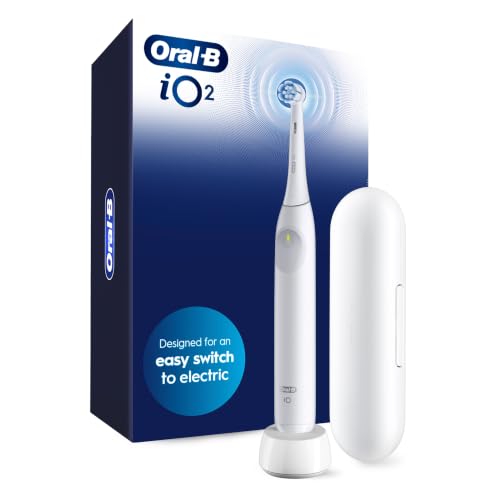
Oral-B iO Simple Clean Electric Toothbrush

Oral-B iO Series 3 Deep Clean Electric Toothbrush

Philips Sonicare DiamondClean 9500 Toothbrush
A Closer Look At Each Pick
The Philips Sonicare 7300 suits you when pressure control matters but you also want help building a consistent routine. Its illuminated base ring gives an easy visual cue to ease off, while the accompanying app adds guidance between sessions.
Compared with the more streamlined Sonicare 5950, this model offers four modes, three intensity levels, and a built-in BrushPacer that changes every 20 seconds. That makes it the richer fit for a household routine built around feedback and coaching.
Practical Advantages
- The visible pressure ring tells you when to reduce pressure without interrupting your brushing position.
- Clean, Sensitive, Gum Health, and White modes cover different routine priorities.
- BrushPacer divides the session into equal sections, which helps new electric-brush users pace themselves.
- Three A3 brush heads give you replacements without requiring another purchase immediately.
- The stated battery life reaches 21 days per charge, and a charging travel case supports trips.
Practical Considerations
- The power adapter is not included, so check the charging stand setup before moving it between rooms.
- Four modes and three intensity levels offer more adjustment than you may need for a simple routine.
Key Specs
Made For
You benefit most from this model when you want pressure guidance, app coaching, and several cleaning modes in one routine.
A Better Fit Elsewhere
The Philips Sonicare 5950 suits you better when you prefer haptic pressure feedback that you can notice without looking at the handle.
Your hand may move faster than your eyes during a hurried morning routine, which makes the Philips Sonicare 5950’s tactile pressure alert especially useful. A gentle vibration tells you to ease up without requiring you to watch a light.
Sonicare Fluid Action adds a water-assisted movement around the brush head, helping guide fluid between teeth and along the gumline. Compared with the app-heavy Sonicare 7300, this is the more focused choice for pressure feedback and straightforward powered cleaning.
Positive Takeaways
- Haptic feedback remains noticeable even when you keep your eyes on the mirror.
- Fluid Action supports cleaning between teeth and around the gumline.
- Two replacement heads provide a useful starting supply for regular changes.
Small Caveats
- The pressure cue communicates excess force, but you still need to adjust your hand position to correct it.
- Two included heads may require sooner replacement in a multi-person household.
Technical Sheet
Right Fit For
You benefit most from this model when you want pressure feedback you can sense while keeping your attention on the mirror.
Another Choice May Suit
The Philips Sonicare 7300 fits you better when you want app coaching, a visual pressure ring, and more cleaning modes.
The Philips Sonicare 6500 stands apart through its C3 two-in-one brush head, which combines a dense, stiff center with surrounding bristles. That design places more emphasis on plaque and surface-stain work than the longer, angled A3 head used by the Sonicare 7300.
A visible pressure sensor keeps excess force in view, while Sonicare Fluid Action supports the brush movement between teeth. This combination works well for you when daily cleaning and an appearance-focused finish matter more than app-based coaching.
Strengths Worth Knowing
- The rigid center of the C3 head targets plaque removal and visible surface staining.
- Fluid Action helps carry water around the bristles and along the gumline.
- The visual pressure indicator gives you a clear signal to reduce pressure.
- Two C3 brush heads cover your initial replacement needs.
Worth Noting
- The dense, stiff center may feel less gentle than the A3 design for people highly sensitive to bristle contact.
Who It Suits Best
You benefit most from this model when plaque removal and reducing the appearance of surface stains are central priorities.
Look Elsewhere When
The Philips Sonicare 7300 suits you better when a longer, angled brush head and app-guided pacing feel more useful.
The Wagner Stern VibroWave Plus takes a different route from the round brush-head systems used by most of this lineup. Its head oscillates through a 60-degree arc while vibrating at up to 66,000 movements per minute, giving you a more mechanically varied brushing sensation.
Four brush heads and an IPX7 water-resistance rating make it practical for a shared bathroom or regular rotation of replacement heads. Your fit check should center on whether you enjoy combined oscillation and vibration, since the Sonicare alternatives concentrate on fluid-assisted bristle movement.
Where It Delivers
- The 60-degree oscillation and high-frequency vibration provide two distinct cleaning motions.
- Four included brush heads offer the largest head supply in this group.
- IPX7 water resistance supports convenient rinsing after use.
Trade Offs
- The dual movement system can feel busier than a single powered brushing pattern.
- Users who prioritize clear pressure alerts may find the Sonicare 5950 more direct.
- The four-head supply does not make head compatibility with other brands any easier to manage.
Built With In Mind
You benefit most from this model when you want vigorous oscillation and vibration plus a generous supply of replacement heads.
Not Your Match When
The Philips Sonicare 5950 fits you better when tactile pressure feedback and fluid-assisted cleaning take priority over movement variety.
The Oral-B iO5 gives you more ways to tailor each session without turning the handle into a complicated control panel. Five cleaning modes cover daily cleaning, deep cleaning, whitening, sensitive brushing, and gum care, while the visual pressure sensor shows when your pressure rises too far.
Compared with the simpler iO Series 3, this model offers more mode choice and three replacement heads. The included travel case also makes it a sensible fit for people who brush at home, work, and away during the week.
The Practical Payoff
- Five modes let you change the routine without changing the entire brush.
- The illuminated pressure sensor gives clear feedback during the two-minute session.
- Deep Clean and Whiten modes add flexibility for appearance-focused brushing.
- Three brush heads provide a practical initial replacement supply.
- The travel case keeps the handle and heads together during business trips or vacations.
Points To Note
- Five modes can take time to learn, especially when several settings feel similar at first.
- The visual alert requires you to glance at the handle rather than rely on vibration alone.
Feature Snapshot
Who Should Grab It
You benefit most from this model when you want several brushing modes, visible pressure cues, and a travel setup in one package.
Where A Sibling Pick Shines
The Oral-B iO Limited Simple Clean fits you better when fewer modes and automatic speed adjustment suit a low-fuss routine.
You can ease into electric brushing with the Oral-B iO Simple Clean because it starts on its super-sensitive setting and uses a single-button layout. Its automatic pressure sensor can reduce the brushing speed when you press too firmly, removing the need to monitor a colored ring yourself.
This approach differs from the Philips Sonicare 5950, which gives a tactile alert but leaves the adjustment to you. Three modes and a travel case keep the model useful without adding the larger mode array found on the Oral-B iO5.
Everyday Wins
- Automatic speed adjustment responds to excess pressure without requiring a separate control action.
- The one-button layout and gentle starting setting reduce the learning curve.
Where It May Fall Short
- You receive fewer mode choices than with the Oral-B iO5.
- Automatic adjustment does not offer the same immediate tactile confirmation as a haptic alert.
- The included travel case supports trips, but you should still confirm room for a full-size charger in your bag.
Quick Facts
The Right Fit
You benefit most from this model when you want automatic pressure correction and a simple routine with minimal adjustment.
Reach For A Different Pick When
The Oral-B iO Series 3 fits you better when you want three modes, smart pressure alerts, and a more cleaning-focused setup.
The Oral-B iO Series 3 combines smooth rotation with light micro-vibrations, creating a movement pattern that feels more substantial than a basic sonic brush. Its smart pressure sensor alerts you when your force becomes excessive, giving you direct control over the way you guide the handle.
For a straightforward deep-clean routine, this model sits between the simpler iO and the five-mode iO5. Two replacement heads and a travel case make it easier to maintain, while the three modes cover daily cleaning and more focused brushing without excessive settings.
Features That Help
- Rotating and micro-vibrating movement supports a thorough-feeling clean.
- The smart pressure sensor gives immediate feedback about excessive force.
- Three modes cover daily, deep-clean, and gum-focused brushing priorities.
- Two replacement heads and a travel case cover maintenance and trips.
Things To Consider
- You receive fewer heads than the Wagner Stern VibroWave Plus and the Oral-B iO5.
- The visual pressure alert requires more attention than a tactile or automatic response.
Who Will Love This
You benefit most from this model when you want focused deep cleaning, three modes, and clear pressure feedback without app dependence.
Swap It Out When
The Philips Sonicare 7300 suits you better when section pacing, app guidance, and a wider choice of intensity levels matter more.
The Philips Sonicare DiamondClean 9500 places particular emphasis on the included A3 brush head and stain removal. Its multi-angle bristles reach around tooth edges, while the pressure ring keeps force visible during a two-minute session.
Compared with the Sonicare 6500’s dense C3 center, the A3 design uses longer, angled bristles for a more distributed approach. The 9500 feels like the refined fit for you when stain removal, gumline coverage, and a polished bathroom setup drive the decision.
The Value In It
- Three A3 brush heads give you a substantial replacement supply.
- The multi-angle head targets plaque, gumline coverage, and visible staining.
- Sixty-two thousand bristle movements per minute support a consistent clean.
- Fluid Action helps move water between teeth and along the gumline.
- The visible pressure ring prompts you to reduce force.
- The white finish gives the bathroom setup a coordinated appearance.
Factors To Consider
- The feature set may be more than a simple two-minute routine needs.
The Numbers That Matter
Best Suited To
You benefit most from this model when polished appearance, replacement-head supply, and stain-focused cleaning shape your choice.
Consider Something Else When
The Philips Sonicare 7300 fits you better when app coaching, intensity levels, and BrushPacer guidance are your main priorities.
Pressure Sensors, Brush Heads, and Everyday Comfort
How Pressure Feedback Works
A pressure sensor detects excessive force and gives you feedback, usually through a light, vibration, or automatic speed change. You may prefer the Sonicare 5950’s haptic pulse, the visible ring on the Sonicare 7300, or the Oral-B iO’s automatic adjustment. The sensor is a prompt, not a substitute for using a light touch.
Matching the Brush Head
The A3 head on the Sonicare 7300 and DiamondClean 9500 uses longer, angled bristles for broad gumline coverage. The C3 head on the Sonicare 6500 has a dense, stiff center aimed at plaque and surface staining. Check the included head design before ordering another compatible head.
Modes, Charging, and Travel
More modes can help you vary your routine, but three well-chosen settings may be easier to use than five or four. Look at charging time, included adapters, and case size before committing. Business travelers may also prioritize the charging case, while app users should account for phone compatibility and their willingness to review guidance.
Smart Checks Before You Commit
Common Shopping Slip Ups
Do not assume every pressure sensor behaves the same way; visual, tactile, and automatic responses suit different routines. Also check the number of included heads, charging hardware, travel case, and app requirement before ordering.
What The Higher Tier Buys
Higher-tier models often add modes, replacement heads, app guidance, or more refined brush-head construction. The extra features matter when you use them regularly, but a simpler model may serve a straightforward routine more comfortably.
Frequently Asked Questions
What does an electric toothbrush pressure sensor do?
It alerts you or changes the brushing response when it detects excessive force. You still control how firmly you press the brush against your teeth.
Which pressure sensor style is easiest to notice?
A haptic alert can be noticed without looking at the handle, while a visual ring is easier to interpret. Automatic speed reduction may suit people who want less active monitoring.
How many replacement heads are included?
The included quantities range from two heads on several models to four on the Wagner Stern VibroWave Plus. The Oral-B iO5 and DiamondClean 9500 each include three.
Do these toothbrushes need an app?
The Philips Sonicare 7300 includes app-based coaching, while several other models provide their guidance directly through the handle. Treat the app as an optional habit rather than a requirement for a complete brushing routine.
Can a pressure sensor help with sensitive gums?
The sensor can help you notice excessive pressure and reduce it during brushing. Persistent gum discomfort deserves attention from an appropriate dental professional.
Final Thoughts
The Philips Sonicare 5950 stands out for tactile pressure feedback, while the Sonicare 7300 adds app guidance and more control. Oral-B models provide visual or automatic alternatives, and the DiamondClean 9500 emphasizes polished, stain-focused cleaning. Match the alert style, brush head, and routine features to how you actually brush.
