

A fish oil routine can seem complicated because softgel size, omega-3 content, and fish versus algae sources matter to different people. The right formula depends on whether you prioritize easier swallowing, plant-based ingredients, a larger supply, or a more concentrated softgel. These six Nature’s Bounty options make those trade-offs easier to compare without ignoring the labels.
How The Shortlist Stacks Up

Nature’s Bounty Mini Fish Oil
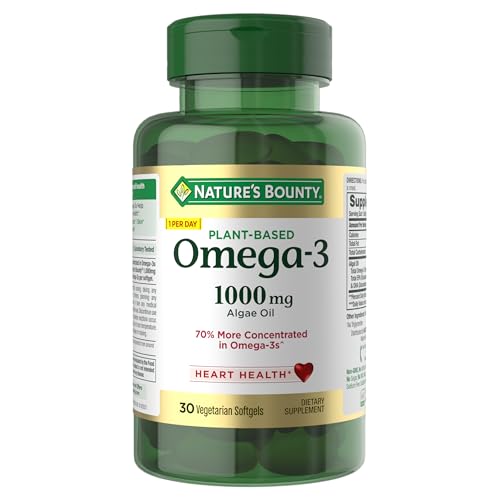
Nature’s Bounty Plant-Based Omega-3

Nature’s Bounty 1000mg Fish Oil 145 Count

Nature’s Bounty 300mg Omega-3 Fish Oil

Nature’s Bounty 1200mg Fish Oil Omega-3 200 Softgels

Nature’s Bounty Odorless Fish Oil 1200mg Omega-3 EPA DHA 90 Coated Softgels
The Picks, Examined More Closely
A large softgel can be the practical obstacle that keeps a fish oil routine from feeling manageable. The Nature’s Bounty Mini Fish Oil uses a capsule described as 35% smaller than standard softgels, giving you a more compact option for busy mornings or travel days. The coated, odorless design may also suit people who find traditional fish odor unpleasant.
Unlike the plant-based option later in this list, this formula comes from fish and includes both EPA and DHA. Its 1,290 mg of total fish oil per serving provides a useful comparison point with higher-count or higher-concentration choices. For most people who want fish-derived omega-3s in a smaller format, the size reduction is the feature that carries the most weight.
Everyday Wins
- The smaller softgel takes up less room in a daily pill organizer.
- The odorless coating reduces the prominence of fish odor.
- Fish oil is purified to remove mercury.
- Each serving includes 900 mg of combined EPA and DHA.
Things To Consider
- A reduced size still may not suit people who cannot comfortably manage softgels.
- Compare total fish oil with the omega-3 amount because the figures describe different parts of the formula.
Quick Facts
Made For
You benefit most from this option when easy swallowing matters more than a plant-based source.
Consider Something Else When
Nature’s Bounty Plant-Based Omega-3 suits you better when you prefer algae-derived EPA and DHA over fish oil.
Your decision changes substantially when fish is not part of the routine. Nature’s Bounty Plant-Based Omega-3 uses algae oil as its source and provides 520 mg of omega-3 fatty acids, including 510 mg of EPA and DHA per softgel. That makes it the clear choice for a plant-based or vegan approach, particularly for households that prefer not to keep fish-derived products.
Unlike Nature’s Bounty Mini Fish Oil, this formula does not depend on a smaller capsule to make the routine easier. Its 30-softgel package is compact, although the smaller count means more frequent replacement than the 145-, 120-, and 200-count options. For a plant-based routine, the source outweighs that packaging difference.
Key Advantages
- Algae-derived omega-3 provides a clear alternative to fish oil.
- EPA and DHA are included rather than relying on one fatty acid alone.
- The compact package suits travelers and smaller storage spaces.
Worth Noting
- The short 30-count package may need more regular replacement than the larger fish oil options.
At A Glance
The Right Fit
This option fits you best when algae-derived EPA and DHA matter more than a large package count.
Look Elsewhere When
Nature’s Bounty Mini Fish Oil is a better fit when you want fish-derived omega-3s in a smaller softgel.
A larger bottle can be the sensible choice when replacing a short-count supplement becomes annoying. The Nature’s Bounty 1000mg Fish Oil 145 Count provides 145 standard softgels, with the label showing 1,000 mg of fish oil and 300 mg of omega-3 per serving. That makes it more practical for a long-running household routine than the compact 30-count algae option.
Compared with Nature’s Bounty Mini Fish Oil, this choice uses standard-size softgels rather than a capsule reduced by 35%. The trade-off is straightforward: you gain package count and a more familiar fish oil format, while giving up some of the compactness that makes the mini version appealing. For people who manage larger capsules comfortably, the 145-count bottle is a sensible balance.
A Favorable Mix
- A 145-count bottle supports a longer supply between replacements.
- Each softgel combines fish oil with 300 mg of omega-3.
- EPA and DHA provide the two fatty acids highlighted by the formula.
- Standard softgels may suit people who have no issue with larger capsules.
- Fish oil is purified to remove mercury.
Points To Note
- Standard softgels take up more room than the mini format.
- Several count variations appear for this product, so verify the 145-count label.
- Omega-3 content is lower than the 360 mg shown on Nature’s Bounty 1200mg Fish Oil Omega-3 200 Softgels.
Built With In Mind
This bottle serves you best when a larger supply matters more than a compact capsule or plant-based source.
Another Choice May Suit
Nature’s Bounty 1200mg Fish Oil Omega-3 200 Softgels suits you better when a higher-count package and 360 mg of omega-3 per serving take priority.
Storage can become a real issue for fish oil softgels, particularly in a warm kitchen or a car parked in summer sun. The Nature’s Bounty 300mg Omega-3 Fish Oil uses odorless, coated softgels and comes in a 120-count package. Its label lists 1,000 mg of fish oil with 300 mg of omega-3 per serving, offering a familiar format without unnecessary extras.
Compared with the 145-count fish oil option, this bottle trades 25 softgels for a slightly simpler count. Neither size changes the per-serving figures, so your choice comes down to supply, storage space, and format preference. The coated design may be appealing during a busy morning, while heat-sensitive storage deserves attention before the bottle arrives.
Why It Works Well
- The coated, odorless format makes the softgels less conspicuous in a routine.
- EPA and DHA are included in the 300 mg omega-3 amount.
Trade Offs
- Heat and direct sunlight can damage or melt the softgels, so a cool storage area matters.
- The 120-count bottle offers less supply than the 145- and 200-count options.
Feature Snapshot
Who It Suits Best
You benefit most from this option when a coated softgel, moderate count, and compact package matter to your routine.
Reach For A Different Pick When
Nature’s Bounty 1000mg Fish Oil 145 Count fits you better when a larger bottle reduces replacement stops.
A high-count bottle can make a long-term supplement routine less cluttered. Nature’s Bounty 1200mg Fish Oil Omega-3 200 Softgels provides 200 softgels, with 1,200 mg of fish oil and 360 mg of omega-3 per serving. The label also highlights EPA and DHA for heart, cellular, and metabolic support, giving you several reasons to compare the formula beyond capsule count.
Unlike Nature’s Bounty Odorless Fish Oil 1200mg Omega-3 EPA DHA 90 Coated Softgels, this option carries a much larger package but a lower omega-3 figure per serving. The 200-count format may require more cabinet space, depending on where you keep supplements. For a household that values supply over a compact bottle, that trade-off can be worthwhile.
A Few Highlights
- Two hundred softgels reduce the need for frequent replacement.
- Each serving provides 360 mg of omega-3.
- EPA and DHA support the formula’s heart-health positioning.
- The label also highlights cellular and metabolic support.
- Softgels provide a familiar format for routine supplement users.
Minor Gripes
- The 200-softgel bottle takes more storage space, and the 360 mg omega-3 figure is lower than the 1,200 mg shown on the 90-count concentrated option.
Whose Shelf It Belongs On
This option belongs on your shelf when a long supply and a standard fish oil softgel matter most.
Swap It Out When
Nature’s Bounty Odorless Fish Oil 1200mg Omega-3 EPA DHA 90 Coated Softgels suits you better when compact packaging and concentrated omega-3 take priority.
A concentrated formula does not need a large bottle to feel substantial, and this 90-count package is built around that idea. Nature’s Bounty Odorless Fish Oil 1200mg Omega-3 EPA DHA 90 Coated Softgels lists 1,200 mg of omega-3 per serving, including the EPA and DHA fatty acids. Its compact format suits people who want a higher-concentration softgel without adding bulk to the cabinet.
Compared with Nature’s Bounty 1200mg Fish Oil Omega-3 200 Softgels, the two formulas use similar product names for different quantities: this one lists 1,200 mg of omega-3, while the larger bottle lists 360 mg. That distinction is easy to miss, so read the Supplement Facts panel closely. For shoppers who prioritize purity processing, odorless coating, and a smaller package, this is the more focused option.
Where It Helps
- The 90-count bottle keeps concentrated omega-3 in a compact format.
- Coated, odorless softgels suit people sensitive to fish odor.
- Mercury-removal processing adds another point of comparison.
- The formula contains no shellfish and is non-GMO.
Small Caveats
- The compact 90-count package will need replacement sooner than the 200-count fish oil option.
- The 1,200 mg label refers to omega-3, so confirm the EPA and DHA details on the full panel before comparing it with a 1,200 mg fish oil label.
Core Details
Best Suited To
This formula suits you best when concentrated omega-3, purification, and compact packaging guide your choice.
Where Another Pick Shines
Nature’s Bounty 1200mg Fish Oil Omega-3 200 Softgels fits you better when a larger supply and 360 mg of omega-3 per serving are your priorities.
What Matters in an Omega-3 Supplement
Read the Amounts Separately
Fish oil and omega-3 are not interchangeable label figures. Total fish oil includes the full oil, while omega-3 identifies the fraction made up of fatty acids such as EPA and DHA. A product with 1,200 mg of fish oil may contain a different omega-3 amount from one listing 1,200 mg of omega-3 itself, so compare both values.
Match the Source to Your Routine
Fish-derived formulas provide EPA and DHA from marine sources, while the algae option provides the same two fatty acids through algae oil. A vegan preference makes the source the first deciding point. People without that preference may focus more on softgel size, coating, count, or concentration.
Consider Capsule Size and Storage
The mini softgel is 35% smaller than standard options, which may make it easier to manage in a routine. Standard softgels can suit people who do not mind their size, while a 200-count bottle requires more storage space than a 90-count package. Keep fish oil away from heat and direct sunlight because those conditions can melt or damage softgels.
Confirm the Details Before Use
Mercury-removal processing, shellfish information, non-GMO status, and coating are useful comparison points. People who are pregnant, nursing, managing a medical condition, or using medication should consult an appropriate healthcare professional before starting a supplement.
Common Mistakes Worth Avoiding
A major mistake is treating total fish oil as the same number as omega-3. Another is assuming a smaller capsule contains more omega-3, because capsule size and concentration are separate design choices. Check the source, full label, package count, and storage needs before selecting a formula.
What Separates Higher-Concentration Options
A higher-tier formula may devote more of each softgel to omega-3, use specific purification processes, or package a concentrated product in fewer softgels. Those differences can matter for shoppers who prioritize concentration, odor control, or compact packaging, while a larger-count standard softgel may better suit a long supply routine.
Frequently Asked Questions
What should you check first on a fish oil label?
Start with the omega-3 amount, the EPA and DHA details, and the source of the fatty acids. The total fish oil figure alone does not tell you the same thing as the omega-3 content.
Is plant-based omega-3 the same as fish oil?
Plant-based omega-3 in this roundup comes from algae oil and includes EPA and DHA. Fish oil comes from fish, so your preferred source makes the practical choice clear.
What do EPA and DHA mean?
EPA and DHA are omega-3 fatty acids commonly highlighted on fish and algae supplement labels. A label that states both lets you compare formulas without relying on total oil alone.
Does a larger package mean a stronger formula?
No. Package count describes how many softgels are included, while the label describes their composition. Nature’s Bounty offers 90-, 120-, 145-, and 200-count options with different label amounts.
Are mini fish oil softgels easier to swallow?
The mini softgels are designed to be 35% smaller than standard fish oil capsules, which can improve manageability for some people. Your comfort with the format remains the deciding factor.
Final Verdict
Your best fit depends on the practical detail that matters most: a smaller capsule, algae-derived omega-3, a larger supply, a coated standard softgel, or a concentrated 90-count bottle. Compare the full Supplement Facts panel rather than relying on the largest number on the front, and choose the format you can comfortably maintain.
