

A full workday in pumps, a long shift on tile, or a walk that starts feeling tender under the ball of your foot can make ordinary shoes seem like a bad fit. The right insole can change how pressure is distributed, but the useful choice depends on your shoes, arch shape, and how long you remain on your feet. These six options cover everything from slim heel inserts to fuller orthotics designed for more structured support.
A Quick View Of The Lineup

SursilOrtho High Heel Insoles

Dr. Shoesert 3mm Metatarsal Pads

PowerStep ProTech Met Full Length Orthotics, Men’s 10-10.5
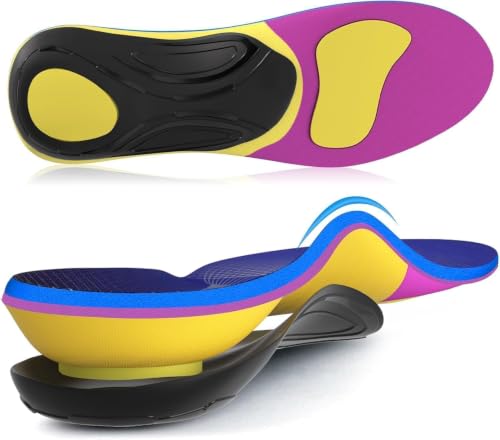
FitGeno Plantar Fasciitis Insoles

PowerStep Pinnacle Plus Met Orthotics, M 8-8.5 W 10-10.5
PowerStep Morton’s Extension Carbon Fiber Insole, M 8-8.5 W 10-10.5
Why These Options Stand Out
Heels place more demand beneath the forefoot, so a soft pad that simply adds thickness may not address the pressure you feel there. SursilOrtho uses a rigid heel-to-arch frame and a metatarsal cushion to redirect load toward the heel and midfoot, with the manufacturer stating that its geometry can move up to 70% of forefoot load.
At 1.6 ounces per pair, these inserts suit closed-toe heels from 3 cm to 12 cm, including pumps and dress shoes. The first few wears may feel different because the shape changes how the shoe supports you, so give your feet time to adjust. Unlike the compact gel pad in the next review, this is a structured insert rather than a soft layer.
Practical Pluses
- Pressure redistribution targets the forefoot area that becomes uncomfortable in heels.
- The rigid frame maintains its shape during long meetings, shifts, and formal events.
- A slim 1.6-ounce pair reduces crowding inside dress shoes.
- Removable inserts can move between compatible closed-toe shoes.
- A grippy design helps limit the forward slide created by high heels.
Practical Considerations
- These inserts are intended for closed-toe shoes and do not suit open-toe or strappy sandals.
- The structured design may require a short adjustment period, particularly for feet accustomed to flat gel cushions.
Key Specs
Who It Suits Best
You benefit most from this choice while wearing closed-toe heels through workdays, weddings, or events where the forefoot needs more structured support.
A Better Fit Elsewhere
Dr. Shoesert 3mm Metatarsal Pads suit you better when shoe space is too limited for a rigid heel insert.
Not every shoe has room for a full orthotic, and replacing the original insole can change the fit unexpectedly. The Dr. Shoesert pads take a simpler approach with a 3 mm gel cushion shaped for the ball of the foot, making them a practical option for pumps, flats, or work shoes where internal space is limited.
A honeycomb surface adds texture that helps keep your foot from sliding forward, while the gel is designed to absorb everyday impact and spread pressure. That makes this a more focused option than the SursilOrtho insert, which rebuilds the support across the heel and arch. The honest read is that these pads solve a specific forefoot problem rather than provide whole-foot support.
Notable Upsides
- The 3 mm profile fits inside shoes without the bulk of a full-length orthotic.
- The contoured gel cushions the area directly beneath the metatarsal heads, the bones at the ball of the foot.
- Honeycomb texture improves grip and leaves more room for airflow than a smooth surface.
- Targeted cushioning works well for shopping trips, standing shifts, and events in dressier shoes.
Worth Noting
- These pads do not provide the heel and arch framework found in the fuller orthotics.
- Check the shoe’s internal dimensions, since adding even a thin pad can affect toe room in a narrow fit.
Who Will Love This
You benefit most from these pads when your discomfort is concentrated under the ball of the foot and you need low-profile cushioning for fitted shoes.
Not Your Match When
PowerStep ProTech Met Full Length Orthotics suit you better when you want arch, heel, and forefoot support across the entire foot.
Where the Dr. Shoesert pads concentrate on the forefoot, the ProTech Met spreads support from heel to toe. A rigid arch component, heel cushion, and metatarsal pad create a more complete structure for work shoes, walking shoes, and other footwear with a removable factory insole.
Its support is designed for pronation, which describes the foot turning inward as you bear weight. That structure may feel more substantial than the preceding gel pads, especially during the first walk. The listed size is men’s 10-10.5, and the full-length shape deserves a fit check before you commit to a long workday.
Positive Takeaways
- Full-length support covers the heel, arch, and forefoot rather than isolating one pressure area.
- Rigid arch support suits people who prefer a structured platform over a soft gel cushion.
- A dedicated metatarsal pad targets the ball-of-foot area highlighted in the product’s design.
- Heel cushioning adds support where the foot first meets the ground during each step.
- The made-in-USA construction and men’s 10-10.5 sizing give you clear fit and origin information.
Room For Improvement
- The full-length insert occupies more shoe space than the 3 mm metatarsal pads.
- The listed width is 10-10.5, so your own shoe size and toe room need checking.
Feature Snapshot
Made For
You benefit most from this orthotic while spending long hours in roomy work shoes that accept a full-length replacement insole.
Where Another Pick Suits Better
FitGeno Plantar Fasciitis Insoles suit you better when a deep heel cup and high arch are the main features you need.
The FitGeno approach starts with a high arch and deep heel cup, both of which create a more pronounced platform than the neutral structure in the PowerStep Pinnacle Plus Met. That makes these insoles a logical match for people who spend long periods standing and want substantial support rather than a thin cushion.
The manufacturer positions the design for bodies over 220 pounds, with a shock guard intended to absorb impact through the heel. Teachers, nurses, and retail workers are named use cases because their shifts involve extended time on their feet. Depending on your footwear, the high arch may feel pronounced during the first several wears.
Where It Excels
- A deep heel cup gives the rear foot a more defined landing platform.
- The rigid high arch provides structured support for long standing shifts.
- A shock-guard component adds cushioning where repeated heel strikes occur.
- The intended 220-pound-plus design addresses the support needs of heavier body sizes.
Trade Offs
- The pronounced arch may feel too structured for someone who prefers minimal support.
- Full-foot support takes more room than a targeted metatarsal pad, so shoe fit needs close attention.
Built With In Mind
You benefit most from this design during long workdays spent in supportive shoes, especially with a body size above the manufacturer’s stated range.
Reach For A Different Pick When
PowerStep Pinnacle Plus Met Orthotics suit you better when a neutral arch and removable-insole design match your shoes more closely.
The Pinnacle Plus Met sits between the focused Dr. Shoesert cushion and the taller FitGeno arch. Its built-in metatarsal pad adds localized cushioning beneath the forefoot, while a neutral arch and deep heel cradle create stability without the pronounced high-arch profile.
That combination works especially well in shoes with a removable factory insole. The listed size covers men’s 8-8.5 and women’s 10-10.5 widths, and the polyester construction is made in the USA. You may find this a more balanced daily option than the rigid FitGeno design, particularly during long errands and commutes.
What Makes Sense
- The metatarsal pad targets the ball of the foot without making the entire insert rigid.
- Neutral arch support offers a middle ground between minimal cushioning and a high-arch platform.
- A deep heel cradle adds stability around the rear foot.
- The removable-insole requirement makes it practical for many walking and work shoes.
- Polyester construction and made-in-USA production provide clear material information.
Small Caveats
- Your shoes must have a removable factory insole for the intended setup.
- The M 8-8.5 and W 10-10.5 sizing means your width needs to align with the listed measurements.
The Details
The Right Fit
You benefit most from these orthotics when you want balanced arch support and forefoot cushioning in a shoe with a removable insole.
Consider Something Else When
PowerStep Morton’s Extension Carbon Fiber Insole suits you better when firm big-toe control matters more than general forefoot cushioning.
General ball-of-foot discomfort does not always call for the same response as a stiff big toe. This carbon fiber orthotic takes a narrower path, using a rigid plate beneath the first toe to limit excessive upward movement while providing full-length arch support.
That design makes it relevant to turf toe, hallux rigidus, and bunion-related scenarios, according to the product details. Compared with the Pinnacle Plus Met, you give up some soft forefoot cushioning in exchange for firmer control. The listed fit is men’s 8-8.5 and women’s 10-10.5, and the carbon construction is made in the USA.
Points In Its Favor
- The carbon fiber plate provides firm control through the big-toe joint.
- Limiting excessive big-toe movement can improve stability in suitable footwear.
- Full-length support provides a more complete platform than a small metatarsal pad.
- The orthotic is specifically designed around standard arches rather than a pronounced high-arch profile.
Points To Keep In Mind
- The rigid carbon fiber construction may feel less forgiving than gel or polyester cushioning.
- Standard-arch support may not align with a very high or low arch, so assess the fit before extended wear.
Quick Facts
Who Should Grab It
You benefit most from this specialty orthotic when big-toe stiffness or restricted toe movement is the main issue affecting your stride.
Another Choice May Suit
Dr. Shoesert 3mm Metatarsal Pads suit you better when you need soft, localized cushioning rather than rigid big-toe control.
Match The Insole To Your Shoe And Day
Start With The Pain Location
Discomfort centered beneath the ball of the foot calls for a metatarsal pad, while heel and arch symptoms often justify a full-length orthotic. Big-toe stiffness needs a different structure again, such as the carbon fiber plate in the PowerStep Morton’s Extension. Pinpointing the area prevents you from choosing a full orthotic for a problem that a small cushion could address.
Check The Shoe Before The Support
Remove the factory insole and measure the space beneath it. Full-length models need enough depth and length, while a 3 mm metatarsal pad takes less room but can still affect toe clearance. Shoes with fixed footbeds or a snug forefoot deserve particular caution, especially when you need more toe room to avoid compressing the toes.
Match Structure To Your Routine
Firm, high-arched support may suit long shifts and heavier body sizes, while neutral support offers a more balanced daily fit. A rigid heel insert makes sense for closed-toe heels, whereas a carbon fiber extension suits a specific big-toe concern. Your daily hours, footwear, and preferred amount of structure should point toward one design.
Allow Time To Adjust
A new insole can initially feel different because your foot is resting on a new contour. Wear it in a low-demand setting before using it for an entire shift, and replace any factory insole removed from the shoe. Discomfort that continues beyond normal adjustment deserves attention from an appropriate specialist doctor.
Practical Lessons Before You Order
Mistakes Worth Dodging
Choosing an insole by arch label alone can miss the actual source of discomfort. Check the pain location, shoe space, and activity level together, and avoid selecting a full-length model for a narrow shoe. Make sure the insert can sit flat without forcing the foot into an unnatural position.
What Separates Premium From Basic
The higher-cost choices often use more structured materials, deeper heel cups, or specialty plates rather than simply adding soft padding. That added construction can help with a defined support need, but it may be unnecessary for mild forefoot tenderness. A smaller targeted pad can offer a more practical fit in formal shoes.
Frequently Asked Questions
Can Metatarsal Pads Help Ball-Of-Foot Discomfort?
Metatarsal pads can add cushioning and spread pressure beneath the ball of the foot. Their usefulness depends on fit, shoe space, and whether your discomfort comes from pressure or another foot issue.
Are Rigid Orthotics Better Than Gel Insoles?
Rigid orthotics provide more structure, while gel inserts prioritize cushioning and flexibility. You may prefer rigidity for long shifts or arch support, but fitted dress shoes often have more room for a slim gel pad.
Which Insole Works Best With High Heels?
SursilOrtho High Heel Insoles are designed specifically for closed-toe heels and pressure redistribution. Their rigid frame takes more room than the Dr. Shoesert 3mm Metatarsal Pads, so shoe fit remains important.
How Long Should You Wear New Insoles?
Begin with a shorter wear period and increase use as your foot adjusts to the new contour. Follow the manufacturer’s fitting guidance, and keep the shoe’s original insole available for comparison.
When Should Ball-Of-Foot Pain See A Doctor?
Persistent pain, swelling, numbness, or a noticeable change in walking deserves assessment by an appropriate specialist doctor. An insole may provide comfort, but it should not replace professional evaluation of persistent symptoms.
Closing Remarks
Your best choice comes down to location and structure: slim metatarsal cushions for focused forefoot relief, heel inserts for closed-toe heels, and full-length orthotics for broader support. Match the design to your shoes and daily hours, allow time to adjust, and stop using any insert that creates numbness, rubbing, or worsening discomfort.
