

A calm activity can turn an awkward afternoon into a manageable routine. For families supporting someone living with dementia, simple puzzles, coloring pages, and memory activities can provide structure without demanding complicated rules or fine motor precision. The right choice depends on the person’s interests, current abilities, and the amount of guidance available.
The six options below cover different routines, from large-print puzzle books to reusable water painting and tactile matching games. Each one offers a different level of structure, and all are designed for older adults or people living with memory changes. You can select based on what feels engaging now, then adapt the activity as needs change.
The Leading Options At A Glance
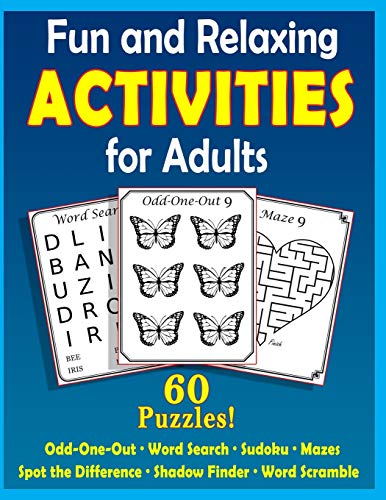
Mighty Oak Books Large-Print Puzzles

Keeping Busy Dementia Coloring Activity Kit

QUOKKA Reusable Water Painting Set

RC Schell Memory Care Sudoku: 150 Extra-Large 6×6 Puzzles for Seniors

J. D. Kinnest Easy and Relaxing Memory Activity Book

Keeping Busy Dementia Games: Match Dots, Matching Shapes, and Tile Logic
A Closer Look At Each Pick
A large-print activity book can make a familiar daily ritual easier to manage. Mighty Oak Books uses a mix of very easy and slightly more challenging exercises, so a family can begin with confidence-building pages and move toward more stimulation as the person becomes comfortable. The format is especially useful at home during a quiet morning or afternoon.
Unlike the art-focused options later in this list, this book relies on reading, visual attention, and problem solving. It was created for adults with mild dementia, Alzheimer’s, or Parkinson’s, as well as people rehabilitating after a stroke, giving you a clear sense of who the publisher had in mind.
Key Advantages
- Large print reduces the strain of working with small characters or images.
- Activities progress from extremely easy to slightly more challenging.
- The mixed format gives caregivers a flexible choice for each session.
- Content suits several memory and rehabilitation needs.
Practical Considerations
- Printed pages take up more room than a small tabletop game.
- Some participants may need help reading the instructions.
At A Glance
Who It Suits Best
This book fits older adults who enjoy puzzles and benefit from large print, adjustable challenge, and a calm activity that can be completed at home.
A Better Fit Elsewhere
QUOKKA Reusable Water Painting Set may suit someone who wants creative expression with less reading and fewer loose pieces.
Four activity formats make this kit adaptable to a changing routine. Guided coloring, color-by-number, open-ended coloring, and color-matching pages give participants different levels of direction, which helps you avoid repeating the same page every day. It works well for a shared activity in a home or assisted-living setting.
The six included colored pencils are designed for an easy grip, adding a practical advantage for older adults with limited dexterity. Compared with Mighty Oak Books Large-Print Puzzles, this option puts more emphasis on color, creativity, and hand use, while requiring less reading.
The Helpful Details
- Four activity styles suit different comfort levels.
- Guided pages provide structure without requiring complex decisions.
- Open-ended pages allow a more personal creative choice.
- Larger-grip pencils make coloring more comfortable.
Less Ideal Details
- Caregivers may need to explain several activity formats.
- Messy creative work calls for a protected tabletop.
Made For
This kit suits older adults who enjoy art, prefer manageable visual directions, and can benefit from adaptable dexterity activities.
Consider Something Else When
J. D. Kinnest Easy and Relaxing Memory Activity Book is a better fit for someone who wants more puzzle variety and less coloring-focused play.
Water-activated art changes the cleanup routine. QUOKKA uses ten art-inspired scenes that reveal color when the included brush is dipped in water, giving someone a creative task without conventional crayons or paint. The format can be especially inviting for a person who enjoys images but struggles with sustained coloring.
Reusability makes the set practical for repeated household use, and the brush keeps the required materials together. Unlike the structured Sudoku option, this activity emphasizes sensory discovery and conversation, with scenes intended to prompt memories and communication.
What Earns Its Place
- Water reveals color without traditional coloring materials.
- Ten scenes provide several subjects to revisit.
- The included brush removes the need to gather a separate tool.
- Reusable designs suit an established daily routine.
Points To Note
- Water exposure means the set needs a suitable drying surface.
- Participants with limited hand control may need brush assistance.
Core Details
Right Fit For
This set fits older adults who respond to art, conversation, and a simple reveal while needing a low-complexity creative activity.
Where Another Pick Shines
Keeping Busy Dementia Coloring Activity Kit offers more paper-based formats for someone who prefers conventional coloring with dry pencils.
A 6×6 Sudoku is a number-placement puzzle with a smaller grid than the familiar 9×9 version. RC Schell combines that format with 150 very easy puzzles, giving older adults and caregivers a substantial collection without the complexity of a more advanced book.
Extra-large print is the decisive feature for anyone who struggles with compact characters. The pages are designed to support a calm, approachable routine, so this option works well for a person already familiar with Sudoku as well as someone trying a simplified version.
Well-Handled Touches
- The smaller grid keeps the number-placement task manageable.
- Extra-large print makes each symbol easier to see.
- One hundred fifty puzzles support sustained use.
- Very easy puzzles reduce the chance of an immediate dead end.
Worth Noting
- Sudoku may feel too rule-based for someone who dislikes numbers.
- A caregiver may need to demonstrate the first puzzle.
Quick Facts
Best Suited To
This collection suits older adults who enjoy logic puzzles, recognize Sudoku, and appreciate a repeatable task with clearly visible numbers.
Another Choice May Suit
J. D. Kinnest Easy and Relaxing Memory Activity Book offers more varied content for someone who wants humor and activities beyond number placement.
Variety matters on days when one familiar activity starts to feel stale. This book combines humor, easy puzzles, logic exercises, and short- and long-term memory activities, with around-the-house content mixed in. It can become a convenient source for short visits or a weekly activity rotation.
The broad selection is the main advantage here. Compared with RC Schell Memory Care Sudoku, which concentrates on numbered puzzles, this book can reach someone who enjoys a joke, a practical prompt, or a simpler brain teaser. The content appears designed to keep sessions relaxed rather than competitive.
What Works In Its Favor
- Several activity categories prevent a repetitive routine.
- Short exercises suit visits with limited time.
- Humor adds a welcoming tone to difficult topics.
- Memory and logic content provides a balanced mix.
Small Caveats
- Varied content may require sorting through more material.
- Adults with very limited vision may still need closer page assistance.
Who Will Love This
This book fits older adults who appreciate a mixed selection of humor, familiar puzzles, and memory prompts in one portable format.
Look Elsewhere When
Mighty Oak Books Large-Print Puzzles is a stronger fit when visual comfort and carefully adjusted difficulty matter more than activity variety.
Tabletop challenges add movement to the activity mix. Keeping Busy includes Match the Dots, Matching Shapes Large, and Tile Logic Challenge, giving an older adult several ways to work with patterns, comparisons, and placement. These activities can fill a short period without turning into a complicated game night.
The adult-oriented presentation helps the set feel more like a regular pastime than a toy. That distinction can matter in shared spaces, where dignity and a sense of normalcy matter. Compared with the paper-based coloring kit, this option offers more tactile handling and a stronger focus on tabletop play.
A Favorable Mix
- Three distinct challenges vary the task from session to session.
- Large matching shapes suit visual recognition and handling.
- Tile Logic adds a focused placement task.
- Adult-oriented materials suit shared environments.
Points To Keep In Mind
- Small game pieces may need careful handling or supervision.
- The set takes more table space than a single activity book.
Feature Snapshot
Built With In Mind
This set suits older adults who enjoy tabletop challenges, can handle game pieces comfortably, and benefit from short hands-on activities.
Reach For A Different Pick When
Keeping Busy Dementia Coloring Activity Kit may suit someone who prefers less material to organize and more creative choice with pencils.
What Makes a Dementia Activity Work in Practice
Match the Activity to Current Abilities
A good activity should offer enough challenge to hold attention without creating constant frustration. Look for adjustable difficulty, clear visual directions, and tasks that can be completed with a different amount of help. The Mighty Oak Books option offers several difficulty levels, while the coloring kit separates guided and open-ended activities.
Consider the Materials
Paper, water, and game pieces create different daily requirements. Coloring books need a protected table, the QUOKKA set needs room for drying, and tabletop games need enough space for pieces. Match the cleanup and storage demands to the setting where the activity will actually be used.
Favor Familiar Interests
Art, number puzzles, humor, and shape matching attract different people. An activity connected to a past hobby may prompt more participation than a generic puzzle, while a familiar format such as Sudoku can provide reassuring structure. You can also rotate formats to keep the routine fresh.
Plan for Human Support
Caregivers can make these activities easier by demonstrating the first step, limiting choices, and stopping before fatigue sets in. Keep the session calm and allow the participant to set the pace. A short, successful activity is more useful than a longer session that ends in frustration.
Avoiding Common Activity Mistakes
Wrong Turns To Avoid
Choosing by age alone overlooks practical details such as print size, dexterity, and reading load. Check the required materials and cleanup process before buying. A highly structured game may feel too demanding for someone who cannot follow the rules, while an unstructured page may leave the person unsure where to begin.
What The Higher Tier Buys
A higher-priced set may provide a larger number of puzzles, a more substantial physical kit, or a reusable format. The added value is meaningful only when it matches your routine and interests. Paying more for complexity rarely helps, but a well-made set can become more useful when it stays accessible and engaging over time.
Frequently Asked Questions
What are the easiest games for someone with dementia?
The easiest options use large print, simple instructions, and a short sequence of steps. RC Schell Memory Care Sudoku, J. D. Kinnest Easy and Relaxing Memory Activity Book, and the coloring kit all offer simplified ways to begin.
Are coloring books suitable for dementia activities?
Coloring books can provide a familiar, hands-on routine, especially when pages include guidance and simple visual choices. Keeping Busy Dementia Coloring Activity Kit offers several formats so the activity can be adjusted to the person’s comfort with coloring.
What type of activity encourages conversation with dementia patients?
Scenes, familiar objects, and stories often create better opportunities for conversation than an activity with only one correct answer. QUOKKA Reusable Water Painting Set can prompt discussion about its art-inspired scenes, while memory books can bring up personal recollections.
Are reusable dementia activities easier to repeat?
Reusable activities reduce the need to replace finished pages each time. The QUOKKA set can be revisited with water and the included brush, making it convenient for a recurring routine in a home or care setting.
How do I choose games for a person with memory loss?
Start with familiar interests, current vision, reading ability, dexterity, and the amount of supervision available. A large-print puzzle book suits a different need from a tactile matching set, so the most suitable choice is the one that feels inviting rather than demanding.
Final Verdict
The best dementia activity is one that feels familiar, manageable, and worth returning to. Large-print puzzles suit readers, the coloring kit supports adaptable art, and reusable painting or tabletop games add variety without demanding complicated rules. Match the activity to the person today, then adjust as their interests and abilities change.
