

A Geiger counter can help you check uranium glass, building materials, rocks, and household objects for ionizing radiation. You need a model that detects the radiation types you expect, covers their energy range, and fits your monitoring habits. The right balance of alarms, logging, portability, and display clarity matters more than an intimidating list of technical terms. Here are seven practical options for home screening, from compact handheld units to feature-rich models with downloadable records.
The Essentials At A Glance
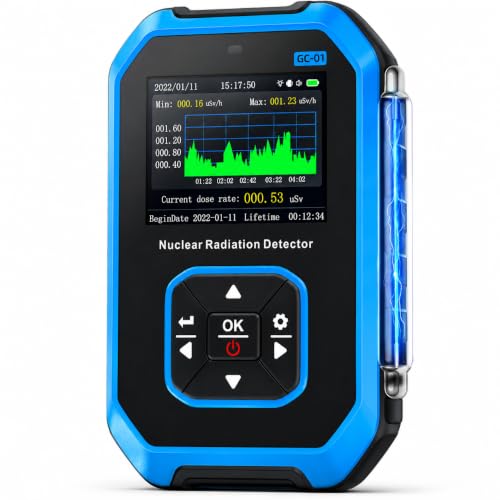
FNIRSI GC-01 Geiger Counter Curve Display

APOWER RD-3 Geiger Counter

GQ GMC-800 Geiger Counter Color LCD Data Save

GQ GMC-300S Digital Radiation Detector

GQ GMC-500Plus Radiation Monitor Dosimeter

MOESAPU FS5000 Geiger Counter 2.4-Inch TFT Display

GAMMA-SCOUT Rechargeable Handheld Geiger Counter
Why These Options Stand Out
The FNIRSI GC-01 puts a live radiation curve beside the numerical reading, giving you a quick visual sense of whether activity is rising or settling. Its built-in GM, or Geiger-Müller, sensor detects gamma rays, beta particles, and X-rays, making it suitable for screening uranium glass, rocks, renovation materials, and household objects.
One-handed operation keeps the meter practical during a home project, while selectable light, vibration, and sound alarms let you choose a notification style that suits the room. Compared with the session-oriented APOWER RD-3, this model emphasizes an immediate, uncluttered readout rather than stored history, which may be exactly what you need for occasional checks.
Advantages To Know
- The curve display makes changing readings easier to interpret at a glance.
- Three radiation types cover common home-screening tasks.
- Light, vibration, and sound alarms suit different settings.
- Separate current and cumulative alarm thresholds support flexible monitoring.
Trade Offs
- Confirm that your expected radiation sources fall within the 48 keV to 1.5 MeV energy range.
- Alarm setup adds a few decisions before your first scan, so choose thresholds that suit the task.
Key Specs
Who It Suits Best
You benefit most from the FNIRSI GC-01 when you want straightforward readings, selectable alerts, and a visual trend curve for occasional household checks.
Where Another Pick Suits Better
The APOWER RD-3 suits you better when timed measurements and stored historical records matter more to your monitoring routine.
The APOWER RD-3 brings together a color LCD, visual and audible alarms, adjustable settings, and historical data storage in a pocketable meter. You can review real-time readings, adjust alarm thresholds, choose units and language, and change screen brightness according to the light around you.
Its timed measurement function makes repeated comparisons easier because each session can be retained for later review. Compared with the FNIRSI GC-01’s curve-focused display, this model leans toward record keeping and customization, which suits home projects where you may want to compare readings from several rooms or objects.
Bright Spots
- Color and flashing alerts make threshold events difficult to overlook.
- Stored sessions support comparisons between separate home checks.
- Adjustable brightness helps in dim rooms and outdoor spaces.
- The compact format fits easily into a shirt pocket.
Practical Considerations
- Handle the meter carefully because bumps may affect internal parts and readings.
- The stated eight-day battery life assumes the particle sound is turned off, so audible operation shortens that interval.
Feature Snapshot
Made For
The APOWER RD-3 fits you best when you plan recurring home checks and want a readable history of each measurement session.
Consider Something Else When
The GAMMA-SCOUT Rechargeable Handheld Geiger Counter is the stronger fit when alpha radiation detection is part of your required coverage.
Large color information makes the GQ GMC-800 approachable for home checks where you want more than a compact numeric screen. The display is designed to remain readable in sunlight, and shortcut controls move between four function screens without burying the main reading behind extra menus.
Beta, gamma, and X-ray detection makes it relevant for checking rocks, mineral collections, renovation items, and household objects. Unlike the GQ GMC-300S, which centers on one-second logging and computer downloads, the GMC-800 emphasizes a large display, five alarm types, saved data, and sharing.
Practical Pluses
- The large color screen gives readings and status changes a clear visual hierarchy.
- Sunlight-readable display supports outdoor use during mineral or property checks.
- Four shortcut-accessible screens keep common functions close at hand.
- Five alarm types offer more ways to notice unusual activity.
- Data saving and sharing suit repeat measurements.
Things To Consider
- The broader feature set takes a little more navigation than a basic numeric meter.
- Screen-first operation may feel less discreet in shared indoor spaces than a compact unit with a simple display.
Right Fit For
The GMC-800 suits you when clear visual information and multiple alert choices matter more than minimalism.
A Better Fit Elsewhere
The MOESAPU FS5000 fits you better when a fast response, a 2.4-inch TFT screen, and audible particle clicks are your priorities.
The GQ GMC-300S is built around records rather than a glance-and-go display. It logs real-time readings every second into internal memory, then lets you download the history to a computer through the included data-viewing software for closer analysis.
Dosimeter mode accumulates exposure, CPM mode shows counts per minute, and graph mode visualizes changes over time. Compared with the display-heavy GMC-800, this model gives you a more analytical workflow, which can be useful after a home renovation or during a series of material checks.
Positive Takeaways
- One-second logging creates a detailed history of changing readings.
- Computer download support makes stored sessions easier to organize and examine.
- Three display modes serve exposure totals, count rates, and visual trends.
- The rechargeable battery suits repeated use without routine cable connections.
Worth Noting
- Computer transfer adds a step compared with keeping readings entirely on the meter.
- Detailed logging is more useful for repeat sessions than a quick single-object check.
Core Details
Who Will Love This
You will appreciate the GMC-300S when your home checks require downloadable timelines rather than only a current numerical reading.
Look Elsewhere When
The FNIRSI GC-01 is the better option when you prefer a curve display and immediate alarm selection over stored one-second records.
The GQ GMC-500Plus takes recorded radiation readings beyond the device itself. It stores data internally and links with Geiger Counter World Map, where submitted readings can be placed on a shared map for a broader view of monitoring activity.
Software sends readings approximately every minute, giving you a connected workflow that differs from the GMC-300S’s computer download process. For your home or field trips, this makes the model practical when you want continuous records and shared location context rather than isolated measurements.
Real-World Strengths
- Internal logging keeps a record of readings during active monitoring.
- Map sharing adds location context to collected radiation data.
- Automatic submission reduces the need to transfer every session manually.
- The white handheld format suits portable monitoring.
Some Limits To Know
- Connected sharing adds a software and service step that a local-only meter avoids.
- Map-based records suit monitoring projects, while quick household spot checks may need fewer features.
The Right Fit
The GMC-500Plus suits you when connected logging and shared geographic records are central to your monitoring plans.
Another Choice May Suit
The APOWER RD-3 may suit you better for local repeat sessions without a map-sharing workflow.
The MOESAPU FS5000 responds in 0.5 seconds, which helps you follow changes as you move a source closer or farther from the J321 GM sensor. Distinctive clicks provide an audible indication of detected beta, gamma, or X-ray events while the 2.4-inch TFT screen carries the numerical information.
That combination of fast response and audible output makes it useful for quick scans of mineral collections, building materials, and household objects. Compared with the FNIRSI GC-01’s multi-mode alarm and curve display, the FS5000 places more emphasis on immediate response, a TFT interface, and audible particle feedback.
Why It Works Well
- The 0.5-second response supports quick changes during close scans.
- Audible clicks give you feedback without watching the screen constantly.
- The 2.4-inch TFT display provides a clear handheld view.
- Rechargeable operation suits repeated household checks.
Small Caveats
- Continuous clicking may be distracting during quiet indoor work.
- Confirm that the 48 keV to 1.5 MeV range matches the radiation sources you expect to screen.
Quick Facts
Whose Shelf It Belongs On
The FS5000 fits you best when responsive readings and audible feedback matter during hands-on screening.
Reach For A Different Pick When
The APOWER RD-3 is the better match when timed sessions and stored local histories matter more than rapid response.
The GAMMA-SCOUT Rechargeable Handheld Geiger Counter covers a broad set of ionizing radiation types, including alpha, beta, gamma, and X-rays. Its audible click marks the presence of radiation, while an adjustable threshold provides an alert when activity reaches the level you set.
As a general-purpose survey meter, it works well for field checks that require more radiation-type coverage than the beta, gamma, and X-ray instruments listed elsewhere. Compared with the GQ GMC-800’s color display and saved sharing functions, this model favors simple handheld cues and rechargeability.
Positive Points
- Alpha detection broadens the supported radiation coverage.
- Audible clicks provide immediate feedback during a scan.
- Adjustable thresholds let you define your own alert level.
- The rechargeable design supports repeated field use.
Where It May Fall Short
- For technical work, prioritize a model with a clearly documented response range.
- Its general-purpose approach may offer less menu depth than the GQ GMC-800.
At A Glance
Built With In Mind
This GAMMA-SCOUT model suits you when broad radiation-type coverage and straightforward audible cues guide your field checks.
Swap It Out When
The GQ GMC-300S fits you better when one-second logs, graph views, and downloadable computer records are your main priorities.
What to Look for in a Home Radiation Meter
Start With Radiation Type
Your first check should match the source you expect to examine. Most household screening meters in this roundup detect beta, gamma, and X-rays, which suits many minerals, building materials, and glowing glass objects. The GAMMA-SCOUT model also lists alpha detection, an important distinction when your planned survey requires broader particle coverage.
Read The Energy Range
An energy range shows the span of ionizing-radiation energy the meter is designed to measure. The FNIRSI GC-01 and MOESAPU FS5000 cover 48 keV to 1.5 MeV, while the APOWER RD-3 extends from 33 keV to 3 MeV. Compare that span with your intended sources instead of treating a wider figure as automatically better.
Compare Alarm And Logging Tools
Alarms help you notice a threshold event while the meter is set down or partly out of sight. Logging tools serve a different purpose: the GQ GMC-300S captures readings every second for computer review, and the APOWER RD-3 retains timed sessions. Your choice depends on whether you need an alert during the scan or a record afterward.
Account For Daily Handling
Consider display readability, audible output, charging method, and storage before buying. A sunlight-readable color screen helps outdoors, while clicking sounds can become distracting indoors. A pocketable format is useful for scanning multiple rooms, though a computer-based workflow suits someone who wants organized data files.
Buying Lessons Before You Choose
Mistakes Worth Dodging
Do not treat every audible click as the same measurement, and do not confuse a Geiger counter’s count rate with an accumulated dose. Check the supported radiation types and energy range before scanning. Set the alarm threshold for the task rather than leaving an unfamiliar default in place.
What Separates Premium From Basic
A higher tier may add faster response, larger displays, multiple alarm styles, detailed logging, or computer and map integration. Those extras matter for repeated monitoring, while a single quick household check may need only a clear numerical display and a supported measurement range. Pay for the features you will actually use.
Frequently Asked Questions for Geiger Counter for Home Use
Can a Geiger counter check uranium glass?
Yes, many Geiger counters can screen uranium glass for ionizing radiation. Compare the glass’s expected radiation type and energy with the meter’s coverage, and keep the sensor close to the piece while watching how the reading changes.
What is the difference between a Geiger counter and a dosimeter?
A Geiger counter registers radiation events, often as counts per minute, while a dosimeter tracks accumulated exposure. Some handheld meters combine both functions, such as the GQ GMC-300S with its count, graph, and dosimeter modes.
Can I use a home radiation meter during renovation?
You can use one to screen materials as part of a home project. Match its radiation types and energy range to the material, avoid assuming a normal reading settles every question, and consider a site-specific assessment for unfamiliar or potentially contaminated building materials.
Which radiation types should I look for?
Most home screening meters cover beta, gamma, and X-rays, while the GAMMA-SCOUT adds alpha detection. Your required coverage depends on the sources and materials involved, so list your expected objects before comparing models.
Which specifications matter most for home use?
Prioritize supported radiation types, energy range, alarm options, logging, power, and display readability. Compact models suit quick scans, while logged and downloadable records help you compare repeated readings across rooms, objects, or project stages.
