

A stiff, catching finger can make typing, sewing, cooking, or even opening a jar more difficult than it should be. The right support needs to fit the task, cover the areas that need compression, and avoid getting in the way of your fingers. Gloves work best for ongoing hand strain, while a rigid splint offers more structure for an injured pinky or ring finger. Here are six practical options based on their materials, fit, coverage, and intended use.
A Closer Look At The Lineup

Copper Fit Mobilizer Hand Compression Gloves

Edmunds Hand-Aids HA-3 Gloves
Gripnerie Copper Gloves M
PKSTONE Pinky Finger Splint M
PKSTONE Pinky Finger Splint L

GRACE & ABLE Trigger Gloves
Meet The Standout Selections
Trigger finger support often has to survive ordinary movement rather than hold the finger completely still. These Copper Fit gloves use graduated compression, meaning the material applies supportive pressure while still allowing the hand to bend and grip. The open fingers are useful during typing, cooking, knitting, or pickleball because your fingertips remain free for precise tasks.
Compared with the Frank A. Edmunds gloves reviewed next, this pair adds silicone gripping points and a more active, exercise-friendly design. A soft cotton-knit construction may feel comfortable during extended wear, though the sizing chart deserves attention because compression works best when the fit is snug rather than restrictive.
Features That Help
- Open fingers preserve fingertip dexterity for keyboards, tools, and crafts.
- Silicone grips add traction without covering the fingertips.
- The cotton-blend knit contours to the hand and manages moisture.
- Compression suits repetitive work, exercise, and general hand fatigue.
Trade Offs
- Exposed fingers provide less coverage than a full-finger compression glove.
- A close fit is important, so measure your hand before choosing a size.
Feature Snapshot
Made For
You benefit most from this option if typing, cooking, exercise, or crafts repeatedly strain your hands while you still need full fingertip movement.
Where Another Pick Suits Better
The Frank A. Edmunds Hand-Aids HA-3 Gloves suit dedicated sewers and quilters who value close hand and wrist coverage over exposed fingertips.
Fine handwork produces tiny movements repeated hundreds of times, so the Edmunds Hand-Aids HA-3 Gloves take a focused approach to support. Their 88% nylon and 12% spandex construction stretches with the hand while maintaining close pressure around the fingers, palms, and wrists. That makes them a natural fit for sewing, quilting, and other crafts that demand control.
Unlike the Copper Fit Mobilizer gloves, this option does not feature silicone palm dots or an open-finger construction. The trade-off is fuller coverage and a more uniform hand-hugging feel, while the benefit is steady support during detailed, sustained work.
Practical Pluses
- Close compression supports demanding needle and thread work.
- Spandex gives the gloves flexibility across the palms and wrists.
- Fuller coverage retains warmth around the hands.
- Machine washing makes regular care straightforward.
Small Caveats
- This listing includes medium sizing, so larger or smaller hands need another size.
- You lose the open-finger dexterity offered by the Copper Fit Mobilizer Hand Compression Gloves.
Who Will Love This
Experienced sewers, quilters, and crafters who spend long periods making repeated hand movements will appreciate the close, flexible support.
Consider Something Else When
The Copper Fit Mobilizer Hand Compression Gloves are a better fit for active tasks that require stronger fingertip grip and exposed fingers.
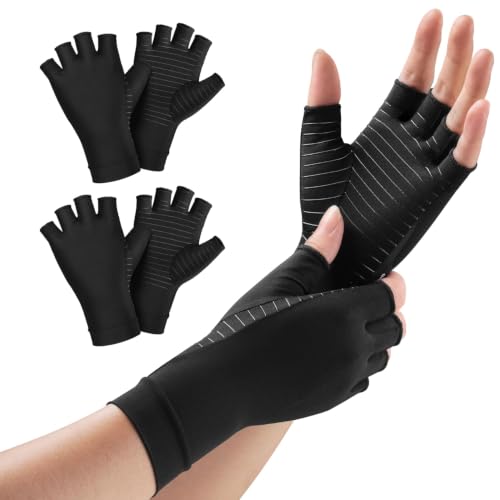
Two pairs make the Gripnerie Copper Gloves convenient for alternating between work and home without wearing the same gloves continuously. The fingerless design supports typing, gaming, sewing, and cooking while leaving the fingertips uncovered, and textured silicone dots improve the handling of mugs, tools, and craft materials.
Compared with the Edmunds Hand-Aids HA-3 Gloves, this option provides more exposed-finger freedom and a stronger grip texture, although less continuous coverage. Its 85% copper nylon and 15% spandex knit is lightweight and snug, but the medium variant requires you to compare your hand with the size chart before ordering.
Real Benefits
- Two pairs allow convenient rotation between daily activities.
- Fingerless coverage supports precise typing, gaming, and crafts.
- Silicone palm dots improve control during common tasks.
- Low-profile seams sit comfortably beneath sleeves.
- Stretch sizing accommodates different hand contours.
Practical Considerations
- Hand washing and air drying require more care than machine washing.
- Exposed fingers offer less warmth and coverage than full-finger gloves.
- Choose the size carefully to preserve a snug fit without restricting movement.
Quick Facts
Right Fit For
You benefit most from this option if you want two pairs of fingerless gloves for office work, gaming, crafts, and daily household tasks.
Not Your Match When
The Frank A. Edmunds Hand-Aids HA-3 Gloves suit handworkers who want fuller fabric coverage and simple machine washing.
A compression glove wraps the hand in flexible support, but this PKSTONE splint takes a firmer approach. Aluminum plates on the front and back of the ring and pinky fingers provide a rigid framework for fractures, sprains, tendonitis, and knuckle discomfort. The medium size is intended for a 12 to 16 cm measurement from the pinky tip to the base of the wrist.
That structure makes it more relevant than the Gripnerie Copper Gloves when limiting movement matters more than preserving fingertip freedom. Its soft foam and cotton lining improve comfort, while the adjustable hook-and-loop closure lets you refine the fit with one hand.
The Value In It
- Front and back plates create more structured finger support.
- The closure adjusts easily using one hand.
- Foam and cotton lining soften contact with the skin.
- One design fits either the left or right hand.
Points To Keep In Mind
- Rigid coverage is less suitable for unrestricted typing or gaming.
- Measure the specified hand length before choosing medium.
- The splint accommodates the ring and pinky fingers rather than the whole hand.
The Right Fit
People recovering from a pinky or ring finger injury who need structured support for daily tasks will find this medium version relevant.
A Better Fit Elsewhere
The PKSTONE Pinky Finger Splint L accommodates longer hands measuring 17 to 21 cm from fingertip to wrist base.
The larger PKSTONE option shares the same structured design as the medium splint, but its 17 to 21 cm length range serves longer hands. Dual aluminum plates support the ring and pinky fingers from both sides, making this a more substantial option than a flexible compression glove during fracture recovery or post-surgery support.
You still retain use of the remaining fingers for basic tasks, though the covered digits will be less flexible than those in the Gripnerie Copper Gloves M. Removable plates, a padded cotton lining, and a one-handed hook-and-loop closure make the design easier to adjust and clean.
Bright Spots
- The long size fits a clearly defined 17 to 21 cm range.
- Removable aluminum plates simplify cleaning and adjustment.
- Soft padding supports comfortable daytime or overnight wear.
Worth Noting
- The bulk of the plates limits bending in the ring and pinky fingers.
- Accurate measurement is essential because the two sizes do not overlap.
The Numbers That Matter
Built With In Mind
This large splint suits people with longer hands who need firm support for a fractured or recovering pinky or ring finger.
Swap It Out When
The PKSTONE Pinky Finger Splint M is the better match for hands measuring 12 to 16 cm.
Joint coverage is the defining detail in these GRACE & ABLE gloves. The fabric extends over the DIP joints, the hinge-like joints nearest the fingertips, while the fingertips remain available for typing, texting, and crafts. That balance makes them more structured than the Gripnerie Copper Gloves M without approaching the rigidity of the PKSTONE splints.
Silicone dots across the palm improve your hold on mugs, tools, and a steering wheel, and the lightweight cotton, polyester, and spandex blend is intended for daytime or overnight wear. A clinical hand therapist developed the design, while sizes from extra small to extra large offer a broad fit range.
Reasons It Performs
- DIP joint coverage adds support near the fingertips.
- Silicone dots improve everyday object handling.
- Free fingertips support typing, texting, and crafting.
- The broad size range accommodates varied hand dimensions.
Things To Consider
- Joint coverage may feel less flexible than fully fingerless gloves.
- You may prefer the Copper Fit Mobilizer Hand Compression Gloves for sports and heavier gripping tasks.
Core Features
Who Should Grab It
You benefit most from these gloves if frequent hand tasks leave you wanting fingertip support, grip, and a comfortable fit for typing or crafting.
Another Choice May Suit
The PKSTONE Pinky Finger Splint M offers firmer support for people managing a specific injury to the ring or pinky finger.
What Matters Most Before You Choose
Compression or immobilization
Compression means flexible pressure around the hand, making it suitable for repetitive work and general stiffness. A splint uses rigid plates and limited movement for a specific injured finger. Repeated typing and crafting call for flexible coverage, while a fracture or post-surgery situation points toward structured support.
Finger coverage and dexterity
Open fingertips improve access to keyboards, tools, and craft materials, but they reduce fabric coverage. Joint-support designs cover more of each finger without surrounding the entire fingertip. Your normal tasks should decide which compromise feels more useful.
Fit and sizing
A compression glove needs close contact without creating a tight or restricted feeling. Measure the recommended hand length before selecting a splint, and compare your hand with the sizing chart for gloves. Two pairs can be helpful when you want separate pairs for work and home.
Materials and upkeep
Cotton blends tend to feel soft and breathable, while spandex adds stretch. Knit gloves usually benefit from gentle washing and air drying. A machine-washable glove may suit frequent craft use better, especially when a splint’s removable plates add more parts to clean.
Getting the Fit Right
Mistakes Worth Dodging
Choosing a splint for ordinary hand fatigue is usually a mismatch because its rigid plates restrict movement. Another common error is selecting compression purely by fabric or color without checking the size chart. Measure your hands, note the tasks you perform, and compare coverage before ordering.
What The Higher Tier Buys
More complex designs may include rigid plates, removable components, or wider sizing ranges, which can justify added cost when a specific injury needs them. Flexible compression gloves offer the better value for everyday repetitive work, while specialized splints earn their place when structured support matters more than dexterity.
Frequently Asked Questions for Gloves For Trigger Finger
Are compression gloves suitable for trigger finger?
Compression gloves can provide gentle support during repetitive tasks while keeping the fingers available for movement. Persistent catching, swelling, or discomfort deserves attention from a licensed healthcare professional.
Should trigger finger gloves cover the fingertips?
Fingerless or partially open designs preserve dexterity for typing and crafts. Fuller coverage supplies more warmth and compression, so the best choice depends on whether movement or coverage matters more.
Are splints better than compression gloves?
A splint offers more rigid support and limits movement in the affected finger. Compression gloves are more practical for general hand fatigue because they remain flexible during normal tasks.
What size PKSTONE splint should you choose?
The medium version fits measurements from 12 to 16 cm, while the large version covers 17 to 21 cm. Measure from the pinky tip to the wrist base before choosing.
Can these gloves be worn overnight?
The GRACE & ABLE Trigger Gloves are designed for daytime or overnight wear, while the PKSTONE splints also support nighttime use. Adjust each item so it remains secure without creating discomfort.
Final Thoughts
Flexible compression suits everyday work, typing, crafts, and exercise, with the Copper Fit and Gripnerie gloves offering different levels of fingertip freedom. The PKSTONE splints serve a narrower need by stabilizing the ring and pinky fingers. Measure your hand, consider how much movement you need, and choose the level of support that fits the task rather than the most rigid option.
