

Should you’re looking for halal fish oils that balance purity, potency, and sustainability, you want options that are transparently sourced and third‑party tested. I’ll highlight five top picks for 2026 that meet Islamic dietary standards and practical quality checks, then explain what to look for whenever you buy—so you can pick a supplement that fits both your faith and health goals without guesswork.
| Noor Halal Fish Oil Ultra Omega-3 (120 Count) |
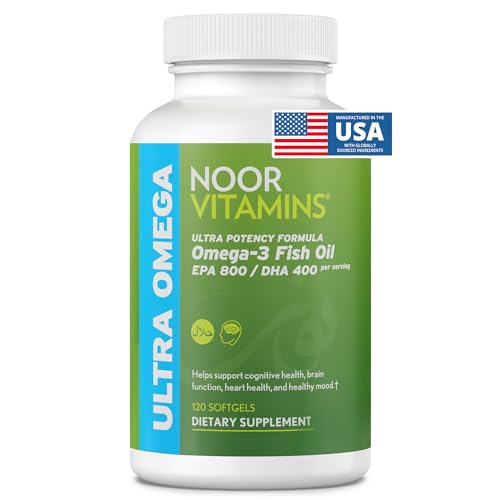
| Best Halal High-Potency | Form: Softgels | Omega‑3 content (contains EPA/DHA or ALA): EPA 800 mg / DHA 400 mg (1,200 mg total Omega‑3 per serving) | Purity / third‑party testing: Third‑party lab tested for purity; free of heavy metals | VIEW LATEST PRICE | Read Our Analysis |
| NOW Foods Omega 3-6-9 1000 mg Softgels (250) |

| Best Plant + Seed Blend | Form: Softgels | Omega‑3 content (contains EPA/DHA or ALA): ALA (primary Omega‑3) — ~45% of oil blend per serving | Purity / third‑party testing: Hexane‑free processing; natural oil variation noted (quality processing) | VIEW LATEST PRICE | Read Our Analysis |
| Klaire Labs Eicosamax TG Omega‑3 Fish Oil Softgels |

| Practitioner-Grade Purity | Form: Softgels | Omega‑3 content (contains EPA/DHA or ALA): EPA 360 mg / DHA 240 mg per softgel | Purity / third‑party testing: Independently tested for mercury, pesticides, PCBs; anaerobic bottling | VIEW LATEST PRICE | Read Our Analysis |
| Nature’s Bounty Fish Oil 1000mg Rapid Release (145ct) |

| Rapid-Release Everyday | Form: Softgels | Omega‑3 content (contains EPA/DHA or ALA): EPA + DHA ~300 mg total per serving | Purity / third‑party testing: Purified to eliminate mercury | VIEW LATEST PRICE | Read Our Analysis |
| Carlson Elite Omega-3 Fish Oil Softgels (120) |

| Premium Norwegian Strength | Form: Softgels | Omega‑3 content (contains EPA/DHA or ALA): Total Omega‑3s 1,600 mg per serving (includes EPA & DHA) | Purity / third‑party testing: IFOS certified and tested by independent FDA‑registered lab | VIEW LATEST PRICE | Read Our Analysis |
More Details on Our Top Picks
Noor Halal Fish Oil Ultra Omega-3 (120 Count)
Should you want a high‑potency, certified halal fish oil that’s been third‑party tested for purity, Noor’s Ultra Omega‑3 delivers — 1,200 mg total EPA+DHA per serving from wild Peruvian fish, packaged in bovine halal softgels that are non‑GMO and gluten‑free. You’ll get 2,000 mg total fish oil with 800 mg EPA and 400 mg DHA per serving, in a 120‑count bottle that typically lasts two months. It’s ISNA‑certified halal, lab‑tested for heavy metals, and formulated to minimize aftertaste and fishy burps. You can use it to support brain, heart, and joint health reliably.
- Form:Softgels
- Omega‑3 content (contains EPA/DHA or ALA):EPA 800 mg / DHA 400 mg (1,200 mg total Omega‑3 per serving)
- Purity / third‑party testing:Third‑party lab tested for purity; free of heavy metals
- Source / sustainability indication:Wild cold‑water Peruvian fish
- Flavor / aftertaste control:Formulated to minimize aftertaste and fishy burps
- Allergen / dietary claims:Halal certified (ISNA); non‑GMO; gluten‑free
- Additional Feature:ISNA halal certified
- Additional Feature:Bovine halal softgels
- Additional Feature:Non-GMO & gluten-free
NOW Foods Omega 3-6-9 1000 mg Softgels (250)
Assuming you’re looking for a versatile plant-based essential fat supplement, NOW Foods Omega 3-6-9 1000 mg softgels are a solid choice for those avoiding marine sources or seeking a hexane-free oil blend. You get 250 softgels containing a blend of flaxseed, evening primrose, canola, black currant, and pumpkin seed oils. Per serving the profile is roughly 45% ALA (omega-3), 26.5% omega-6 (including GLA), 17.5% omega-9, and 11% other fats. This provides dietary ALA and GLA to support cardiovascular, skin, and immune health. Follow label directions or your healthcare provider’s guidance.
- Form:Softgels
- Omega‑3 content (contains EPA/DHA or ALA):ALA (primary Omega‑3) — ~45% of oil blend per serving
- Purity / third‑party testing:Hexane‑free processing; natural oil variation noted (quality processing)
- Source / sustainability indication:Plant oil blend (flax, evening primrose, canola, black currant, pumpkin) — sustainable vegetable sources
- Flavor / aftertaste control:Natural oil product; no specific flavoring noted
- Allergen / dietary claims:Dietary plant oils; hexane‑free; contains no animal‑derived claims (vegetable oils)
- Additional Feature:Multi-seed oil blend
- Additional Feature:Hexane-free processing
- Additional Feature:High ALA percentage
Klaire Labs Eicosamax TG Omega‑3 Fish Oil Softgels
Should you want a concentrated, physician‑trusted omega‑3 in natural triglyceride form that’s been independently tested for purity, Klaire Labs Eicosamax TG is a strong choice — it delivers 360 mg EPA and 240 mg DHA per softgel in a lemon‑flavored, softgel format designed to minimize aftertaste and oxidation. You’ll get ultra‑pure fish oil sourced sustainably off South America, bottled anaerobically and batch‑tested for mercury, PCBs, pesticides and other contaminants. Natural mixed tocopherols and lemon oil protect freshness and taste. Free of common allergens and artificial additives, the 60‑count softgels are practitioner‑guided for cardiovascular, joint, brain and skin support.
- Form:Softgels
- Omega‑3 content (contains EPA/DHA or ALA):EPA 360 mg / DHA 240 mg per softgel
- Purity / third‑party testing:Independently tested for mercury, pesticides, PCBs; anaerobic bottling
- Source / sustainability indication:Sustainably harvested off the coast of South America
- Flavor / aftertaste control:Natural lemon flavor to prevent fishy burps/aftertaste
- Allergen / dietary claims:Free of common allergens (milk, eggs, tree nuts, peanuts, wheat, gluten, corn, yeast)
- Additional Feature:Triglyceride (TG) form
- Additional Feature:Anaerobic bottling process
- Additional Feature:Natural mixed tocopherols
Nature’s Bounty Fish Oil 1000mg Rapid Release (145ct)
Supposing you want a widely trusted, no‑frills omega‑3 option that’s been purified for mercury and comes without shellfish or common allergens, Nature’s Bounty Fish Oil 1000mg Rapid Release (145ct) is a solid pick for everyday heart‑support—especially assuming you prefer non‑GMO, gluten‑ and sugar‑free supplements from a brand with decades of experience. You get 1000 mg softgels supplying 300 mg total EPA+DHA per serving, the two most studied omega‑3s linked to cardiovascular benefits. Softgels are rapid release, free of artificial colors or sweeteners, and produced with Nature’s Bounty’s quality emphasis; label warnings still apply.
- Form:Softgels
- Omega‑3 content (contains EPA/DHA or ALA):EPA + DHA ~300 mg total per serving
- Purity / third‑party testing:Purified to eliminate mercury
- Source / sustainability indication:(Not explicit) Fish oil sourcing emphasized by established manufacturer (assumed marine source)
- Flavor / aftertaste control:Rapid Release softgels (formulation designed for reduced aftertaste)
- Allergen / dietary claims:Contains no shellfish; non‑GMO; gluten‑free; sugar‑free
- Additional Feature:Rapid release softgels
- Additional Feature:Purified for mercury removal
- Additional Feature:Sugar-free & no shellfish
Carlson Elite Omega-3 Fish Oil Softgels (120)
Whenever you want a high-potency, lemon-flavored omega-3 that’s rigorously tested and halal-friendly, Carlson Elite Omega-3 Gems are a strong pick — they deliver 1,600 mg total omega-3s per serving (including EPA and DHA) in convenient softgels sourced from wild-caught Norwegian fish and verified through IFOS and independent FDA-registered labs for purity and freshness. You’ll get EPA and DHA to support heart, brain, and vision health in lemon softgels packaged as 90 + 30 count. Carlson’s fish oil comes from deep, unpolluted waters, uses sustainable sourcing, and reflects the brand’s quality assurance since 1965.
- Form:Softgels
- Omega‑3 content (contains EPA/DHA or ALA):Total Omega‑3s 1,600 mg per serving (includes EPA & DHA)
- Purity / third‑party testing:IFOS certified and tested by independent FDA‑registered lab
- Source / sustainability indication:Norwegian wild‑caught fish from deep, unpolluted waters; sustainably sourced
- Flavor / aftertaste control:Lemon flavor for palatability
- Allergen / dietary claims:IFOS testing and quality; no specific common‑allergen claims listed (lemon flavor; sourced from fish)
- Additional Feature:IFOS certified purity
- Additional Feature:Norwegian wild-caught source
- Additional Feature:Lemon-flavored gems
Factors to Consider When Choosing Halal Fish Oils
Whenever choosing halal fish oils, you’ll want to check the halal certification standards and where the fish were sourced. Also compare omega-3 potency alongside purity testing for contaminants to make certain safety. Finally, read labels for formulation details and additives so you’re getting a product that fits your dietary and quality needs.
Halal Certification Standards
Because halal certification covers more than just the fish species, you should verify that an accredited Islamic authority has reviewed the entire supply chain—from harvesting and rendering to processing and packaging—to confirm permissibility, absence of prohibited substances (like porcine enzymes or alcohol solvents), and safeguards against cross‑contamination. Check labels for the certifier’s name, logo and certificate number, then cross‑check those details with the certifier’s public registry to confirm current status. Understand that auditors inspect ingredient lists and processing aids—capsule material, gelatin source, emulsifiers—and require plant‑based or properly slaughtered animal derivatives with documentation. Some standards also mandate third‑party purity testing and traceability records, so reliable certification often signals contaminant control and verifiable provenance rather than mere label claims.
Source Of Fish
Start checking exactly what fish the oil comes from and how it was caught, since species and harvest method strongly affect both omega‑3 levels and contaminant risk. You should prefer wild‑caught cold‑water forage species like anchovy, sardine, and mackerel because they’re short‑lived, pack higher EPA/DHA, and bioaccumulate fewer heavy metals than large predators. Verify the listed species, harvest method, and geographic origin; fisheries with strict management and low industrial runoff yield cleaner oil. Observe seasonal and diet-driven fat cycles—oil from peak‑fat harvests delivers more EPA/DHA per gram. Finally, confirm halal compatibility for your school of thought and that processing avoids cross‑contamination with non‑halal products, so the source meets both purity and religious requirements.
Omega‑3 Potency
Focus on the EPA+DHA content per serving rather than the softgel’s total oil weight, because that’s what delivers the therapeutic benefit you need. Check the combined EPA+DHA milligrams — higher totals (for example, 1000–1200 mg+) give you more active omega‑3s than the same oil volume with low EPA/DHA. Don’t be misled against a 1000–2000 mg oil listing if actual EPA+DHA is much lower. Prefer concentrated or triglyceride/re‑esterified triglyceride forms when available; they typically pack more EPA+DHA per capsule and absorb better. Observe the EPA:DHA ratio to match goals — higher EPA for inflammation and triglyceride control, higher DHA for brain and eye support. Finally, verify serving size so you know how many softgels daily reach your target dose.
Purity And Contaminants
Whenever choosing a Halal fish oil, insist on third‑party testing and clear certificates showing levels of mercury, lead, cadmium, PCBs and dioxins are below accepted limits so you don’t ingest concealed toxins. Check that testing includes peroxide, anisidine and TOTOX values to confirm freshness and minimal oxidative damage. Prefer oils refined through molecular distillation or equivalent processes that remove heavy metals and organochlorines while concentrating EPA/DHA. Verify GMP-compliant manufacturing and that batch results are traceable to lot numbers for consistent quality control. Confirm Halal certification explicitly covers source fish, processing aids, capsules and excipients, and states no non‑Halal solvents or cross‑contamination occurred during production. Prioritize transparency: accessible lab reports and lot traceability.
Formulation And Additives
Having confirmed purity and contaminant testing, you should next look closely at formulation and additives, since what’s in each capsule affects absorption, efficacy and halal compliance. Check the omega‑3 form: triglyceride (TG) tends to absorb better than ethyl ester (EE), so prefer TG provided bioavailability matters. Verify EPA and DHA amounts per serving in milligrams rather than just total oil. Favor products with natural antioxidants like mixed tocopherols or anaerobic bottling to prevent oxidation. Confirm flavorings, enteric coatings and excipients are halal‑compliant and don’t use alcohol‑derived agents. Review the capsule base and processing aids—plant gelatin or other certified halal sources are preferable to bovine or unspecified animal gelatin. These details guarantee potency, freshness and religious compliance.
Dosage And Serving
Because the right dose determines benefit and safety, check the combined EPA+DHA per serving (expressed in mg) and how many softgels make up that serving so you can calculate your true intake. Aim for 500–1,000 mg combined EPA+DHA daily for general heart and brain support; therapeutic goals might require 2,000–3,000 mg under medical guidance. Confirm total oil per softgel (often 1,000–2,000 mg) and servings-per-bottle so you can plan supply—for example, 120 softgels at two per day is a 60-day supply. Should you require higher EPA/DHA, choose concentrated formulas to avoid many softgels and extra fillers. Consult regimens above about 3,000 mg/day with a healthcare provider, especially when you use blood thinners or face bleeding risks.
Testing And Transparency
Regularly checking a product’s testing and transparency is essential anytime choosing halal fish oils, since lab-verified data tells you whether what’s on the label — and the halal claims — actually hold up. You should require third‑party CoAs that test for contaminants like mercury, PCBs and dioxins, with measured levels clearly below international limits. Verify independent analyses of EPA and DHA so potency claims aren’t just manufacturer estimates. Check peroxide and anisidine values to confirm low oxidation and freshness. Demand documented halal certification from a recognized body that explicitly covers sourcing, processing and capsule ingredients. Prefer brands that publish batch numbers and lot‑specific test results online so you can trace quality and review recent analytical data prior to buying.
Sustainability Practices
Testing and transparency tell you whether a halal fish oil is safe and authentic, but sustainability shows whether it’s responsible for people and planet. You should choose oils from fisheries certified by recognized programs (MSC or equivalent) because certified fisheries use stock assessments and set sustainable quotas. Prefer products made from species with healthy populations and low ecological risk, like small pelagics with high reproductive rates. Insist on clear sourcing and chain-of-custody details—fishery of origin, harvest method, and date—so you can verify responsible sourcing. Look for manufacturers that disclose alternative-bycatch mitigation and selective gear practices (purse seine with reduction measures or pole-and-line). Favor suppliers publishing third-party audits, traceability reports, and improvement plans concerning fuel use, carbon footprint, and habitat protection.
