

Your wrist may feel fine during the day and become noticeably uncomfortable at night, especially after keyboard work, phone use, or a day spent gripping tools. A hand brace for carpal tunnel can support wrist positioning while you sleep, work, or recover from strain, but the useful choice depends on hand side, fit, support style, and the activities you need to manage.
How The Shortlist Stacks Up

Therapist’s Choice Night Wrist Sleep Support Brace, Adjustable for Most Sizes

Med Spec Wrist Lacer Support

FREETOO Right Wrist Brace, Medium
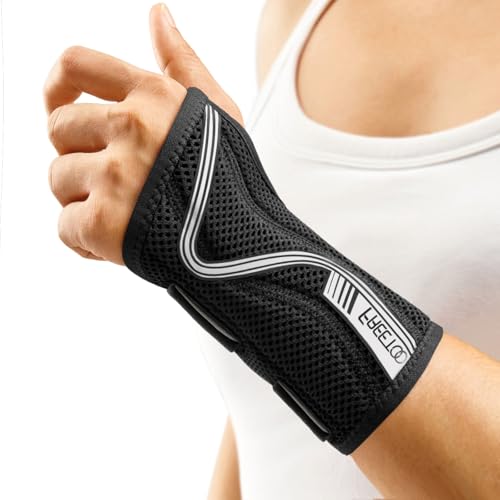
FREETOO Left Wrist Brace, Medium

Carpal Tunnel Wrist Brace by OrthoMD, Orthopedic-Designed Rigid Stabilizer for Right Wrist, Medium

DonJoy Performance Anaform Wrist Wrap Support Brace
More Details On Our Top Picks
Picture waking with your wrist folded into an uncomfortable position after several hours of sleep. This Therapist’s Choice brace combines a cushioned palm support with an enclosed metal splint, helping hold your hand in a neutral position while protecting the wrist from direct pressure.
The sleeve-style construction makes this a practical nighttime choice, and hook-and-loop straps let you adjust the fit over a 5.25- to 9-inch wrist range. You benefit most from the plush cushioning after a day spent typing, using a mouse, or doing repetitive hand work.
Well-Handled Touches
- The padded palm cushion gives your hand a softer landing than a bare splint.
- The enclosed metal support avoids uncomfortable metal touching your skin.
- Breathable, moisture-releasing fabric suits longer periods of wear.
- The sleeve slides on without complex setup, then secures with hook-and-loop tabs.
- You can use the same design on either hand across a broad wrist range.
Practical Considerations
- Measure your wrist at its narrowest point to confirm the stated fit range.
- The cushioned and rigid components may feel bulkier than a soft sleeve during sleep.
Key Specs
Made For
You get the most benefit from this brace when nighttime wrist positioning and cushioned comfort matter more than a low-profile sports design.
A Better Fit Elsewhere
OrthoMD Carpal Tunnel Wrist Brace offers a clearer choice for rigid daytime stabilization, while this Therapist’s Choice model leans more heavily into cushioned sleep support.
The Med Spec Wrist Lacer Support takes a focused approach to wrist support after a sprain, strain, or period of cast use. Its universal-right format is aimed at people who need structured support rather than the softer nighttime positioning offered by a padded sleep brace.
You may find this model useful when your wrist needs support during recovery and routine movement. The 8-inch black design gives the product a straightforward appearance, while the right-hand orientation narrows the fit decision to one clear option.
Positive Takeaways
- The support format suits sprains, strains, carpal tunnel discomfort, and post-cast use.
- Its defined 8-inch length gives you a concrete size to compare with your hand.
- The black finish keeps the support visually understated under clothing.
Small Caveats
- This listing is for the right hand, so left-hand wearers need a different model.
- Compare the 8-inch format with your hand and forearm before ordering.
- Choose a cushioned night brace when sleep comfort takes priority over this support profile.
The Right Fit
You benefit most from this support during recovery from a wrist injury or while transitioning away from a cast.
Another Choice May Suit
FREETOO Right Wrist Brace, Medium offers an anatomical S-shaped profile for people who want shaped daily support rather than an 8-inch lacer format.
An S-shaped profile gives this FREETOO right-hand brace a more anatomical approach to wrist positioning. You can wear it during daily activities or at night, with the shape designed to sit more naturally around the wrist and hand than a straight sleeve.
Its stated uses include discomfort associated with carpal tunnel syndrome, tendonitis, and arthritis. The right-hand and medium-size combination makes this a specific choice for people whose symptoms call for shaped support rather than a broad recovery wrap.
Real Benefits
- The anatomical S-shape follows the hand’s curve more closely than a simple tubular sleeve.
- You can use the brace during daytime activity or as overnight wrist support.
- Its intended applications cover several common sources of wrist discomfort.
- The right-hand format removes any uncertainty about the model’s orientation.
A Few Limitations
- Confirm that a medium size matches your wrist before ordering.
- Choose the left-hand sibling for the opposite wrist rather than trying to reverse this model.
Built With In Mind
You benefit most from this brace when your right wrist needs shaped support for daily tasks and nighttime positioning.
Where A Sibling Pick Shines
FREETOO Left Wrist Brace, Medium is the direct choice for left-hand wearers who want the same S-shaped concept.
Support for your left wrist should not depend on adapting a right-hand design. This FREETOO left-hand model uses the same anatomical S-shaped concept as its right-hand sibling, giving you a properly oriented option for carpal tunnel support, tendonitis, arthritis, and general wrist discomfort.
The medium designation is the main sizing decision to make. You may find the shaped fit useful during desk work, daily tasks, or sleep, especially when a loose sleeve does not provide the hand-following support you want.
A Strong Showing
- Left-hand orientation provides a clear alternative to the right-side FREETOO model.
- The S-shaped construction is designed to follow the hand more closely.
- You can use it for nighttime support or added stability during routine activity.
- Its intended applications span carpal tunnel discomfort, tendonitis, and arthritis.
Factors To Consider
- Check that your wrist measurements align with the medium size.
- Choose OrthoMD for a rigid splint when firm motion control matters more than an anatomical profile.
Who It Suits Best
You benefit most from this model when your left wrist needs an anatomically shaped brace for daily activities or overnight positioning.
Consider Something Else When
FREETOO Right Wrist Brace, Medium fits your situation better when your symptoms are concentrated in the right hand.
OrthoMD takes a firmer approach than the FREETOO options with a rigid stabilizer designed to hold your wrist in a neutral position. Andrew Yang, MD, a practicing orthopedic hand surgeon, developed the brace based on clinical experience with carpal tunnel syndrome and wrist injuries.
You can wear the right-hand medium model for sleep or daytime support, including wrist discomfort associated with tendonitis and arthritis. The rigid construction gives this brace a clearer purpose when limiting wrist movement is more important than soft, flexible padding.
Reasons It Performs
- The rigid stabilizer provides a firm alternative to a soft sleeve.
- Neutral positioning gives your wrist a defined resting angle.
- One design covers both sleeping and daytime wear.
- Development by a practicing orthopedic hand surgeon adds clinical context.
- The right-hand medium format suits one clearly defined fit.
Trade-Offs To Consider
- A rigid splint may feel less adaptable than the cushioned Therapist’s Choice design.
- Confirm the right-hand orientation and medium size before ordering.
Technical Highlights
Whose Shelf It Belongs On
You benefit most from this brace when your right wrist needs rigid support during sleep and demanding daytime activities.
Reach For A Different Pick When
Therapist’s Choice Night Wrist Sleep Support Brace is the better fit for you when soft cushioning and a removable palmar splint take priority over a rigid stabilizer.
Competitive sports place your wrist through repeated extension, flexion, and sideways movement. The DonJoy Performance Anaform uses two straps to hold the wrist in place while limiting that motion, making it more relevant to football, motocross, cheer, and golf than to overnight rest.
You also get compression, heat regulation, and protection without the wrap blocking hand movement. The result is a more athletic support profile than the sleep-oriented cushions and rigid neutral-position splints in this shortlist.
Where It Delivers
- Double straps hold the wrist steady during quick athletic movement.
- Motion control addresses extension, flexion, and sideways deviation.
- Compression adds support without enclosing the entire hand.
- Heat regulation helps manage warmth during active use.
- Your hand remains available for gripping and coordinated movement.
Details To Watch
- This athletic wrap targets sports and active work rather than nighttime positioning.
- Choose a dedicated night brace when sleeping comfort is your main concern.
Feature Rundown
Who Will Love This
You benefit most from this wrap during competitive sports, practice, or physically demanding work that calls for controlled wrist movement.
Swap It Out When
OrthoMD Carpal Tunnel Wrist Brace is the better choice for you when neutral wrist positioning during sleep matters more than athletic motion control.
What to Check Before Your Wrist Brace Decision
Night Support or Daytime Stability
Nighttime braces often emphasize cushioning, neutral hand placement, and easy sleep, while rigid splints concentrate on firmer wrist control. Daytime activity can shift the decision toward compression, motion restriction, and freedom of movement, especially during sports or physically demanding work.
Hand Side and Sizing
A right-hand model cannot double as a left-hand fit, so confirm the orientation before checking dimensions. Measure your wrist at its narrowest point for adjustable models, and check the stated size against the product’s sizing system for fixed-size braces.
Soft Padding or Rigid Support
Soft cushioning can feel more natural during sleep, while a rigid stabilizer offers firmer control over wrist movement. Your normal activity level matters more than general comfort alone, since a brace you remove for daily tasks may not suit your routine.
Intended Use
Nighttime support, post-cast use, daily activities, and competitive sports call for different features. Persistent numbness, weakness, or continuing discomfort deserves evaluation by a healthcare professional rather than relying only on brace fit.
Brace Details That Shape Your Decision
Where Shoppers Go Wrong
Many mistakes come from focusing on the condition name while overlooking hand side, sizing, or the intended activity. A sleep brace, rigid splint, and sports wrap can all appear similar in a search, yet each supports the wrist in a different way.
What Separates Premium From Basic
Higher-tier braces may add enclosed splints, shaped profiles, better padding, or more deliberate motion control. The extra expense is most useful when a specific feature matches your comfort needs or activity, rather than simply adding more structure than you need.
Frequently Asked Questions
Should I wear a hand brace for carpal tunnel while sleeping?
A nighttime brace can support a neutral wrist position and reduce the strain created by a bent wrist during sleep. Choose a comfortable fit and avoid tightening it in a way that creates numbness, tingling, or new discomfort.
Should I choose a right-hand or left-hand brace?
Choose the model made for the wrist that needs support, because these versions are not interchangeable. Confirm the orientation and size on the product listing before ordering.
Is a rigid splint or soft brace better for carpal tunnel support?
A rigid splint offers firmer motion control, while a soft padded brace may feel more natural during sleep. Your level of support, preferred sleep comfort, and daily activity should guide the choice.
How do I measure my wrist for a brace?
Measure around the narrowest point of your wrist, keeping the tape snug but not tight. Compare that measurement with the stated adjustment range or size guide for your selected model.
Can I wear a wrist brace during sports?
A sports-oriented wrap can stabilize the wrist during movement, especially when you need control during swings, catches, or impacts. Look for a design that limits unwanted wrist motion while leaving your hand able to grip.
Closing Remarks
Your best match starts with the hand that needs support and the hours when discomfort appears most. Therapist’s Choice leads for cushioned sleep, OrthoMD for rigid neutral positioning, FREETOO for shaped side-specific support, Med Spec for recovery use, and DonJoy for athletic movement control. Choose based on fit and purpose, then give the brace a fair wear period before deciding whether it belongs in your routine.
