

A home blood pressure monitor earns its place by making daily checks easier to position, read and record correctly. That matters most for people managing long-term monitoring, coordinating care for a family member or sharing a device between two adults. Your priority may be a simple upper-arm cuff, app-based trend tracking or a model that detects unusual heart rhythms during routine measurements.
The Leading Options At A Glance

OMRON Bronze Blood Pressure Monitor
CAVN Barrel-Type Upper Arm Monitor

Arboleaf No-Wrap BP Monitor

Medline Plus Elite Blood Pressure Monitor with Two Cuffs

AMSPROOF Dual-User Voice Broadcast Monitor with XL Cuff

OMRON 2-in-1 EKG Monitor
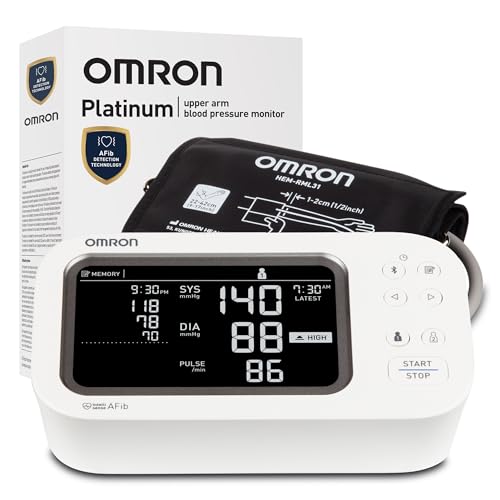
OMRON Platinum BP Monitor
Why These Options Stand Out
The Bronze model suits a daily routine where you want more than a single on-screen number. Its Bluetooth connection moves readings into the OMRON Connect app, where charts and unlimited records can help you and your healthcare professional examine patterns over time.
For regular morning checks, the hypertension indicator and irregular-heartbeat detection add context without turning the device into a diagnostic tool. The wide-range D-ring cuff accommodates arms from 9 to 17 inches, although correct positioning still matters for a useful reading.
The Value In It
- Bluetooth app support provides a longer history than the monitor’s 14-reading onboard memory.
- Compatibility with Apple Health and Google Fit makes trend review more convenient.
- Irregular-heartbeat detection adds context during routine measurements.
- The 9-to-17-inch cuff covers a broad adult arm range.
- A storage case, four AA batteries and setup guides are included.
Things To Consider
- The cuff must sit correctly on the upper arm, so check the fit before each session.
Key Specs
Made For
You benefit most from this model if you want app-supported tracking and routine heart-rhythm notifications without a multi-function EKG setup.
Where Another Pick Suits Better
The CAVN Barrel-Type Upper Arm Monitor is easier for you to position if wrapping a traditional cuff creates difficulty.
Loosening a wrap cuff and guessing where the artery marker should sit can make a familiar task feel fiddly. The CAVN monitor takes a different approach: you slide your arm into a cylindrical barrel, rest your elbow on the built-in switch and press one button to begin.
That arrangement may be especially helpful in a busy household or for an older adult who wants less cuff handling. The barrel fits arms from 7.1 to 16.5 inches, while separate profiles for two people keep their stored results apart.
Everyday Perks
- Arm-in placement removes the need to wrap and position a traditional cuff.
- A backlit LCD makes systolic, diastolic and pulse figures easier to see in dim rooms.
- Two user profiles retain up to 99 readings each.
- The 2,000mAh rechargeable battery uses a Type-C connection.
- The broad arm range suits adults and family members with different sizes.
Worth Noting
- Rechargeable power means the monitor needs access to its charging cable.
- For multiple readings, allow two minutes between sessions and use the average of the latest three.
Feature Snapshot
Right Fit For
This monitor suits you or an older family member who values straightforward placement, a readable screen and minimal cuff adjustment.
Swap It Out When
The Arboleaf No-Wrap BP Monitor offers more user profiles and a specified accuracy of plus or minus 3 mmHg for multi-adult households.
The Arboleaf combines a one-button arm-in design with unusually generous family storage. It records up to 199 entries for each of four users and calculates the average of the latest three, making it practical for a household that does not want separate paper notes.
Its specified pressure accuracy is plus or minus 3 mmHg, and the display includes systolic and diastolic figures, pulse, an average value and a level bar. The fit spans adult arms from 8.7 to 15.7 inches, with a wide screen designed for quick reading.
Where It Excels
- Four separate profiles prevent family readings from becoming mixed together.
- The 199-reading capacity supports long-term comparisons without frequent resets.
- A three-reading average gives routine sessions a useful summary.
- Irregular-heartbeat detection provides an additional on-screen indication.
- One-touch operation reduces the number of controls involved in each check.
Trade Offs
- There is no Bluetooth, app syncing or cloud storage for transferring records.
- The 15.7-inch upper limit may not suit every adult arm.
Built With In Mind
You benefit most from this model if several adults track readings independently and prefer on-device history over app-based records.
A Better Fit Elsewhere
The OMRON Bronze Blood Pressure Monitor is a stronger match for anyone who wants Bluetooth records and compatibility with Apple Health or Google Fit.
Two cuff sizes make the Medline Plus Elite practical for a couple or family with noticeably different arm measurements. The smaller cuff covers 22 to 30 centimetres, while the larger version accommodates 30 to 42 centimetres.
Its traditional wrap-around layout remains familiar, and a single button starts automatic inflation and measurement. The display shows systolic pressure, diastolic pressure and pulse, with an adjacent colour scale for quick reference and a three-reading average.
Where It Delivers
- Including two cuffs reduces the need to buy another size separately.
- Three user profiles suit a household with regular individual monitoring.
- Up to 90 saved measurements provide a practical history for routine comparisons.
- The carrying case supports storage and travel.
- Automatic inflation and error detection simplify each measurement session.
Practical Considerations
- Confirm your arm circumference falls within one of the included cuff ranges.
- The model relies on four AA batteries rather than a rechargeable cell.
Quick Facts
Who It Suits Best
This monitor suits you when a familiar cuff, multiple user profiles and two included sizes matter more than app connectivity.
Another Choice May Suit
The AMSPROOF Dual-User Voice Broadcast Monitor with XL Cuff fits people who benefit from spoken results during each measurement.
The distinguishing feature here is audible feedback. Voice broadcast can make a measurement easier to follow without leaning toward the screen, which may be useful for an older adult or anyone who finds small digital figures difficult to parse.
Two-user memory separates the records of people sharing the device, while the XL cuff fits upper arms from 8.7 to 16.5 inches. One-touch operation keeps the process compact for a morning or evening routine.
A Few Highlights
- Voice broadcast communicates results without requiring close screen reading.
- Dual-user memory suits two people sharing one monitor.
- The XL cuff covers upper arms from 8.7 to 16.5 inches.
- An irregular-heartbeat detector adds context during a measurement.
Small Caveats
- Spoken results may be undesirable in a shared or quiet room.
- Check the arm range before ordering, particularly for measurements near either end of the stated range.
Made For
This monitor fits you if you want spoken feedback and separate records for two adults in the same home.
Look Elsewhere When
The Medline Plus Elite Blood Pressure Monitor with Two Cuffs offers a clearer fit for households needing three user profiles and two different cuff sizes.
The Complete 2-in-1 brings blood pressure measurement and EKG recording into one upper-arm device. An EKG, short for electrocardiogram, records the electrical activity of the heart, giving you a second kind of home measurement to discuss with your healthcare professional.
OMRON’s advanced-accuracy technology supports the pressure readings, while onboard storage holds up to 90 measurements. For people who want more than a pressure number, this adds a useful layer without moving routine tracking to a separate device.
Features That Help
- Blood pressure and EKG functions reduce the number of devices needed for home measurements.
- The 90-reading memory supports recent history and trend comparisons.
- Upper-arm measurement provides a familiar format for regular checks.
- Combined results can give your healthcare professional a broader view to discuss.
Areas To Watch
- The EKG function adds value only when you intend to use it consistently.
- Follow the measurement instructions carefully, as correct hand and body positioning remains important.
The Numbers That Matter
Who Will Love This
You benefit most from this model when you want both pressure readings and regular EKG measurements from one upper-arm device.
Reach For A Different Pick When
The OMRON Platinum BP Monitor better suits two adults who want separate records and AFib detection rather than an EKG function.
The Platinum is built around routine monitoring for two adults. Each person can have a separate profile with capacity for 100 readings, which helps prevent one household member’s history from being mixed with another’s.
Its AFib detection screens for atrial fibrillation, an irregular heart rhythm, during blood pressure checks. That feature gives you information to discuss with a healthcare professional, but it remains a screening indication rather than a diagnosis.
Useful Strengths
- Dual-user support keeps two people’s readings separated.
- Up to 100 readings per user provide a detailed onboard history.
- AFib detection adds rhythm information to routine pressure checks.
- Advanced-accuracy technology supports consistent home measurement.
Possible Compromises
- The AFib indication should be considered alongside advice from a healthcare professional.
- This model is less focused than the OMRON 2-in-1 EKG Monitor for people primarily seeking an EKG function.
Core Details
The Right Fit
This monitor suits you if two adults want separate histories and routine AFib screening alongside blood pressure readings.
Where A Sibling Pick Shines
The OMRON Bronze Blood Pressure Monitor is the more focused option for app-based tracking, irregular-heartbeat detection and compatibility with Apple Health.
What Matters Before You Choose a Home Monitor
Cuff fit comes first
The cuff must match your upper arm without slipping or cutting into the skin. Measure your arm before ordering, then compare the circumference with the stated range rather than relying on a loose general size category.
Decide how you will record results
Onboard memory suits people who mainly want recent comparisons. The OMRON Bronze is a different proposition because Bluetooth transfers records into an app for longer-term review.
Consider who will use the display
The CAVN and Arboleaf models use an arm-in barrel, while the AMSPROOF adds spoken results. These features can simplify the routine for some adults, although you should also consider visibility and noise in your home.
Look at storage in the context of your routine
Memory capacity, separate user profiles and averaging functions affect how easily you can follow change over time. Match those controls to the number of people using the monitor rather than choosing the largest figure on the box.
Practical Details That Shape Home Monitoring
Common Shopping Slip Ups
A common mistake is focusing on the number of readings without checking whether those records can be transferred or separated by user. Another is choosing a cuff by appearance rather than arm circumference. Measure first, and then decide whether app support, shared profiles or spoken results deserve a place in your routine.
What Separates Premium From Basic
A higher-tier model often adds rhythm screening, larger memory, dual-user handling or app connectivity. The upgrade makes sense when you will regularly use that specific function; a simpler monitor remains more practical when your priority is straightforward placement and dependable records.
Frequently Asked Questions
Which type of blood pressure monitor is easiest to use at home?
An upper-arm monitor with an arm-in barrel is often easier to position because you slide your arm into a fixed fitting rather than wrapping a cuff. The CAVN and Arboleaf models use this approach, while correct seated posture remains necessary.
Should I choose a monitor with Bluetooth?
Bluetooth is useful for long-term trend review because readings move from the device into an app. The OMRON Bronze supports Bluetooth, Apple Health and Google Fit, while the Arboleaf relies on its onboard display and memory.
Can two people use the same home blood pressure monitor?
Several models support separate profiles for two adults. The OMRON Platinum stores up to 100 readings for each of two users, while the CAVN holds 99 readings per user and the Medline Plus Elite supports three profiles.
What cuff size should I choose?
Choose a cuff whose stated arm range includes your measured upper-arm circumference. The Medline Plus Elite includes both a 22-to-30 centimetre cuff and a 30-to-42 centimetre cuff, while barrel models need their full arm range checked.
What is the difference between irregular-heartbeat detection and AFib detection?
Irregular-heartbeat detection flags unusual pulse patterns during a blood pressure measurement. AFib detection is specifically intended to identify patterns associated with atrial fibrillation, and either indication should be discussed with a healthcare professional.
Final Verdict
The best home monitor is the one you can position correctly and use without frustration. Match the cuff to your arm, then decide whether app history, shared profiles, voice guidance or rhythm detection will genuinely improve your routine. Consistency matters more than having every function available, so a comfortable and well-understood device is usually the more useful choice.
