

A blood pressure cuff sitting on the kitchen table can turn a routine health check into a quick, focused task. The right fit matters because a cuff that is too tight or loose can distort the reading, while features such as backlit displays, irregular heartbeat alerts, and two-user memory help different households track changes more conveniently. These options cover simple daily checks, connected trend tracking, larger arm sizes, and dedicated cuff replacement needs.
The Leading Options At A Glance

OMRON Bronze Upper Arm Blood Pressure Monitor

Braun ExactFit 1 Upper Arm Monitor BUA5000

HealthTree Upper Arm Monitor with Large Cuff

Double love Blue Home Blood Pressure Monitor

A&D Medical UA-280A Medium Replacement Cuff

OMRON Complete 2-in-1 EKG Monitor
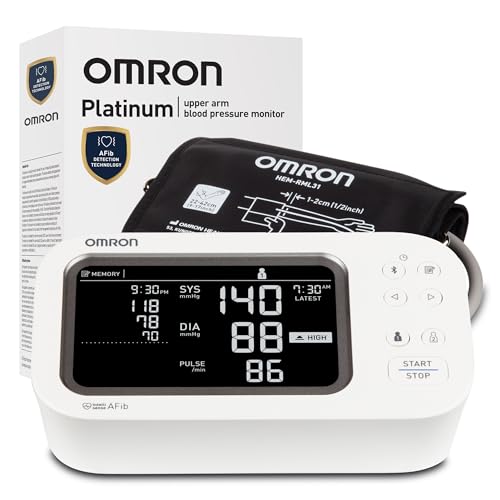
OMRON Platinum Upper Arm Monitor
Taking A Closer Look At The Options
The Bronze model brings app connectivity to an otherwise straightforward upper-arm setup, which makes it a natural fit for someone who wants a paper trail without fussing with separate logs. Its wide-range D-ring cuff accommodates upper arms measuring 9 to 17 inches, and the included case keeps the monitor organized between morning or evening checks.
For a commuter who checks pressure away from a medical office, the useful part is continuity: the device keeps up to 14 readings on its own and can hold unlimited records through the OMRON Connect app. Irregular heartbeat detection and a hypertension indicator add context to each measurement, though Bluetooth and app compatibility add a little more setup than a basic standalone monitor.
Noteworthy Benefits
- Bluetooth syncing creates a broader history than the monitor’s 14-entry onboard memory.
- The 9-to-17-inch D-ring cuff fits a broad range of adult upper arms.
- Irregular heartbeat detection flags unusual rhythms during a routine measurement.
- The hypertension indicator makes elevated results easier to identify at a glance.
- Apple Health and Google Fit support adds useful options for existing app routines.
Points To Keep In Mind
- Bluetooth setup and app permissions add steps compared with a standalone display.
- The included four AA batteries suit regular use, while rechargeable cells require your own charging routine.
Feature Snapshot
Made For In Mind
This monitor suits people who want connected records, multi-device app support, and a broad cuff range in one package.
A Better Fit Elsewhere
Braun ExactFit 1 offers a simpler choice for anyone who prioritizes one-button operation and a large display without app-based record keeping.
A single button and a large display make the ExactFit 1 easy to approach, especially on a busy morning when you have more than one routine competing for your attention. Clinically validated monitoring gives the device a reassuring foundation without adding a complicated interface to the daily process.
This is a practical monitor for someone starting a home routine or preferring a compact appliance over a connected ecosystem. The universal cuff covers arm circumferences from 8.6 to 16.5 inches, while the most recent measurement remains available for recall between sessions. In our view, its simplicity is the main advantage, though limited history may matter for longer trend analysis.
What Helps Most
- One-button operation reduces the number of steps between sitting down and taking a reading.
- The large display makes systolic pressure, diastolic pressure, and pulse information easier to see.
- Irregular heartbeat detection provides an alert during the measurement process.
- The universal cuff accommodates upper arms from 8.6 to 16.5 inches.
Small Caveats
- Only the latest result is stored, so the device offers limited built-in trend history.
- Confirm your arm circumference falls within the cuff range before ordering.
Who Will Love This
The ExactFit 1 suits adults who value simple controls, readable results, and a compact daily monitoring routine.
Another Choice May Suit
HealthTree Upper Arm Monitor with Large Cuff better serves households that need two-user memory and a backlit display.
The backlit screen is the feature that stands out in dim rooms, such as a bedroom before breakfast or a hallway with limited lighting. Large characters present systolic pressure, diastolic pressure, pulse rate, and irregular heartbeat alerts together, reducing the need to squint at small figures.
Dual-user mode makes this a sensible choice for couples or family members who each want separate histories. The monitor retains 90 readings for each of two users, with date and time stamps, and its adjustable 8.7-to-16.5-inch cuff covers most adult arms. The trade-off is a broader feature set, which may feel busier than the Braun ExactFit 1 for someone who only wants the latest result.
What Pays Off
- The backlit, large-character display improves visibility in low-light settings.
- Two separate 90-entry histories keep partners’ records organized.
- Date and time stamps make older entries easier to place in context.
- One-touch inflation reduces the learning curve for routine users.
- The adjustable cuff is designed for arm sizes from 8.7 to 16.5 inches.
Things That May Matter
- Two-user storage adds menu complexity compared with a single-user monitor.
- Arms outside the stated 8.7-to-16.5-inch range need a differently sized cuff.
Quick Facts
Built For In Mind
This model is built for shared homes, dim rooms, and people who want separate date-stamped histories for two users.
Reach For A Different Pick
OMRON Platinum Upper Arm Monitor offers stronger dual-user and AFib-related functionality for shared tracking with added rhythm focus.
Voice guidance gives this monitor a noticeably different home-use angle, particularly for someone who has difficulty reading small display text. It announces preparation steps before the measurement and reads the results afterward, with a switch for turning the announcements off.
The included cuff options cover 8.7-to-16.5-inch and 15-to-21.7-inch upper arms, making this a more accommodating choice than most of the standard models here. It also stores 120 readings for each of two users and includes an arm-detection indicator for improper placement. The catch is the larger physical package, particularly once both cuff sizes are considered.
Where It Excels
- Spoken results reduce the need to read and interpret the display immediately.
- Two cuff sizes accommodate both standard and larger upper arms.
- Automatic arm detection alerts you when the cuff appears to be positioned incorrectly.
- Separate 120-record histories serve two users.
- The 4.5-inch display supports easier viewing in dim conditions.
Possible Compromises
- Voice announcements may not suit users who prefer a completely silent appliance.
- Two included cuff sizes and a round DC connector add more components to store.
- The extra-large cuff overlaps the standard range at 15 to 16.5 inches.
Feature Rundown
The Right Fit
This monitor fits larger upper arms and people who benefit from spoken instructions and results.
Swap It Out When
Braun ExactFit 1 is a cleaner fit for someone who values silent operation and fewer controls.
A replacement cuff solves a different problem from a complete monitor, and that distinction is important here. The UA-280A is a standalone cuff rather than a display device, so it suits someone whose A&D monitor still works but whose original cuff is worn, difficult to fit, or shared awkwardly with another person.
The medium cuff fits upper arms from 9.4 to 14.2 inches and uses an adjustable, latex-free design. It is compatible with the A&D Medical UA-789AC, UA-787EJ, and UA-705V monitors, using a connector designed for a secure fit. Measure your arm at the midpoint between shoulder and elbow before ordering, since choosing the wrong category can affect the fit.
What Stands Out
- It replaces a worn cuff without requiring a new monitor.
- The adjustable latex-free material conforms to the natural curve of the arm.
- A second cuff can provide a separate fit for another household member.
Details To Watch
- The cuff works only with the three listed A&D monitor models.
- Medium sizing covers 9.4 to 14.2 inches, not the full range of adult arms.
- No monitor, display, or measurement memory is included.
Whose Shelf It Belongs On
This cuff belongs in the home of a compatible A&D Medical monitor owner with a 9.4-to-14.2-inch upper arm.
Not Your Match When
HealthTree Upper Arm Monitor with Large Cuff is the better choice when you need a complete monitor rather than a replacement component.
The Complete combines an upper-arm blood pressure reading with an EKG measurement, where EKG means electrocardiogram, a recording of the heart’s electrical activity. That dual purpose gives it a different role from the standard monitors here, particularly for someone whose daily routine already includes tracking several heart-related measurements.
The device can store up to 90 readings, giving the monitor more onboard history than the Bronze model’s 14 entries. For someone building a consistent record at home, that larger memory is meaningful, though the combined functions may feel like more equipment than needed for a single pressure check. It is best treated as a focused upgrade for users who understand both measurement types.
Notable Upsides
- Blood pressure and EKG measurements are combined in one device.
- Ninety stored readings provide more local history for routine tracking.
- The upper-arm format fits neatly into an established home-monitoring habit.
Practical Considerations
- The extra EKG function adds complexity when only a pressure reading is needed.
- Blood pressure and EKG results serve different purposes and should not be treated as interchangeable.
Core Details
Made With In Mind
This device suits established monitoring routines that benefit from both pressure and EKG functions in one unit.
Look Elsewhere When
OMRON Bronze Upper Arm Blood Pressure Monitor is a simpler fit for people who mainly want pressure readings with app-based trend storage.
Platinum centers its added functionality on rhythm awareness, using AFib detection technology during blood pressure checks. AFib refers to atrial fibrillation, an irregular heart rhythm, so this feature gives the device a stronger monitoring angle than the Bronze model and the standard Braun, HealthTree, and Double love options.
Dual-user support stores up to 100 readings for each person, which makes the monitor appealing to couples who want separate histories. Its upper-arm design suits a routine performed at a kitchen table or bedroom desk. The trade-off is a more specialized feature set, so a person who only wants a quick pressure check may find the Bronze model more focused.
What Earns Its Place
- AFib detection adds rhythm-related information to regular pressure checks.
- Separate 100-reading histories provide generous storage for two users.
- Dual-user organization suits couples monitoring on separate schedules.
- The upper-arm format supports a familiar seated measurement routine.
Where It May Fall Short
- Rhythm-focused features may add complexity for a basic pressure-only routine.
- The monitor takes up more attention than the Braun ExactFit 1’s one-button layout.
Technical Highlights
Who Should Grab It
Platinum fits couples who want substantial dual-user history and a monitor with AFib detection built into upper-arm checks.
Where A Sibling Pick Shines
Double love Blue Home Blood Pressure Monitor offers a better fit for larger arms and users who depend on spoken results.
What Matters Before You Choose An Upper-Arm Monitor
Cuff Fit Comes First
Measure the circumference of your upper arm at the midpoint between your shoulder and elbow. Compare that number with the stated cuff range before ordering, since a snug fit is essential for a dependable measurement.
Memory Depends On Your Household
A single stored result suits someone checking occasionally, while two-user memory helps couples or family members separate their histories. Connected storage is worth considering when you want longer-term trend records in an app.
Display And Alerts Shape Daily Use
Large characters help during a hurried morning, while a backlit display is useful in dim rooms. Voice guidance can make results easier to access, and irregular heartbeat or AFib detection adds another layer of information to a standard reading.
Practical Details That Change The Decision
Mistakes Worth Dodging
Choosing by display alone can lead to a poor arm fit, while assuming every irregular heartbeat alert represents a diagnosis is equally misleading. Check the cuff range, connection requirements, stored memory, and power options before placing an order.
What Separates Premium From Basic
Basic models concentrate on pressure readings, recent results, and a straightforward display. Advanced models add app syncing, dual-user histories, voice guidance, EKG functions, or AFib detection, making the extra features worthwhile only when your routine uses them.
Frequently Asked Questions
Which Cuff Size Fits Most Adults?
Most adult arms fit within a standard upper-arm cuff range, but sizes vary by model. Measure your upper arm circumference and compare it with the manufacturer’s stated range before purchasing.
Is a Backlit Display Useful for Home Monitoring?
A backlit display makes results easier to see in dim rooms or early mornings. It is particularly helpful for users who have difficulty reading small characters.
Should I Choose a Model With Memory?
Choose built-in memory for repeated trend tracking or shared household use. A one-reading model is simpler, while larger histories make comparisons easier.
What Does an Irregular Heartbeat Alert Mean?
It means the device detected a pattern that may be irregular during that measurement. The alert is information for follow-up, not a diagnosis by itself.
Is a Replacement Cuff a Complete Monitor?
No, a replacement cuff only connects to a compatible monitor and provides the arm wrap. The A&D Medical UA-280A requires one of the specifically listed A&D monitor models.
Final Thoughts
Start with cuff fit, then decide how much history and connectivity your routine genuinely needs. The Braun ExactFit 1 offers the simplest operation, the OMRON Bronze handles connected tracking, and the Platinum, Complete, HealthTree, and Double love models serve more specialized preferences. The A&D Medical UA-280A is the practical choice when you only need a compatible replacement cuff.
