

A home blood pressure monitor can turn a quick check into a steadier routine, especially for adults who track readings over time or share a device with a partner. The right model should make positioning easy, display numbers clearly in dim rooms, and store enough history to reveal meaningful patterns without turning your kitchen table into a clinic. These options range from straightforward upper-arm monitors to app-connected models and one with a hands-free tunnel cuff.
An Overview Of The Picks

HealthTree Upper Arm Blood Pressure Monitor with Large Cuff and Backlit Display

Double love Home BP Monitor

LotFancy Automatic Upper Arm BP Monitor with Large Cuff and 120-Reading Memory

Wellue Auto-Fit Tunnel Cuff
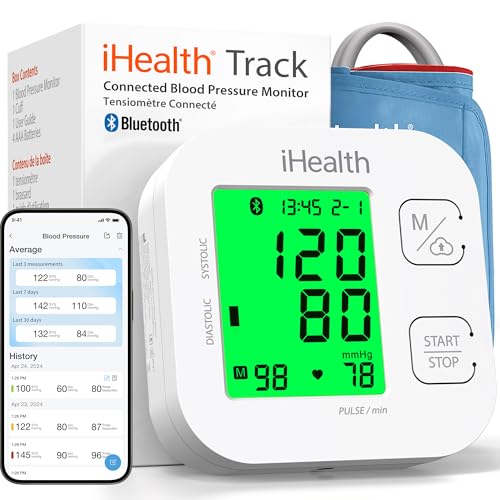
iHealth Track Smart Upper Arm Monitor

iHealth Neo Wireless Monitor with App

iHealth Track Pro Upper Arm Monitor
More On The Choices That Made The List
A large, illuminated display makes this a practical choice for evening checks or shared bathrooms. The one-button sequence reduces the number of decisions between wrapping the cuff and reading the results.
Its 8.7- to 16.5-inch cuff covers a broad adult range, while separate memories suit couples tracking their own histories. Compared with the Double love Home BP Monitor, it offers less spoken guidance, so visual comfort is its stronger suit.
Strengths Worth Knowing
- Large backlit numbers remain visible in dim rooms.
- Two profiles hold 90 readings each for longer comparisons.
- Date and time stamps help organize recurring measurements.
- Heart-rate and irregular-heartbeat indicators appear on screen.
Practical Considerations
- Measure your arm before ordering because the cuff starts at 8.7 inches.
- There are no voice prompts for users who prefer spoken results.
Key Specs
Built With In Mind
This model suits couples or family members who each want a separate, dated record with minimal setup.
Another Choice May Suit
The Double love Home BP Monitor fits people who rely on spoken instructions and results more than a large backlit screen.
Spoken instructions and results give this monitor a distinct advantage for anyone who has trouble reading small print. The blue housing and 4.5-inch display give the device a friendly, approachable appearance without compromising the main reading area.
Two cuff sizes cover more arm measurements than many standard cuffs, and 120 stored records per person offer room for sustained tracking. The trade-off is more hardware around the cuff and power setup compared with a rechargeable model.
Why It Works Well
- Voice broadcast reads results after inflation.
- Spoken precautions can guide each measurement.
- Standard and extra-large cuffs suit different arm sizes.
- Two user profiles preserve separate histories.
- Battery or DC power supports flexible placement.
Things To Consider
- Audio announcements may not suit a shared or quiet room.
- The supplied round DC connector should match your chosen power setup.
Feature Snapshot
Who It Suits Best
It is especially helpful for an adult who wants an audible reading or instructions that do not depend on viewing the display.
Where A Sibling Pick Shines
The HealthTree Upper Arm Blood Pressure Monitor with Large Cuff and Backlit Display is better for people who want a larger illuminated screen and silent operation.
The LotFancy design centers on a simple routine: fit the cuff, press one button, and read the result after roughly 30 seconds. Its oversized LCD characters and operation icons make the display approachable for older adults.
Each of two user profiles stores 60 dated readings, while the monitor averages the previous three results for added context. Compared with the HealthTree, it provides fewer total records, but its multi-reading average gives the stored data a different kind of utility.
Bright Spots
- One-button operation limits the daily learning curve.
- Large numbers support quick visual checks.
- Three-reading averages reduce manual calculation.
- Two profiles keep household records separate.
Worth Noting
- Four AA batteries are needed for battery operation and are not included.
- LotFancy products are transitioning to the Medlot sub-brand, so packaging may differ.
- The cuff accommodates arms from 8.6 to 16.5 inches.
Quick Facts
Made For
It fits a senior couple or shared household that wants one-touch measurements and two independent histories.
Look Elsewhere When
The HealthTree Upper Arm Blood Pressure Monitor with Large Cuff and Backlit Display suits households that prioritize more memory per profile and a backlit display.
Sliding your arm into the tunnel removes the fiddly step of wrapping and securing a conventional cuff. The built-in arm and elbow rests also guide positioning, which may help people who take readings without assistance.
For a home setup, the foldable, wireless design is easier to store than a monitor with a long cuff wrapped around its main body. The stated ±3 mmHg accuracy and color-coded backlight add useful clarity, though its charging requirement sets it apart from battery models.
Standout Benefits
- The tunnel cuff needs no wrapping strap.
- Rest components encourage steadier positioning.
- Color lighting differentiates result ranges.
- Separate users can each store 99 readings.
- The folding armrest reduces cabinet space.
Small Caveats
- USB-C charging is required before use.
- The stated cuff range begins at 7.1 inches.
Core Details
The Right Fit
This monitor suits independent users who want cuff-free setup, position guidance, and compact storage.
Reach For A Different Pick When
The iHealth Neo Wireless Monitor with App is the stronger fit for someone who wants records handled through a phone application.
A color-coded backlit display gives this model a quicker visual read than a plain number panel. Red, yellow, and green indicators help separate broad result ranges, while the large digits remain useful in a dim bedroom.
The smart label matters because this monitor fits into an app-centered routine rather than functioning as a stand-alone display alone. Compared with the Wellue Auto-Fit Tunnel Cuff, it offers a more familiar upper-arm format, but you give up the strap-free tunnel design and integrated arm support.
Good Reasons To Consider
- Large numbers make the screen easy to scan.
- Color indicators provide quick result context.
- Two-button control keeps the main functions accessible.
- No routine calibration is required.
Things That May Matter
- Confirm that your phone and account setup suit the connected tracking routine.
- The wide-range cuff is less convenient for a shared upper arm than a two-size cuff set.
Right Fit For
It suits someone who already keeps health data in an app and values color cues over cuff-free positioning.
A Better Fit Elsewhere
The Wellue Auto-Fit Tunnel Cuff better serves adults who want a monitor that can be positioned without wrapping a strap.
The appeal here is continuity between a physical check and a phone-based record. One-button operation and gentle inflation keep the monitor approachable, while wireless connectivity removes the need to copy every result into a separate notebook by hand.
This model makes more sense for someone already comfortable with mobile health tools than for a person who wants large local storage and spoken guidance. Compared with the iHealth Track Smart Upper Arm Monitor, its distinguishing feature is the explicit app and wireless focus.
Reasons It Performs
- Wireless results support connected record keeping.
- One-button operation keeps the starting point simple.
- Gentle inflation focuses on cuff comfort.
- Large numbers help with immediate reading.
Potential Drawbacks
- App access adds another part to the routine.
- Phone compatibility should be checked before purchase.
- The protection plan varies by covered event and part.
Who Will Love This
It suits smartphone-oriented adults who want each measurement to enter their connected record without manual transcription.
Consider Something Else When
The Double love Home BP Monitor is a better choice for someone who values spoken results and local two-user memory more than app connectivity.
The wide-angle LED display keeps the numbers legible from more than one viewing position. That makes the Track Pro appealing beside a bed, where you may be sitting or lying down and glancing at the screen instead of standing directly over it.
Red, yellow, and green indicators provide a quick visual cue, and one-touch operation keeps the interaction simple. The iHealth Track Smart Upper Arm Monitor offers similar color coding, but the Pro model’s viewing-angle emphasis gives it a distinct bedside advantage.
Key Advantages
- Wide-angle screen supports easier side viewing.
- Color indicators summarize result ranges quickly.
- One-touch startup suits a repeat routine.
- LED visibility helps in low-light rooms.
Points To Note
- Color lighting is an interpretation aid rather than a replacement for recorded values.
- Confirm arm fit and app requirements before settling on the model.
Product Snapshot
Whose Shelf It Belongs On
It fits a bedside table where a wide viewing angle and illuminated numbers matter more than a spoken result.
Swap It Out When
The Wellue Auto-Fit Tunnel Cuff is a stronger alternative for anyone who needs cuff-free placement and built-in arm support.
What Matters Before You Bring One Home
Cuff fit comes before extra features
A monitor only helps if the cuff fits properly. Compare the stated range with your arm circumference, paying particular attention to the minimum measurement. The LotFancy Automatic Upper Arm BP Monitor with Large Cuff and 120-Reading Memory begins at 8.6 inches, while the Wellue Auto-Fit Tunnel Cuff reaches down to 7.1 inches.
Decide how you want to see results
Some models use a plain numerical display, while others add color-coded backlights, voice broadcasts, or app-based records. Color lighting is convenient for a quick glance, voice is useful for reduced visual access, and an app suits people who already manage health data on a phone.
Think about two people using one monitor
Dual-user memory prevents one person’s readings from being mixed with another’s. Capacity still matters: the HealthTree model holds 90 records per profile, the Double love holds 120 per person, and the Wellue stores 99 per user.
Match power and storage to your space
Some monitors use AA batteries, some accept a DC connection, and the Wellue uses USB-C charging. Foldable parts and wireless construction can reduce cabinet space. Measure your available surface and confirm the power arrangement before ordering.
Avoiding Common Measurement Mistakes
Common Shopping Slip Ups
The most consequential mistake is choosing a model by display size while overlooking cuff fit. A large screen cannot compensate for a cuff that is too small. Also check whether the monitor needs batteries, a proprietary connection, or app setup, because that affects daily convenience and placement.
Mistakes Worth Dodging
Avoid treating a color indicator as a substitute for the actual systolic, diastolic, and pulse figures. Write down or retain the numbers as directed, keep the routine consistent, and avoid changing position midway through a measurement. Simple placement habits make separate readings easier to interpret.
What Separates Premium From Basic
Higher-tier models tend to spend more on positioning, storage, charging, and connected records rather than basic inflation. A tunnel cuff, arm supports, rechargeable design, or app workflow can justify the difference for daily users. A straightforward backlit display with ample memory may be more sensible when your priorities are limited to fast, readable measurements.
Frequently Asked Questions
Which home use blood pressure monitor is easiest to position?
The Wellue Auto-Fit Tunnel Cuff is designed for the simplest positioning because you slide your arm into the cuff instead of wrapping a strap. Its integrated arm and elbow rests also provide placement guidance.
Which monitor is best for a large upper arm?
The Double love Home BP Monitor includes an extra-large cuff extending to 21.7 inches, giving it an advantage over the standard ranges of most other models here. Measuring your arm before ordering remains the safest way to confirm fit.
Are voice results useful for home checks?
Voice announcements can make a monitor easier to use when reading small digits is inconvenient. The Double love Home BP Monitor reads results aloud and can also turn off the voice broadcast for quieter settings.
Do I need an app for blood pressure tracking?
An app is helpful when you want records organized on a phone, but it is not required for every routine. The iHealth Neo Wireless Monitor with App suits connected tracking, while the HealthTree and LotFancy models place more emphasis on local memory.
Can two people use the same monitor?
All seven models support two-user organization to some degree, with separate profiles or memories. Their storage limits vary, so compare the number of records per person rather than checking only for a dual-user label.
Wrap Up
The best fit depends on the part of the routine you find hardest. Choose the Wellue for effortless positioning, the Double love for spoken guidance, or an iHealth model for connected records. For a conventional display with strong local memory, the HealthTree and LotFancy options deserve a closer look. Take your arm measurement, compare the cuff range, and choose the setup you will actually use consistently.
