

Walking all day can expose the small differences between a comfortable insole and one that leaves your feet feeling worse. Shoes that roll inward slightly, combined with long shifts, hard floors, or narrow footwear, can make arch height, heel support, and trim-to-fit construction especially important. These six options serve different needs, from dress shoes to work boots and higher arches.
How The Shortlist Stacks Up
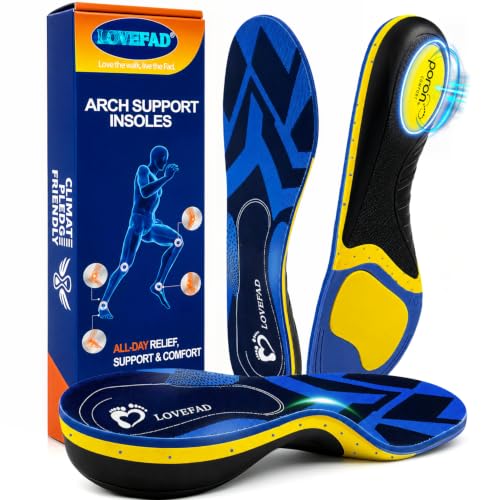
LOVEFAD Arch Support Insoles

Prothotic Original Pressure Relief Insoles for Plantar Fasciitis, Aching and Swollen Feet

CRUVHEAL 220+ lbs High Arch Support Insoles

Saluber H482-46 3/4-Length Italian Orthotic Insoles with Metatarsal Pad, EU37

CRUVHEAL Work Orthotic Insoles, Blue XL

CRUVHEAL Low Arch Boot Insoles, Black XL
What Each Pick Brings To The Table
LOVEFAD combines a 1.3-inch arch profile with 5.5 mm dual-layer EVA cushioning, giving it more substance than a thin sockliner. The three-point shape supports the forefoot, arch, and heel, which makes it a practical choice for work shoes, walking shoes, boots, and hiking footwear. You may notice the arch feels firm during the first few wears, particularly on a long shift.
The trim-to-fit format sets this option apart from the more structured choices in the roundup. It gives you a way to accommodate different shoe volumes, although trimming works best before the insole is heavily worn. Compared with the Prothotic Pressure Relief Insoles, LOVEFAD offers a more openly adjustable design rather than specialized contouring materials.
Positive Points
- Dual-layer EVA cushions from heel to toe during long periods of standing.
- The 1.3-inch arch height suits moderate support needs and normal or flatter arches.
- A deep heel cradle adds stability while the three-point shape supports the forefoot.
- Trim-to-fit construction works with several shoe styles.
- A Poron heel pad adds cushioning where repeated impact reaches the heel.
Things To Consider
- The firm arch profile may need a gradual introduction during the first several wears.
- Check the available toe area and insole thickness before trimming for a particular shoe.
Key Specs
Made For Mixed Shoe Rotation
You benefit most from these insoles if you divide your time among sneakers, work shoes, boots, and walking shoes.
Look Elsewhere When
The CRUVHEAL 220+ lbs High Arch Support Insoles suit you better when you want a taller, more substantial arch profile.
Prothotic builds around a soft open-cell Plastazote cover, a 25-durometer material that can soften around pressure points, paired with a polyurethane base. Its raised arch and metatarsal area are intended to support an inward-rolling foot while distributing pressure more evenly. That makes it a more contour-oriented option than the removable, trim-to-fit LOVEFAD Arch Support Insoles.
Vy-Gel pads appear at the forefoot and heel, where hard flooring and extended walking can create concentrated pressure. Depending on your footwear, the softer upper may feel more accommodating than a rigid orthotic, although the listed narrow-to-wide sizing means careful checking matters. The design looks most relevant to people who spend substantial time walking or standing.
The Helpful Details
- The conforming Plastazote cover adapts gradually to the shape of your foot.
- A raised metatarsal area balances support beneath the ball of the foot.
- Vy-Gel pads cushion both the forefoot and heel during repeated steps.
- The polyurethane base adds support without relying on conventional memory foam.
Small Caveats
- The listed size covers EU E-Wide for men’s 13–15 and EU M 11–12.5 for men, so check your shoe size carefully.
- Contoured cushioning is less adjustable than a trim-to-fit insert.
- Expect a more sculpted feel beneath the arch than a low-profile foam liner.
Quick Facts
Right Fit For
These insoles suit people who spend long periods walking and prefer a molded, cushioning-focused design over a simple flat insert.
Another Choice May Suit
The Saluber H482-46 orthotics are a better fit for narrow dress shoes that cannot accommodate a full-length contoured insole.
CRUVHEAL positions this model around people weighing 220 pounds or more who need more substantial support than a thin everyday liner provides. Its 1.4-inch arch is slightly taller than the LOVEFAD Arch Support Insoles, creating a more pronounced support profile. That distinction matters most in roomier shoes, since a high arch can feel intrusive in a narrow or low-cut design.
The shape is aimed at distributing weight through the arch and easing concentrated heel pressure during long workdays. For people who spend much of the day on their feet, the structure looks more purposeful than a basic foam insert. You may still need a short adjustment period, so wearing it gradually can make the fit feel more familiar.
Useful Highlights
- The 1.4-inch arch provides a pronounced support profile.
- Weight distribution is designed for users above 220 pounds.
- The structure targets heel pressure during extended standing and walking.
Points To Note
- Check the arch height against your footwear, particularly narrow dress shoes or low-cut sneakers.
Built With In Mind
This model suits heavier adults who need a taller arch and more structured support for long workdays.
Where A Sibling Pick Shines
The CRUVHEAL Low Arch Boot Insoles suit you better when a high, pronounced arch would feel too aggressive.
The Saluber H482-46 uses a three-quarter-length format, which leaves the toe box more open than a full-length insert. That makes it a sensible choice for tighter dress shoes where extra material near the toes would bunch up. Its Poron footbed provides cushioning, while the metatarsal pad adds a defined support point beneath the ball of the foot.
Compared with the CRUVHEAL 220+ lbs High Arch Support Insoles, this is a more compact option for constrained footwear. The listed EU37 sizing narrows the audience further, so confirm your shoe size before ordering. People who spend formal-office days in close-fitting shoes may find the shorter profile particularly practical.
What Pays Off
- The three-quarter length fits more easily into narrow dress shoes.
- A Poron footbed cushions contact with hard shoe interiors.
- The metatarsal pad provides targeted support beneath the forefoot.
- The made-in-Italy construction includes a defined H482-46 model and EU37 sizing.
Practical Considerations
- The EU37 designation limits compatibility with other shoe sizes.
- The shorter format leaves the toe area uncovered, so it offers less coverage than a full-length insole.
Core Details
Whose Shelf It Belongs On
This compact insole belongs in your shoe rotation if you wear size EU37 dress shoes and need forefoot support without toe-box crowding.
A Better Fit Elsewhere
The LOVEFAD Arch Support Insoles suit you better when you need a trim-to-fit design that can cover more of the foot.
This CRUVHEAL model focuses on stability for people who spend a full shift standing or moving around a work site. A cushioning layer sits beneath the arch, while a deep U-shaped heel cup helps keep the foot centered in the shoe. Shock-absorbing pads add another layer of protection on hard surfaces.
Compared with the CRUVHEAL Low Arch Boot Insoles, this version uses a more pronounced heel cup and is intended for higher support rather than a flatter fit. That extra structure can feel welcome in roomy work boots, though it may take up more space in a shallow shoe. The honest read is that this is a focused workwear design, not a subtle insole for formal footwear.
The Good Stuff
- The deep heel cup adds stability during long periods of standing.
- Arch support and cushioning work together for workday use.
- Shock-absorbing pads soften repeated contact on hard flooring.
Possible Compromises
- The structured heel profile may feel too substantial in a shallow or narrow shoe.
- The XL designation needs to match your work boot size.
- Higher support may not suit feet that prefer a nearly flat platform.
Who Will Love This
These insoles suit people who need a secure heel and structured support during extended shifts in work boots.
Reach For A Different Pick When
The Saluber H482-46 orthotics suit you better when your footwear is narrow and a three-quarter-length insert is needed.
The CRUVHEAL Low Arch Boot Insoles keep the support profile intentionally flatter, which makes them a better match for people who dislike a pronounced arch. Full-length cushioning covers the foot from heel to toe, while elastic components help absorb impact during long walks. You may find this gentler transition more comfortable than the taller CRUVHEAL Work Orthotic Insoles.
A moisture-wicking top layer adds another practical touch for people who wear boots for extended periods. The black, XL version appears designed around men’s work footwear, so verify the size before ordering. Unlike the trim-to-fit LOVEFAD Arch Support Insoles, this option prioritizes a complete, low-profile platform.
Everyday Perks
- Low-arch support offers a flatter platform for long walks.
- Full-length cushioning covers the heel and forefoot.
- Elastic construction absorbs impact as your foot lands.
- The moisture-wicking top layer suits warm, extended wear.
Less Ideal Details
- The low arch offers less structured support than the taller CRUVHEAL models.
- The XL designation is specific, and the black variant is not offered in multiple colors here.
- A full-length profile needs enough room inside the boot.
Feature Snapshot
The Right Fit
These insoles suit people who spend long periods in boots and prefer low-arch support with full-foot coverage.
Consider Something Else When
The Prothotic Pressure Relief Insoles suit you better when contouring, a metatarsal rise, and softer pressure-distributing materials are your priority.
Matching Insole Support To Your Foot And Schedule
Start With The Arch Pattern
Pronation generally refers to the foot rolling inward during movement. A high arch may need more support, while a flatter foot often benefits from firmer control without an exaggerated profile. Your shoe’s removable factory insole offers a useful baseline: replace it with the same category of support rather than jumping immediately to the most structured option.
Match Support To The Shoe
Full-length insoles suit boots and roomier shoes, while three-quarter-length models work well in tighter dress footwear. Consider the insole’s total thickness, the heel height, and whether your shoes already have substantial cushioning. A structured orthotic in a flat-soled dress shoe can feel very different from the same support inside a work boot.
Check Fit Before Long Days
Wear the selected insole around your home before committing it to an eight-hour shift. Check the heel position, toe clearance, and any pressure beneath the arch. Trim only removable designs, and compare the left and right shoes rather than assuming both provide the same space. Persistent discomfort or recurrent problems warrant an assessment by an appropriate specialist.
Let Your Schedule Set The Priority
People walking several miles need cushioning and shock absorption, while people standing in one place may prioritize a stable heel cup. Your activity, footwear, and body weight determine which features matter most. That makes the best insole for pronation the one you can wear comfortably without crowding the shoe or creating an uneven sensation.
Avoiding Costly Insole Mistakes
Mistakes Worth Dodging
Choosing by color or shoe type alone can leave the arch profile mismatched. Measure both feet, inspect the shoe’s removable insole, and check the size before ordering. A single insole may also fit one shoe differently from the other, so compare both sides.
What Separates Premium From Basic
More complex construction may add shaped heel cups, layered cushioning, or specialized pressure-management materials. Those features matter most for extended wear or sensitive pressure areas, while a simpler trim-to-fit insole can be more practical for occasional use.
Frequently Asked Questions
How Do I Know Which Arch Support I Need?
Compare the shape of your bare foot and how it sits in a neutral position. A pronounced arch generally pairs with high support, while a flatter profile may need moderate control.
Should Pronation Insoles Fit Snugly?
They should sit flat without bunching, curling, or pressing sharply against the arch. Brief pressure may occur as the support feels unfamiliar, but sharp or uneven pressure suggests a poor fit.
Can I Trim Any of These Insoles?
Only the LOVEFAD Arch Support Insoles are specifically described as trim-to-fit. The other models have fixed shapes and sizes, so check the listed measurements before use.
Are High-Arch Insoles Better for Pronation?
A higher arch can provide more support, but stronger support is not automatically more suitable. Flat feet and low arches may feel better with a lower or moderate profile.
Can I Use These Insoles in Work Boots?
The LOVEFAD and CRUVHEAL selections include work-oriented models, while the Saluber design can suit compatible boots. Check the insole dimensions and your boot’s internal space before purchase.
Final Verdict
LOVEFAD offers the most adaptable general-purpose design, Prothotic emphasizes contouring and cushioning, and the CRUVHEAL models cover high-arch, structured work, and low-arch needs. For narrow dress shoes, Saluber’s three-quarter-length design stands apart. Match the insole to your arch, footwear, and daily activity rather than treating a stronger profile as automatically better.
