

Your feet handle a different kind of stress during a long shift, a brisk neighborhood walk, or a snowy commute. The right insole should match your shoe volume, arch needs, and the amount of time you spend on your feet, not simply add the softest cushioning available. These six options cover cold weather, fluid movement, high-arch support, full-length coverage, heavy-duty use, and cork-based stability.
An Overview Of The Picks

Moneysworth Polar Insoles

Amazing Insoles Liquid Glycerin Massaging Orthotics for Running and Walking

Sof Sole Men’s High Arch Insole

Dr. Scholl’s 3/4 Arch Support CF340
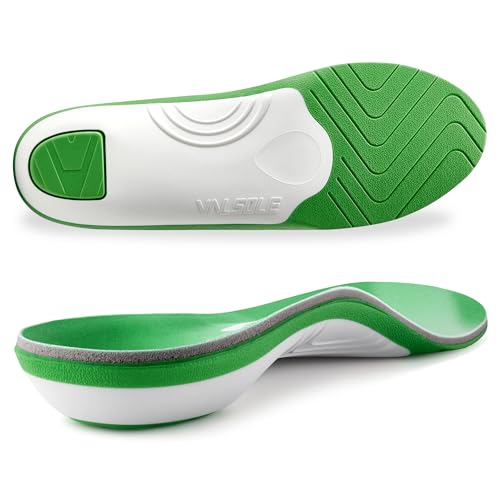
VALSOLE 250+ lbs High Arch Support Orthotics for Work Boots and Walking

VALSOLE Cork Support Orthotics for Walking, Work Boots, and Daily Wear
The Details Behind The Selections
Your winter commute calls for insulation rather than the moving cushioning found in the Amazing Insoles design. Moneysworth Polar Insoles place a soft felt layer over a woven felt-and-aluminum base, combining a warm upper surface with a lower layer designed to reduce heat loss and protect against dampness.
You also gain a felt cushion over the foot instead of relying on foam compression alone. The design is intended for temperatures down to -25°C, making it most relevant for outdoor work boots, rain boots, and cold-weather walks. The honest read is simple: this is a specialized seasonal choice, not an all-purpose indoor insert.
Useful Strengths
- Felt traps warmth while cushioning your foot.
- The aluminum base helps limit heat loss and dampness.
- Woven felt and aluminum create a layered construction.
- Cold protection is rated for temperatures down to -25°C.
Things To Consider
- Its insulated construction has little relevance during ordinary warm-weather walking.
- Check the internal volume of your boots because the layered insert may change how your foot sits.
Key Specs
Made For
You need maximum cold-weather protection while walking or working outdoors in insulated boots.
Where Another Pick Suits Better
Amazing Insoles Liquid Glycerin Massaging Orthotics for Running and Walking suit warm-weather shifts where moving cushioning matters more than insulation.
Your feet feel different over a moving liquid than over fixed foam, and that is the defining feature here. Amazing Insoles Liquid Glycerin Massaging Orthotics for Running and Walking use a glycerin fill that shifts beneath your foot as you move, creating a gentle massaging sensation without the bulk of a thick insert.
The thin, flexible profile works best for routine shoes in which you want cushioning without sacrificing toe room. Improved sealing technology is designed to help prevent fluid leaks, while shock absorption adds comfort during long walks and extended periods of standing. Nothing about the design is subtle, so give it a fair trial in shoes you can replace easily.
Real-World Strengths
- The glycerin fluid moves beneath your foot with each step.
- A slim profile fits comfortably inside most shoes.
- Flexible construction suits walking and running footwear.
- Shock absorption softens the impact of repeated strides.
- Improved sealing technology helps limit leaks.
Worth Noting
- The shifting liquid feels different from a fixed foam or cork support, so you may need time to adjust.
At A Glance
Who Will Love This
You spend long periods walking or standing and prefer a slim insert with fluid cushioning.
Reach For A Different Pick When
Moneysworth Polar Insoles fit your routine better when freezing outdoor conditions make warmth the priority.
Full-length coverage is the useful detail in Sof Sole Men’s High Arch Insole. The foam insert extends through the shoe and carries a high-arch profile, giving you more support across the foot than the three-quarter design reviewed later.
It also takes a more direct approach than the moving glycerin insert. You get a conventional foam construction with a position intended for high arches, which may work well in roomy athletic shoes, walking sneakers, or work footwear. The honest catch is fit: both the arch profile and the full length need enough space inside your shoe.
Bright Spots
- Full-length construction covers more of your foot.
- The high-arch profile targets a pronounced arch shape.
- Foam provides a familiar, straightforward walking cushion.
Points To Note
- Full-length placement requires a shoe with adequate internal space.
- A pronounced high-arch profile may feel more structured than a neutral or fluid insert.
- The design is listed for men, so shoppers seeking another fit should check the available sizing.
The Right Fit
You have high arches and wear roomy shoes that can accommodate a full-length foam insert.
A Better Fit Elsewhere
Dr. Scholl’s 3/4 Arch Support CF340 suit you better when preserving toe space matters more than full-foot coverage.
Your toes need breathing room, especially in a narrow walking shoe or work boot. Dr. Scholl’s 3/4 Arch Support CF340 stops before the toe area, creating a compact insert for shoes where a full-length foam layer would crowd your foot.
Arch support is combined with pressure distribution and shock absorption, while the fit can be selected around your arch type, body weight, and shoe size. That makes sense for daily wear, particularly when you swap between several pairs of shoes. You get support without choosing between a full-length insert and one that covers only the heel and main arch area.
The Good Stuff
- Three-quarter length preserves room at the front of your shoe.
- Arch support, pressure distribution, and shock absorption work together for daily walking.
Practical Considerations
- You receive less coverage than a full-length insert, particularly through the forefoot.
Core Details
Built With In Mind
You need arch support in everyday shoes where toe room and a discreet profile are priorities.
Another Choice May Suit
Sof Sole Men’s High Arch Insole suit you better when you want full-length coverage and a foam-based feel.
Your body weight changes how much support a walking shoe needs, which is why VALSOLE 250+ lbs High Arch Support Orthotics for Work Boots and Walking is built around a more substantial load. The design combines a high-arch profile with heavy-duty cushioning for men and women who spend significant time standing or walking.
You get added cushioning and pressure distribution where ordinary thin inserts may feel insufficient, particularly in work shoes. The trade-off is straightforward: this is a specialized, fuller-feeling design rather than a discreet option for a narrow dress shoe. Listed sizes include 230mm and 240mm lengths, so verify the conversion against your own footwear before choosing.
Strengths Worth Knowing
- Support is designed for body weights above 250 pounds.
- The high-arch profile suits a pronounced arch shape.
- Heavy-duty cushioning suits long shifts and frequent walking.
- The unisex design works across men’s and women’s sizing.
Some Limits To Know
- The substantial support profile may feel less natural in slim or low-volume shoes.
- Confirm that your foot length corresponds to the available 230mm or 240mm options.
Whose Shelf It Belongs On
You weigh more than 250 pounds, have high arches, and need substantial support for standing-heavy workdays.
Swap It Out When
VALSOLE Cork Support Orthotics for Walking, Work Boots, and Daily Wear suit you better when cork-based support fits your preferences.
Your work boots need support that feels more substantial than a thin foam layer, and cork gives you a firmer option. VALSOLE Cork Support Orthotics for Walking, Work Boots, and Daily Wear combine a cork support section with shock absorption and arch support for extended periods on your feet.
As the cork wears against your foot, it takes on a more foot-shaped impression, which helps create a stable, close fit. The unisex design and beige color make it less conspicuous inside footwear, while available lengths include 236mm and 244mm. The cork feel is the deciding detail, so you may prefer its structure to the shifting sensation of the Amazing Insoles design.
Reasons It Performs
- Cork provides firm support that gradually takes on your foot’s shape.
- Shock absorption softens the impact of walking, exercise, and prolonged standing.
- The unisex design suits everyday shoes, work boots, and walking footwear.
Less Ideal Details
- The cork feel is firmer than foam or a moving liquid insert.
- Check the listed 236mm and 244mm lengths against your footwear measurements.
Feature Facts
Best Suited To
You prefer structured cork support for work boots, long walks, and shoes used throughout the day.
Look Elsewhere When
VALSOLE 250+ lbs High Arch Support Orthotics for Work Boots and Walking suit you better when support designed specifically for body weights above 250 pounds is the priority.
What Actually Matters In A Walking Insole
Start With Your Walking Load
Your shoe and schedule matter as much as the insert itself. A commuter walking several miles, someone standing through a workplace shift, and a person making short errands need different amounts of cushioning. Start with how long you remain active and whether your shoes accept a full-length or partial insert.
Match Shape And Support
The arch is the inner curve of your foot, and a high-arch profile feels different from a neutral insert. An orthotic is a shoe insert designed to support the arch and foot alignment, while liquid cushioning prioritizes movement and foam prioritizes simplicity. You gain more from a shape that matches your foot than from a generically supportive design.
Check Length And Shoe Volume
A full-length insert provides more coverage but needs room from heel to toe. A three-quarter insert preserves toe space and works better in tighter shoes. Remove your current insole before comparing dimensions, and check whether the replacement leaves your toes able to move without bunching.
Two Details That Change The Decision
Common Shopping Slip Ups
Do not choose an insole solely by its cushioning description, since thickness can crowd your shoe or change its fit. Match the insert to the weather, your arch, and your walking time, then confirm the length before ordering.
What The Higher Tier Buys
More involved materials, shaping, or sealing construction may justify a higher tier, but only when you need that particular feature. A specialized cold-weather build, a fluid cushion, or a body-weight-specific design earns its place more easily than a generic upgrade.
Frequently Asked Questions
How Do I Know Which Walking Insole Fits?
Measure your shoe and the existing removable insole, then compare both length and available toe space. A good fit supports your foot without making your toes bunch or press against the front of the shoe.
Are Full-Length Insoles Better Than Three-Quarter Insoles?
Full-length insoles cover more of your foot, while three-quarter models leave more room near the toes. Choose full length for roomy footwear, or three-quarter length for tighter shoes and lighter profiles.
Can Insoles Help With Plantar Fasciitis?
They may add cushioning and support during walking, but they do not resolve plantar fasciitis. A podiatrist or other appropriate specialist doctor can help you assess ongoing foot discomfort before changing your footwear routine.
How Do Liquid Gel Insoles Feel?
Their glycerin filling moves beneath your foot, so the sensation changes with each step. You may find it more dynamic than a fixed foam or cork insert, especially during long walks.
Can I Use the Same Insoles for Walking and Running?
You can use them across both activities when the fit and construction suit both shoes. Check the available space in each pair, since a running shoe usually has more interior room than many walking shoes.
Final Verdict
The best insole for walking is the one that fits your shoe, matches your arch, and addresses the conditions you actually face. Moneysworth handles severe cold, Amazing Insoles provides fluid cushioning, Sof Sole favors full-length high-arch coverage, and the two VALSOLE options serve heavier support and cork preferences. Start with the part of your routine that causes the most discomfort, then choose the insert that solves that specific problem.
