

Cuboid syndrome can make the outer middle of your foot feel tender or unstable, especially during long shifts, frequent walking, or poorly supportive shoes. These insoles offer different combinations of rigid support, arch control, cushioning, and forefoot stability, giving you a focused place to start. A foot specialist can also help confirm that cuboid syndrome fits your symptoms and that a particular insert suits your footwear.
An Overview Of The Picks

EstCarbon Carbon Fiber Insole, Women 7, Full-Length Reversible 1.2 mm Rigid Foot Plate
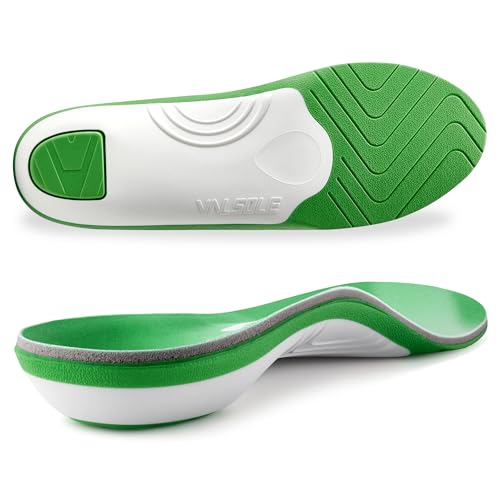
VALSOLE 250+ lbs Heavy Duty High Arch Support Orthotic Insole for Standing All Day Work Shoes

VALSOLE 250+ lbs Heavy Duty Plantar Fasciitis High Arch Support Insole for Standing All Day Work Boots

Cushwork Metatarsalgia Orthotic Insoles for Ball-of-Foot Pain and Morton’s Neuroma
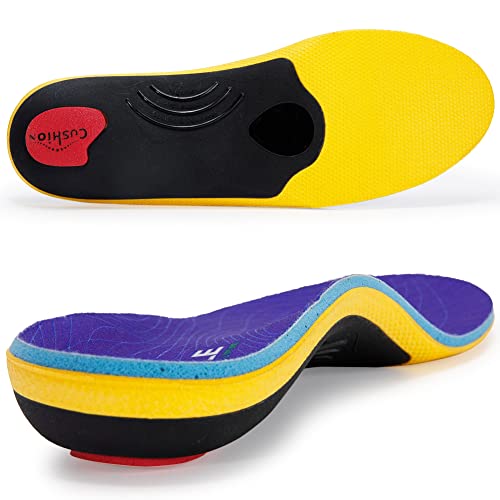
VALSOLE 220+ lbs Heavy Duty Plantar Fasciitis High Arch Support Orthotic Insole for Work Boots
Smilesky Shoe Insoles with Forefoot Slope for Pronation, Heel Pain and Flat Feet

SoleAid Thera2K Insoles

VALSOLE Cork Support Orthotic Insoles for Flat Feet, Metatarsalgia and Standing All Day Work Boots
A Deeper Look At The Lineup
Cuboid syndrome is the clearest reason to start with this rigid insert. Unlike the cushioned arch options later in the list, the EstCarbon plate is a full-length 1.2 mm carbon-fiber structure designed to limit excessive movement through the midfoot.
For someone walking across a warehouse or standing through a long shift, that stability may be the central benefit. The plate is reversible, can suit either foot, and is specifically listed for cuboid syndrome, although its stiffness will feel distinctly different from a foam insole.
Key Advantages
- Directly listed as suitable for cuboid syndrome, unlike the broader arch-support choices here.
- The rigid carbon-fiber construction limits midfoot movement and shoe flex beneath the arch.
- Its 1.2 mm thickness keeps the plate slim enough to fit many removable-insole shoes.
- Reversibility lets the single insert serve either foot, subject to proper sizing.
Things To Consider
- Only one plate is included, so matching footwear may require a separate insert.
- Measure heel to longest toe before ordering, as the listed size follows that measurement.
- A rigid plate can alter the feel of a shoe, particularly during the first several wears.
Key Specs
Who It Suits Best
People with diagnosed cuboid-related midfoot discomfort who want a rigid, low-profile support layer under supportive shoes.
Where Another Pick Suits Better
VALSOLE 250+ lbs Heavy Duty High Arch Support Orthotic Insole for Standing All Day Work Shoes suits people who prefer cushioning over a stiff carbon-fiber plate.
The VALSOLE 250+ lbs Heavy Duty High Arch Support Orthotic Insole for Standing All Day Work Shoes takes a different approach from the rigid EstCarbon plate. Its arch support and cushioning are intended for heavier body weights and prolonged standing, where a softer insert may feel more approachable.
That makes it a practical match for warehouse shifts, service work, or busy retail days. Although cuboid syndrome is not named in the product details, broad foot support may be useful during long periods of loading, and a foot specialist can help determine whether this level of control suits you.
Well-Handled Touches
- Enhanced arch support targets the main support area rather than relying on loose cushioning alone.
- Cushioning is designed to soften repeated steps during long standing shifts.
- The 250-pound-plus design is aimed at people who place greater downward force on each foot.
- Two listed length options cover smaller and larger versions of the same unisex design.
Practical Considerations
- The product focuses on high arches and standing comfort, not cuboid-specific support.
- Its fuller cushioning profile may reduce the room available inside close-fitting shoes.
- Confirm the listed 230 mm and 240 mm lengths against your shoes before ordering.
Feature Snapshot
Made For
Adults above 250 pounds who spend long periods standing and want a cushioned arch insert for work shoes.
Consider Something Else When
EstCarbon Carbon Fiber Insole, Women 7, Full-Length Reversible 1.2 mm Rigid Foot Plate better suits anyone seeking direct cuboid-syndrome design and maximum sole stiffness.
Where the previous VALSOLE emphasizes general standing comfort, this version explicitly pairs high-arch support with a heavy-duty work-boot format. Its cushioning is intended to absorb impact during repeated steps, which can matter more than stiffness for people who walk constantly on hard surfaces.
The design appears most useful for workers who spend their day moving rather than remaining in one place. Your response may differ from a rigid orthotic, so footwear fit and professional guidance remain important when cuboid discomfort is present.
Where It Excels
- High arch support adds structured control during extended periods on your feet.
- Shock-absorbing cushioning softens the landing phase of each step.
- The 250-pound-plus focus reflects support intended for greater downward pressure.
- Work-boot orientation suits jobs involving repeated walking and heavier footwear.
Points To Note
- This is a broad arch-support design rather than a cuboid-specific insert.
- Boot interiors need enough depth to accommodate the supportive profile.
- Compare the 236 mm and 244 mm options closely with your existing footwear.
Right Fit For
People above 250 pounds who walk for work, wear boots, and want more arch control with step-absorbing cushioning.
Not Your Match When
VALSOLE 250+ lbs Heavy Duty High Arch Support Orthotic Insole for Standing All Day Work Shoes may fit shoppers who spend more time standing than walking.
The Cushwork Metatarsalgia Orthotic Insoles for Ball-of-Foot Pain and Morton’s Neuroma focus attention on the forefoot rather than the outer midfoot. Metatarsalgia describes discomfort around the ball of the foot, and this insert uses an orthotic structure with targeted forefoot support and heavy-duty arch control.
That focus makes it relevant when cuboid discomfort occurs alongside a tight or overloaded forefoot. You may find the support useful, although an assessment by an appropriate foot specialist is sensible when the source of pain is uncertain.
Features That Help
- Targeted forefoot support addresses the area beneath the metatarsal heads.
- The orthotic design is intended to support better foot positioning during walking.
- Heavy-duty arch support adds a broader base of control beneath the midfoot.
- The design suits everyday shoes where the forefoot carries noticeable pressure.
A Few Limitations
- Its stated focus is the forefoot rather than direct cuboid-syndrome support.
- Precise sizing details are not presented clearly enough to rely on visual scale alone.
- Takeup under the forefoot can affect narrow shoes, so check the interior before ordering.
Quick Facts
Best Suited To
People whose foot discomfort centers on the ball of the foot and who also want substantial arch support.
Look Elsewhere When
EstCarbon Carbon Fiber Insole, Women 7, Full-Length Reversible 1.2 mm Rigid Foot Plate is the more focused option for confirmed cuboid syndrome.
At a 220-pound threshold, this VALSOLE model broadens the range of people who may benefit from a heavy-duty orthotic profile. It combines high arch support with step absorption and is intended for men and women who spend substantial time in work boots.
Compared with the 250-pound-plus models in this list, the defining difference is its lower weight focus. That may make it a more reasonable starting point for some heavier adults, while the broader plantar-fascia support remains a separate concern from cuboid syndrome.
What Works In Its Favor
- The 220-pound design point is more inclusive than the 250-pound options.
- High arch support supplies structure for a foot that needs more control.
- Shock-absorbing construction softens repeated contact during a long shift.
- Work-boot compatibility suits jobs where the feet spend hours underfoot.
Trade Offs
- Cuboid syndrome is not a named focus of this design.
- Its heel-focused support profile may not address forefoot pressure as directly as the Cushwork insert.
- Anyone above 250 pounds may prefer one of the models designed for that higher load range.
Who Will Love This
Shoppers over 220 pounds who need substantial arch support in work boots without moving to a 250-pound-plus model.
A Better Fit Elsewhere
VALSOLE 250+ lbs Heavy Duty Plantar Fasciitis High Arch Support Insole for Standing All Day Work Boots targets a higher body-weight range.
The Smilesky Shoe Insoles with Forefoot Slope for Pronation, Heel Pain and Flat Feet combine a firm arch shelf with a sloped forefoot. A forefoot slope changes the angle at which the foot approaches the floor, while the arch section provides structure for flatter-footed patterns.
This is a versatile everyday option rather than a cuboid-specific insert. It may be useful when your footwear supports the heel but leaves the midfoot and forefoot feeling poorly controlled, especially during a day that mixes walking with standing.
Real Benefits
- The forefoot slope supports a more deliberate transition as the foot rolls forward.
- Firm arch support gives flat-footed users a defined platform beneath the midfoot.
- The geometry is positioned to support ankle, knee, and spinal alignment during walking.
- Multiple length pairings offer options for different men’s and women’s sizes.
Areas To Watch
- The rigid profile may feel more structured than a basic foam insert.
- Forefoot elevation can reduce shoe room in especially narrow footwear.
- Check the men’s and women’s size pairings carefully before choosing.
At A Glance
Who Should Grab It
Daily walkers and standing workers who want coordinated forefoot slope and firm arch support in ordinary shoes.
Skip It When
VALSOLE Cork Support Orthotic Insoles for Flat Feet, Metatarsalgia and Standing All Day Work Boots may suit you better when a contouring material is preferred.
The SoleAid Thera2K Insoles use a two-layer design intended to balance support and cushioning for sensitive feet. That makes them different from the rigid EstCarbon plate, which limits motion, and from the high-profile work insoles designed primarily for heavy loading.
Cuboid syndrome is not the primary design focus, so the two-layer format is most relevant when foot sensitivity or diabetes is part of your footwear considerations. Ask an appropriate specialist for guidance before using an insert as part of a broader foot-care plan.
Everyday Advantages
- Two layers allow support and cushioning to work together rather than relying on one rigid surface.
- The design is intended for sensitive feet that may prefer a gentler contact than a carbon plate.
- Listed size ranges cover women’s sizes 9-12 and men’s sizes 7-10.
- The accommodative shape is intended for varied foot needs rather than a single activity.
The Fine Print
- This is not a cuboid-specific orthotic, so its suitability depends on the rest of your foot mechanics.
- Two layers can take up more room than a single-profile insert.
- Diabetic foot care should be guided by a qualified healthcare professional.
Built With In Mind
People with sensitive or diabetic feet who need a layered insert and have already established an appropriate foot-care plan.
Another Choice May Suit
EstCarbon Carbon Fiber Insole, Women 7, Full-Length Reversible 1.2 mm Rigid Foot Plate suits people who need direct cuboid-syndrome support rather than layered cushioning.
The VALSOLE Cork Support Orthotic Insoles for Flat Feet, Metatarsalgia and Standing All Day Work Boots use cork as the supportive component. Cork gradually takes on the shape of the foot, offering a different response from the fixed 1.2 mm carbon plate and the molded geometry of the Smilesky insert.
That contouring quality makes the design appealing for walking, exercise, and extended standing. The stated concerns are flat feet and forefoot discomfort rather than cuboid syndrome, so you may need professional guidance to connect the support type to your symptoms.
A Favorable Mix
- Cork support is designed to conform increasingly to the shape of your foot.
- Shock-absorbing construction softens the impact of repeated walking steps.
- The design suits boots, exercise, and long periods spent standing.
- Support is directed toward flat-foot and metatarsalgia-related patterns.
Softer Spots
- Contouring cork may need several wears before it feels fully familiar.
- The insert is not specifically designed for cuboid syndrome.
- Its supportive profile can affect clearance inside closely fitted footwear.
Core Details
The Right Fit
People who prefer a gradually conforming support and spend time walking, exercising, or standing in work shoes.
Reach For A Different Pick When
Cushwork Metatarsalgia Orthotic Insoles for Ball-of-Foot Pain and Morton’s Neuroma better serves people whose discomfort is concentrated mainly beneath the ball of the foot.
Match The Insert To Your Foot And Schedule
Confirm The Support Type
Cuboid syndrome generally calls for attention to midfoot stability, but many useful inserts also support the arch, heel, or forefoot. A rigid carbon-fiber plate limits foot movement, while a cushioned orthotic adds volume and controlled support, and a contouring cork insert gradually follows the foot’s shape.
Your daily routine should guide that choice. Long walking shifts favor cushioning and shock absorption, while a stiff shoe may amplify movement through the midfoot. Persistent or worsening discomfort deserves evaluation by an appropriate specialist.
Measure Before Ordering
Measure your foot from the heel to the tip of the longest toe, then compare that number with the product’s size guide. Shoe size alone can be misleading, especially for inserts that change the internal dimensions of a boot or narrow shoe.
Check the removable factory insole as well. Removing it may create enough room for a deeper orthotic, while a fixed insole may require a lower-profile option.
Match Shoes To Daily Work
Work boots have room and structure that casual shoes may not provide, but an insert can still alter heel height and toe position. Shoes used for exercise need enough freedom to flex naturally, so a very rigid insert may feel overly restrictive.
Try the new insert in the shoes you use most. The goal is steadier support without pressure points, rubbing, or difficulty completing your normal workday.
Making The Right Support Choice
Mistakes Worth Dodging
Do not choose an insert solely because it mentions foot pain. That phrase can cover very different areas, from the heel and arch to the ball of the foot and outer midfoot. Check the intended support area, shoe size, and internal shoe space before ordering.
Avoiding a professional assessment can also lead you down the wrong path. An insert that suits plantar-fascia discomfort may not suit cuboid-related midfoot symptoms.
What Separates Premium From Basic
A more specialized insert may use a thinner rigid material, a targeted contour, or a layered cushioning system. The useful upgrade is the feature that matches your foot and workload, not simply a more elaborate construction.
Basic foam may be enough for occasional walking in roomy shoes. A rigid plate, heavier-duty arch support, or conforming cork layer becomes more relevant when the insert must work under repeated load or inside demanding footwear.
Frequently Asked Questions
What is the best insole type for cuboid syndrome?
A rigid, full-length orthotic that limits excessive midfoot movement is often the most directly targeted option. Your shoe fit, foot shape, and diagnosed needs still determine whether that structure feels appropriate.
Are carbon-fiber insoles suitable for cuboid syndrome?
The EstCarbon insert specifically lists cuboid syndrome among its intended uses. Its 1.2 mm rigid plate stiffens the shoe beneath the foot, although comfort and footwear compatibility need individual consideration.
Can a cushioned insole help with cuboid syndrome?
Cushioned arch support may be useful when fatigue, flat feet, or prolonged standing contributes to your symptoms. It does not offer the same degree of motion control as a carbon-fiber plate, so a specialist can help you weigh the trade-off.
How do I measure my foot for insoles?
Measure from the back of your heel to the tip of your longest toe while keeping your weight distributed normally. Compare that measurement with the product’s chart rather than relying only on your usual shoe size.
When should I see a foot specialist for cuboid pain?
Seek professional advice when pain persists, worsens with activity, or makes walking difficult. A specialist can identify contributing factors and help determine whether orthotic support or another form of care fits your situation.
Final Verdict
Start with the EstCarbon plate for its direct cuboid-syndrome design and rigid midfoot control, then consider the VALSOLE options when cushioning, body weight, or long standing shifts dominate your routine. Match the insert to your shoe space and daily workload, and ask a foot specialist for guidance when symptoms remain unclear.
