

A full day on the trail leaves little room for discomfort in your hiking shoes. The right insole can add support, manage warmth, or improve the fit between your foot and the boot, depending on your arch and the terrain ahead.
These eight options cover different needs, from medium support and wide-fit construction to winter insulation and higher arch profiles. Pay attention to shoe size, available toe room, and the amount of support your foot actually needs. Replacing the factory insole can also change how the upper sits, so give the new insert a short trial before committing to a long hike.
A Closer Look At The Lineup



Meet The Standout Selections
A trail-ready insole should support the foot without making the boot feel crowded. These Superfeet use a medium arch profile, giving you a balanced option for active use rather than the pronounced shape associated with the Sof Sole later in the list.
The synthetic construction and trim-to-fit format let you match the insert to your hiking shoe more closely. Trimming takes a little preparation, but it also means the front of the insole can be adjusted to preserve toe room.
Notable Upsides
- Medium arch support suits many active outdoor routines.
- Trim-to-fit sizing allows a closer match to your shoe.
- The supportive structure stays focused on foot stability.
- Listed in common men’s and women’s size ranges.
Things To Consider
- Trimming reduces the insert’s length, so follow the provided cutting guidance carefully.
- The medium profile may feel less substantial than a high-arch design during long, loaded hikes.
Key Specs
Who It Suits Best
You benefit most from these insoles when you have medium arches, take regular day hikes, and want support without a very high arch profile.
Where Another Pick Suits Better
The EASYFEET 220+ lbs High Arch Insoles may suit you better when you need a more pronounced arch structure and a reinforced high-load design.
Cold toes can end a hike early, and the pedag Viva Winter is designed around warmth rather than a general-purpose trail profile. Quilted wool, foam, and a reflective foil layer create a more insulated barrier than the synthetic Superfeet All-Purpose option.
Its support extends beyond the arch, with heel cushioning and metatarsal support for women’s hiking shoes. The combination works particularly well for winter walks, although you may notice the thicker construction inside a snug boot.
What Earns Its Place
- Multiple insulating layers help address cold conditions.
- Heel cushioning adds comfort beneath the rear foot.
- Metatarsal support covers the area behind the toes.
- Longitudinal arch support adds structure through the foot’s center.
Worth Noting
- The 0.16-inch thickness can reduce toe room in close-fitting boots.
- The listed women’s US 7 and EU 37 sizing makes this a narrower fit than the unisex choices.
Feature Snapshot
Made For
These insoles fit your routine best when you hike in cold weather, wear women’s size 7 shoes, and value warmth alongside structured support.
Consider Something Else When
The Superfeet All-Purpose Support Medium Arch Insoles suit you better for mild-weather day hikes where insulation is unnecessary.
A high arch can leave a noticeable gap inside a hiking shoe, particularly during steep climbs. The Sof Sole fills that space with a raised support profile, offering a different approach from the medium-height Superfeet All-Purpose model.
Its targeted gel heel drop adds cushioning where the foot meets the shoe, while the heel cup helps keep your heel more centered. You may find this shape particularly useful in athletic footwear, walking shoes, and casual boots.
Real Benefits
- The elevated arch profile suits high arches and fills midfoot space.
- Gel heel cushioning softens the rearfoot landing area.
- A deep heel cup supports a steadier, more centered position.
- Full-length coverage suits athletic and casual footwear.
Small Caveats
- The high arch shape may feel intrusive in a boot with a shallow footbed.
- The listed women’s US 8 to 11 range requires a close size comparison.
Who Will Love This
You’ll appreciate this insole most when high arches leave empty space in your footwear and you walk or train in shoes with a roomy toe box.
A Better Fit Elsewhere
The Superfeet All-Purpose Support Medium Arch Insoles are a better match for you when a medium profile feels more natural underfoot.
Fast descents and long afternoons on uneven ground call for more than a lightly shaped insert. These Superfeet use a high-impact support profile for women’s running shoes, giving the foot a firmer structure than the Sof Sole’s arch-focused construction.
The trim-to-fit approach helps you tune the length to your shoe, while the berry color makes the model easy to distinguish from the blue medium-support version. You may find the more substantial profile useful in footwear that already accommodates an insert.
Practical Pluses
- High-impact support suits demanding walking and running routines.
- Trim-to-fit sizing improves compatibility with the shoe’s interior.
- The women’s fit centers the product around the intended shoe type.
Possible Compromises
- The specified women’s 10.5 to 12 range may not align with your shoe size.
- Cutting reduces the insert’s length and requires care around the forefoot.
Quick Facts
Built With In Mind
These insoles suit women with a US 10.5 to 12 shoe size who want structured support in running shoes, hiking shoes, or similarly roomy footwear.
Reach For A Different Pick When
The Sorbothane Unisex UltraSole Insoles may suit you better when a unisex, general-purpose format matters more than a women-specific high-impact profile.
Some hikers want an insole without committing to a narrow arch type, seasonal construction, or a gender-specific fit. The Sorbothane Unisex UltraSole takes the straightforward route, giving you a broadly applicable insert for hiking shoes and everyday footwear.
That simplicity also means your decision should center on fit. Compared with the raised Sof Sole profile, this option may be easier to introduce into shoes that do not have much spare interior space.
Practical Advantages
- The unisex format fits neatly into a shared-shoe household setup.
- A general insole design suits varied hiking footwear.
- The simple format avoids a narrowly defined arch specialization.
Details To Watch
- Confirm that the listed size matches your hiking shoe before ordering.
- Check the shoe’s internal shape to ensure the insole lies flat without bunching.
The Right Fit
This insole fits your needs when you want a straightforward unisex option and your hiking shoes can accommodate a full-length insert.
Swap It Out When
The pedag Viva Winter Insulating Insoles suit you better when cold-weather insulation and layered construction are central to your hike.
Wide feet can make a supportive insole difficult to wear because the sides have little room to spread. The Superfeet Wide-Fit model addresses that problem directly, with a width designed for shoes from 3E through 6E.
The broader shape distinguishes it from the standard All-Purpose Medium Arch model, making it a more practical option for long shifts on your feet or hikes in roomier footwear. The wide-green color also helps separate it from other Superfeet styles.
Where It Helps
- Wide construction supports feet that need extra room.
- The 3E-to-6E range covers several broad width categories.
- All-day support suits long periods of walking or standing.
- Broad fit reduces the crowding associated with narrow insoles.
Practical Considerations
- The wide shape needs a shoe with enough room across the forefoot.
- Match your shoe’s width category carefully before using the insert.
Whose Shelf It Belongs On
These insoles suit you when your feet or hiking shoes require a 3E, 4E, 5E, or 6E width and you spend substantial time walking.
Another Choice May Suit
The Superfeet All-Purpose Support Medium Arch Insoles fit you better when your feet have a medium arch profile and your shoes are not extra wide.
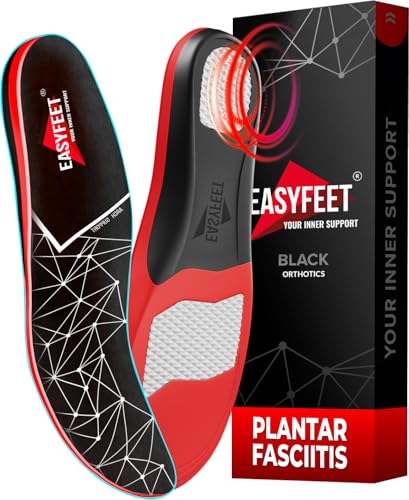
A pronounced arch bridge can change how pressure travels across the foot during a long walk. These EASYFEET insoles use that firm central structure to support high arches while also addressing the inward rolling often associated with flatter feet.
Unlike the Sof Sole, which combines a high arch with a gel heel drop, this design places greater emphasis on the bridge and deep heel cup. You may find the firmer shape more noticeable underfoot, particularly during the first several hikes.
Advantages To Know
- A firm arch bridge provides a pronounced support profile.
- The shape accommodates both high and flatter arch patterns.
- A deep heel cup supports the rearfoot’s position in the shoe.
- Structured support may be useful during extended walks.
A Few Limitations
- The high arch profile may take up noticeable space inside a hiking shoe.
- Footwear with a removable factory insert gives you more room to fit the insole.
Feature Breakdown
Best Suited To
These insoles suit you when you have high or neutral arches, spend long periods walking, and prefer firm support over a soft insert.
Where A Sibling Pick Shines
The Superfeet All-Purpose Wide-Fit Support Insoles suit you better when your main concern is shoe width rather than a pronounced arch bridge.
Body weight changes how much support a foot needs during a loaded hike. The EASYFEET 220+ lbs High Arch Insoles add a reinforced arch structure intended for people above 220 pounds, giving you a more substantial option than the standard EASYFEET model.
The contoured shape is designed to spread weight across the foot and provide a pronounced high-arch profile. You may find that support more substantial underfoot, so footwear with generous interior space is a practical consideration.
Standout Benefits
- Reinforced construction targets a higher body-weight range.
- The high arch offers strong support for demanding hikes.
- Contoured shape spreads weight across more of the foot.
- The unisex design works across men’s and women’s hiking shoes.
Trade Offs To Consider
- The substantial shape needs enough room inside the shoe to lie flat.
- Your hiking footwear may need a removable factory insole for the best fit.
Core Details
Who Should Grab It
These insoles fit your routine best when you weigh 220 pounds or more, favor high-arch support, and regularly hike with substantial gear.
Look Elsewhere When
The EASYFEET High Arch Support Insoles suit you better for lighter use when you want a firm arch bridge without the heavier-duty construction.
Fit First: What Matters in Hiking Insoles
Start With Your Arch Shape
A medium arch usually calls for moderate support, while a high arch often benefits from a more pronounced profile. Flat feet may need a firmer bridge to limit inward rolling, but the right response depends on your foot and shoe rather than a label alone. An orthotic insole has a shaped structure intended to support foot position, so compare the profile with the space your boot provides.
Check the Volume Inside Your Shoe
Thickness, heel depth, and full-length coverage all affect how the shoe feels. A winter insole with several insulation layers takes more room than a low-profile insert, while a high arch can change how the upper settles around your foot. Remove the factory insole and place the new one in its position so you can judge the fit.
Match Support to the Load
Casual day hikes, long treks, and routes with heavy packs create different demands. Medium support may feel balanced for lighter walks, while reinforced or high-impact designs suit more demanding use. Insole support should work with your footwear rather than compensate for a badly fitting boot.
Account for the Weather
Cold-weather routes call for insulation, while warm hikes favor breathability and a lighter feel. Insulated layers can make footwear feel snug, so check the boot size and toe room before committing. Replace the insole for a shorter walk first if the fit changes noticeably.
Two Details That Change the Fit
Mistakes Worth Dodging
Avoid choosing solely by arch label, since shoe volume can matter as much as support level. Do not assume a full-length insole will fit every boot, and check the stated size before ordering. A removable factory insert also gives you a more accurate comparison.
What Separates Premium From Basic
More specialized models may add reinforced arches, targeted cushioning, insulation, or a trim-to-fit shape. Those additions help only when they match your foot and boot. Pay for the feature that solves a specific problem, not simply for a longer feature list.
Frequently Asked Questions
How do I know which insole will fit my hiking shoes?
Compare the listed insole size with your shoe size and account for the shoe’s internal width and depth. Your best option should lie flat without crowding the toes or pressing against the heel.
Should I remove the factory insole?
Removing it can reveal the true space available and show how the replacement fits. It also helps you compare the original footbed with the new insole before setting out.
Are high-arch insoles better for hiking?
High-arch insoles suit feet that need more midfoot support, while medium or neutral profiles may feel more natural for others. The right choice depends on your arch shape, footwear, and preferred level of structure.
Can winter insoles make hiking shoes too tight?
Insulating layers add thickness, so a snug boot may lose some toe room. Check the insole measurements against the boot interior and try a short walk before a cold-weather hike.
How long should I test new hiking insoles?
Give the insert enough time to become familiar with your footwear, but stop using it if it causes rubbing, numbness, or increasing discomfort. Persistent foot problems deserve attention from an appropriate specialist doctor.
Final Verdict
Start with fit, then choose support or insulation that matches your arch, load, and season. The Superfeet All-Purpose model covers many everyday needs, while specialized options solve clear problems involving high arches, wide feet, winter cold, or heavier body weight. A short, realistic walk is the most useful final check before you commit to a long trail.
