

A full workday can leave your feet feeling completely different from how they felt at breakfast, especially when your shoes offer little control or cushioning. An orthotic insert adds structured support inside the shoe, while overpronation describes the tendency for your foot to roll inward during each step. The right insole depends on your arch, activity, shoe volume, and the amount of support you actually need.
How The Shortlist Stacks Up

OrthoComfoot Arch Support Orthotic Insoles for Work Boots and Everyday Shoes

PowerStep Pinnacle Maxx Orthotic Insoles with Angled Heel Stability
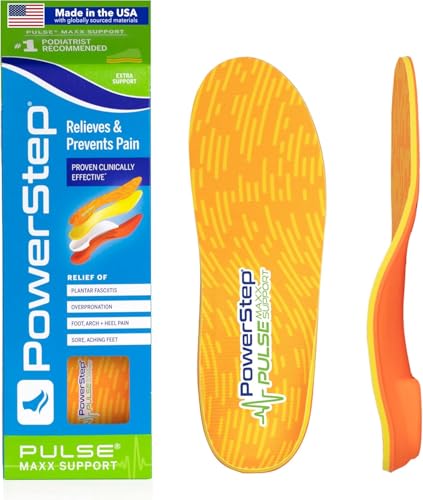
PowerStep Pulse Maxx Running Insoles for Overpronation, Angled Heel and Rigid Shell

Prothotics Pressure Relief Insoles with Arch Support, Gel and Metatarsal Lift
PowerStep Pinnacle Low Arch Support Insoles with Deep Heel Cradle and Dual Layers

Saluber 3/4-Length Orthotic Insoles with Metatarsal Pad for Men and Women
The Picks, Examined More Closely
OrthoComfoot combines several support layers in a work-oriented insert. Its air-cushioned heel softens landing pressure, while a rigid polyurethane base and forefoot gel add structure and cushioning for long standing or walking. You may find this combination more useful in work boots or court shoes than in a minimalist dress shoe.
Compared with the PowerStep models later in the list, this insert takes a layered approach, adding a deep heel cup, a 1.18-inch arch rise, metatarsal padding, and moisture-wicking fabric. The listed size is men’s 6.5 or women’s 8.5, so matching the exact size matters before you order.
Strengths Worth Knowing
- Air-cushioned heels soften impact during standing and walking.
- The forefoot gel adds cushioning beneath your toes.
- Metatarsal padding spreads pressure across the ball of the foot.
- Moisture-wicking fabric suits active routines.
Practical Considerations
- The fixed 1.18-inch arch height may feel pronounced for low-arch feet.
- The listed size is specific, and trimming is not part of the design.
Key Specs
Made For
You benefit most from this insert during long workdays, active walks, or athletic sessions where cushioning and structured control both matter.
Where Another Pick Suits Better
PowerStep Pulse Maxx Running Insoles suit dedicated runners who want a rigid shell, while OrthoComfoot serves mixed work and activity use.
Pinnacle Maxx takes a firmer route than a basic cushioned insert. Its firm but flexible construction and angled heel are designed to add stability and alignment as your foot moves through shoes, which makes the insert relevant for long walks, frequent standing, or demanding daily routines.
Compared with OrthoComfoot’s air-cushioned heel and forefoot gel, Pinnacle Maxx keeps the emphasis on control rather than layered softness. The available sizes include men’s 3–3.5 with women’s 5–5.5 and men’s 4–4.5 with women’s 6–6.5, so you should check both foot length and shoe fit.
What Stands Out
- The angled heel supports a more deliberate foot position.
- Firm construction stays structured while retaining some flexibility.
- The broad support platform suits extended periods on your feet.
- It is made in the USA.
Points To Note
- Its firmer feel may take some adjustment compared with a foam-heavy insert.
- You need sufficient room inside your shoes for a structured orthotic.
Who It Suits Best
You gain the most from Pinnacle Maxx when prolonged standing or walking is routine and you want stronger heel control than a soft cushioning insert provides.
Reach For A Different Pick When
PowerStep Pinnacle Low suits lower-arch feet wanting a deep heel cradle, while Pinnacle Maxx fits you seeking stronger angled-heel control.
Running shoes create a tighter fit and a narrower landing surface than many casual shoes, so a dedicated running orthotic can make more sense than a general-purpose insert. Pulse Maxx uses a rigid shell and angled heel to add structure and guide your foot through repeated strides.
Unlike Pinnacle Maxx’s broader stability emphasis, Pulse Maxx is formulated specifically for advanced running shoes and rigorous athletic activity. The listed variant covers men’s 6–6.5 and women’s 8–8.5, with other size combinations also shown in the product options.
Good Reasons To Consider
- The rigid shell provides firm control during running.
- An angled heel supports alignment as your foot lands.
- The shape is intended for advanced running shoes.
- It is made in the USA.
Trade-Offs To Consider
- The rigid design may feel less natural in loose casual shoes.
- You need a close-to-foot running shoe fit for the support to feel appropriate.
Quick Facts
Built With In Mind
You get the most from Pulse Maxx during frequent running or athletic sessions in supportive running shoes rather than casual footwear.
Another Choice May Suit
PowerStep Pinnacle Maxx fits walkers and standing-heavy routines, while Pulse Maxx is purpose-built for running shoes.
Prothotics builds this insert around a softer, pressure-focused design. A 25-durometer open-cell Platazote cover, meaning a relatively soft foam measured on a hardness scale, sits over a polyurethane base and Vy-Gel elastomer pads for cushioning under the heel and forefoot.
Unlike the running-specific Pulse Maxx, this construction places cushioning and metatarsal lift at the center of the design. The listed size covers women’s 13–15 and men’s 11–12.5, and the open-cell top cover is intended to conform gradually to your foot.
A Few Strong Suits
- Soft cushioning feels gentler than a rigid shell.
- Gel pads add targeted cushioning at the heel and forefoot.
- Metatarsal lift supports the ball of the foot.
- The open-cell cover can shape itself around pressure points.
Worth Noting
- The soft construction offers less rigid motion control than Pinnacle Maxx.
- Confirm the specific women’s 13–15 or men’s 11–12.5 size before ordering.
Feature Breakdown
Right Fit For
You benefit most from Prothotics when soft cushioning, forefoot pressure distribution, and a gentler feel matter more than rigid running control.
Where A Sibling Pick Shines
PowerStep Pinnacle Low suits low-arch feet wanting a deep heel cradle, while Prothotics favors a softer pressure-focused construction.
Pinnacle Low starts with the assumption that overpronation support does not always require a high arch profile. Its contoured low-arch cushioning and deep heel cradle create a steadier platform without placing as much height beneath the middle of your foot as a more pronounced insert.
Compared with Prothotics’ soft metatarsal lift and layered pressure cushioning, Pinnacle Low presents a firmer low-profile design for everyday footwear. The dual-layer construction adds comfort, and the listing positions the insert for body weights above 250 pounds.
What Helps Most
- Low-arch support suits feet that dislike taller profiles.
- The deep heel cradle adds stability around the rear foot.
- Dual cushioning layers soften each step.
- Firm construction remains flexible for everyday movement.
Minor Gripes
- The low profile may provide less support than a high- or rigid-heel model.
- The listed variant fits men’s 8–8.5 or women’s 10–10.5, so confirm the size.
Who Will Love This
You benefit most from Pinnacle Low during everyday walks and work shifts, especially with a low arch or a preference for moderate-profile support.
Consider Something Else When
Prothotics Pressure Relief Insoles suit you prioritizing soft layered cushioning and metatarsal lift, while Pinnacle Low favors a lower-profile arch.
Saluber solves a familiar space problem: finding support inside a dress shoe with a narrow toe box. The three-quarter-length format stops before the toes, reducing bulk while retaining a shaped heel, arch support, and a metatarsal pad beneath the ball of the foot.
Unlike Pinnacle Low’s broader everyday-shoe format, Saluber concentrates on compact placement and a Poron footbed for cushioning over hard surfaces. It is made in Italy and listed for EU size 37, equivalent to US women’s 6.5–7.
What Pays Off
- The shorter format leaves more room at the toes.
- The Poron footbed adds cushioning without a bulky profile.
- The metatarsal pad supports the ball of the foot.
Things To Consider
- Three-quarter-length coverage leaves the toe area uncovered.
- You need the specific EU 37 or US women’s 6.5–7 size for this listing.
Core Details
The Right Fit
You benefit most from Saluber in close-fitting dress shoes, work shoes, or other footwear where a full-length insert takes up too much room.
Swap It Out When
PowerStep Pinnacle Low offers broader coverage for everyday shoes, while Saluber fits dress shoes with tighter toe boxes.
Match Support to Your Foot Shape
Arch height is only one part of the fit. A low profile may feel more natural beneath a low arch, while a pronounced arch can feel restrictive under a higher arch. Overpronation support also depends on how the heel and forefoot sit inside the shoe, so you should consider the complete insert rather than choosing by one feature.
Leave Room for the Insole
Shoe volume matters nearly as much as foot shape. A full-length or deeply structured insert needs room around the toes, heel, and arch, especially in a boot or a shoe with a closed upper. Three-quarter-length options such as Saluber can be more practical in fitted dress shoes, but they cover less of the foot.
Match Support to Your Routine
Standing-heavy workdays call for cushioning and heel control, while running places different demands on an insert. You may need a firmer shell for repetitive strides, softer cushioning for long static shifts, or a moderate profile for general use. Begin with light wear and increase only as your foot tolerates the added structure.
Check Fit and Practical Details
Confirm the exact size before ordering, and compare the insole’s length, heel depth, and arch height with your shoe. You also need room for your sock and any existing footbed. Persistent discomfort, swelling, or a noticeable change in your walking pattern deserves evaluation by an appropriate specialist doctor.
Shop With More Confidence
Mistakes Worth Dodging
Choosing solely by arch height can leave out shoe fit, cushioning, and activity demands. Another common error is assuming a more structured insert must be better for every foot. Measure your foot, check the insole dimensions, and consider how much room remains inside the shoe.
What Separates Premium From Basic
Higher-tier insoles may use firmer shells, shaped heel components, layered cushioning, or specialized metatarsal support. Those additions can help when you need specific control, while a simpler low-profile design may feel better for routine wear.
Frequently Asked Questions
How do overpronation insoles fit into a shoe?
They sit inside the shoe beneath your foot, with the heel and arch portions providing structure. Most removable insoles need enough shoe volume to sit flat without crowding your toes.
Do I need full-length or three-quarter-length insoles?
Full-length coverage supports more of the foot and fits roomier shoes. Three-quarter-length insoles suit tighter footwear, especially dress shoes with narrow toe boxes.
Can an insole fit in a narrow dress shoe?
A compact three-quarter-length model may fit more easily than a full-length insert. You should compare the shape and width of the replacement with the original footbed before ordering.
How long should I give new insoles time to feel comfortable?
Begin with light wear and increase only as your foot tolerates the support. A marked pressure point, rubbing, or altered shoe fit is a sign to reassess the size or design.
When should foot discomfort prompt professional advice?
Persistent discomfort, swelling, or changes in your walking pattern deserve evaluation by an appropriate specialist doctor. Do not rely on an insole to mask pain that continues or worsens.
Wrap Up
The right insole balances control with comfort and the space available inside your shoes. Pinnacle Maxx suits stronger stability needs, Pulse Maxx focuses on running, and Prothotics favors softer cushioning, while Pinnacle Low and Saluber cover lower-profile and space-conscious situations. Match the insert to your routine, check the fit carefully, and let comfort guide your choice.
