

The first miles of a run can feel uneven when your arch, heel, or forefoot starts taking more stress than it should. These insoles give runners and daily walkers different levels of support, from firm high-arch structures to cushioned designs for heavier loads. Plantar fasciitis affects the plantar fascia, the band of tissue running along the sole, so persistent discomfort deserves attention from a qualified healthcare professional.
How The Shortlist Stacks Up

EASYFEET Core Energy Anti-Fatigue Low Arch Running Insoles, Size S for Men & Women
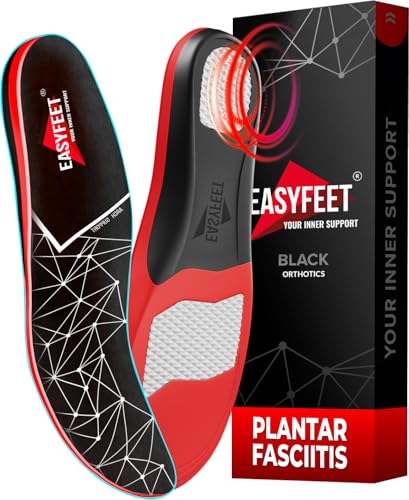
EASYFEET High Arch Insoles

EASYFEET Arch Support Insoles

EASYFEET 220+ lbs Work Boot Insoles with High Arch Support, Size M

EASYFEET Premium Arch Insoles

EASYFEET Black Onyx Anti-Fatigue High Arch Insoles, Size S for Men & Women

EASYFEET Mount Strength Insoles
EASYFEET Orthotic Work Insoles
More On The Choices That Made The List
Core Energy combines a firm arch platform with shock-absorbing pads in the forefoot and heel. The heel cup adds stability, while the carbon fiber construction gives the running insert a more structured feel than a simple foam liner. You may notice that support immediately, particularly during longer sessions or frequent walks.
This design makes more sense for recreational runners who want structure without moving to the heavier-duty models later in the list. The trade-off is a relatively pronounced arch profile, so runners preferring a soft, minimally shaped insert may find it too assertive.
Practical Advantages
- Firm arch support helps limit unwanted inward movement.
- Deep heel cup improves heel positioning and stability.
- Heel and metatarsal pads cushion high-pressure areas.
- Carbon fiber construction adds a structured running feel.
Trade Offs
- The firm profile may take some adjustment in flexible shoes.
- Confirm that Size S matches both your shoe and foot measurements.
Key Specs
Made For
Recreational runners with low arches who want firm support and targeted cushioning in one removable insert.
Where Another Pick Suits Better
EASYFEET Arch Support Insoles may suit you better when heel and forefoot cushioning matters more than the Core Energy model’s firm carbon fiber structure.
A pronounced arch bridge is the defining feature here. Unlike the Core Energy running insoles with their broader cushioning and carbon fiber structure, this model concentrates on filling the space beneath a high arch and steadying the heel. That makes it a straightforward choice for feet that feel unsupported in ordinary shoes.
You may find the geometry more noticeable than a flexible gel insert, especially during a long workday. The supportive approach can suit high-arched feet and casual walkers, although the firmer feel may take some time to become familiar.
Real-World Strengths
- Firm bridge supports a visibly high arch.
- Deep heel cup encourages steadier placement.
- Structured shape can reduce pressure at the heel and forefoot.
Small Caveats
- High-arch geometry may feel more substantial than a soft liner.
- Check the available size carefully before ordering.
At A Glance
Right Fit For
People with pronounced high arches who spend long periods walking or standing in structured shoes.
Another Choice May Suit
EASYFEET Core Energy Anti-Fatigue Low Arch Running Insoles offer more explicit forefoot and heel cushioning for low-arched runners.
This Core Energy version balances a high, firm arch with cushioning under the heel and forefoot. Compared with the preceding high-arch design, it spreads attention across more of the foot, which can make it the easier all-rounder for runners who move between training shoes and everyday footwear.
The manufacturer states that the cushioning absorbs up to 43 percent of shock, a useful reference point rather than a promise about how every stride will feel. For you, the important question is whether the structured arch feels supportive without crowding the shoe.
Key Advantages
- High, firm support suits several arch types.
- Deep heel cup keeps the rear foot steadier.
- Forefoot and heel cushioning softens busy areas.
- Two sizes are listed for a broader fit range.
Practical Considerations
- A firm arch can feel restrictive in very flexible shoes.
- Choose between XS and S by comparing both foot and shoe dimensions.
Feature Snapshot
Who It Suits Best
Runners seeking a balanced combination of arch control and cushioning across training, commuting, and daily wear.
A Better Fit Elsewhere
EASYFEET 220+ lbs Work Boot Insoles with High Arch Support, Size M are the stronger choice for heavier loads and work boots.
Work boots leave little room for a soft, oversized insert, making this model’s structured fit more purposeful. The extra-strong arch is designed for body weights above 220 pounds, while a cushioning layer and shock-absorbing pads spread pressure through the heel, forefoot, and lower leg.
Compared with EASYFEET Arch Support Insoles, this version concentrates on heavier loads and prolonged work. You may notice less movement underfoot, though the firm geometry and boot volume require careful size selection.
Well-Handled Touches
- Extra-strong arch is made for loads above 220 pounds.
- Heel and metatarsal pads cushion pressure points.
- Cushioning layer helps distribute the load.
- Size M suits larger listed foot ranges.
Points To Keep In Mind
- Check your boot’s internal dimensions before ordering.
- The strong arch may feel more pronounced during the first wear.
Technical Sheet
Built With In Mind
People above 220 pounds who wear work boots through long shifts involving substantial standing and walking.
Swap It Out When
EASYFEET Premium Arch Insoles are a better fit for everyday shoes and lighter daily-walking demands.
Odor control shifts the focus from running mechanics to a more complete daily-wear experience. The Black Onyx premium line uses high-arch support for walking, office work, and routine activity, making it most relevant when your shoes need support without looking like dedicated athletic equipment.
That quieter approach is useful on commutes and long days spent moving between appointments, counters, and workstations. The honest read is that this pick prioritizes daily practicality rather than the heavier structure of the preceding work-boot model.
Strengths Worth Knowing
- Odor control supports more frequent daily wear.
- High-arch support suits feet that need structure.
- Discreet styling works with office and casual shoes.
Factors To Consider
- High-arch geometry may feel prominent in thin shoes.
- Confirm the size and footprint before replacing your current insert.
Who Will Love This
Office workers and daily walkers who value high-arch support, odor control, and a less overtly athletic appearance.
Look Elsewhere When
EASYFEET Core Energy Anti-Fatigue Low Arch Running Insoles suit runners who need explicit forefoot and heel cushioning.
Black Onyx combines a contoured anatomical shape with high-arch support and evenly distributed weight. Unlike EASYFEET Premium Arch Insoles, which emphasizes odor control and understated daily styling, this model presents a more orthopedic profile for heels, arches, and prolonged standing.
The design makes sense for people moving through a full day of walking, work, and ordinary errands. You may appreciate the fuller-foot shaping, although the Size S version needs enough room inside your shoes to accommodate its raised geometry.
A Few Strong Suits
- Anatomical contour supports the arch and heel.
- Weight distribution suits extended standing periods.
- Anti-fatigue positioning helps daily active routines.
- Size S covers common men’s and women’s ranges.
Where It May Fall Short
- May feel too structured for minimalist shoes.
- Confirm Size S against both foot and shoe dimensions.
The Right Fit
Adults who spend much of the day walking or standing and want shaped support without a heavy-duty 220-pound design.
Not Your Match When
EASYFEET Mount Strength Insoles fit people above 220 pounds who need extra-strong support and load distribution.
Mount Strength is built around a clear load requirement: extra-strong arch support for people weighing more than 220 pounds. Its anatomical shape is designed to spread weight across the foot, giving this model a firmer purpose than the everyday Black Onyx option.
For higher-weight runners or people who stand through long workdays, that stronger geometry can be the relevant feature. The trade-off is bulk, so your shoes need enough internal space to hold the raised arch without lifting your heel.
Positive Takeaways
- Designed specifically for loads above 220 pounds.
- Extra-strong arch resists excessive inward movement.
- Anatomical shape supports broader weight distribution.
Trade-Offs To Consider
- Extra support may feel unnecessary below its intended load.
- Confirm that your shoes have enough room for the raised profile.
Core Details
Whose Shelf It Belongs On
Higher-weight runners and standing workers who need a firm arch and load distribution built around their body weight.
Where A Sibling Pick Shines
EASYFEET Black Onyx Anti-Fatigue High Arch Insoles, Size S for Men & Women suit lighter daily-walking needs.
Orthotic means shaped to support the foot, and this model applies that principle to occupations involving long periods on your feet. The goal is steadier positioning as the day progresses, with particular relevance for work shoes that already need dependable arch support.
Compared with the heavier Mount Strength design, this pick makes fewer load-specific claims and addresses the broad problem of work-day fatigue. You may find it useful across factory floors, retail shifts, or any job where standing and walking are mixed together.
What It Does Well
- Targets feet and legs tired after long shifts.
- Supports prolonged standing and walking.
- Suits a broad range of work environments.
Details To Watch
- Supportiveness may depend on your work shoe’s construction.
- Check the insole dimensions before inserting it into safety footwear.
Best Suited To
Workers who spend most of a shift standing or walking and want an insert designed for prolonged daily use.
Reach For A Different Pick When
EASYFEET 220+ lbs Work Boot Insoles with High Arch Support, Size M are better aligned with heavier loads and boots.
What Matters Before You Choose Running Insoles
Match the arch profile
A high arch usually calls for a more pronounced bridge, while a flatter foot may benefit from firmer support that limits inward rolling. The EASYFEET High Arch Insoles and EASYFEET Mount Strength Insoles suit different needs, so compare the stated arch design with how your foot sits in your usual shoes.
Check room inside the shoe
An insert must fit beneath the foot without lifting the heel or crowding the toes. Measure the removable insert from each shoe, then compare it with the listed size and intended range. This matters most for boots, structured shoes, and inserts with raised anatomical shapes.
Balance support and cushioning
Firm support can improve control, while added cushioning softens pressure around the heel and forefoot. EASYFEET Arch Support Insoles offer a broader cushioning focus than EASYFEET High Arch Insoles, giving runners a more useful place to start when their needs are not narrowly defined.
Account for your normal load
Body weight, running distance, and hours spent standing all affect which structure feels appropriate. The models designed for 220 pounds and above provide a clearly stated load target, while the Black Onyx and Core Energy options better match lighter daily and running demands.
Avoiding Common Insole Mistakes
Mistakes Worth Dodging
Choosing solely by the word “running” can overshadow arch shape, shoe volume, and daily workload. Measure your foot and shoe, identify how long you remain on your feet, and avoid forcing a very structured insert into a flexible or narrow shoe.
What Separates Premium From Basic
Higher-tier insoles add more focused shaping, cushioning, or odor-control features. Those extras make sense for frequent use, heavier loads, or a need for a more finished design, while a basic supportive profile may be enough for lighter activity.
Frequently Asked Questions
Can insoles cure plantar fasciitis?
These insoles can support the foot and alter how pressure is distributed, but they are not a cure or a substitute for professional care. Persistent heel or arch discomfort deserves evaluation by an appropriate specialist doctor.
How do I choose between high and low arch support?
Look at how your foot behaves in your usual shoes and compare that with each insert’s stated arch design. A pronounced arch generally pairs with a fuller bridge, while flat-foot support aims to reduce inward movement.
Which option suits heavier runners?
EASYFEET 220+ lbs Work Boot Insoles with High Arch Support, Size M and EASYFEET Mount Strength Insoles are designed for loads above 220 pounds. The work-boot version also provides a stated Size M fit range.
Will firm arch insoles work in any running shoe?
No. Firm support needs enough space inside the shoe to sit flat without raising your heel or compressing the forefoot, so narrow or minimally structured shoes may not be suitable.
Should I use the same insoles for standing and running?
You can, provided the insert fits both shoes and suits the activity. Runners with heavier loads or substantial standing time may benefit from a more robust design, while lighter users may prefer balanced cushioning.
Final Verdict
Start with your arch shape, daily load, and the space available inside your shoes, then narrow the field by activity. Core Energy suits running, Black Onyx handles everyday standing, and the 220-pound models target heavier loads. The right choice is the one that feels supportive without disrupting your stride or crowding your footwear.
