

The end of a workday can leave your back feeling compressed, especially after hours at a desk or on your feet. An inversion table offers a controlled way to stretch your spine, but choosing the wrong model can mean dealing with an awkward ankle position, an uncomfortable backrest, or a unit that crowds your home gym. These seven options range from full-size, weight-rated tables to compact rollers suited to lighter routines and tighter spaces.
A Fast Comparison Of The Options

Teeter FitSpine X3 Inversion Table with Accessories

TEETER EP-560 Inversion Table with Accessories
TEETER FitSpine LX9 Inversion Table with Accessories

Verakare ITX9560 Heavy Duty Inversion Table

YOLEO ITX320 Inversion Table with Lumbar Pad

Relife Mini Inversion Table with Rollers
Lerpio Mini Inversion Table with Rollers
The Details Behind The Selections
The FitSpine X3 places the emphasis on movement rather than a rigid, one-position stretch. Its backrest is designed to let your torso slide and flex as the table rotates, which can feel more natural for people spending long stretches seated.
For a dedicated home gym, that adaptable backrest is a sensible middle ground between a basic table and a larger comfort-focused model. The listed 300-pound capacity also broadens the audience, although your own body proportions and comfort preferences still matter.
Why It Works Well
- Floating backrest support permits movement during inversion
- Easy-reach ankle lock reduces awkward setup adjustments
- Integrated accessories support varied stretching positions
- Handholds offer options for upper-body stretching
- The 300-pound capacity suits a wide range of adults
Things To Consider
- Its full-size frame needs more floor space than a mini roller
- Buyers sensitive to pressure around the ankles may prefer deeper ankle cups
Key Specs
Who It Suits Best
The X3 suits adults who want a substantial home inversion table with a flexible backrest and enough stated capacity for a wider range of body sizes.
Another Choice May Suit
The TEETER EP-560 may suit you better when secure ankle cups and a straightforward foot platform matter more than the X3’s floating backrest system.
The EP-560 makes the entry process the main event. Wraparound ankle cups, a two-position foot platform, and a flexing backrest work together to help your body settle into the inversion position without relying on a loose, straight-leg setup.
That approach makes more sense for someone who feels uneasy about inversion but still wants a full-size table. Compared with the FitSpine X3’s floating suspension, this model prioritizes a steadier, more enclosed ankle position and a simpler foot adjustment.
Useful Highlights
- Enclosed ankle cups distribute contact around the lower legs
- The foot platform offers two distinct height positions
- A flexing ComforTrak backrest moves with the torso
- Handholds add another way to stretch after inversion
Worth Noting
- The fixed foot positions may not match every leg length perfectly
- Its full-size structure requires more space than the YOLEO ITX320
Quick Facts
Made For
The EP-560 fits adults who want guided ankle positioning and a full-size table with an adjustable but uncomplicated entry system.
Consider Something Else When
The Relife Mini Inversion Table is a better fit for apartment living or short stretching sessions where floor space and storage are the deciding factors.
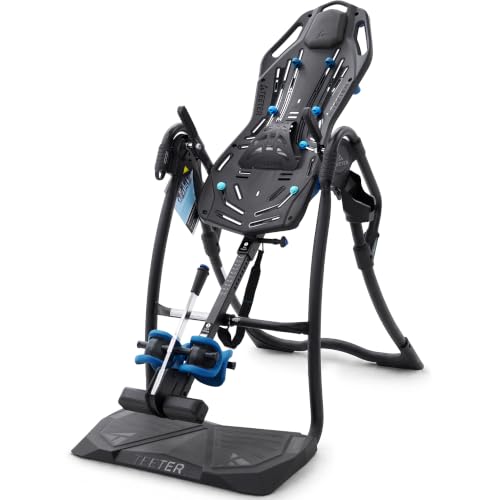
The FitSpine LX9 builds on the floating-backrest approach used by the X3, adding a broader set of stretching accessories. For a home setup where you want more ways to vary the session, that combination gives you more to work with.
You may find the eight-point suspension more accommodating during a long inversion, particularly compared with a fixed backrest on a basic mini table. The trade-off is a larger frame and a more involved setup, so it works best with a dedicated exercise area.
What Pays Off
- Floating suspension allows controlled movement around the torso
- Eight-point support is designed for a distributed contact area
- Easy-reach ankle lock simplifies changes between sessions
- Integrated accessories create several stretching options
Small Caveats
- The full-size frame takes more room than any mini model here
Best Suited To
The LX9 suits users with a dedicated exercise space who value backrest movement and multiple accessory-based stretching positions.
Where Another Pick Shines
The Verakare ITX9560 offers more explicit height and position adjustment, making it the stronger choice for taller users who want numerous locking positions.
The ITX9560 is built around adjustment, with six ankle-lock positions, a reversible ankle system, and a height range that reaches 6 feet 6 inches. That makes the fit less dependent on one fixed body shape than the simpler mini tables.
Assembly is required, so set aside time before your first session. Once assembled, the adjustable headrest and large backrest give this model a practical advantage for adults seeking a tailored position.
Reasons It Performs
- Six locking positions provide precise ankle placement
- Ankle holders can switch sides for a different setup
- The adjustable headrest accommodates changing body proportions
- A stated range covers users from 4 feet 10 inches to 6 feet 6 inches
Practical Considerations
- Assembly is required before the table is ready to use
- Its 300-pound limit is a maximum, not a target
- Multiple settings take more time to learn than a mini roller
Technical Sheet
Right Fit
This table fits adults near the upper end of its stated height range who need detailed ankle and head positioning.
Look Elsewhere When
The YOLEO ITX320 suits you better when foldable storage and a removable lumbar pad matter more than six locking positions.
The ITX320 focuses on the two details that matter most in a small home gym: a foldable frame and a removable lumbar pad. The pad adds support around the lower back, while removing it gives you a different feel for shorter inversion sessions.
Its reversible ankle holders add flexibility, but this is a basic table rather than a heavily adjusted system. Apartment residents may appreciate the reduced storage burden more than users who want multiple height positions.
What Helps Most
- Foldable construction simplifies storage in compact spaces
- The removable lumbar pad lets you change support
- Reversible ankle holders offer another entry configuration
Points To Note
- Assembly is required before use
- The basic structure offers fewer positioning adjustments than the ITX9560
Built With In Mind
The ITX320 is built for apartment residents and home exercisers who value compact storage and adjustable lower-back support.
Reach For A Different Pick When
The Relife Mini Inversion Table is a better fit for very short floor-space routines built around rollers and a curved backrest.
The Relife Mini Inversion Table takes a different approach from the full-size models by pairing a compact frame with a curved backrest and movable rollers. You can also use the structure as a back-extension machine, which gives the small frame more than one purpose.
For a short home stretching routine, that versatility may be enough. Compared with the TEETER models, this option trades a long backrest, ankle platform, and 300-pound rating for a smaller exercise footprint and simpler setup.
Well-Handled Touches
- Compact shape works well in limited floor space
- Rollers add movement during stretching
Trade Offs
- The compact backrest supports shorter sessions
- It lacks the ankle platform found on full-size tables
- Roller placement may require a little experimentation
Feature Facts
Whose Shelf It Belongs On
This compact table fits home exercisers with limited space who want a short inversion and back-extension routine in one frame.
Swap It Out When
The TEETER FitSpine X3 is the better choice for longer full-body inversion sessions with a flexible backrest and more substantial ankle support.
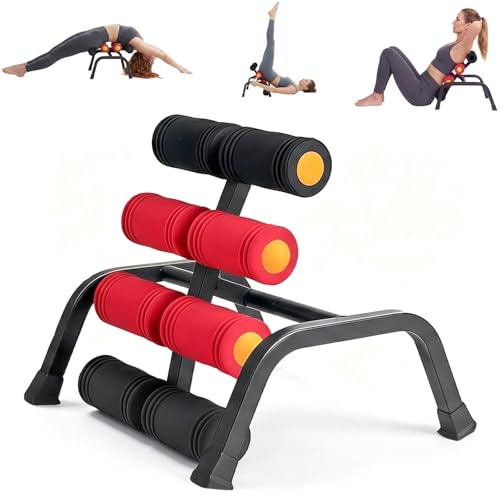
The Lerpio Mini Inversion Table combines a compact frame with rollers and a back-extension position. Its iron construction gives it a straightforward, familiar appearance, while the shorter format makes it easier to use for brief daily mobility sessions.
It serves a different purpose from the adjustable TEETER tables. Rather than supporting a full-length inversion with extensive position controls, it offers a smaller surface for rolling and extension movements, which may suit someone building a simple home routine.
Where It Delivers
- Compact frame suits compact home exercise areas
- Rollers add movement to the stretching position
- Back-extension use expands the exercise options
Some Limits To Know
- The mini format is less suitable for extended inversion sessions
- There are fewer positioning controls than on the ITX9560
Core Details
Who Will Love This
The Lerpio model fits home exercisers who want a compact iron frame for brief rolling and back-extension sessions.
A Better Fit Elsewhere
The YOLEO ITX320 suits you better when a foldable frame, removable lumbar pad, and reversible ankle holders match your storage and support needs.
What Matters Before You Invert
Ankle Fit Comes First
The ankle system determines how comfortably you enter and leave the table. Deep cups may suit users who want more surrounding support, while easy-reach locks help with frequent position changes. Compare the stated height ranges and user limits before considering any accessories.
Backrest Shape Changes The Experience
A flexing or floating backrest can move with your torso, whereas a compact mini table offers a shorter surface for brief sessions. Think about your body length and typical session length rather than choosing on appearance alone.
Floor Space And Storage Matter
A full-size inversion table needs room to rotate and enough clearance to get on and off. Foldable frames and mini roller designs are easier to store, making them practical choices for apartments, shared rooms, and homes with limited floor space.
Match The Model To Your Routine
Ask a licensed healthcare professional whether inversion is appropriate for your circumstances, especially after an injury or with a chronic condition. Once that question is settled, choose full-size support for longer sessions or a compact model for short, frequent mobility routines.
Practical Details Before You Buy
Mistakes Worth Dodging
Don’t judge a table solely by its capacity or by the number of stretching accessories. Entry comfort, backrest length, available floor space, and assembly requirements shape daily use more directly. Measure your available area before ordering a full-size model.
What Separates Premium From Basic
Higher-tier models tend to add backrest movement, deeper ankle support, or more precise locking positions. Those features can matter for frequent sessions, but a compact roller table may serve a shorter routine just as well. Pay for the adjustment you will actually use.
Frequently Asked Questions
Are Inversion Tables Suitable For Everyone With Back Problems?
No, inversion tables are not appropriate for every type of back discomfort or medical condition. Ask a licensed healthcare professional about your specific situation before using one.
Do Inversion Tables Require Assembly?
Most models listed here need some assembly before use, with the ITX9560 and ITX320 explicitly requiring it. Allow enough time to follow the instructions and check every adjustment before your first session.
Which Inversion Table Is Best For A Small Apartment?
The YOLEO ITX320 is the strongest fit for compact storage because it folds and includes a removable lumbar pad. The Relife Mini Inversion Table also works well where floor space is limited.
Are Full-Size Tables More Comfortable Than Mini Models?
A full-size table usually provides a longer backrest and more structured ankle support. Mini models are better for short routines and compact spaces, but they may not feel as accommodating during an extended inversion.
What Capacity Should You Consider?
Your body weight should remain below the table’s stated maximum. The FitSpine X3, EP-560, FitSpine LX9, and ITX9560 each list a 300-pound capacity.
Final Verdict
The TEETER FitSpine models suit a dedicated home gym, while the EP-560 stands out for easier ankle positioning. The Verakare ITX9560 offers more adjustment, and the YOLEO ITX320 prioritizes storage. For very compact spaces, the Relife and Lerpio mini tables provide shorter, more focused routines. Match the frame to your room and your preferred level of adjustment before choosing.
