

An inversion table puts your head below your hips to create a gentle, traction-like stretch. That appeal is strongest for desk workers, drivers, and home exercisers who want a simple way to move after long periods of sitting. The right model depends on ankle security, backrest comfort, adjustability, storage needs, and your weight.
An Overview Of The Picks

Teeter FitSpine X3 Inversion Table with Deluxe Ankle Lock, 300 lb

TEETER EP-560 Inversion Table with Accessories, 300 lb Capacity
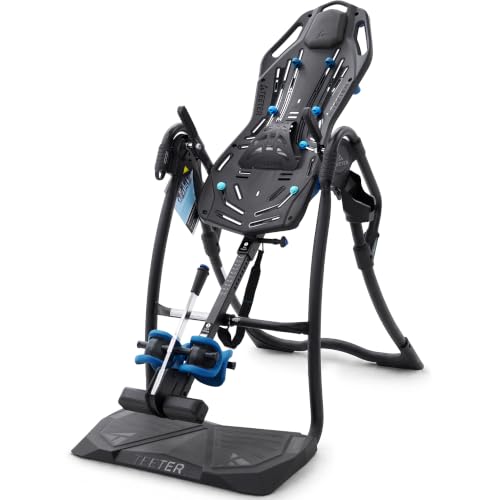
TEETER FitSpine LX9 Inversion Table with Deluxe Ankle Lock, 300 lb Capacity

YOLEO ITX320 Inversion Table
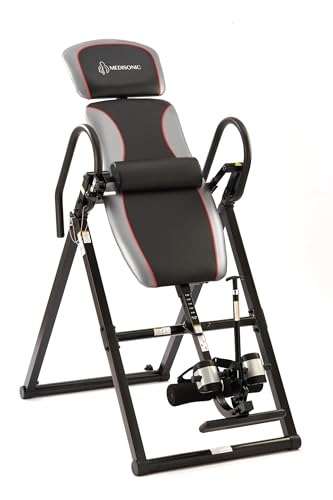
MediSonic Inversion Table with Adjustable Lumbar Pad, 300 lb Capacity

TITIDU Heavy-Duty Foldable Inversion Table, 330 lb Capacity

PJUYD Mini Inversion Table with 8 Rollers, 3 Angles, 300 lb Weight Capacity
A Breakdown Of The Leading Choices
The FitSpine X3 places comfort at the center of inversion. Its contoured backrest uses an eight-point floating suspension system, allowing the support surface to move with your body rather than forcing one rigid position. That makes it a sensible fit for desk workers who want to stretch after hours of sitting, particularly those who prefer a more cushioned contact point.
Unlike the simpler YOLEO ITX320 later in this list, the X3 emphasizes backrest movement and a more structured accessory set. You may find the added equipment useful, though it also gives this table a larger footprint than a compact rolling design.
The Value In It
- The suspension backrest supports a more adaptable position during inversion.
- Deluxe easy-reach ankle locking improves entry and exit for home routines.
- Grip-and-stretch handholds add upper-body options without separate equipment.
- Eight raised nodes provide varied pressure points for focused stretching.
Things To Consider
- The 300 lb capacity requires a comfortable margin below that limit for unrestricted movement.
- A full-length table needs more floor space than the smaller alternatives.
Key Specs
Built With In Mind
This model suits adults who value a cushioned, flexible backrest and plan to use inversion regularly at home.
A Better Fit Elsewhere
The YOLEO ITX320 suits people who prioritize foldable storage and a removable lumbar pad over the X3’s suspension backrest.
The EP-560 focuses on making inversion feel less rigid. Its ComforTrak backrest bends as you shift, while the wraparound ankle cups distribute contact around the lower legs. Those details matter most during longer stretching sessions or for people who find a rigid metal backrest uncomfortable.
Compared with the FitSpine X3, this model takes a simpler approach to back support. You gain a two-position foot platform and hand grips for stretching, but you give up the X3’s eight-point floating suspension.
The Good Stuff
- The flexible backrest follows body movement for a less rigid contact surface.
- Two-position foot placement helps you settle your legs at a comfortable angle.
- Wraparound ankle cups add contact around the feet and lower legs.
Trade Offs
- Its fixed backrest design offers fewer adjustment choices than the FitSpine X3 and LX9.
At A Glance
The Right Fit
The EP-560 fits adults who want a conventional full-length table with flexible support and simple foot positioning.
Consider Something Else When
The TEETER FitSpine LX9 suits stretch-focused users who want a suspension backrest, more hand support, and additional accessories.
The LX9 builds on the FitSpine approach with a flexible backrest, an easy-reach ankle lock, and an integrated accessory package. Its eight-point suspension allows the backrest to follow your body as you adjust, which can feel more natural during a slow home stretching routine.
The main difference from the X3 is the LX9’s broader accessory presentation rather than a completely different core design. For people comparing both, your attention should center on the included components and room available for the table.
What Earns Its Place
- The floating backrest responds to body movement during inversion.
- Deluxe ankle locking adds a clearer entry and release process.
- Grip handles create additional stretching positions for the upper body.
- Integrated accessories keep more options together in one purchase.
- Protection plans cover qualifying accidental damage and breakdowns, with parts, labor, and shipping included.
Where It May Fall Short
- The accessory-heavy setup may take more time to arrange than a simpler table.
- You remain limited to the listed 300 lb capacity.
Made For
The LX9 suits adults who want a full-length table with flexible back support and several built-in stretching options.
Another Choice May Suit
The TEETER EP-560 is the simpler fit for people who prefer fewer accessories and a more traditional backrest.
The ITX320 keeps its emphasis on practical home use, with a foldable frame, reversible ankle holders, and a removable lumbar pad. The lumbar pad is a useful middle-ground feature: you can reposition or remove it as your body moves through the inversion.
Unlike the premium Teeter models, this table offers a more straightforward feature set. That makes it worth comparing against the MediSonic model when your priority is a removable support pad rather than numerous fixed inversion angles.
Well-Handled Touches
- The folding frame reduces the space needed between workouts.
- A removable lumbar pad lets you adjust the lower-back contact area.
- Reversible ankle holders provide flexibility in foot positioning.
Small Caveats
- You receive fewer built-in stretching accessories than the FitSpine LX9.
- Assembly requirements should be reviewed before delivery day.
Quick Facts
Who Will Love This
The ITX320 suits apartment residents and home exercisers who value folding storage and adjustable lumbar contact.
Look Elsewhere When
The MediSonic inversion table fits people who want four marked inversion angles and a heavier 300 lb frame.
The MediSonic table stands apart through its range of marked inversion positions at 20, 40, 60, and 90 degrees. An angle is simply how far your body tips from upright, so having several settings can help you find a comfortable point for stretching without repositioning the entire table.
Compared with the YOLEO ITX320, the MediSonic model offers more explicit angle control and a heavier frame. The adjustable lumbar pad, headrest, and cushioned ankle cups also create a comfort-focused setup for regular home use.
A Few Highlights
- Four marked angles give you clear stopping points during inversion.
- The lumbar pad can be adjusted and removed to suit your position.
- A cushioned headrest adds support around the neck and upper back.
- Padded ankle cups improve contact during longer sessions.
- The 300 lb capacity supports a wide range of adult body sizes.
Practical Considerations
- The four-angle system requires more deliberate setting changes than a basic rocking table.
- Its full-size frame needs adequate ceiling clearance and floor space.
Feature Card
Whose Shelf It Belongs On
This model suits home exercisers who want precise angle selection and a generously padded support system.
Reach For A Different Pick When
The YOLEO ITX320 is the better fit for people who prioritize folding storage and fewer adjustment mechanisms.
The TITIDU model combines a 330 lb capacity with a foldable frame, making it the most accommodating option in this group for larger adults. Its extended ankle-lock handle gives you a longer reach for securing your position, which is useful because the wider capacity does not change the importance of a comfortable ankle fit.
Its listed length range of 4.27 to 6.07 feet reflects an adjustable frame, so you can check your available space before assembly. Unlike the PJUYD mini table, this is a full-length design with a heavier stated capacity.
Useful Touches
- A 330 lb capacity is the highest listed limit in this selection.
- The folding structure helps with storage in a basement, garage, or spare room.
- The extended ankle handle offers more reach during setup.
- The adjustable frame length accommodates different body heights.
Possible Compromises
- Its full-size frame requires more space than the PJUYD mini model.
- The listed feature set is less focused on adjustable back support than the MediSonic table.
Built With In Mind
This table suits larger adults who need a higher listed capacity and want the option to fold it away.
Swap It Out When
The PJUYD mini inversion table suits people with limited floor space who do not need a full-length frame.
The PJUYD mini table turns a smaller footprint into its main selling point. Eight rollers support the back as it moves across the frame, while three marked angles at 135, 180, and 225 degrees give you different inversion positions. That makes it appealing for an office corner or a compact exercise area.
Compared with the TITIDU table’s 330 lb limit, the PJUYD reaches 300 lb but trades full-body length for a shorter design. Its reinforced right-angle iron frame targets frame steadiness, though the smaller frame still deserves a careful look in your available space.
Noteworthy Benefits
- The compact frame suits smaller rooms and home offices.
- Eight moving rollers support the back during position changes.
- Three marked angles provide useful starting points.
- The reinforced frame includes thicker central and side supports.
- The 300 lb limit covers many adult body sizes.
Things That May Matter
- Its shorter format may feel less accommodating than a full-length table.
- You need enough surrounding space to enter and leave the inverted position safely.
Technical Reference
Best Suited To
This mini table fits adults who want rolling back support and adjustable angles in a compact home or office setup.
Where A Sibling Pick Shines
The TITIDU foldable inversion table suits larger adults who need more length and a 330 lb listed capacity.
What Matters Before You Commit
Ankle Support Comes First
An inversion table holds your ankles while your body rotates, so a secure fit should be your first check. Compare the ankle lock, cups, and foot-platform positions, and account for your shoe size and leg length. A model that feels secure at one angle may still need adjustment as the frame rotates.
Angle and Backrest Fit
A backrest defines where your back and shoulders rest, while angle settings control how far you rotate. The FitSpine models use flexible suspension, the MediSonic offers four marked positions, and the PJUYD uses rollers with three angles. Try the available positions before settling on the backrest style.
Capacity and Storage
Every model has a stated weight limit, but a higher number does not make every table comfortable for every body. Stay comfortably below the listed limit and leave room to move. Full-length tables need more floor and ceiling space, while the PJUYD mini design suits tighter rooms.
Accessories and Setup
Grip handles, nodes, headrests, and adjustable pads expand the ways you can stretch. They also add parts to arrange and may affect how quickly the table folds. Confirm the included accessories, assembly requirements, available floor area, and protection plan details before ordering.
Practical Lessons Before You Order
Mistakes Worth Dodging
Avoid judging an inversion table solely by its capacity number. Check ankle adjustment, backrest contact, frame length, and ceiling clearance together. Measure the intended floor area and confirm that you can enter and exit without striking nearby furniture or walls.
What Separates Premium From Basic
Higher-tier models often spend more on the backrest, ankle system, position controls, and stretching accessories. Those additions can improve daily convenience, but a simpler folding table can suit a light user with limited space. Pay for adjustments you will actually use.
Frequently Asked Questions
How do you use an inversion table safely?
Secure your ankles fully, start with a shallow angle, and stop if anything feels uncomfortable. Keep the surrounding area clear so you can move into and out of the position without obstruction.
Which inversion table is best for a small room?
The PJUYD Mini Inversion Table is the most compact option here, with a short frame suited to home offices and smaller exercise areas. The YOLEO ITX320 also folds, so measure both against your available floor space.
What capacity should you choose?
Choose a model with a listed limit comfortably above your body weight, rather than one that places you near the maximum. The MediSonic and Teeter models list 300 lb, while the TITIDU lists 330 lb.
Are adjustable ankle holders important?
Adjustable ankle hardware helps distribute contact and accommodate different leg sizes. It is especially useful for anyone who struggles to feel secure in a fixed ankle system.
Do inversion tables require assembly?
Assembly requirements vary across the models, so check the included instructions and available tools before delivery. Measure the intended location as well, since a folding frame still needs room to unfold.
Final Verdict
Start with the space you have and the support your body needs. The Teeter FitSpine X3 and LX9 suit people who value flexible backrests, the MediSonic offers the clearest angle selection, and the YOLEO and PJUYD prioritize more compact footprints. Choose the features you will use most rather than adding equipment for a routine you may never follow.
