

A long shift at work, a crowded flight, or a full day on your feet can leave your legs feeling heavy and tired. Graduated compression helps by applying the greatest pressure near the ankle and gradually reducing it up the calf, while mmHg, short for millimeters of mercury, describes the compression level.
The six options below cover everything from gentle 8-15 mmHg support to firmer 20-30 mmHg designs, with open toes, natural-fiber blends, practical sizing, and multi-pair sets to suit different routines. You’ll find your best match by comparing pressure, fit, toe construction, and the kind of day you plan to wear them.
A Side-By-Side Look

Doc Miller Open Toe Socks 15-20 mmHg

Doc Miller Open Toe Socks 20-30 mmHg

VBNW Pima Cotton Compression Socks
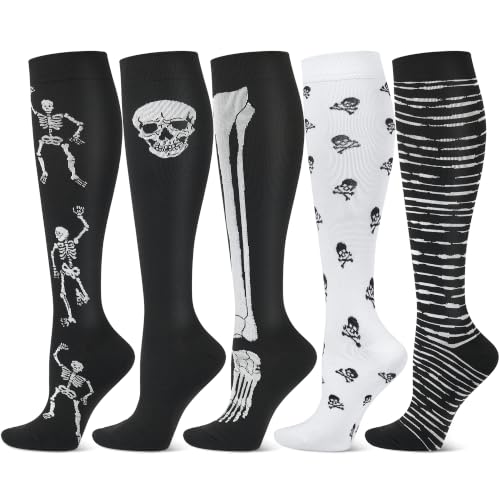
HONGTEYA 20-30 mmHg Socks

Lalapapa Bamboo Viscose Socks
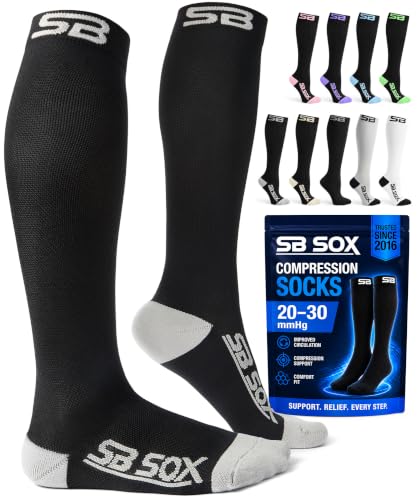
SB SOX 20-30 mmHg Socks
The Strengths Of Each Pick
Open toes make this pair particularly easy to wear with sandals or shoes that leave more of the foot visible. The 15-20 mmHg compression provides moderate, graduated support from the ankle through the calf, giving you a balanced option for travel, long periods of sitting, or active days without the strongest squeeze.
The nylon-spandex construction keeps the socks lightweight and flexible, while the open toe gives your toes more room to move. Compared with the firmer Doc Miller option later in this list, this model favors an easier, more flexible feel for daily routines.
Where It Excels
- The open toe promotes airflow and gives your toes room to move naturally.
- Moderate 15-20 mmHg compression suits everyday standing, sitting, and travel.
- The lightweight nylon-spandex blend flexes well enough for commutes and active days.
- Size options extend through 3X-Large for a broader range of calf sizes.
Worth Noting
- Open toes trade complete foot coverage for ventilation and sandal compatibility.
- This moderate level may feel less substantial than the 20-30 mmHg options.
Key Specs
Who It Suits Best
You’ll appreciate this pair most during travel or daily wear when you want moderate support, an open toe, and less intensity than 20-30 mmHg compression.
Where Another Pick Suits Better
Doc Miller Open Toe Socks 20-30 mmHg offer a firmer fit for long shifts where you want more pronounced support.
This Doc Miller pair steps up from 15-20 mmHg to a firm 20-30 mmHg level while retaining the open-toe construction. That makes it a more substantial choice for nurses, teachers, travelers, and anyone who spends hours standing or wants stronger support after an active day.
The sizing guidance deserves attention before checkout because these socks are designed to fit snugly. Measure the widest part of your calf and compare it with the chart; unlike the softer VBNW pair later, this model is clearly aimed at a firmer compression experience.
A Strong Showing
- The 20-30 mmHg level gives long shifts and active routines more pronounced support.
- Open toes preserve airflow and freedom of movement around the foot.
- Clear calf-measurement guidance helps you select a more accurate size.
Practical Considerations
- Firm compression may feel intense during your first wear.
- Measure your calf rather than relying only on a clothing size.
- The open toe leaves part of the foot uncovered inside closed shoes.
Built With In Mind
You’ll find this level most useful for demanding workdays, frequent travel, or active routines where firmer graduated support feels more natural.
Consider Something Else When
Doc Miller Open Toe Socks 15-20 mmHg are a better match for everyday wear when moderate support feels more comfortable.
Softness is the central advantage here. Pima cotton and bamboo viscose create a smoother, more breathable feel than many synthetic compression socks, making this pair appealing for office hours, long commutes, and routines where your feet stay enclosed in shoes.
The 15-20 mmHg compression sits between the gentle Lalapapa pair and the firmer 20-30 mmHg choices. A terry-cushioned sole, arch support, breathable instep mesh, and a reinforced sole make this more of a thoughtfully finished everyday sock than a basic support tube.
A Few Highlights
- The cotton and bamboo-viscose blend feels smooth and manages moisture comfortably.
- Lycra spandex adds flexible stretch and helps the sock stay in place.
- Moderate 15-20 mmHg support works well for commuting and long periods of sitting.
- Arch support and a cushioned sole improve comfort underfoot.
- Breathable mesh at the instep helps release heat during extended wear.
Minor Gripes
- The light-to-moderate compression may not satisfy anyone seeking the firmer 20-30 mmHg feel.
Feature Snapshot
The Right Fit
You’ll appreciate this pair for desk work, commuting, travel, and regular walking when a soft feel matters as much as steady compression.
A Better Fit Elsewhere
Lalapapa Bamboo Viscose Socks provide a gentler 8-15 mmHg level for first-time wearers who prefer less pressure.
Five pairs make this a practical choice for frequent wear because you can rotate socks through the week without doing laundry every night. The firm 20-30 mmHg compression targets long periods of sitting or standing, similar to the firmer Doc Miller option but with a different multi-pair approach.
A wide-calf design and substantial stretch help the socks go on more easily, while soft, breathable fabric keeps the fit practical. Skull prints and other lively patterns also give them more personality than the restrained styling of many support socks.
Real-World Strengths
- Five pairs make weekday rotation simple and convenient.
- The wide-calf construction and stretch support easier dressing.
Things To Consider
- Five pairs take more drawer and laundry space than a two-pair set.
- The 20-30 mmHg level is firmer than the moderate and gentle alternatives.
Quick Facts
Made For
You’ll get the most from this set during frequent workdays or travel, especially when you want firm support and several pairs ready to rotate.
Reach For A Different Pick When
SB SOX 20-30 mmHg Socks make more sense when precise calf-and-shoe sizing guidance matters more than a five-pair package.
Light compression makes this a sensible starting point for someone who wants support without a tight, intense sensation. The 8-15 mmHg level feels noticeably gentler than the 15-20 mmHg VBNW pair and much less substantial than the 20-30 mmHg options, which can make it easier to introduce compression socks into a daily routine.
Most of the fabric is bamboo viscose, with spandex for flexible movement and a small amount of nylon and cotton. Cushioning at the heel and toe, a smooth seamless toe, and left-and-right shaping add practical comfort, while the two included pairs can be styled with bows, cats, florals, checks, and other patterns.
A Few Strong Suits
- The 8-15 mmHg level offers a gentler entry point for compression wear.
- A mostly bamboo-viscose construction feels soft and light on the foot.
- Heel-and-toe cushioning improves comfort inside work shoes and sneakers.
- Two pairs and varied patterns make the set practical and easy to coordinate.
Trade Offs
- Gentle pressure may provide less noticeable support than the 15-20 and 20-30 mmHg options.
- Size choices are limited to S/M and L/XL, so compare both foot size and calf circumference.
- Two pairs offer less rotation than the HONGTEYA five-pair set.
- Playful prints may not suit every workplace dress code.
Who Will Love This
You’ll appreciate this set most as a first pair of compression socks, a softer option for long workdays, or a fun style for casual outfits.
Another Choice May Suit
VBNW Pima Cotton Compression Socks provide firmer 15-20 mmHg support and more focused foot construction for everyday office wear.
Size precision is the standout detail here. The chart pairs calf circumference with women’s and men’s shoe sizes across five lettered sizes, giving you a clearer basis for ordering than a loose clothing-size guess, and the 20-30 mmHg compression offers firm support for long shifts and active routines.
The 80% nylon and 20% spandex construction supplies stretch for a close fit. Compared with HONGTEYA, the trade-off is packaging rather than pressure level: you receive detailed sizing guidance here, while the HONGTEYA set includes five pairs for easier rotation.
Everyday Perks
- The 20-30 mmHg compression provides a firm, graduated fit.
- Nylon and spandex create a stretchy construction that follows the leg.
- Detailed calf and shoe ranges make size selection more methodical.
The Fine Print
- Your shoe size and calf measurement must align within the listed ranges for the best fit.
Technical Reference
Best Suited To
You’ll find this pair useful for long workdays or travel when you want firm compression and are comfortable taking a few minutes to match your calf and shoe measurements.
Swap It Out When
HONGTEYA 20-30 mmHg Socks are the more convenient choice for anyone who prioritizes five pairs for weekly rotation.
How To Match Compression Level And Fit
The right compression socks start with pressure and fit, not color or pattern alone. Graduated compression means the pressure changes along the sock, so the difference between 8-15, 15-20, and 20-30 mmHg can change how the pair feels from morning to evening.
Pressure Level
The Lalapapa pair offers the gentlest 8-15 mmHg range, making it a practical starting point for light support. The Doc Miller 15-20 and VBNW options sit in the middle, while the Doc Miller 20-30, HONGTEYA, and SB SOX pairs provide firmer pressure for demanding routines.
Calf And Foot Sizing
Measure the widest part of your calf before ordering, especially for snug 20-30 mmHg styles. Compare that number with the product’s chart, then confirm that your usual shoe size falls within the stated range for that calf measurement.
Toe Design And Materials
Open toes favor airflow, visible footwear, and freer toe movement, but they provide less coverage than enclosed designs. Pima cotton, bamboo viscose, nylon, and spandex each affect softness, stretch, and breath differently, so your preference for natural fibers or a firmer synthetic feel can narrow the list.
Compression Socks: Small Choices, Big Comfort Difference
Common Shopping Slip Ups
A common mistake is selecting a size from a clothing label without measuring your calf, especially with firm 20-30 mmHg compression. Another is judging the pair by pressure alone; toe construction, foot cushioning, and shoe compatibility can determine whether you enjoy wearing it.
What Separates Premium From Basic
Higher-priced compression socks may improve materials, shaping, or construction, but a higher price does not automatically create a better fit. A multi-pair set improves rotation, while a detailed size chart improves ordering, so extra spending is most useful when it addresses a specific weakness in your routine.
Frequently Asked Questions
Which Compression Level Is Best for Daily Wear?
The 15-20 mmHg range is the middle option here, while 8-15 mmHg feels gentler and 20-30 mmHg feels firmer. Match the level to how much pressure you want during long shifts, travel, or daily wear.
Are Open Toe Socks Suitable for Sandals?
Open-toe socks can work with sandals because the toe area is uncovered. Their open construction favors airflow and toe freedom, but they provide less full-foot coverage than a fully enclosed sock.
How Should I Size Compression Socks?
Measure your calf circumference and compare it with the size chart, then check your shoe size. For SB SOX, follow its paired calf and shoe ranges because the combination matters.
Are Stronger 20-30 mmHg Socks Always Better?
No. Stronger 20-30 mmHg compression suits people who want more pronounced support, while moderate or light pressure may feel better for routine wear. Fit and comfort matter as much as the number.
Do Cotton and Bamboo Socks Work for Long Shifts?
Yes. VBNW combines Pima cotton and bamboo viscose, while Lalapapa uses a mostly bamboo-viscose blend with added stretch. These material choices can be appealing for people who prefer a softer feel over a firm synthetic squeeze.
Final Verdict
Your easiest decision starts with compression strength: choose 8-15 mmHg for a gentle start, 15-20 mmHg for balanced daily support, or 20-30 mmHg for a firmer fit. Toe coverage, calf measurements, and material preferences narrow the field further, so the right pair is the one that suits both your compression level and your actual routine.
