

A bottle of fish oil can look like an easy choice, then leave you dealing with a lingering fishy aftertaste or a label packed with unfamiliar terms. Krill oil offers a different approach for people who want omega-3 fatty acids in phospholipid form, with astaxanthin naturally present in the source. The right formula depends on whether you value a women-focused blend, added choline, detailed ingredient quantities, or simply a convenient softgel routine.
An Overview Of The Picks

Dr. Mercola Krill Oil for Women

Kori Krill Oil Omega-3 800 mg
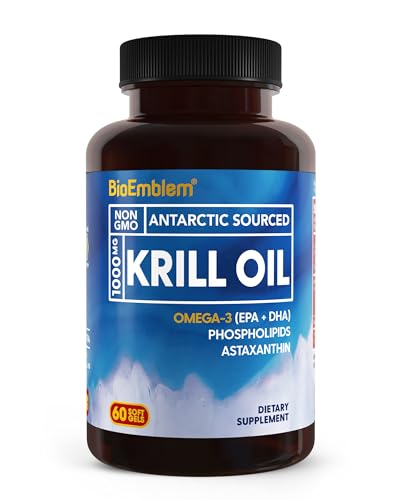
BioEmblem Krill Oil 1000 mg


JulyDeer Krill Oil 60 Softgels

MegaRed Antarctic Krill Oil 500 mg, EPA & DHA, 90 Softgels
What Each Pick Brings To The Table
A women-focused label gives you a more defined choice than a general krill oil capsule. Dr. Mercola pairs omega-3 fatty acids with evening primrose oil, which supplies GLA, a type of omega-6 fatty acid, alongside astaxanthin. That combination makes more sense for you when you want one capsule that brings several lipids together rather than a single-ingredient formula.
Phospholipids are fatty molecules that carry omega-3s through digestion, so their presence matters when comparing krill products. This formula uses that form and adds astaxanthin, the reddish pigment naturally associated with krill. For most women comparing women-specific supplements, that gives it a clearer identity than the more general formulas later in this list.
Useful Touches
- Evening primrose oil adds GLA to a formula that already contains EPA and DHA.
- Astaxanthin offers a natural complement to the phospholipid-based omega-3s.
- The capsule format works neatly alongside a daily supplement routine.
- The targeted blend may appeal to you more than a general-purpose krill oil.
Points To Note
- The added GLA makes this less suitable for someone seeking a minimal krill oil formula.
- The 90-capsule bottle may need more storage planning than a smaller softgel container.
Key Specs
Who It Suits Best
This formula best suits women who specifically want a krill oil capsule with GLA and astaxanthin in one blend.
Consider Something Else When
Kori Krill Oil Omega-3 800 mg suits you better when added choline matters more than a women-specific evening primrose blend.
Kori Krill Oil builds on the women-focused approach of Dr. Mercola Krill Oil for Women by making choline the distinguishing ingredient. Choline is a nutrient involved in normal brain, nerve, and liver function, so its inclusion gives this formula a broader appeal for adults who want more than krill-derived lipids.
The softgels contain EPA, DHA, phospholipids, and astaxanthin, with the omega-3s carried in a concentrated phospholipid form. For a busy routine, that combination keeps things straightforward, while the absence of artificial flavors, colors, and preservatives may matter to you. The honest read is that this is the feature-focused formula here, rather than the simplest one.
What It Does Well
- Adds choline to EPA, DHA, phospholipids, and astaxanthin.
- The concentrated phospholipid format supports efficient distribution through the digestive system.
- Softgels offer a familiar format for people who already use fish or krill oil.
- No artificial flavors, colors, or preservatives keep the formulation straightforward.
- Astaxanthin comes naturally from the krill oil rather than being added separately.
Practical Considerations
- Choline may be unnecessary for you if you already prefer a simpler omega-3 product.
- The bottle contains 90 softgels, so check the available capsule count against your storage space.
The Right Fit
This option fits adults who prioritize phospholipid-form omega-3s and want choline included in the same softgel.
Another Choice May Suit
BioEmblem Krill Oil 1000 mg may suit you better when clear EPA and DHA quantities on the label matter more than added choline.
BioEmblem makes the omega-3 profile easier to evaluate because it spells out the EPA and DHA figures rather than leaving you with krill oil alone. Each serving includes those two fatty acids, phospholipids, and astaxanthin, giving you a direct look at what sits inside each softgel.
Compared with Kori Krill Oil Omega-3 800 mg, this formula skips added choline but provides more visible fatty-acid detail on the label. Its filtering and contaminant checks add another layer of reassurance for label-conscious shoppers. You may find the 60-softgel bottle less generous than the larger JulyDeer supply, though the tradeoff is a compact, clearly presented package.
Bright Spots
- EPA and DHA amounts appear directly on the label, simplifying comparisons.
- Phospholipids support absorption of the krill-derived omega-3s.
- Astaxanthin is included in the same softgel.
- Filtering and contaminant checks provide added confidence in the source.
- The softgel format avoids the shell used by capsule-based formulas.
Softer Spots
- Sixty softgels create a smaller supply than the 240-count JulyDeer option.
- People looking for added choline or GLA will not find either in this formula.
Feature Snapshot
Made For
This formula is made for shoppers who want exact EPA and DHA figures and care more about label clarity than extra ingredients.
Reach For A Different Pick When
JulyDeer Krill Oil 240 Softgels may serve you better when a larger bottle and a lower per-softgel planning burden matter most.
A large bottle changes the practical side of a supplement routine. JulyDeer Krill Oil 240 Softgels gives you a substantial supply, which can reduce the frequency of reorder planning compared with the 60-softgel version. The formula includes Antarctic krill oil, phospholipids, EPA, DHA, and astaxanthin in quick-release softgels.
BioEmblem Krill Oil 1000 mg provides more explicit EPA and DHA figures, so choose that option when label transparency comes first. JulyDeer instead leans on a practical, uncomplicated format that may work better for your cabinet or travel bag. Independent laboratory analysis for safety and potency adds another consideration, although 240 softgels still require meaningful storage space.
Key Advantages
- The 240-softgel container supports long-range routine planning.
- Quick-release softgels fit neatly into a busy morning schedule.
- Phospholipids carry the krill-derived omega-3s in a water-compatible form.
- The formula is formulated to reduce the familiar fishy aftertaste associated with some fish oils.
- Antarctic sourcing provides a clear origin for the krill.
Worth Noting
- Two softgels make up the stated serving, so the bottle covers more capsules than smaller packages.
- Detailed EPA and DHA figures are less prominent than on the BioEmblem label.
Quick Facts
Best Suited To
This bottle suits people who want a large softgel supply and prefer a routine that does not require frequent reordering.
A Better Fit Elsewhere
BioEmblem Krill Oil 1000 mg is a better fit when you want exact EPA and DHA amounts printed on the label.
The smaller JulyDeer bottle keeps the same broad formula while taking up less space than the 240-softgel version. Its quick-release softgels contain Antarctic krill oil with EPA, DHA, phospholipids, and astaxanthin. For your kitchen cabinet or travel bag, that compact footprint can be a meaningful practical advantage.
Compared with JulyDeer Krill Oil 240 Softgels, the formula is essentially the same but the supply is shorter. That makes it a sensible choice for anyone who prefers a smaller container or dislikes keeping a large number of softgels around. You trade reorder convenience for less storage space, and the decision comes down to which part matters more in your home.
Notable Gains
- A compact 60-softgel bottle takes up less cabinet and travel space.
- Quick-release softgels make the format convenient to use.
- EPA, DHA, phospholipids, and astaxanthin appear in the formula.
- The Antarctic source is easy for you to identify.
Where It May Fall Short
- You will reorder sooner than with the 240-softgel JulyDeer bottle.
- The serving uses two softgels, which makes a single-capsule routine impossible.
- The label offers less fatty-acid detail than the BioEmblem formula.
Who Will Love This
This option will suit people who prioritize compact storage and the familiar JulyDeer formula over a long supply.
Where A Sibling Pick Shines
JulyDeer Krill Oil 240 Softgels shines for you when fewer reorders and a larger on-hand supply matter more than compact storage.
MegaRed takes a straightforward approach to Antarctic krill oil, combining EPA, DHA, and astaxanthin in softgels. The 90-count package falls between the smaller BioEmblem bottle and the much larger JulyDeer supply. For many people, that middle ground looks practical on a shelf and simple enough for a familiar supplement routine.
Unlike BioEmblem Krill Oil 1000 mg, MegaRed does not lead its featured details with individual fatty-acid figures. The listing also emphasizes a krill-oil amount rather than the full phospholipid profile, which can make direct comparisons harder. Its main appeal for you is the familiar softgel format and the inclusion of astaxanthin without an added evening primrose or choline blend.
A Strong Showing
- Antarctic krill provides a clearly stated source.
- EPA and DHA provide the familiar omega-3 profile most shoppers look for.
- Astaxanthin appears alongside the omega-3 fatty acids.
- The softgel format is designed to avoid a fish-oil aftertaste.
- Ninety softgels create a convenient middle-sized supply.
Details To Watch
- Compare EPA and DHA on the label because total krill oil alone does not show those quantities.
- The 90-count bottle sits between the smaller and larger options in this list.
At A Glance
Built With In Mind
This formula suits people who want a familiar EPA, DHA, and astaxanthin combination without evening primrose oil or added choline.
Swap It Out When
Kori Krill Oil Omega-3 800 mg is a better choice for you when added choline and a concentrated phospholipid formula are the deciding factors.
What To Look For Before You Choose
Check The Omega-3 Profile
EPA and DHA are the two omega-3 fatty acids most often associated with krill oil, while phospholipids act as their delivery form in krill-based products. A label that shows each component gives you a clearer basis for comparison. Total krill oil by itself does not tell the full story, so you should look beyond the largest number on the front.
Consider The Added Ingredients
Evening primrose oil brings GLA into Dr. Mercola Krill Oil for Women, while choline gives Kori Krill Oil Omega-3 800 mg a different focus. Astaxanthin appears naturally in several options. These additions may suit your priorities, but they can also make two otherwise similar formulas harder to compare. A straightforward blend may be easier for you to manage.
Think About Bottle Size And Storage
The difference between 60 and 240 softgels affects cabinet space, travel convenience, and how often you need to reorder. BioEmblem provides the clearest fatty-acid figures, JulyDeer offers both compact and large bottles, and MegaRed sits between them. Your storage space and preferred container size can be as important as the ingredient list.
Review The Source And Testing
Antarctic sourcing appears throughout this list, so look for another differentiator within each product. BioEmblem describes filtration and contaminant checks, while JulyDeer mentions independent laboratory analysis for safety and potency. Those details can matter to you, especially when comparing otherwise similar softgels. Anyone who is pregnant, nursing, managing a medical condition, or taking other supplements should speak with a qualified healthcare professional before adding a new supplement.
Everyday Supplement Decisions
Pitfalls Shoppers Hit
Comparing only the front-panel krill oil amount can lead you toward the wrong formula. Check EPA, DHA, phospholipids, and any added ingredients before deciding. Also consider capsule count, storage space, and the serving format instead of assuming the larger bottle is automatically the better fit.
What Separates Premium From Basic
Added choline, evening primrose oil, or more detailed sourcing information can distinguish higher-tier formulas. Those additions are useful only when they match your priorities, though. A simpler formula may suit you better when easy storage and a straightforward ingredient profile matter most.
Frequently Asked Questions
Is Krill Oil Different From Fish Oil?
Krill oil comes from Antarctic krill and naturally contains omega-3s, phospholipids, and astaxanthin. Fish oil also provides omega-3s, but it usually uses a triglyceride form and does not naturally include astaxanthin.
Why Do Some Krill Oil Labels Emphasize Phospholipids?
Phospholipids are fats that help carry omega-3s through digestion. Krill oil naturally contains them in a phospholipid form, which is one reason people compare it favorably with fish oil.
What Does Astaxanthin Add To Krill Oil?
Astaxanthin is a naturally occurring carotenoid that gives krill its reddish color. In krill oil, it appears alongside the omega-3 fatty acids and gives the formula an additional distinguishing compound.
How Can You Compare Two Krill Oil Supplements?
Compare EPA, DHA, phospholipids, added ingredients, capsule count, and sourcing details. The largest number on the bottle may represent total krill oil rather than the amount of each fatty acid.
Should You Add Krill Oil To Your Routine?
Krill oil can fit into a routine for people seeking omega-3 fatty acids in phospholipid form. Speak with a qualified healthcare professional before starting a supplement, particularly when you are pregnant, nursing, managing a medical condition, or using other supplements.
Final Thoughts
The right krill oil comes down to the formula and container that suit your routine. Dr. Mercola stands apart for its women-focused GLA blend, Kori adds choline, and BioEmblem provides the clearest EPA and DHA figures. JulyDeer and MegaRed prioritize softgel convenience, with the main difference coming down to bottle size and how much label detail matters to you.
