

A large upper-arm cuff can make a home blood pressure check more comfortable, especially when standard cuffs pinch or feel awkward. The right fit also matters for people with larger arms, caregivers supporting older adults, and anyone who wants clearer records over time. These seven options range from traditional adjustable cuffs to a barrel-style design, app-connected tracking, and models that combine blood pressure readings with EKG measurements.
The Shortlist At A Glance

Greater Goods Upper Arm Monitor

Greater Goods Bluetooth Monitor

OMRON Bronze BP Monitor

easy@Home Upper Arm Monitor
CAVN Barrel-Type Arm Monitor

OMRON Complete Monitor EKG
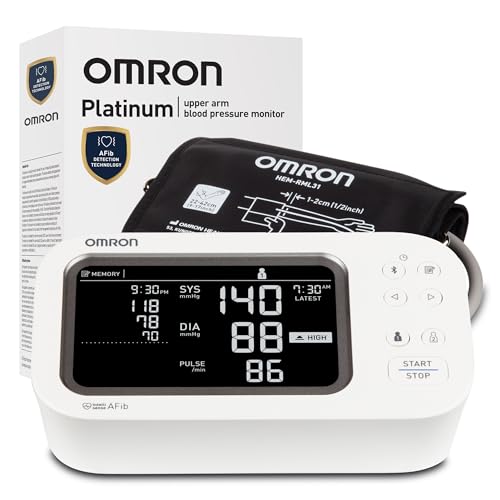
OMRON Platinum BP Monitor
What Each Pick Brings To The Table
For a straightforward home setup, this monitor keeps the useful parts uncomplicated: an upper-arm cuff, digital readings, AC power, and four AAA batteries for cordless use. You also receive a travel case, so moving the monitor between a bedroom and living room is less disruptive for daily routines.
Compared with the Greater Goods Bluetooth Monitor, this version suits anyone who would rather avoid phone setup and app syncing. The honest trade-off is less organized trend tracking, while the availability of smaller or larger cuffs through support adds some flexibility for household members with different arm sizes.
A Favorable Mix
- Includes the monitor, cuff, wall adapter, four AAA batteries, and a travel case.
- Dual power options support both stationary and portable use.
- Additional cuff sizes through support can improve fit for larger or smaller arms.
- The simple upper-arm format avoids wrist-position learning curves.
Things To Consider
- Measure your upper arm and confirm the available cuff size before ordering.
- Without app syncing, keeping a long-term history requires more manual record keeping.
Quick Facts
Made For
This monitor fits people who want dependable home readings, straightforward controls, and a complete kit without managing an app.
Another Choice May Suit
People who want automatic app organization will find the Greater Goods Bluetooth Monitor a better fit for long-term trend tracking.
Phone-based record keeping sets this monitor apart from the first Greater Goods model. It syncs with the Balance Health app on iOS and Android, supports Apple Health, and can store readings without a fixed cap while also keeping up to 60 entries per person, or 120 total, in the monitor itself.
For people tracking changes over weeks, that combination reduces the chance of missing useful context before an appointment. The adjustable cuff covers arm circumferences from 8.7 to 16.5 inches, and Wirecutter recognized the monitor five times, including in 2026, for accuracy, consistency, and ease of use.
What Stands Out
- Automatic app syncing makes weekly and monthly trend review easier.
- Built-in memory still stores readings when a phone is not nearby.
- The artery guide helps position the cuff on the upper arm.
- A large backlit display remains readable in dim rooms.
- Reports can be shared with a healthcare professional.
Practical Considerations
- Phone compatibility and account setup add steps compared with a basic standalone monitor.
- Confirm that your arm falls within the 8.7-to-16.5-inch cuff range.
Feature Snapshot
Built With In Mind
This model suits people who want connected records, easy sharing, and reliable memory without giving up a wired cuff design.
A Better Fit Elsewhere
The easy@Home Upper Arm Monitor offers a larger stated cuff range for adults who fall beyond this monitor’s fit range.
The Bronze monitor pairs a 9-to-17-inch D-ring cuff with app connectivity, giving it a slightly wider stated arm range than the Greater Goods Bluetooth Monitor. You can store 14 readings on the device, while the OMRON Connect app handles records without a fixed cap, trend viewing, and report sharing.
Its hypertension indicator gives each systolic and diastolic result a visual status, where systolic refers to the pressure during heart contraction and diastolic refers to pressure during relaxation. For daily tracking, the monitor also flags irregular pulse patterns, though that indicator does not establish a diagnosis.
Standout Benefits
- The wide-range cuff accommodates arms from 9 to 17 inches.
- Bluetooth syncing reduces the work of maintaining phone records.
- Hypertension and irregular-heartbeat indicators add context to each measurement.
- Apple Health and Google Fit support fits established routine-tracking setups.
Trade Offs
- The device holds fewer readings than the Greater Goods Bluetooth Monitor.
- App permissions and Bluetooth pairing create more setup than a standalone model requires.
Who Will Love This
This monitor suits adults who want a broad cuff range, phone-based records, and clear on-screen status indicators in one package.
Where A Sibling Pick Shines
The Greater Goods Bluetooth Monitor offers more built-in memory for people who need readings retained on the device itself.
Two-user storage makes this a practical choice for couples or family members who take readings in the same home. The monitor keeps 60 records for each person, and its large adjustable upper-arm cuff covers 22 to 42 centimeters, or 8.66 to 16.53 inches.
Unlike the Greater Goods Bluetooth Monitor, the phone app does not receive readings automatically because this model lacks Bluetooth. You enter measurements manually through MyHeartPal, which also supports Apple Health syncing and report sharing, so the app adds planning tools but introduces an extra step.
Strengths Worth Knowing
- Two separate user profiles prevent household readings from being mixed together.
- Device memory holds 120 measurements across the two profiles.
- The three-reading average can make routine monitoring more consistent.
- Color-coded systolic and diastolic results provide quick visual context.
- Four AA batteries, a storage case, and English and French instructions support portable routines.
Points To Note
- Manual app entry adds work compared with automatic Bluetooth syncing.
- Check your arm measurement against the stated 8.66-to-16.53-inch range.
Essential Details
Shared-Space Pick
This model fits households that need separate user records and a roomy upper-arm cuff without wanting automatic phone syncing.
Reach For A Different Pick When
The Greater Goods Bluetooth Monitor serves people better when automatic transfer of readings to a phone is a priority.
Wrapping a conventional cuff can be frustrating for older adults or anyone with limited hand mobility. The CAVN design avoids that step: you slide your arm into a cylindrical barrel, rest your elbow on the pressure switch, and press one button to begin.
The barrel fits arms from 7.1 to 16.5 inches and keeps two user profiles, each with 99 stored measurements. Its rechargeable 2000mAh battery uses Type-C charging, so you avoid replacing disposable batteries during regular home use.
A Strong Showing
- The no-wrap structure reduces placement guesswork and cuff-handling effort.
- The elbow switch helps establish a consistent position before measurement.
- A three-color backlight makes the display easier to see in low light.
- Separate profiles keep two users’ records organized.
- Rechargeable power suits daily routines without routine battery changes.
Less Ideal Details
- The barrel requires a supportive surface and proper arm alignment at heart level.
- Its cylindrical form may occupy more counter or storage space than a flat wrap cuff.
Feature Facts
Right Fit
This monitor suits people who find traditional cuff wrapping difficult or want a simple placement process for a family member.
Consider Something Else When
Anyone who wants automatic phone syncing will find the OMRON Bronze BP Monitor easier to connect to a digital record system.
The Complete 2-in-1 model adds an EKG function to upper-arm blood pressure measurement. An EKG, short for electrocardiogram, records the heart’s electrical activity, giving you two kinds of information to organize before discussing your routine with a healthcare professional.
You can store up to 90 readings directly on the monitor, which is useful for users who want a record trail without placing every measurement on a phone. Support coverage also includes plans for accidental damage and breakdowns, though the exact terms depend on the selected plan.
Strong Points
- Combines upper-arm pressure readings with an EKG measurement.
- Stores 90 readings for longer-term progress review.
- Uses OMRON’s Advanced Accuracy measurement system.
- Support coverage includes damage and breakdown plans.
Where It May Fall Short
- Verify the upper-arm cuff range before ordering, especially for a larger arm.
- The combined function serves a narrower purpose than a basic pressure-only monitor.
Specialty Choice
This model suits people who want upper-arm pressure readings and an EKG record in a single home routine.
Not Your Match When
People focused only on pressure trends will find the OMRON Platinum BP Monitor more directly aligned with dual-user blood pressure records.
Two-person storage gives the Platinum monitor an edge for couples who want separate records without managing two devices. It stores 100 readings for each user, compared with the 14-entry limit of the Bronze model, while retaining the familiar upper-arm measurement format.
AFib detection is the defining feature, alerting you when the device detects an irregular pattern that may be associated with atrial fibrillation, an irregular heart rhythm. It is a screening signal rather than a diagnosis, so persistent alerts deserve a conversation with a healthcare professional.
Everyday Perks
- Separate storage keeps two users’ records distinct.
- Two sets of 100 readings support detailed history review.
- AFib detection adds context during routine measurements.
- Advanced Accuracy technology serves as the core measurement system.
- Support plans can cover accidental damage and breakdowns.
Worth Bearing In Mind
- Confirm cuff dimensions before ordering for a larger upper arm.
- AFib detection is a screening feature, not a substitute for professional evaluation.
Key Product Details
Best Suited To
This monitor suits couples who want separate, well-stored blood pressure histories with AFib screening during regular checks.
Swap It Out When
The OMRON Complete Monitor EKG suits people who value an EKG function more heavily than dual-user memory.
Cuff Fit And Features That Shape Your Choice
Measure Before You Order
A cuff that is too small may not sit properly around the upper arm, while a loose cuff can shift during inflation. Measure your arm at the midpoint between the shoulder and elbow, then compare that number with the stated range. The easy@Home Upper Arm Monitor reaches 16.53 inches, while the OMRON Bronze BP Monitor extends to 17 inches.
Understand The Added Features
Systolic pressure is the upper number, reflecting pressure while the heart contracts, and diastolic pressure is the lower number, measured during relaxation. Indicators for high readings, irregular pulse patterns, or AFib provide context, but each remains a screening signal rather than a diagnosis.
Decide Between Storage And Connectivity
Built-in memory is useful when you want measurements retained on the monitor. App connectivity is more convenient for automatic record keeping, averages, and report sharing, though it adds setup and a dependency on your phone. The Greater Goods Bluetooth Monitor provides both, while the easy@Home Upper Arm Monitor requires manual app entry.
Account For The Cuff Design
Traditional cuffs wrap around the arm and adjust for fit. The CAVN Barrel-Type Arm Monitor takes a different approach, using a cylindrical chamber and elbow switch to simplify placement. That design may feel easier for users with limited dexterity, while others may prefer the familiarity of a traditional wrap cuff.
What Separates Practical Monitors From Feature-Heavy Models
Mistakes Worth Dodging
Do not choose by the largest number on the specification list. A wide display matters less than a cuff that fits your arm correctly, and an alert feature matters less than comfortable placement. Compare the stated arm range, user profiles, memory, and power method before deciding.
Where The Extra Money Goes
Connected models direct more complexity toward phone syncing, reports, and trend storage. Models with rechargeable batteries or combined EKG measurements also add specialized hardware, so the practical upgrade depends on your routine. Paying more makes sense when the added function removes a task you already struggle with.
Frequently Asked Questions
What Arm Size Counts As Large For A Blood Pressure Cuff?
Large generally refers to the upper-arm circumference stated in the product specifications, not to a person’s build alone. The easy@Home Upper Arm Monitor fits up to 16.53 inches, and the OMRON Bronze BP Monitor fits up to 17 inches, so measuring first prevents a poor fit.
Is A Wide-Range Cuff More Accurate?
A cuff has a better chance of sitting correctly when its stated range matches your arm measurement. Accuracy still depends on proper placement, a supported arm, and consistent measurement habits, so fit is only one part of the process.
Do Bluetooth Blood Pressure Monitors Need A Phone?
Bluetooth monitors can generally transfer readings to a compatible phone, while some retain memory on the device. The Greater Goods Bluetooth Monitor supports both approaches, whereas the easy@Home Upper Arm Monitor requires manual entry into its app.
What Is The Difference Between An Irregular-Heartbeat Alert And AFib Detection?
An irregular-heartbeat alert identifies a broader irregular pulse pattern during measurement. AFib detection is designed to flag patterns associated with atrial fibrillation, a specific irregular rhythm, and either indicator should be discussed with a healthcare professional.
Is A Barrel-Type Blood Pressure Cuff Easier To Use?
A barrel-style cuff removes the wrapping step and uses an elbow switch to guide positioning. It may suit people with limited hand mobility, although you still need to support the arm and keep the barrel centered at heart level.
The Takeaway
The best large blood pressure cuff depends on your arm size, comfort preferences, and how you organize readings. Greater Goods suits connected tracking, easy@Home handles two users with a roomy cuff, and CAVN simplifies placement. OMRON adds app support, rhythm screening, or EKG capabilities for routines that need more than a basic pressure record. Measure your arm, compare the cuff range, and choose the features you will actually use.
