

Fish oil can arrive as a spoonable liquid, squeeze packet, liquid-filled softgel, or small pill, and each format suits a different routine. People who dislike swallowing large capsules, want a fruity texture, or prefer a single-serve packet can compare these options without overlooking EPA and DHA, the two long-chain omega-3 fatty acids listed on the labels. EPA and DHA support several everyday health functions, but format, ingredient preferences, and label transparency matter as much as the number on the front.
How The Shortlist Stacks Up


Barlean’s Key Lime Pie Oil

Barleans Lemon Zest
Wiley’s Easy Swallow Minis

Coromega Omega-3 Packets

Barlean’s Mango Peach Liquid
Why These Options Stand Out
Nature Made Fish Oil Softgels suit people who want a familiar capsule format rather than a flavored liquid. Each softgel contains 360 mg of omega-3, while the label identifies 720 mg of EPA and DHA for a two-softgel serving basis.
The oil comes from wild ocean fish and is purified to remove mercury and other contaminants. That makes this a practical alternative to the spoonable products that follow, although the softgel format may not suit anyone with difficulty swallowing capsules.
Features That Help
- Softgels are familiar and easy to organize in a routine.
- Wild ocean fish provides a clearly stated oil source.
- Purification removes mercury and other contaminants.
- The label contains no artificial colors or added sugar.
Things To Consider
- This is a capsule format, so it does not solve pill-swallowing discomfort.
- Confirm that a 200-softgel container suits your available storage space.
Key Specs
Made For
This option fits supplement users who prefer a compact softgel and want clearly stated EPA and DHA amounts.
Consider Something Else When
Barleans Lemon Zest offers a sweeter, spoonable alternative for people who dislike fish-oil capsules.
Barlean’s Key Lime Pie Oil turns fish oil into a fruity, creamy liquid for people who would rather mix it into breakfast than swallow a capsule. Its label lists 1,500 mg of EPA and DHA per serving, the largest stated amount among these products.
The label also describes an emulsified process intended to improve absorption and reduce fishy aftertaste. The oil can be eaten from a spoon or blended into yogurt, oatmeal, or a smoothie, making it more useful for adults and children ages four and older.
Everyday Perks
- The 1,500 mg EPA and DHA label stands above the other listings.
- Key lime pie flavor makes the oil resemble a dessert.
- A creamy texture can be eaten directly or added to breakfast foods.
- The label positions the formula for easier digestion and absorption.
- Wild-caught, highly purified fish oil addresses contaminant concerns.
Trade Offs
- Refrigeration after opening makes storage planning important.
- The 8-ounce bottle may run out sooner than larger containers.
- Keep it inaccessible to children, and never give it to pets.
At A Glance
Who It Suits Best
This liquid suits families and adults who prioritize a fruity texture, a high listed EPA and DHA amount, and a format that can enter breakfast foods.
A Better Fit Elsewhere
Nature Made Fish Oil Softgels provide a more familiar capsule routine for people who do not need a flavored liquid.
Barleans Lemon Zest brings a brighter citrus note to the same liquid category, making it a sensible choice for people who enjoy lemon but do not want a pie-inspired flavor. Its 16-ounce bottle is intended for spooning directly or mixing into yogurt, oatmeal, and smoothies.
The label says the emulsified oil offers three times the absorption of ordinary fish oil or softgels. That is a manufacturer comparison, so the practical decision still comes down to texture, amount, and how consistently the format fits your routine.
Real-World Strengths
- Lemon flavor offers a lighter alternative to dessert-style liquids.
- The creamy formula works in several familiar breakfast foods.
- No artificial colors, flavors, sweeteners, or added sugar appear on the label.
- The non-GMO formula may align with ingredient-focused preferences.
Small Caveats
- The 16-ounce bottle requires more storage space than an 8-ounce container.
- Treat the stated absorption advantage as a label claim rather than a universal result.
The Right Fit
This option fits people who want a citrus-flavored omega-3 liquid they can eat by the spoonful or add to breakfast.
Another Choice May Suit
Barlean’s Key Lime Pie Oil fits people who prefer a sweeter dessert profile and a higher listed EPA and DHA amount.
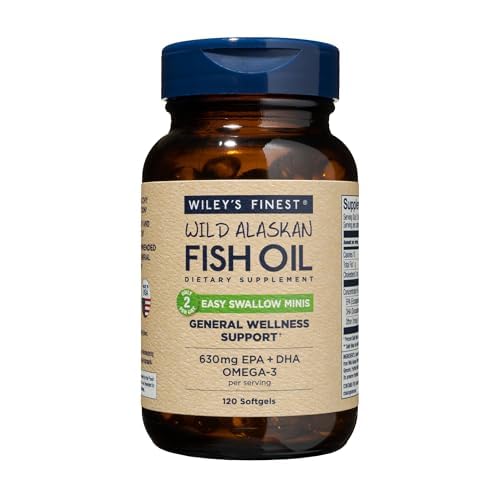
Wiley’s Easy Swallow Minis solve a narrower problem: swallowing a larger fish-oil capsule. The small softgels are intended for adults and children who dislike ordinary pills, and the label pairs two minis with 630 mg of EPA and DHA.
Unlike the liquids in this list, there is no flavor or mixing step to manage. The tradeoff is that you still swallow softgels, although their reduced size can make the routine feel considerably less cumbersome.
Key Advantages
- Mini softgels are easier to swallow than full-size capsules.
- The label lists 630 mg of EPA and DHA.
- The format avoids a spoon, blender, or flavored breakfast addition.
- Wild Alaskan fish oil provides a stated source.
- The label is designed to reduce fishy aftertaste.
Practical Considerations
- Confirm that swallowing any softgel suits your needs, since the texture remains.
Quick Facts
Built With In Mind
This option serves people who avoid large pills but remain comfortable with small softgels.
Where A Sibling Pick Shines
Coromega Omega-3 Packets suit people who prefer not to swallow any fish-oil capsule at all.
Coromega Omega-3 Packets remove the bottle and capsule from the routine. You tear open an orange-flavored packet and squeeze the liquid into your mouth, onto a spoon, or into food, which works well for travel, offices, and routines without kitchen storage.
The label states 650 mg of essential fatty acids and describes an emulsified formula intended to offer three times the absorption of traditional pills. Compared with Wiley’s Easy Swallow Minis, the main advantage is the absence of a softgel, not a higher labeled omega-3 amount.
Why It Works Well
- Single-serve packets travel easily in a bag or lunch box.
- The liquid can be squeezed directly without a spoon.
- Orange flavor replaces the usual fish-oil taste.
- The label is designed to minimize burping and fishy breath.
- You can mix the packet into yogurt or a smoothie.
Factors To Consider
- Thirty individual packets create more packaging than a bottle.
- The 650 mg figure covers essential fatty acids rather than separate EPA and DHA amounts.
- The orange taste may be too sweet for people who prefer a neutral option.
Whose Shelf It Belongs On
This pick fits commuters, travelers, and office workers who need a portable liquid format without a container.
Reach For A Different Pick When
Nature Made Fish Oil Softgels suit home routines where capsule storage is more convenient than disposable packets.
Barlean’s Mango Peach Liquid combines a fruit-flavored omega-3 liquid with vitamin D3, giving it a different role from the plain lemon and key lime options. The label lists 1,080 mg of EPA and DHA per serving alongside 600 IU, or 15 micrograms, of vitamin D3.
The creamy texture can be spooned out or mixed into breakfast, while the 16-ounce size suits regular use at home. The added vitamin makes label comparison important because a broader supplement panel does not automatically translate into a better fit for every routine.
Well-Handled Touches
- Mango peach flavor makes the liquid resemble a fruit smoothie.
- Each labeled serving includes 1,080 mg of EPA and DHA.
- Vitamin D3 adds a clearly stated 600 IU.
- The label excludes artificial colors, flavors, and sweeteners.
- Multiple package configurations offer home and household options.
Details To Watch
- Confirm that your routine benefits from a product that also includes vitamin D.
- The 16-ounce container needs a dedicated refrigerator or pantry spot.
Essential Details
Who Will Love This
This liquid fits people who want a fruit-flavored omega-3 source with vitamin D3 in their existing supplement routine.
Look Elsewhere When
Barleans Lemon Zest suits people who want a flavored liquid without an added vitamin on the label.
What Matters in a Liquid Omega-3 Format
Start With the Format You Will Actually Use
A product that looks appealing on a shelf can become troublesome once it enters your routine. Spoonable liquids suit people who enjoy breakfast foods, squeeze packets suit mobile routines, and smaller softgels solve some pill-swallowing concerns without changing the category beyond recognition.
The format that disappears into your day is usually more useful than one that demands extra preparation. Consider refrigerator space, mixing utensils, package disposal, and whether the flavor remains appealing after several weeks.
Compare EPA and DHA Carefully
The total fish-oil number and the EPA and DHA number are not interchangeable. EPA andDHA are the specific omega-3 fatty acids emphasized on several labels, so comparing them directly makes your decision easier.
Barlean’s Key Lime Pie Oil has the highest listed EPA and DHA amount here, while Barlean’s Mango Peach Liquid adds vitamin D3. The smaller softgel and packet formats can still make sense when portability or pill avoidance matters more to your routine.
Check Texture, Ingredients, and Storage
Flavor is only one part of tolerability. The two Barlean’s liquids offer a creamy, emulsified texture, meaning the oil is blended into a smoother liquid rather than remaining plain oil, and their fruit flavors can make the routine more pleasant.
Check refrigeration instructions, ingredient lists, and any dietary restrictions before choosing. A qualified healthcare professional can guide your supplement decisions, especially while you are pregnant, nursing, taking medication, or managing a health condition.
Practical Checks Before You Choose
Common Shopping Slip Ups
Do not compare total fish-oil weight with EPA and DHA content as though the numbers measure the same thing. Check flavor, storage needs, capsule size, and ingredient preferences too, since the best label is one that fits your routine comfortably.
What Separates Premium From Basic
Higher-priced versions may add emulsification, distinctive flavors, extra nutrients, or more convenient packaging. The added cost is worthwhile only when one of those features solves a specific problem you would otherwise encounter.
Frequently Asked Questions
Is liquid fish oil different from fish-oil softgels?
Yes. Liquid fish oil is poured or squeezed from a bottle or packet, while softgels hold oil inside a dissolvable shell. Your preferred texture and ease of use are the main differences.
What do EPA and DHA mean on a label?
EPA and DHA are two long-chain omega-3 fatty acids. Their listed amount lets you compare the active omega-3 content across these products more accurately than total fish-oil weight alone.
Can flavored fish oil be easier to tolerate?
For some people, a creamy texture and fruit flavor make fish oil more appealing than capsules. Individual tolerance varies, so review the ingredients and choose the format you are more likely to use consistently.
Is liquid fish oil suitable for children?
Some products label liquid fish oil for children, but age guidance and serving directions belong on the package. Ask a pediatrician or another qualified healthcare professional before adding a supplement to a child’s routine.
Does a higher EPA and DHA number make a product better?
A higher number only settles one part of the decision. Texture, format, ingredients, storage, and your own dietary needs still matter, and a suitable lower amount may fit your routine more comfortably.
Final Verdict
Your best liquid omega-3 choice is the one that matches how you actually take supplements. Barlean’s Key Lime Pie Oil leads on listed EPA and DHA content, Coromega wins for portable packets, and Wiley’s Easy Swallow Minis suit people who prefer capsules in a smaller shape. A little attention to format and label details can make the choice much easier.
