

A blood pressure monitor becomes far more useful when it fits your arm, matches your routine, and makes results easy to read. The right model can support daily tracking at home, help you compare readings over time, and reduce the friction of checking in your bedroom, office, or while traveling. These options cover different needs, from rechargeable convenience and shared family profiles to app-based tracking and generously sized cuffs.
The Leading Options At A Glance

KIKEANG BP Monitor with Storage Bag
Homedics 300 Series Monitor

Medisana 5.5-Inch Home Monitor
Jogfit One-Touch Upper Arm Monitor
iHealth Track Smart Upper Arm Monitor

iHealth Neo Wireless Upper Arm Monitor

iHealth Track Pro Home Monitor
A monitor you can charge, pack, and place neatly on a shelf solves more than a reading. KIKEANG combines a cup-shaped storage holder with a soft upper-arm cuff, making this a practical choice for home checks that move between rooms or trips.
The built-in 750mAh battery is rated for roughly 30 to 45 days of use and recharges in two to three hours. You also get separate storage for two profiles with up to 99 readings each, which helps households avoid mixing daily records.
What It Does Well
- The rechargeable battery removes routine battery replacements and supports use away from an outlet.
- A backlit LED screen presents blood pressure and heart rate clearly in dim rooms.
- The soft, adjustable upper-arm cuff supports a comfortable fit across a broad range of body sizes.
- The carrying bag keeps the monitor and cuff together during travel.
- One-button operation keeps the daily check simple.
Points To Note
- The built-in battery requires access to the supplied charging cable, so you may want to keep it nearby.
- The cuff is described as suitable for most people, but measuring your upper arm before ordering gives you a better fit check.
Key Specs
Made For
You benefit most from this model if you want cordless monitoring, simple storage, and separate records for two people.
A Better Fit Elsewhere
The Medisana 5.5-Inch Home Monitor suits you better when three cuff sizes and voice guidance matter more than compact storage.
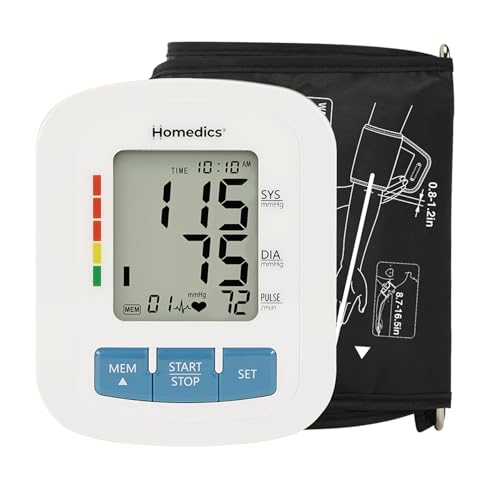
The Homedics 300 Series keeps daily monitoring uncomplicated without stripping away helpful measurement checks. Its motion detector is the notable addition, giving you a prompt to settle down rather than wondering whether movement affected the result.
Smart Measure inflation takes a reading as the cuff inflates and then releases, while one-touch operation controls the process. Compared with KIKEANG BP Monitor with Storage Bag, this model emphasizes measurement safeguards and reading interpretation rather than a rechargeable battery and travel bag.
What Stands Out
- Motion detection can help you repeat a reading taken while shifting around or talking.
- Smart inflation reduces the need to manage inflation and deflation manually.
- A single control makes the routine approachable for regular home use.
- The memory holds 60 readings and calculates an average from the latest three.
Trade Offs
- Its single-user memory makes it less convenient for a household monitoring several profiles.
- The risk category display and irregular heartbeat alert provide context, but you may still prefer to review unusual readings with a healthcare professional.
Quick Facts
Who It Suits Best
This monitor fits you well if you live alone and value simple controls, movement alerts, and automatic averaging.
Another Choice May Suit
The iHealth Track Pro Home Monitor is a better fit when a wide-angle screen and one-button start matter more than risk categories.
A cuff that fits properly matters because an upper-arm cuff wraps around the arm and inflates to take a reading. Medisana includes three sizes covering 17 to 22cm, 22 to 42cm, and 42 to 50cm, giving you options that the simpler KIKEANG monitor does not offer.
The 5.5-inch backlit screen is the centerpiece, with large numbers and green, yellow, or red illumination for a quick visual reference. Voice guidance can read out results, while three separate profiles keep family records organized.
Well-Handled Touches
- Three cuff sizes support a more tailored fit across different upper-arm circumferences.
- The oversized display makes results easier to inspect in dim conditions.
- Voice guidance adds convenience during a morning routine, and muting restores quiet operation.
- Three user profiles reduce the chance of confusing one person’s history with another’s.
Small Caveats
- The included cuff set adds more components to store and organize than a single-cuff setup.
- USB-C and four AA batteries offer flexible power, though you may use only one method consistently.
Feature Snapshot
Built With In Mind
You benefit most from Medisana when several people share a device or cuff fit is your main concern.
Where A Sibling Pick Shines
The Jogfit One-Touch Upper Arm Monitor suits you better when rechargeable power and a 7.1-to-16.5-inch adaptive cuff are priorities.
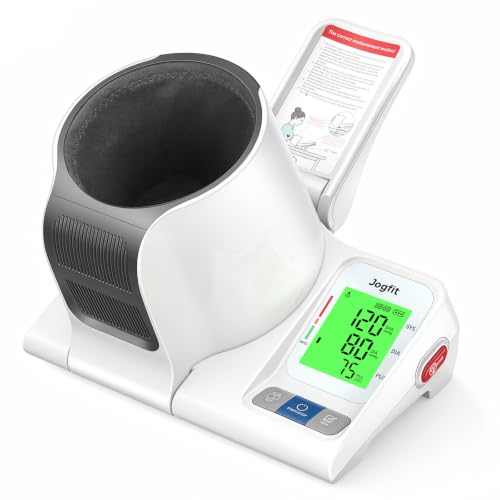
Slipping your arm into a monitor and pressing one button can make a daily check feel less involved. Jogfit’s barrel-style design supports that approach, with an adaptive upper-arm cuff covering 7.1 to 16.5 inches and a stop key for ending a session early.
The stated measurement error is within plus or minus 3mmHg, and the monitor has FDA 510(k) clearance for over-the-counter personal use. A rechargeable 2000mAh battery and two-person memory make it a practical shared option, depending on your arm size and charging location.
Benefits That Matter
- The one-touch control reduces the number of steps in your daily routine.
- The flexible barrel cuff adjusts to upper arms from 7.1 to 16.5 inches.
- Type-C recharging supports cordless use without disposable battery changes.
- Separate profiles hold 99 readings each for two people.
- The emergency stop key gives you direct control during inflation.
Things That May Matter
- The stated cuff range may not accommodate arms outside its listed dimensions.
- You need the charging cable for rechargeable use, so keep it accessible near your routine.
Right Fit
This model fits you best when easy operation, rechargeable power, and separate records for two people shape your decision.
Reach For A Different Pick When
The Medisana 5.5-Inch Home Monitor is a better fit when you need three cuff sizes, voice guidance, and separate memory for three people.
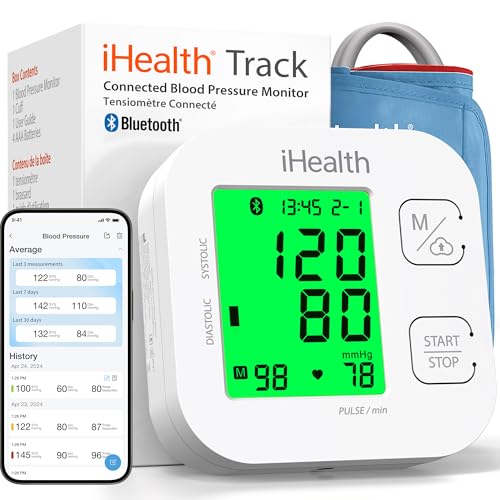
A color-coded screen can make a reading easier to interpret at a glance. The iHealth Track uses green, yellow, and red illumination beneath large numbers, giving you a quick visual cue before you turn to the detailed result.
Two buttons handle operation, while the wide-range upper-arm cuff is designed to accommodate a range of arm sizes. Compared with the Homedics 300 Series Monitor, this iHealth model places more emphasis on presentation, while the Homedics adds motion detection, risk categories, and irregular heartbeat alerts.
A Few Highlights
- Large digits and a multicolor backlit display improve everyday readability.
- The color scheme offers a fast visual reference for interpreting the displayed status.
- A two-button layout keeps operation straightforward.
- The wide-range cuff supports different upper-arm sizes within one home setup.
Possible Compromises
- Two controls add a step compared with the one-touch operation of the Homedics 300 Series Monitor.
- Your arm circumference should be checked against the available cuff fit before purchase.
Core Details
Who Will Love This
You benefit most from this model if clear digits, color cues, and a simple display matter more than multi-profile memory.
Swap It Out When
The Medisana 5.5-Inch Home Monitor suits you better when three cuff sizes, three user profiles, and voice results are needed.
App connectivity changes how home readings fit into your routine. The iHealth Neo pairs wireless operation with one-button control, so the device can become part of a connected record rather than a device that only displays the latest numbers.
Gentle inflation is designed to make the upper-arm measurement more comfortable, and the readings appear in large, easy-to-read numbers. This model makes the most sense for you when you already manage health information in a phone or prefer fewer physical controls.
The Practical Payoff
- Wireless app support helps place readings within a connected tracking routine.
- One-button operation reduces the physical steps required for each check.
- Gentle inflation focuses on comfort during upper-arm measurement.
- Large numbers make the displayed results easy to inspect.
Details To Watch
- App-based organization adds a phone and software to your routine, which may not suit a display-only preference.
- You need a compatible phone and app connection to gain the full benefit of its connected tracking.
The Right Fit
You benefit most from this monitor when you want concise daily operation with wireless organization in your phone.
Not Your Match When
The iHealth Track Pro Home Monitor is a better fit when you want a wide-angle LED display and one-touch operation without app dependence.
A monitor placed beside your bed should be readable without fumbling for a phone or switching on a separate light. The iHealth Track Pro uses a wide-angle LED display that remains clear from different viewing positions, with red, yellow, and green indicators for rapid interpretation.
One button starts the fully automatic routine, keeping the interaction direct. It shares the display-forward focus of the iHealth Track Smart Upper Arm Monitor, but adds a wider viewing angle for bedroom use and quick morning checks.
Everyday Perks
- The wide-angle screen supports easier viewing from beside, above, or slightly in front of the device.
- Color indicators give you a quick visual reference for the displayed result.
- One-touch operation makes daily checks feel less involved.
- The LED display remains practical for dim bedrooms and quick glances.
Less Ideal Details
- Color indicators simplify interpretation, but you still need to review the actual numbers when tracking changes over time.
- Check the included cuff range against your arm size before settling on this model.
Important Details
Whose Shelf It Belongs On
You benefit most from this model when a bedroom display, broad viewing angle, and one-button routine guide your choice.
Look Elsewhere When
The Homedics 300 Series Monitor is a better fit when motion detection, automatic averaging, and irregular heartbeat alerts are your priority.
What Matters Before You Choose A Home Monitor
Cuff fit comes first
An upper-arm cuff must fit the intended arm without sitting too loosely or pinching. Compare the listed cuff ranges with your arm circumference, especially when several people plan to use the same monitor.
Decide how you will read results
A large display and backlighting suit dim rooms, while voice guidance helps you avoid reading small numbers. Color indicators provide quick context, but your routine may still benefit from a larger screen.
Consider power and portability
Rechargeable models remove disposable battery changes, while battery operation can be useful during outages or travel. Carry cases and compact storage matter for anyone who moves a monitor between rooms.
Match memory to your household
Two-person profiles suit couples, while three-user memory handles a larger family. More stored readings help with trend review, although a single profile can be sufficient for one person.
Common Mistakes Worth Dodging
Where Shoppers Go Wrong
Ignoring cuff size can lead to an uncomfortable or inconsistent fit, so measure before ordering. Choosing a complicated display may also add friction, and buyers should not treat color indicators as a substitute for recording the actual numbers.
Mistakes Worth Avoiding
Buying around a temporary sale or headline feature without checking the daily routine often leads to disappointment. A rechargeable device needs reliable access to its cable, and an app-based model needs a compatible phone. Match the setup to the person who will actually use it, not just the specification sheet.
The Case For Spending Up
What Separates Premium From Basic
Higher-priced models often add multi-user memory, voice guidance, larger displays, motion alerts, or connected tracking. These extras help when you share a device, check readings in low light, or want a clearer history. For one person with a straightforward routine, a basic model may provide everything you need.
Frequently Asked Questions
Which blood pressure monitor is easiest to use?
The Jogfit One-Touch Upper Arm Monitor is among the simplest choices because a single button starts the measurement. The Homedics 300 Series Monitor is also easy to operate, with additional movement detection.
Which model is best for a large upper arm?
The Medisana 5.5-Inch Home Monitor includes a 42 to 50cm cuff alongside two smaller sizes. The Jogfit One-Touch Upper Arm Monitor offers an adaptive design spanning 7.1 to 16.5 inches.
Do I need a rechargeable blood pressure monitor?
Rechargeable operation is convenient for daily home use because you avoid replacing disposable batteries. A cordless design also helps during travel, provided you keep the charging cable accessible.
Which monitor supports multiple family members?
The Medisana 5.5-Inch Home Monitor stores separate records for three people. The KIKEANG BP Monitor with Storage Bag and Jogfit One-Touch Upper Arm Monitor each support two profiles.
Are app-connected blood pressure monitors useful?
App connectivity helps you organize readings within a phone-based routine. You may prefer a display-only model when you want fewer digital steps, such as the iHealth Track Pro Home Monitor.
Final Thoughts
The most useful monitor is the one that fits your arm, fits your household, and fits the way you check blood pressure. Choose Medisana for varied cuff sizes and shared profiles, Jogfit for one-touch rechargeable use, or an iHealth model for display-focused and app-connected routines. Match the device to your daily habits, and use the readings as one consistent part of your health routine.
