

Magnesium supports normal glucose metabolism, but the form and amount you choose matter as much as the mineral itself. A daily commute, demanding workouts, and an uneven diet can leave you comparing several very different approaches: broad blends, single-form capsules, and a liquid concentrate. These options also vary in serving size, dietary preferences, and convenience, so the right choice depends on your routine and how closely you want to track magnesium intake.
The Leading Options At A Glance
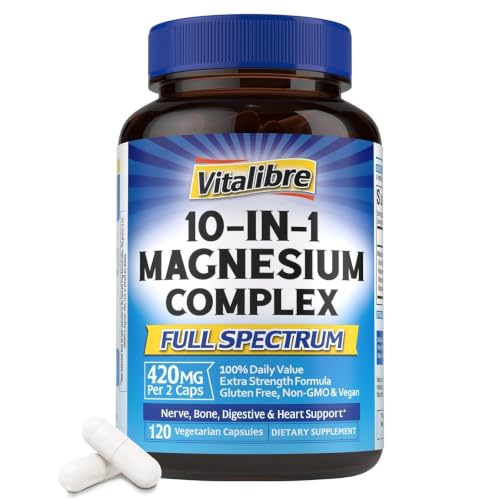
Vitalibre Magnesium Complex 420mg

NOW Magnesium Glycinate

Nature’s Bounty Magnesium Glycinate

RnA ReSet ReMag Liquid Magnesium

Wild Crop 8-in-1 Magnesium Complex

Wild Crop Vitamin D3 K2 5000 IU

LifeSeasons Mobili-T Joint Support
More Details On Our Top Picks
Ten magnesium forms in two capsules make this an easy starting point for anyone tired of sorting through single-ingredient options. Each serving supplies 420 mg of elemental magnesium, meaning the amount of the mineral itself rather than the combined weight of several compounds.
The formula suits people who want a broad approach without managing multiple bottles. Compared with the single-form choices later in this list, its convenience is clear, though the serving also delivers a larger magnesium amount.
Standout Benefits
- Ten distinct forms combine in one capsule.
- The 420 mg elemental amount meets the listed daily value.
- Two capsules simplify a multi-form routine.
- The vegetarian formula excludes several common dietary allergens.
Things To Consider
- A 420 mg serving may be more magnesium than you want, so compare it with lower-dose options.
- The bottle contains 120 capsules, making serving details important for routine planning.
Quick Facts
Made For
This formula best suits adults who want several magnesium forms in a single capsule and can comfortably use a 420 mg serving.
Look Elsewhere When
NOW Magnesium Glycinate suits you better when you prefer a lower-dose, adjustable single-form routine.
For a straightforward routine, this glycinate tablet offers more control than Vitalibre’s fixed two-capsule serving. Magnesium glycinate is magnesium bound to glycine, an amino acid, and each tablet supplies 100 mg of the mineral.
People who take a measured amount with meals can use the suggested one or two servings to fit their needs. The honest read is that the format is wonderfully plain, and that simplicity is the main advantage.
Notable Gains
- A 100 mg tablet makes portioning straightforward.
- Taking it with food fits many morning or evening routines.
- The 180-tablet bottle offers room for flexible serving schedules.
Worth Noting
- The suggested use can reach four tablets daily, which may require more planning than a two-capsule product.
Feature Snapshot
The Right Fit
This option works well for adults who prefer one recognizable magnesium form and want to adjust the serving in 100 mg increments.
Consider Something Else When
Wild Crop 8-in-1 Magnesium Complex fits people who prefer several magnesium forms within one capsule.
Two capsules deliver 240 mg of magnesium glycinate, placing this option between NOW’s adjustable 100 mg tablets and Vitalibre’s 420 mg serving. That middle ground may feel easier to schedule for people who generally take one supplement with breakfast or dinner.
The formula also suits several dietary preferences, including vegetarian, non-GMO, and lactose-free diets, and contains no sugar or sodium. Its focused approach lacks the variety of an eight-form blend, but the daily task stays refreshingly uncomplicated.
Everyday Perks
- A simple two-capsule serving fits daily scheduling.
- The 240 mg amount sits neatly between the lower and higher-dose options.
- Dietary exclusions make it practical for several eating styles.
- Magnesium contributes to normal muscle, nerve, heart, and bone functions.
Minor Gripes
- Two capsules are required for the listed 240 mg amount, so pill-count preferences matter.
- The single-form formula offers less variety than the Vitalibre or Wild Crop blends.
Who Will Love This
This capsule suits adults wanting a fixed 240 mg glycinate serving without managing several magnesium forms.
Another Choice May Suit
RnA ReSet ReMag Liquid Magnesium suits you better when swallowing capsules is not your preferred routine.
ReMag replaces capsules with a ready-to-drink liquid, which changes the daily routine more dramatically than any capsule count. Its 18-step manufacturing process creates stabilized picometer magnesium ions from magnesium chloride at a stated 60,000 ppm concentration.
The format may appeal to people who dislike swallowing tablets or want magnesium alongside a meal. Unlike the earlier capsule formulas, however, a concentration figure is not the same as the total elemental magnesium consumed per serving.
Positive Points
- Liquid form avoids managing multiple capsules.
- The stated ion concentration distinguishes it from standard capsules.
- Magnesium supports normal glucose, fat, and protein metabolism.
- The 8.1 fl oz package is easy to carry for travel.
- The source states 99.99% purity.
Practical Considerations
- Check the serving instructions and elemental amount before comparing this liquid with capsule formulas.
- A concentrated liquid has a stronger flavor and texture than a plain capsule for some people.
Technical Highlights
Built With In Mind
This liquid works well for adults who prioritize pill-free convenience and want to inspect the serving amount closely.
A Better Fit Elsewhere
NOW Magnesium Glycinate is the stronger match for people who prefer precisely measured tablets with food.
Eight forms, including glycinate, malate, taurate, citrate, and oxide, give this formula broader coverage than the single-form glycinate options. It also provides 1,000 mg of a magnesium complex blend per serving, intended for adults with varied wellness routines.
Unlike Vitalibre’s clearly stated 420 mg elemental amount, this label emphasizes the combined complex weight. That distinction matters when you are comparing daily magnesium intake rather than simply counting ingredients.
Useful Touches
- Eight magnesium forms broaden the formula’s variety.
- Each bottle provides 45 servings with 90 capsules.
- Glycinate and taurate suit evening-focused routines.
- The non-GMO formula is produced under GMP standards.
Possible Compromises
- A 1,000 mg complex total should not be read as 1,000 mg of elemental magnesium.
- The capsule count and eight-form formula may be more than a simple routine requires.
- People managing several supplements may prefer a single-form option.
Core Details
Best Suited To
This blend suits adults who want a varied magnesium formula and can comfortably follow a multi-ingredient capsule routine.
Swap It Out When
Nature’s Bounty Magnesium Glycinate is a better fit when you want one magnesium form and a 240 mg two-capsule serving.
This is not a magnesium formula, so it belongs beside the main list only as a companion for bone-focused routines. Each serving supplies 5,000 IU of vitamin D3 and 100 mcg of vitamin K2, nutrients that support calcium handling and bone maintenance.
Individual blister packaging sets it apart from the bottles used for magnesium. You can carry a softgel without transferring it into another container, which works well for travel or desk-based routines.
Key Advantages
- Blister-packed softgels stay separate and easy to portion.
- Vitamin D3 and K2 appear together in one daily serving.
- The portable format suits travel and work bags.
Details To Watch
- It does not add magnesium to your routine.
- The 5,000 IU vitamin D3 amount is substantial, so account for other vitamin D products.
- Each individually wrapped softgel creates more packaging than a standard bottle.
Made For
This product suits people already focusing on vitamin D and K2 who value individually portioned softgels.
Not Your Match When
Vitalibre Magnesium Complex is the better fit when your main priority is a broad-spectrum magnesium supplement.
Mobili-T addresses joint comfort and mobility rather than magnesium intake or glucose metabolism. Its formula combines MSM, chondroitin, collagen, glucosamine, and turmeric, giving it a distinct role in an active adult’s supplement routine.
The capsules provide building blocks associated with cartilage and collagen formation while supporting joint lubrication and movement. Some people may find that complementary approach more relevant than adding another broad magnesium blend.
What Stands Out
- Five complementary ingredients support joint-focused routines.
- The formula targets comfort, mobility, and cartilage support together.
- The 120-count package fits a consistent monthly routine.
Things That May Matter
- It contains no magnesium and does not directly serve a magnesium routine.
- The broader ingredient list may suit a wellness stack rather than a minimal routine.
- Joint-focused support and blood-sugar support are separate goals, so avoid confusing the two.
Essential Details
Who Should Grab It
This formula suits adults whose primary goal is joint comfort and mobility alongside magnesium use.
Reach For A Different Pick When
RnA ReSet ReMag Liquid Magnesium fits you better when your priority is a pill-free magnesium routine.
How to Match Magnesium to Your Routine
Start With the Amount You Need
Elemental magnesium is the mineral amount in a serving, while a compound weight includes the entire chemical structure. Compare the Supplement Facts panel, not the front of the bottle, because 1,000 mg of a magnesium blend does not equal 1,000 mg of elemental magnesium.
Decide Between One Form and Several
Magnesium glycinate binds the mineral to glycine and provides a focused, adjustable serving. Multi-form formulas offer variety, but they can make daily intake harder to compare, especially when the elemental amount is not prominent on the label.
Match the Format to Your Habits
Capsules work well for predictable routines, while a liquid may be easier for people who dislike pills. Vitamin D3 and K2 softgels serve a different purpose and should not be counted as magnesium, and joint formulas such as Mobili-T belong in a separate wellness category.
Check the Serving Instructions
Two capsules, four tablets, and one measured liquid serving are not interchangeable. Review the daily amount, serving count, and any other supplements already in your routine before deciding which format fits your week.
Shopping Mistakes to Avoid in Magnesium Supplements
Mistakes Worth Dodging
Comparing total compound weights can make one supplement appear more concentrated than another. Check elemental magnesium per serving, then compare the serving size and how many capsules or tablets it requires.
What Separates Premium From Basic
Broader formulas, specialized production methods, travel-oriented packaging, and stricter manufacturing controls often account for price differences. Pay for the feature that genuinely fits your routine, not merely a larger bottle or longer ingredient list.
Frequently Asked Questions
Does Magnesium Help With Blood Sugar?
Magnesium participates in normal glucose metabolism, so adequate dietary intake matters for people concerned about blood sugar. Supplements do not replace glucose monitoring, meal planning, or professional care.
Which Magnesium Form Is Easiest to Compare?
Single-form products such as glycinate are usually simpler to compare because the label identifies one compound and its elemental amount. Multi-form blends require checking the total elemental magnesium rather than adding the weight of every compound.
Is a 1,000 mg Magnesium Complex the Same as 1,000 mg of Elemental Magnesium?
No, a complex total can include several magnesium compounds and their attached components. The elemental magnesium row gives the amount of the mineral itself, which is the useful figure for comparison.
Should You Take Magnesium With Food?
Taking magnesium with food can fit many routines and may suit people sensitive to taking supplements on an empty stomach. Follow the product’s serving instructions and avoid adding extra servings without checking the total daily amount.
Can You Take Magnesium and Vitamin D3 K2 Together?
Some routines include both products, but you should review the total amounts of every nutrient before combining them. Vitamin D3 and K2 support calcium-related functions but do not add magnesium to the routine.
Final Thoughts
The most practical choice depends on the part of your routine you want to simplify. A broad blend offers variety, glycinate tablets provide precise control, and the liquid option removes capsules from the equation. None of these products replaces glucose monitoring or broader nutrition, so keep the decision focused on dosage, format, and consistency.
