

A food diary becomes useful when it fits your routine, whether you want to count calories, balance protein, fat, and carbohydrates, or simply notice how meals and activity affect your day. These paper trackers offer a refreshing alternative to juggling nutrition apps, with spaces for food notes, macro totals, exercise, and personal goals. They track what you write, not vitamin or mineral levels, so a micronutrient tracker is best understood as a structured journaling tool rather than a nutritional laboratory.
The Essentials At A Glance

Feelfun Daily Calories Tracker Journal and Activity Log

Feelfun Calories Tracker Journal Premium Color: Food, Macro, and Activity Log
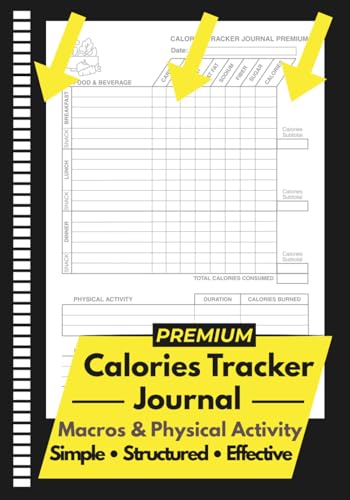
Feelfun Calories Tracker Journal Premium: Food, Macros, and Activity Log

by LAMIRAMO.Y MOLINAZERTY.H Daily Nutrition Log and Macro Food Journal

Clubby Parrot Anorexia Food Journal and Meal Tracker

Nutrition Log Book 6×9 and Macro Food Journal with 120 Pages

Arkmobinx Macro Tracker for Calories, Protein, Fat, and Carbs

DIETMINDER Personal Food and Fitness Journal, Easy Fill-In-the-Blank Diary for Any Diet Plan
A Deeper Look At The Lineup
A stack of receipts and half-remembered meals can make calorie tracking harder than it needs to be. The Feelfun Daily Calories Tracker Journal and Activity Log gives you a physical place to record food intake and movement, which can feel more natural during a busy week than repeatedly opening an app.
The minimalist approach suits beginners who want one straightforward system. You can write the day’s meals, note calories, and add activity without managing a complicated spreadsheet, though people who need vitamin or mineral totals may find it too basic.
Standout Benefits
- Keeps calorie and activity details in one daily record.
- Paper-based logging works well during commutes or busy kitchen routines.
- A straightforward format makes short daily entries easy to maintain.
Worth Noting
- The journal records information you enter, rather than calculating nutrient totals for you.
- Those wanting detailed macro or micronutrient fields may need a more specialized layout.
Made For
This journal best suits beginners who want a low-friction way to record daily calories and physical activity.
Where Another Pick Suits Better
The Feelfun Calories Tracker Journal Premium Color suits people who want clearer visual organization and more detailed food and macro entries.
Color coding turns a dense nutrition log into something easier to scan at a glance. The Feelfun Calories Tracker Journal Premium Color combines food, macro, and physical activity spaces in a more visually organized format, which can help you separate information before adding daily totals.
For people managing several eating goals, that visual structure may reduce the chance of overlooking a field. You still need reference values for calories and macronutrients, but the color cues can make daily review feel less administrative.
Strong Points
- Color-coded organization makes different tracking categories easier to distinguish.
- Food, macro, and activity sections support a complete daily picture.
- Visual organization helps you spot missing entries during a weekly review.
- A paper layout avoids charging your phone or opening an app for every meal.
Minor Gripes
- The more structured layout may feel unnecessary for a very casual diary.
Quick Facts
Best Suited To
This format fits people who track several nutrition categories and appreciate visual cues for quick daily review.
Consider Something Else When
The Feelfun Calories Tracker Journal Premium is a better fit for writers who want a structured layout without relying on color coding.
Detailed food notes and daily totals can start to feel cramped in a small diary, particularly during a busy meal-prep session. The Feelfun Calories Tracker Journal Premium uses a 7-by-10-inch format, giving your food descriptions, macro fields, and activity notes more room to breathe.
That larger canvas makes it a practical middle ground between a minimalist calorie log and a specialized macro workbook. In our view, it suits daily writers who want useful detail without committing to a tightly color-coded system.
What It Does Well
- The 7-by-10-inch pages accommodate longer food descriptions and multiple daily entries.
- Food, beverage, macro, and activity sections create a complete daily record.
- Roomier writing space reduces the temptation to abbreviate every meal.
- Combining tracking categories saves time at the end of the day.
Practical Considerations
- The larger size may require more room in a handbag, backpack, or kitchen drawer.
- You still need a reliable reference for individual calorie and macro values.
Feature Snapshot
The Right Fit
This journal suits daily food writers who want generous writing room and separate sections for meals, macros, and movement.
A Better Fit Elsewhere
The Nutrition Log Book 6×9 and Macro Food Journal with 120 Pages suits people who need a smaller format for carrying a tracker between places.
Tracking only protein and carbohydrates can leave out nutrients that matter to your own priorities. The by LAMIRAMO.Y MOLINAZERTY.H Daily Nutrition Log and Macro Food Journal gives you dedicated fields for calories, sugar, protein, fat, carbohydrates, fiber, and sodium in a 6-by-9-inch format.
That broader list makes it useful for households comparing several details at once, such as a fitness goal alongside a lower-sodium eating pattern. The journal records your entries, so accurate figures still depend on label information or another nutrition reference.
The Case For It
- Tracks a wider range of nutrition details than a basic calorie log.
- Separate sugar and sodium fields support more specific daily attention.
- The compact size works for a kitchen counter, office drawer, or travel bag.
- A coordinated daily format keeps several nutrient categories together.
Points To Note
- More fields can make each entry feel demanding during a rushed day.
- The listed tracking categories do not include every vitamin and mineral.
Core Details
Who Will Love This
This journal suits people who want to monitor calories, macros, sugar, fiber, and sodium in a single daily log.
Not Your Match When
The Feelfun Daily Calories Tracker Journal and Activity Log suits people who prefer a simpler layout with less writing each day.
Recording a meal involves more than its calorie total. The Clubby Parrot Anorexia Food Journal includes breakfast, lunch, dinner, and snack sections, along with portion size, calories, feelings before and after eating, and exercise details. That makes it more reflective than a standard macro workbook.
The format may help someone organize observations and discuss patterns with a qualified healthcare professional. It is a journaling aid rather than a diagnostic or treatment tool, and a specialist remains the right resource for concerns about eating or body image.
Reasons It Performs
- Separate meal and snack sections create a clear daily structure.
- Before, during, and after feelings add useful context to each meal.
- Portion and calorie fields support more consistent food notes.
- Exercise duration connects movement with the day’s eating record.
Honest Caveats
- Calorie-focused fields may feel uncomfortable for some people with a difficult relationship with food.
- The journal cannot replace individualized support from an appropriate specialist.
Built With In Mind
This journal suits someone who benefits from recording meals, emotions, portion sizes, and activity in one organized format.
Another Choice May Suit
The DIETMINDER Personal Food and Fitness Journal suits people seeking a flexible food-and-fitness diary without a dedicated eating-disorder focus.
A tracker that fits inside a work bag can make daily logging more consistent. The Nutrition Log Book 6×9 and Macro Food Journal with 120 Pages combines a compact format with macro tracking, progress notes, and space for personal nutrition goals.
The matte cover gives it a restrained appearance, while the standard notebook dimensions make it easy to place beside a meal-prep notebook or keep in a desk drawer. The 120-page count is best for daily or near-daily use, so you may want to check how much space each page consumes before committing to one.
Notable Gains
- The 6-by-9-inch size is convenient for travel and limited storage.
- Macro fields help you compare the balance of your daily meals.
- Progress-tracking space supports a written history of your routine.
- Goal-setting fields connect daily entries with a larger nutrition objective.
Small Limitations
- The smaller pages offer less room for long descriptions than a 7-by-10-inch journal.
- With 120 pages, page usage depends on how frequently you write.
Key Product Details
Whose Shelf It Belongs On
This journal suits commuters, students, and home cooks who want a portable tracker for macros, progress, and nutrition goals.
Reach For A Different Pick When
The Feelfun Calories Tracker Journal Premium suits people who want more writing space for detailed meal descriptions and activity notes.
Large sheets can help you spread out a day’s figures instead of squeezing them into narrow boxes. The Arkmobinx Macro Tracker uses 8.5-by-11-inch pages with 110 pages of white paper, giving you generous room for meals, calories, protein, fat, and carbohydrates.
This format works well at a home desk where you want a full-page view of your numbers. You may find it less convenient in a compact purse, though the wide sheet can be folded or kept beside your keys without being a small notebook.
Everyday Advantages
- The large pages make daily macro figures easy to see at a glance.
- White paper supports clear handwritten food names and totals.
- Standard letter-size pages are practical for a home desk setup.
- A smooth pre-matte cover gives the notebook a neat finish.
Where It May Fall Short
- The 8.5-by-11-inch format takes more space than a pocket-sized tracker.
- Activity fields are not highlighted in the listed macro-tracking features.
Technical Highlights
Who It Suits Best
This tracker suits home users who want a large desk journal for recording calories and daily macronutrient totals.
Where A Sibling Pick Shines
The Nutrition Log Book 6×9 and Macro Food Journal with 120 Pages suits people who need a smaller journal for carrying between meals and appointments.
Not every eating plan needs a journal designed around a single metric. The DIETMINDER Personal Food and Fitness Journal uses a fill-in-the-blank format for food and fitness notes, giving you room to adapt the information to your own routine.
That flexibility makes it a practical choice for someone switching between different approaches or recording several habits at once. The blank sections may feel less guided than a dedicated macro book, but you decide which details deserve space on the page.
Points In Its Favor
- Fill-in sections adapt to many eating routines and personal priorities.
- Combining food and fitness notes keeps related daily details together.
- Open-ended fields suit people who dislike rigid tracking templates.
Things To Weigh
- Flexible fields may provide less structure for a complete beginner.
- The journal does not automatically total calories, macros, or activity for you.
Who Should Grab It
This journal suits people following varied eating approaches who want a flexible diary for food, fitness, and personal observations.
Swap It Out When
The Feelfun Calories Tracker Journal Premium suits people who prefer defined food, macro, and activity sections over an adaptable blank format.
What Matters Most In A Food Tracking Journal
The best tracker is one you will still open after the novelty wears off. Start with the information you genuinely want to record, such as calories, protein, sugar, activity, or meal feelings. A focused format can be easier to maintain than a page that asks for everything at once.
Paper size also shapes your experience. A 6-by-9-inch book travels well, while an 8.5-by-11-inch sheet gives you more room for calculations and food notes. Check where the journal will live and whether you will write at a desk, beside a meal, or during a commute.
The amount of guidance matters, too. Color coding and labeled fields speed up daily entries, whereas a fill-in-the-blank journal offers flexibility. More detailed layouts can become tiring, so favor a format that matches your attention level rather than the most elaborate option.
Common Mistakes In Food Journal Shopping
Missing the Daily Fields You Need
A journal full of charts cannot help with a detail it does not contain. Compare the labeled fields with your actual routine, especially for sugar, sodium, fiber, activity, or feelings, and avoid choosing on appearance alone.
Choosing an Overly Ambitious Layout
Large daily sections may look thorough but discourage quick entries. You may find a more compact book easier to maintain, particularly during workdays, when meal decisions and activity notes compete for your attention.
Why The Upgrade Pays Off
A premium layout earns its place when added structure saves you time or captures details your simpler journal misses. Color coding, larger pages, and broader nutrient fields can make review easier, but extra structure only helps when you enjoy using it.
Frequently Asked Questions
What Is A Micronutrient Tracker?
A micronutrient tracker is a journal for recording nutrition information, often including food, calories, macros, and activity. These paper products organize what you enter, but they do not measure vitamin or mineral levels directly.
Which Journal Is Best For Beginners?
The Feelfun Daily Calories Tracker Journal and Activity Log offers the simplest starting point for people who want to record calories and movement without managing many fields.
Can A Food Journal Track Vitamins and Minerals?
Only when the journal includes those fields and you obtain the values from a suitable reference. Most options here focus on calories, macronutrients, sugar, sodium, fiber, meals, and activity.
What Size Food Journal Is Most Portable?
The Nutrition Log Book 6×9 and Macro Food Journal with 120 Pages offers a compact option for carrying in a bag. Larger formats suit desk-based use and provide more writing room.
Should I Choose Macro Tracking or Simple Calorie Logging?
Choose macro tracking when you want to compare protein, fat, and carbohydrates across your day. Simple calorie logging works better when your goal is a shorter daily record with fewer details.
Closing Remarks
The right tracker depends on the notes you expect to make and the format you will realistically use. A simple journal suits casual calorie logging, a color-coded layout helps with visual organization, and larger books benefit people who want detailed entries at a desk. Choose for your daily routine, then keep the categories focused enough to maintain.
