

A tender mouth can make an ordinary routine feel uncomfortable, especially after coffee, meals, or a long day of talking. These alcohol-free options focus on different needs, including dry mouth, enamel care, bad breath, and a gentle rinse that avoids a burning sensation.
The Shortlist At A Glance

Listerine Zero Alcohol Mouthwash
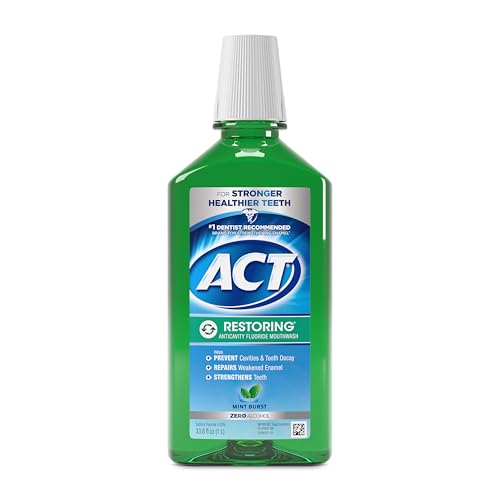
ACT Restoring Fluoride Mouthwash Mint

TheraBreath Icy Mint Rinse 2-Pack

Biotene Dry Mouth Rinse

CloSYS Gentle Mint Mouthwash

CloSYS Silver Mouthwash 2-Pack

CloSYS Ultra Sensitive Mouthwash
Inside Each Recommended Option
A 1-liter bottle suits people who rinse morning and night and prefer fewer refills. The mild mint flavor and zero-alcohol formula make Listerine a practical choice for a mouth that dislikes the sharp sting associated with alcohol-based rinses.
Unlike the more specialized options later in this list, Listerine focuses on routine bad-breath control rather than enamel repair or dry-mouth moisture. It works well for a consistent daily routine, although you may want a targeted formula for persistent sensitivity or a genuinely dry mouth.
Notable Gains
- Zero alcohol offers a gentler option for people bothered by a burning sensation.
- The mild mint flavor suits users who find stronger mint rinses overpowering.
- A 1-liter container reduces refill frequency compared with smaller bottles.
- Its labeled 20 mL, 30-second direction makes the routine easy to follow.
Trade Offs
- This formula is not presented as a sensitivity-specific treatment, so persistent tooth or gum discomfort deserves a dental consultation.
- The large bottle takes more counter or cabinet space than a 16-ounce rinse.
Quick Facts
Made For
You benefit most from this pick if you want a familiar, mild, zero-alcohol rinse for regular morning and evening use.
A Better Fit Elsewhere
ACT Restoring Fluoride Mouthwash Mint suits you better when fluoride and enamel support matter more than a large refillable bottle.
ACT is the fluoride-focused option here, designed for people who want their rinse to support more than fresh breath. Fluoride helps remineralize, meaning it encourages minerals to build back into early enamel changes, while the zero-alcohol base keeps the experience gentle.
The Mint Burst flavor gives you a more noticeable taste than Listerine’s mild profile. That makes ACT a practical choice after the priority shifts from simple freshening toward cavity and enamel care.
A Few Strong Suits
- You get fluoride support alongside freshening benefits in one daily rinse.
- The formula targets enamel strengthening and early soft spots on teeth.
- Its label claims up to 70% more cavity reduction than brushing with fluoride toothpaste alone.
- Zero alcohol makes it suitable for users who dislike a burning rinse.
Practical Considerations
- The Mint Burst flavor may feel more intense to you than a mild mint rinse.
- Its main benefit centers on enamel and cavities, not soothing tender gum tissue.
Feature Snapshot
Right Fit For
This rinse suits you best if fluoride exposure and enamel maintenance are central parts of your daily dental routine.
Where A Sibling Pick Shines
Biotene Dry Mouth Rinse is the better match when moisture and comfort matter more than fluoride-based enamel care.
Two 16-ounce bottles make TheraBreath easy to place in a bathroom and a travel bag. Its dentist-formulated, pH-balanced approach suits a mouth that feels uncomfortable with harsh rinses, while the icy mint flavor provides a clear burst of freshness.
The pH balance is worth understanding: pH measures how acidic or alkaline a liquid is, and a balanced formula can be easier on users who dislike highly acidic products. For you, the practical draw is a non-burning rinse with breath control listed at 12 hours.
What It Does Well
- You get a pH-balanced, non-burning formula designed for sensitive routines.
- The label provides 12-hour bad-breath control for long workdays.
- Two smaller bottles travel more easily than a full-size container.
- The flavor is fresh without relying on a high-alcohol formula.
Worth Noting
- The two 16-ounce bottles occupy more total cabinet space than one 32-ounce bottle.
- Its 12-hour breath claim does not make it a dedicated enamel or dry-mouth formula.
Key Details
Who Will Love This
This pick appeals to you if you want balanced mouth care, a noticeable mint flavor, and separate bottles for home and travel.
Another Choice May Suit
CloSYS Gentle Mint Mouthwash suits you better when longer listed breath control in a single 32-ounce bottle matters more than portability.
Biotene addresses the uncomfortable feeling of a dry mouth rather than treating sensitivity as its central purpose. Its mouth-moisturizing system is designed to soothe and lubricate oral tissue, making it a practical addition to the bedside or bathroom routine for someone who wakes with a dry, uncomfortable mouth.
The fresh mint flavor keeps this from feeling medicinal, and the 33.8-ounce bottle supports frequent use. Compared with ACT Restoring Fluoride Mouthwash Mint, the trade-off is clear: Biotene prioritizes moisture and comfort rather than enamel mineralization.
What Pays Off
- You get a moisturizing system designed specifically for dry-mouth comfort.
- The label lists symptom relief for up to four hours.
- Fresh mint gives you a pleasant taste during a routine built around moisture.
- Balanced pH supports a comfortable oral environment.
Some Limits To Know
- Its primary purpose is dry-mouth relief, so it does not replace a fluoride-focused enamel routine.
- The 33.8-ounce bottle needs more storage space than a compact travel bottle.
Built With In Mind
You benefit most from Biotene when dry, tender tissue is a bigger daily concern than bad breath or cavity prevention.
Reach For A Different Pick When
CloSYS Ultra Sensitive Mouthwash is the closer match for a mouth that reacts to strong flavors or rinsing rather than one that primarily feels dry.
CloSYS Fresh Breath Mouthwash focuses on odor control through a dual-action approach that targets both odor molecules and bacteria. The Gentle Mint flavor and zero-alcohol base make it a sensible daily choice for adults who want fresh breath without an overpowering taste.
Its listed 24-hour breath support gives it a practical edge over TheraBreath Icy Mint Rinse 2-Pack for long shifts, meetings, or evenings out. In your home, the single 32-ounce bottle also reduces the cabinet clutter created by keeping several smaller containers.
Everyday Wins
- You get a dual-action approach addressing both odor molecules and bacteria.
- The label provides 24-hour bad-breath control for demanding schedules.
- Gentle Mint provides everyday freshening without an intense flavor.
- Zero alcohol suits users who prefer a rinse without alcohol.
Small Caveats
- The formula focuses on breath freshness rather than moisture or enamel support.
- For truly tender gums, a more explicitly soothing rinse may align better with your needs.
Technical Notes
Whose Shelf It Belongs On
Choose this rinse for an adult who prioritizes long-lasting breath control and wants a large, straightforward bottle.
Look Elsewhere When
TheraBreath Icy Mint Rinse 2-Pack suits you better when pH balance, a non-burning formula, and separate travel bottles lead your priorities.
CloSYS Silver Healthy Teeth takes the enamel-support route with a fluoride oral rinse for adults. It is designed to help rebuild weakened enamel, strengthen teeth, and protect against cavities, so it makes sense beside a fluoride toothpaste rather than replacing it.
The two 32-ounce bottles are a practical choice for shared bathrooms or homes that keep a backup bottle. Compared with ACT Restoring Fluoride Mouthwash Mint, this option provides more household volume, though the two-pack requires substantially more storage space.
The Upside
- You get fluoride support aimed at weakened enamel and cavity protection.
- The Silver formula adds a distinct tooth-care angle to the CloSYS range.
- Two bottles suit shared spaces, travel, or keeping a spare container ready.
- Each bottle holds 32 ounces for regular twice-daily use.
Possible Compromises
- The formula emphasizes enamel and cavities rather than soothing sensitive gums.
- Buying two 32-ounce bottles requires room for 64 ounces of product.
- A single-bottle option may better suit a small bathroom or travel kit.
Made For
This two-pack fits you best when enamel maintenance is your main goal and you have storage for multiple large bottles.
Swap It Out When
ACT Restoring Fluoride Mouthwash Mint is the better fit when you want fluoride support with less packaging and a brighter mint flavor.
This is the most explicitly sensitivity-focused formula in the group, pairing zero alcohol with a gentle approach intended to clean and soothe without burning. For you, that means a rinse designed around a tender mouth rather than a strong flavor or intense freshness experience.
The two 32-ounce bottles make it convenient to keep one in the bathroom and another at work. Compared with CloSYS Gentle Mint Mouthwash, this option favors soothing and sensitivity over a 24-hour breath-control claim, so your choice depends on which benefit matters more.
Practical Pluses
- You get a formula designed to clean and soothe without a burning sensation.
- Zero alcohol removes a common source of irritation for sensitive users.
- It targets odor-causing bacteria while supporting a gentle daily routine.
- Two large bottles suit separate spaces in your home or work routine.
Details To Watch
- Fluoride is not identified in the listed features, so it may not suit an enamel-focused routine.
- The two-pack requires more storage than a single 32-ounce bottle.
- Persistent pain or bleeding deserves attention from your dental professional rather than a rinse alone.
Feature Facts
Who Should Grab It
This pick suits you best when a non-burning, zero-alcohol rinse is your main requirement for daily oral care.
Consider Something Else When
Biotene Dry Mouth Rinse is the better choice when dry-mouth moisture and longer-lasting comfort are your primary concerns.
What to Look for in a Gentle Daily Rinse
Start with your most uncomfortable symptom
Your main concern should guide the choice. A dry mouth calls for a moisturizing formula, while weakening enamel or cavity concerns point toward fluoride. For tenderness without a specific diagnosis, a zero-alcohol, non-burning rinse offers the most direct match.
Consider the active benefit
Fluoride supports enamel by helping minerals return to early areas of tooth weakening. Breath-focused formulas target odor molecules or bacteria, while dry-mouth rinses add moisture and lubrication. These approaches can serve different needs, so one formula rarely handles every concern equally.
Judge the experience as well as the label
Taste, residue, and burning can determine whether you use a mouthwash consistently. A mild mint may suit you better than a sharp flavor, and a smaller bottle may be more practical for travel. You are more likely to maintain a routine that feels comfortable enough to repeat.
Confirm the practical details
Check the bottle size, package count, and suggested rinse amount before ordering. A large one-liter bottle reduces refills, while two 16-ounce bottles may be easier to distribute between home and work. Persistent sensitivity or gum discomfort still deserves evaluation by a dentist.
Common Sense for Gentler Oral Care
Mistakes Worth Dodging
Choosing on mint intensity alone can hide a poor fit for your actual concern. Check for alcohol, fluoride, moisture support, and the specific benefit you need. A mouthwash supports your routine, but it does not replace brushing, interdental cleaning, or dental care.
What Separates Premium From Basic
Costlier formulas may concentrate on a specific benefit such as enamel remineralization, dry-mouth comfort, or extended breath control. The upgrade pays off when that targeted feature addresses a problem you actually have. Otherwise, a simple mild rinse may serve your routine just as well.
Frequently Asked Questions
What mouthwash is gentlest for sensitive teeth and gums?
CloSYS Ultra Sensitive Mouthwash is the closest match because it is explicitly designed for sensitive oral care and uses a zero-alcohol, non-burning formula. Your own comfort remains the deciding factor.
Does alcohol-free mouthwash work for sensitive gums?
A zero-alcohol formula may feel less irritating because it lacks the drying or burning effect associated with alcohol. Persistent gum pain or tenderness can have other causes, so dental advice is appropriate when symptoms continue.
Should I choose a fluoride mouthwash for sensitive teeth?
Fluoride is useful when enamel strengthening and cavity prevention are your priorities. You can pair it with a gentle toothpaste, but a sensitive mouth may also benefit from a rinse formulated specifically for soothing.
Is dry mouth different from sensitive teeth?
Dry mouth is a moisture problem, while sensitive teeth usually react to temperature, sweets, or touch. Biotene Dry Mouth Rinse addresses moisture more directly, while CloSYS Ultra Sensitive Mouthwash focuses on gentle, non-burning care.
How often should mouthwash be used?
Follow the product directions and your dental professional’s guidance. Most of these formulas are designed for regular rinsing, and using more than directed does not make a sensitive mouth more comfortable.
Wrap Up
The most useful choice is the one that matches the problem you notice most. ACT emphasizes enamel and fluoride, Biotene targets dry-mouth comfort, and CloSYS Ultra Sensitive Mouthwash focuses on non-burning care. Listerine remains a mild, high-volume freshening option, while TheraBreath and CloSYS Fresh Breath serve people whose main concern is lasting odor control.
