

You want control over every sip, and starting with organic unroasted beans gives you that power. Choose single-origin lots like Nicaraguan Caturra or Ethiopia Yirgacheffe for bright floral note, try Brazil peaberry for chocolate balance, and pick Huila Colombia, Guatemala Bourbon, or Kenyan AA for clarity and body. Mix in a Vietnam or Uganda natural for berry sweetness, or use a sampler to learn roast profiles. Small batches, cool fast, and grind just before brewing, and you’ll keep exploring.
| Single-Origin Unroasted Green Coffee Beans – Nicaraguan Caturra |

| Single-Origin Unroasted Green Coffee Beans – Nicaraguan Caturra: Flavor-Forward Pick | Roast State: Unroasted (green beans) | Bean Type: 100% Arabica (Caturra) | Intended User / Use: Home / small-batch roasters (must roast before brewing) | VIEW LATEST PRICE | Read Our Analysis |
| 5 lb Brazil Peaberry Green Arabica Coffee Beans |

| 5 lb Brazil Peaberry Green Arabica Coffee Beans: Chocolate Lover’s Choice | Roast State: Unroasted (green beans) | Bean Type: 100% Arabica (Peaberry) | Intended User / Use: Home roasters (novice to experienced) | VIEW LATEST PRICE | Read Our Analysis |
| Bodhi Green Coffee Sampler Pack (5 × 1 lb) |

| Bodhi Green Coffee Sampler Pack (5 × 1 lb): Best Variety Pack | Roast State: Unroasted (green beans) | Bean Type: 100% Arabica (mixed origins) | Intended User / Use: Home roasters / sampler trials | VIEW LATEST PRICE | Read Our Analysis |
| Fresh Roasted Coffee Unroasted Home Roasting Starter Kit |
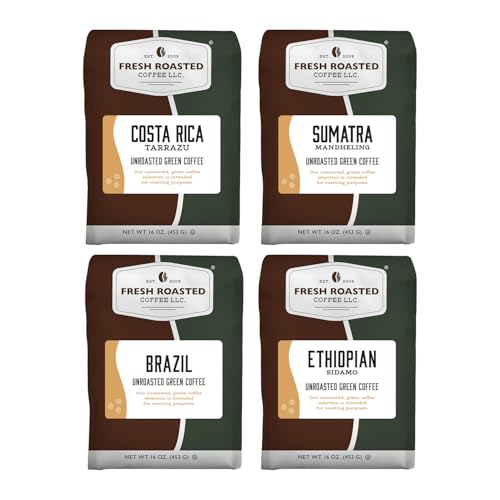
| Fresh Roasted Coffee Unroasted Home Roasting Starter Kit: Best Starter Kit | Roast State: Unroasted (green beans) | Bean Type: 100% Arabica (varied single-origin coffees) | Intended User / Use: Home roasting beginners & enthusiasts (starter kit) | VIEW LATEST PRICE | Read Our Analysis |
| Roastika Ethiopia Yirgacheffe Premium Green Coffee Beans |
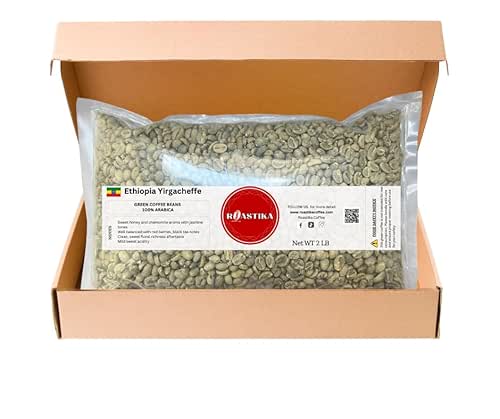
| Roastika Ethiopia Yirgacheffe Premium Green Coffee Beans: Floral Single-Origin | Roast State: Unroasted (green beans) | Bean Type: 100% Arabica (Yirgacheffe) | Intended User / Use: Home / small-batch roasting | VIEW LATEST PRICE | Read Our Analysis |
| Huila Colombia Green Coffee Beans (2 lb Castillo) |

| Huila Colombia Green Coffee Beans (2 lb, Castillo): Clean & Bright | Roast State: Unroasted (green beans) | Bean Type: 100% Arabica (Castillo) | Intended User / Use: Home / customizable roasting | VIEW LATEST PRICE | Read Our Analysis |
| Kenyan AA Green Arabica Coffee Beans (5 lb) |

| Kenyan AA Green Arabica Coffee Beans (5 lb): Fruity/Complex Pick | Roast State: Unroasted (green beans) | Bean Type: 100% Arabica (Kenyan AA) | Intended User / Use: Home roasting (roast then grind/brew) | VIEW LATEST PRICE | Read Our Analysis |
| Guatemala Single-Origin Green Arabica Coffee Beans (5 lb) |

| Guatemala Single-Origin Green Arabica Coffee Beans (5 lb): Full-Bodied Choice | Roast State: Unroasted (green beans) | Bean Type: 100% Arabica (Guatemalan single-origin) | Intended User / Use: Home roasting (roast before use) | VIEW LATEST PRICE | Read Our Analysis |
More Details on Our Top Picks
Single-Origin Unroasted Green Coffee Beans – Nicaraguan Caturra

Single-Origin Unroasted Green Coffee Beans – Nicaraguan Caturra: Flavor-Forward Pick
View Latest PriceWhenever you love hands-on coffee and want beans that reward careful roasting, this single-origin Nicaraguan Caturra is a perfect pick because it gives you control and real flavor depth. You get a 3 lb bag of specialty grade green beans from one family farm at high altitude. They were shade-grown, hand-picked, fully washed and naturally dried, so you can trust their care. Roast small batches to a medium city level to coax out sweet cacao, gentle citrus, and smooth balance. Store cool, dry, and airtight. Direct trade and sustainable farming mean your cup supports the community.
- Roast State:Unroasted (green beans)
- Bean Type:100% Arabica (Caturra)
- Intended User / Use:Home / small-batch roasters (must roast before brewing)
- Origin / Sourcing Transparency:Single Nicaraguan estate, direct trade
- Processing Method:Fully washed, naturally dried
- Flavor Notes:Rich sweetness, gentle citrus acidity, cacao
- Additional Feature:3 lb single-estate bag
- Additional Feature:Shade-grown, hand-picked
- Additional Feature:Direct-trade commitment
5 lb Brazil Peaberry Green Arabica Coffee Beans
Provided you love controlling every step of your coffee, the 5 lb Brazil Peaberry Green Arabica is a perfect pick for home roasters who want a reliably special bean. You’ll observe those small, round peaberries roast evenly, so you get consistent crema and flavor. These specialty grade, fresh current crop beans come semi-washed from about 3,280 ft, and they smell of intense cocoa and hazelnut before you roast. Roast at 400–450°F for 10–15 minutes, cool quickly, and taste creamy dark chocolate and hazelnut notes. Store in a cool dark spot up to 12 months.
- Roast State:Unroasted (green beans)
- Bean Type:100% Arabica (Peaberry)
- Intended User / Use:Home roasters (novice to experienced)
- Origin / Sourcing Transparency:Brazil (South America), sourced from farmers supporting communities
- Processing Method:Semi-washed
- Flavor Notes:Creamy dark chocolate, hazelnut; intense cocoa aroma
- Additional Feature:Peaberry varietal uniqueness
- Additional Feature:Semi-washed process
- Additional Feature:Roast temp/time guidance
Bodhi Green Coffee Sampler Pack (5 × 1 lb)
Should you roast at home and want to try five distinct, specialty-grade green coffees without committing to huge sacks, this Bodhi Sampler Pack is a smart fit for you. You get five one-pound bags: Brazil Ipe natural, Vietnam White Lotus washed, Uganda Embogo natural, Guatemala La Bella La Labor Bourbon natural, and Ethiopia Kochere washed Grade 2. Bodhi imports directly from farms and uses licensed Q-Grader oversight, so you can trust the crop quality and freshness. In case you care about farmer relationships, Bodhi’s values shine through. This pack lets you investigate single-origin roasts and learn how processing shapes flavor.
- Roast State:Unroasted (green beans)
- Bean Type:100% Arabica (mixed origins)
- Intended User / Use:Home roasters / sampler trials
- Origin / Sourcing Transparency:Multiple named origins, direct import relationships (Bodhi)
- Processing Method:Mixed (Brazil natural; Vietnam washed; Uganda natural; Guatemala natural; Ethiopia washed)
- Flavor Notes:Varied by bag (e.g., Brazil natural, Ethiopia floral, Guatemala chocolate, Uganda fruit, Vietnam neutral – sampler covers wide profiles)
- Additional Feature:Five 1-lb origin samples
- Additional Feature:Q-Grader graded selection
- Additional Feature:Breaks large lots down
Fresh Roasted Coffee Unroasted Home Roasting Starter Kit
You’ll love the Fresh Roasted Coffee Unroasted Home Roasting Starter Kit should you’re curious about controlling every step of your cup and want an easy way to learn roasting at home. You get four 16 ounce bags of green 100% Arabica beans from single origins around the world. You’ll enjoy experimenting with blends and roast levels whether you’re new or have roasted before. The beans are sustainably sourced, kosher certified, and packaged in the USA. Keep in mind that these selections are for roasting only and aren’t safe to eat raw. This kit makes learning hands on and friendly.
- Roast State:Unroasted (green beans)
- Bean Type:100% Arabica (varied single-origin coffees)
- Intended User / Use:Home roasting beginners & enthusiasts (starter kit)
- Origin / Sourcing Transparency:Various single-origin farms/co-ops (sustainably sourced)
- Processing Method:Various (assorted processing from origins)
- Flavor Notes:Varied single-origins for blending/experimenting (multiple flavor profiles)
- Additional Feature:Four 16-oz bags
- Additional Feature:Kosher certified
- Additional Feature:Packaged in USA
Roastika Ethiopia Yirgacheffe Premium Green Coffee Beans
Looking for a green bean that’s gentle for beginners but rich enough for small-batch roasters? You’ll like Roastika Ethiopia Yirgacheffe Premium Green Coffee Beans. You handle 2 lb of high graded, 100% Arabica beans grown at 1700–2000 m. They’re washed with 10.6% moisture, so they roast predictably and won’t surprise you. Expect red berries, black tea, and jasmine annotations that lead to a clean, sweet floral aftertaste. Acidity stays mild and pleasant, while the body feels rich, smooth, and silky. These beans suit home roasting and small-batch experiments, helping you learn and enjoy each roast.
- Roast State:Unroasted (green beans)
- Bean Type:100% Arabica (Yirgacheffe)
- Intended User / Use:Home / small-batch roasting
- Origin / Sourcing Transparency:Ethiopia, Yirgacheffe region
- Processing Method:Washed
- Flavor Notes:Red berries, black tea, jasmine; floral and sweet aftertaste
- Additional Feature:2 lb net weight
- Additional Feature:Moisture 10.6% specified
- Additional Feature:High-elevation 1700–2000 m
Huila Colombia Green Coffee Beans (2 lb Castillo)
Whenever you want fresh, customizable coffee that lets you shape every cup, these 2 lb Huila Colombia green beans are a great choice. You get Castillo varietal, specialty grade beans from 100% Huila, Colombia. The washed process gives you a clean, bright base, so your roast choices really show the bean. Huila’s volcanic soils and ideal altitude give consistent quality and lively flavors. Because they’re unroasted, you can roast to light, medium, or dark and learn what you love. Sourced via direct trade, they focus on traceability and farm to cup care, which feels reassuring and fair.
- Roast State:Unroasted (green beans)
- Bean Type:100% Arabica (Castillo)
- Intended User / Use:Home / customizable roasting
- Origin / Sourcing Transparency:Huila, Colombia (single-origin, direct trade)
- Processing Method:Washed
- Flavor Notes:Clean, bright flavors (Huila characteristics)
- Additional Feature:Castillo varietal beans
- Additional Feature:Volcanic-soil origin
- Additional Feature:Direct-trade sourcing
Kenyan AA Green Arabica Coffee Beans (5 lb)
Should you want beans that let you control every step from roast to cup, Kenyan AA Green Arabica is a great choice for home roasters who care about flavor and fairness. You’ll get five pounds of 100% Arabica, hand picked on family farms in Kenya Highlands. The volcanic soil and cool, moist climate give ripe berry notes, fruity undertones, medium acidity, and a clean sweet finish. Washed and sun dried, the green beans arrive ready for your roast profile. Ethically sourced, farmers earn fair wages and work safely. Roast small batches, grind right before brewing, and enjoy bright, balanced cups.
- Roast State:Unroasted (green beans)
- Bean Type:100% Arabica (Kenyan AA)
- Intended User / Use:Home roasting (roast then grind/brew)
- Origin / Sourcing Transparency:Kenyan Highlands (small-scale farms)
- Processing Method:Washed and sun-dried
- Flavor Notes:Ripe berries, fruity undertones, clean sweet finish
- Additional Feature:Kenya AA grade
- Additional Feature:Family-farm sourcing
- Additional Feature:Washed + sun-dried
Guatemala Single-Origin Green Arabica Coffee Beans (5 lb)
Should you want a reliable green bean that feels like a careful craft, these Guatemala Single-Origin Green Arabica beans are ideal for home roasters who value traceable sourcing and clean flavor. You’ll get 5 pounds of specialty grade, hard bean Arabica from a fourth generation family farm on the Guatemala Honduras border. Farmers hand harvest, wash, then air and sun dry each lot. Because beans ship direct and stay in temperature controlled bags, freshness holds. You’ll notice full body, sweet balance, gentle acidity, and chocolate notes. Roast, grind, and try pour over, French press, AeroPress, or drip and enjoy assistance when necessary.
- Roast State:Unroasted (green beans)
- Bean Type:100% Arabica (Guatemalan single-origin)
- Intended User / Use:Home roasting (roast before use)
- Origin / Sourcing Transparency:Fourth-generation family farm (Guatemala–Honduras border)
- Processing Method:Fully washed and air-/sun-dried
- Flavor Notes:Full-bodied, sweet balance with gentle acidity and chocolate notes
- Additional Feature:Fourth-generation family farm
- Additional Feature:Temperature-controlled storage
- Additional Feature:Strict “hard bean” quality
Factors to Consider When Choosing Organic Unroasted Coffee Beans
Whenever you’re picking organic unroasted coffee beans, check the organic certification and where the beans were grown because both tell you about farming practices and flavor. Also pay attention to processing method, bean variety and grade, and the harvest date since those factors shape aroma, body and freshness. As you read about each point below, you’ll see how they connect and help you choose beans that match your taste and roasting plans.
Organic Certification Status
Should you care about what goes into your cup, organic certification gives you a clear way to trust the claim, because it proves the beans were grown without synthetic pesticides, herbicides, or GMOs and are checked by an outside agency. You’ll want to inspect the label for certifier names like USDA Organic or EU Organic and a lot or batch number. That shows a third party verified the claim instead of a marketing line. Certification also usually covers farm, processor, and exporter, so check whether the certificate applies to the finished product or only the farm. Standards require soil and pest practices such as composting, crop rotation, and biological controls. Keep in mind certification costs can raise prices, but they also buy trust and traceability.
Origin And Terroir
You cared enough to check for organic certification, and that same attention will pay off once you look at where the beans come from. Start with altitude because it shapes density and acidity. Beans from above 1,200 m tend to be denser and brighter, so you’ll observe clearer, livelier flavors. Next, consider soil type since volcanic, loam, or clay soils add different mineral and sweet notes that show up in your cup. Also pay attention to microclimate factors like temperature swings, rainfall, and humidity because they control how slowly cherries ripen and how sugars build. Shade versus sun matters too; shaded trees slow maturation and often give more subtle acidity and sweetness. Finally, reflect on region and cultivar together because terroir and variety create signature profiles like floral, berry, or chocolate.
Processing Method Impact
Although the way beans are processed can seem technical, it directly shapes how your coffee tastes and roasts, so paying attention now will save you disappointment later. You’ll notice washed beans taste cleaner with brighter acidity and clearer floral or citrus nuances. That makes them easy to roast a bit brighter so those traits pop. In contrast, natural processed beans hold more sugars and fruit character. You’ll get heavier body and jammy or fermented berry flavors. They often need gentler, longer roasts to avoid burnt sweetness. Honey or pulped natural methods sit between washed and natural. Different honey levels change sweetness and body while adding subtle ferment nuances. Always check drying consistency and fermentation control because uneven drying or overfermentation can give sour, moldy, or funky flaws.
Bean Variety And Grade
Whenever you pick green coffee, the bean variety and grade shape almost everything you’ll taste and how the beans roast, so it pays to know what to look for. You’ll want Arabica for brighter acidity and more delicate flavors, since it usually gives floral or fruity notes and less bitterness than Robusta. Pay attention to cultivar names like Bourbon, Caturra, Typica, and Castillo because each steers cup profile and body. Look at grade factors next: screen size, defect count, and specialty score tell you about uniform roasting and cleaner cups. Observe peaberry lots too, since single-seeded cherries roast and taste differently, often sweeter and more concentrated. Also check moisture and processing cleanliness, which affect storage and roast consistency.
Freshness And Harvest Date
As beans carry a clear harvest date, you can tell how fresh they are and how well they’ll show their origin flavors, so always look for that date initially. Whenever you shop, choose bags with recent harvests. Green coffee keeps peak freshness about 6 to 12 months provided stored cool and dry, so current crop beans within 6 to 9 months give the best chance of bright, true flavors. Ask sellers for crop year and storage history in case no date appears, since undated lots could be many seasons old. Keep in mind that proper storage between harvest and roasting slows loss, while heat, moisture, or air speeds staling. Roasting sooner after harvest helps flavors speak clearly, so prioritize traceable, recently harvested beans.
Roasting Compatibility Range
Now that you’ve learned to look for harvest dates and storage histories, you’ll want to match those fresh beans to a roasting range that suits their body and moisture. Higher altitude, dense beans need slower, slightly hotter roasts so sugars develop without burning. Lower density beans take heat faster and can lose delicate flavors should pushed too hard. Pay attention to moisture above 11 to 12 percent; those beans need a longer, gentler drying stage so the interior won’t taste grassy. At home you’ll work between about 350 and 480°F. Lighter roasts end near initial crack, medium roasts move toward early second crack. Reduce heat 20 to 30°F after initial crack to protect acidity. Track charge temp, roast time, and temperature curves so you can repeat successful profiles.
Storage And Handling Needs
Once you buy organic green coffee beans, treating them gently from the start will keep their flavor and aroma intact, so invest in the right storage and handling habits promptly. Store beans in airtight, opaque containers at a steady 50–70°F and about 50–60% humidity to slow moisture uptake and stop mold. Keep them away from sunlight, heat, and strong smells because green beans absorb odors easily. Use vacuum-sealed bags or containers with one-way valves to cut oxygen exposure, and open them only as required to preserve volatile precursors. For longer storage, refrigerate or freeze in moisture-proof packaging, then let sealed bags reach room temperature before opening to avoid condensation. Check moisture, aim for 10–12%, and inspect often for insects, mold, or odd smells, discarding any bad lots.
