

Overpronation happens when your foot rolls inward during walking, running, or long periods of standing. You may notice uneven shoe wear, shifting toward your big toe, or discomfort that returns after activity, but an insole cannot diagnose the cause. You need enough arch support, heel control, and cushioning to match your foot and footwear without creating a cramped fit. These six options cover everything from full-length motion control to compact three-quarter-length inserts, giving you several practical places to start.
A Closer Look At The Lineup
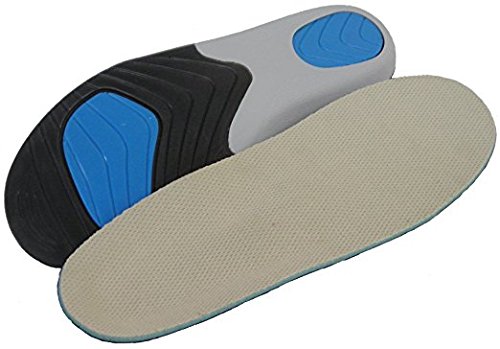
Optimal Motion Control Insole with Met Pad

Aetrex L2200 Memory Foam Arch Support Insoles for Men

PowerStep Pinnacle Orthotic Insoles

PowerStep Pinnacle Maxx Orthotic Insoles for Overpronation and Flat Feet
RooRuns FitFeet 3/4 Length Orthotic Insoles for Overpronation Support

WalkHero Arch Support Insoles
A Closer Look At Each Pick
For women’s size 5-6 seeking full-foot control, the Optimal Motion Control Insole with Met Pad combines a semi-flexible arch platform with cushioning at both the heel and ball of the foot. The metatarsal pad sits beneath the area where the metatarsal bones meet, giving this model a more targeted approach than a simple flat cushioned insert.
Its motion-control construction is intended to limit excessive inward rolling while the gel pads soften repeated impact. Designed by pedorthists, who specialize in footwear and foot support, the insert appears especially relevant for work shoes and walking footwear where you want structured support without a rigid-looking orthotic.
Notable Upsides
- Full-length coverage supports the heel, arch, and forefoot together.
- The metatarsal pad targets the area behind the toes.
- Two gel cushioning zones soften heel landings and forefoot pressure.
- Semi-flexible construction may balance control with everyday comfort.
Practical Considerations
- Confirm that your shoes have a removable insole and enough internal depth.
- The listed women’s 5-6 sizing narrows this option for other sizes.
Key Specs
Who It Suits Best
You wear women’s size 5-6 and want full-length support with extra forefoot cushioning for everyday walking or standing.
A Better Fit Elsewhere
RooRuns FitFeet 3/4 Length Orthotic Insoles for Overpronation Support suit you better when shoe volume matters more than full-foot coverage.
Where the Optimal model emphasizes motion control and a metatarsal pad, the Aetrex L2200 puts a cushioned layer at the center of the decision. Its lQl50 memory foam and Performance Base Poron construction are designed to soften impact, while a cupped heel helps stabilize the rear of your foot during long walks.
The 0.25-inch profile and CopperGuard lining make this a practical option for boots, sneakers, flats, and heels. Teachers, nurses, and warehouse staff represent the clearest use case, although you may find the layered materials feel less firm than a stability-focused orthotic.
The Value In It
- Memory foam adds adaptive cushioning under the arch.
- Poron provides a shock-absorbing layer for repeated steps.
- The cupped heel adds rear-foot positioning.
- A 0.25-inch profile suits many casual shoes.
- Multiple footwear types are included in its intended use.
Things To Consider
- Check toe room because the insert is 0.25 inches thick.
- Soft cushioning may not provide the same directional control as the Pinnacle Maxx.
Feature Snapshot
Made For
You spend much of the workday walking or standing and want a cushioned insert for boots or casual footwear.
Another Choice May Suit
PowerStep Pinnacle Maxx Orthotic Insoles for Overpronation and Flat Feet make more sense when firm heel control takes priority over plush cushioning.
PowerStep Pinnacle Orthotic Insoles sit between a cushioned everyday insert and a more structured correction. The shaped arch is designed to add stability to the foot and ankle, while substantial cushioning suits daily wear without taking the firm, angled-heel approach used by the Pinnacle Maxx.
That makes the Pinnacle a sensible middle ground for people who spend time walking but also want some give underfoot. The material is listed as polyester, and the listed pairing covers men’s sizes 10-10.5 and women’s sizes 12-12.5.
What It Does Well
- Shaped arch support promotes steadier foot positioning.
- Substantial cushioning softens daily walking impact.
- The balanced design works outside highly specialized footwear.
Room For Improvement
- Compare the exact listed size with your footwear.
- The substantial support profile may feel firmer than the Aetrex L2200.
- You may prefer the Pinnacle Maxx for more targeted overpronation control.
Right Fit For
You want a balanced orthotic with noticeable cushioning for commuting, errands, and routine workdays.
Consider Something Else When
Aetrex L2200 Memory Foam Arch Support Insoles for Men suit you better when a softer 0.25-inch profile matters more than structured arch shaping.
The Pinnacle Maxx is the most explicitly targeted option here, with a firm yet flexible angled heel and stability-focused design for overpronation and flat feet. Compared with the standard PowerStep Pinnacle, it gives you a stronger reason to choose structural control rather than cushioning as the main priority.
Its angled heel is intended to influence how your foot sits inside the shoe, which may feel more noticeable than the Aetrex L2200’s cushioned approach. Listed sizes include men’s 3-6.5 with corresponding women’s sizes, and the insert is made in the USA.
What Helps Most
- The angled heel supports a more directed correction.
- Firmness encourages stability without making the insert completely rigid.
- The design directly addresses overpronation and flat-foot support.
- Men’s and women’s sizing options widen the possible fit.
- USA manufacturing provides a clear origin for the product.
Trade Offs
- Check that your shoes have enough room for a stability-focused insert.
- The angled heel may feel more pronounced than a conventional cushioned insole.
- Confirm the listed size before ordering.
At A Glance
Built With In Mind
You have noticeable inward rolling and want a firm, directed orthotic for work shoes or supportive walking footwear.
Where A Sibling Pick Shines
WalkHero Arch Support Insoles suit you better when deep heel positioning and general alignment support matter more than the Pinnacle Maxx’s firmer overpronation focus.
RooRuns FitFeet uses a three-quarter-length design to deliver up to 35 mm of arch support without filling the entire shoe. The firm EVA material, which is a lightweight foam made from ethylene-vinyl acetate, gives the insert a defined shape that feels more structured than a loose gel pad.
Unlike the Optimal Motion Control Insole with Met Pad, this model leaves the heel and part of the forefoot uncovered. That makes it easier to place inside walking or running shoes with less internal space, although you give up some full-foot cushioning.
Features That Help
- The 35 mm arch offers pronounced support for high arches.
- Firm EVA maintains a supportive shape during activity.
- The compact profile suits shoes with limited room.
- One design works for walking and running footwear.
Where It May Fall Short
- Three-quarter length provides less heel and forefoot coverage.
- The high arch profile may feel too pronounced for low-arch feet.
Core Details
Who Will Love This
You have a high or fallen arch and need firm support in walking shoes or running shoes with limited space.
Look Elsewhere When
Optimal Motion Control Insole with Met Pad makes more sense when full-length coverage, heel cushioning, and forefoot support are all important.
WalkHero focuses on two familiar support cues: an arch-support shape and a deep heel cup. The cup is designed to keep your heel more centered during the impact of each step, while the arch profile supports alignment through the middle of the foot.
Compared with the Aetrex L2200’s memory foam emphasis, this model presents a more position-focused approach. You may find that combination useful for everyday shoes, especially when your heel feels mobile inside a less structured sole.
What Earns Its Place
- The deep heel cup promotes centered heel positioning.
- Arch support addresses inward rolling through the midfoot.
- The straightforward design suits general daily wear.
Points To Note
- Check your toe room because a deeper heel cup changes the fit.
- You may prefer a high-arch model for pronounced support.
The Right Fit
You want general arch and heel positioning for commuting, errands, and ordinary walking shoes.
Reach For A Different Pick When
PowerStep Pinnacle Maxx Orthotic Insoles for Overpronation and Flat Feet suit you better when firm, angled-heel control is your main goal.
Matching Support To Your Foot And Shoes
Start With The Type Of Correction
Overpronation is inward rolling during the stance phase, when your foot is planted and accepting your weight. A motion-control or stability-oriented orthotic may suit that pattern, while a simple cushioning insert offers less directional support. A gait assessment from an appropriate specialist can help you distinguish habitual rolling from a shoe-related issue.
Match The Profile To Your Arch
Arch height changes how the insole meets your foot. A pronounced arch, such as the RooRuns FitFeet design, may feel supportive on a high or fallen arch but excessive on a low arch. The Aetrex L2200 and PowerStep Pinnacle offer more moderate everyday profiles.
Check Shoe Compatibility First
A removable insole gives you room to replace the factory insert. Also check the replacement’s length, thickness, and toe clearance, especially in work boots or narrow sneakers. The Aetrex L2200 measures 0.25 inches thick, while the RooRuns FitFeet’s shorter design leaves more of the original footbed exposed.
Decide Between Cushioning And Control
You can soften impact with memory foam, EVA, or gel, but firmer geometry often feels more pronounced through the arch and heel. Your footwear, activity level, and sensitivity to pressure should guide that decision. A moderate profile serves routine walking, while a stability-focused design may be worth considering for pronounced inward rolling.
Before You Commit To An Insole
Mistakes Worth Dodging
Don’t select an orthotic solely because a condition appears in its title. Match the shape to your arch, confirm the size, and check your shoe’s internal volume. An insert that feels cramped can make you remove it before its support has a chance to work.
What Separates Premium From Basic
Higher-tier designs often devote more material or shaped geometry to the heel and arch. That added structure may suit pronounced overpronation, but it can also feel more intense. A simpler cushioned model may be the better everyday choice.
Frequently Asked Questions
How Do I Know Whether I Overpronate?
A specialist can assess your foot and walking pattern, while shoe wear may offer a rough clue. Look for uneven wear along the inner or outer edge, but do not rely on shoe wear alone.
Should Overpronation Insoles Be Hard or Cushioned?
Firmer designs often provide more directional support, while cushioned models soften impact. Your arch shape and comfort response should guide the balance.
Are Full-Length or Three-Quarter Insoles Better?
Full-length insoles cover more of the foot, while three-quarter designs preserve shoe space. Choose full length for broader coverage and the shorter profile when internal volume is limited.
Will These Insoles Fit in Work Boots and Sneakers?
Aetrex L2200 is intended for boots, sneakers, flats, and heels. For the other options, verify the length and thickness inside each shoe before ordering.
When Should I See a Doctor About Foot Pain?
Consult an appropriate doctor when pain persists, worsens, or interferes with normal activity. A specialist can evaluate your feet, gait, and footwear together.
Final Verdict
Your best match depends on the kind of control you need and the space available inside your shoes. The PowerStep Pinnacle Maxx offers the most directed stability, the Aetrex L2200 favors cushioning, and RooRuns FitFeet keeps arch support compact. Choose the profile that feels workable in your footwear, then give it time to become familiar.
