

A runner who spends miles on pavement needs more than a soft insert. The right orthotic insoles for running should balance arch support, heel control, cushioning, and a secure fit inside your training shoes, while also fitting your foot shape and running style.
The six options below cover different priorities, from firm control for overpronation to cushioned support for long walks or rugged trails. Several use a 3/4-length profile that leaves more room in the toe box, while others provide fuller coverage for everyday footwear. You’ll also find options designed specifically for running and high-intensity sport rather than general foot comfort.
A Quick View Of The Lineup

MUNA Plantar Fasciitis Insoles

PowerStep ProTech Control 3/4 Orthotic Inserts, M 5-6.5 W 7-8.5

Aetrex L2200 Men’s Memory Foam Plantar Fasciitis Insoles

Custom Fit Orthotics CF 440 3/4 Length Inserts for Men and Women
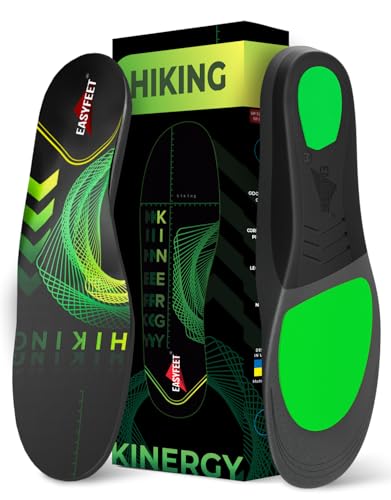
EASYFEET Hiking Boot Insoles

EASYFEET Running & Sport Insoles
The Strengths Of Each Pick
The MUNA design concentrates on a specific runner’s need: limiting how far the arch flattens during a step. Its semi-rigid shell provides more directional support than a soft foam insert, while the heel cup adds stability around the rear of the foot.
That balance makes it worth considering during a road run, especially after heel discomfort first appears in the morning. Unlike the Aetrex L2200’s foam-heavy approach, MUNA puts more emphasis on controlling arch movement, so you may prefer its firmer feel during faster sessions.
Why It Works Well
- The semi-rigid arch shell resists excessive flattening without feeling completely rigid.
- A stabilizing heel cup helps keep the foot centered during repetitive strides.
- Built-to-size sizing avoids trimming, which simplifies rotation between running shoes, boots, and sneakers.
- The design targets plantar fascia discomfort and morning heel sensitivity.
Trade Offs
- The supportive shell may feel more substantial than an all-foam insert, particularly during the first few runs.
- Because no trimming is needed, careful size selection matters for keeping the heel seated.
At A Glance
Built With In Mind
This option best suits runners who prefer structured arch control and noticeable heel stability over a highly cushioned insert.
A Better Fit Elsewhere
EASYFEET Running & Sport Insoles suit athletes who prioritize cushioning for running, jumping, and cross-training over MUNA’s firmer arch shell.
The 3/4-length PowerStep ProTech Control inserts suit runners who need firmer arch support for overpronation. Overpronation means the foot rolls inward more than the support setup accommodates, and the insert’s firmer arch profile is intended to guide that movement.
Unlike the longer MUNA insert, this one stops before the toes, which can preserve room in shoes with a shallow forefoot. For daily mileage, that control-focused design is a sensible alternative when cushioning alone doesn’t meet your support needs.
The Helpful Details
- Firmer arch support is positioned for runners dealing with overpronation or general arch discomfort.
- The shortened profile leaves more forefoot space than a full-length insole.
- Moderate cushioning and a foam heel provide comfort without making the insert excessively soft.
- Made in the USA, which may matter to shoppers who prefer domestic production.
Practical Considerations
- The listed fit covers men’s sizes 5 through 6.5 and women’s sizes 7 through 8.5, so check your size before ordering.
- Three-quarter coverage provides less support beneath the full forefoot than a longer insert.
Quick Facts
The Right Fit
PowerStep fits runners with the listed shoe sizes who want firmer control in shoes with a roomy or shallow toe box.
Another Choice May Suit
MUNA Plantar Fasciitis Insoles suit runners who want a fuller insert that can move between running shoes, boots, and sneakers.
Aetrex takes a softer approach with its L2200, using memory foam to cushion the foot while a Poron performance base helps absorb impact. A cupped heel adds stability around the rear of the foot without the pronounced rigidity of the PowerStep insert.
This combination works especially well for people whose running schedule includes long shifts, teaching days, or other stretches spent standing. The insert is also positioned for sneakers, flats, heels, and boots, giving it more day-to-day versatility than a narrowly athletic design.
What Stands Out
- Memory foam gives the foot a softer, more adaptive landing surface.
- Poron cushioning beneath the foot helps absorb repetitive impact.
- The cupped heel supports and steadies the back of the foot.
- A quarter-inch profile fits into several common shoe styles.
Things To Consider
- Its foam-centered comfort may offer less directional control than the PowerStep ProTech Control.
- The design is listed for men’s feet, so women should check the available sizing before purchasing.
Who Will Love This
The L2200 best suits men who spend substantial time walking or standing and prefer plush cushioning with light heel stability.
Look Elsewhere When
PowerStep ProTech Control 3/4 Orthotic Inserts better suit runners who need firmer support for overpronation rather than a foam-heavy landing.
The CF 440 combines several support functions in a 3/4-length format, including arch support, ankle stability, and pressure distribution. That broader setup makes it useful for runners whose discomfort appears after prolonged standing, walking, or a full workday.
Compared with the MUNA insert, this option spreads its features across the foot and ankle rather than concentrating on a semi-rigid arch shell. You may find it more accommodating for daily wear, although the exact feel will depend on your arch and shoe shape.
What Earns Its Place
- Arch support and ankle stability complement each other during longer periods of activity.
- Pressure distribution can improve comfort beneath prominent areas of the foot.
- The 3/4 profile leaves room for shoes with a shallower toe box.
- Men’s and women’s sizing makes it useful for a broader range of feet.
Details To Watch
- Its broad support approach may feel less focused than MUNA’s plantar-fascia-specific shell.
- Three-quarter length leaves the toes uncovered, which matters for runners who prefer fuller foot coverage.
Feature Overview
Made For
The CF 440 suits men and women who want combined arch, ankle, and pressure support for active days with substantial time on their feet.
Reach For A Different Pick When
MUNA Plantar Fasciitis Insoles better suit runners seeking one concentrated support strategy for arch flattening and morning heel discomfort.
EASYFEET designed these inserts for the repetitive loading and uneven footing found on hiking trails. Arch support and cushioning provide a more structured base than a disposable foam insert, while the hiking-boot shape suits footwear with a roomier interior.
For trail runners, that makes these a practical companion for routes involving rocks, climbs, and long descents. They aren’t the most running-specific option here, but their outdoor focus offers a useful alternative when your training shoes change with the terrain.
The Case For It
- Arch support adds structure beneath the foot on uneven trails.
- Cushioning softens the repeated impact associated with hiking.
- The design is intended for boots rather than low-profile casual shoes.
- Separate sizing ranges cover several men’s and women’s foot sizes.
Small Caveats
- The hiking focus makes these less specialized for track intervals or road runs.
- Choose XS for men’s 4.5-6.5 or women’s 5.5-7.5, and S for men’s 7-8.5 or women’s 8-9.5.
Whose Shelf It Belongs On
These insoles best suit hikers and trail runners who need arch support in roomy hiking boots on rough or uneven ground.
Swap It Out When
EASYFEET Running & Sport Insoles better suit runners whose main focus is road running, jumping, and cross-training footwear.
The EASYFEET Running & Sport Insoles put athletic movement first, with cushioning and arch support designed for running, jumping, and cross-training. They fit the role of a dedicated sports insert better than a general walking insert with a similar shape.
For runners who also play court sports or take high-impact fitness classes, that multi-sport focus has practical value. Compared with MUNA’s semi-rigid shell, this design appears more oriented toward cushioning and flexible athletic support.
The Upside
- Designed specifically for running and other high-intensity activities.
- Cushioning helps soften repeated landings during running and jumping.
- Arch support adds structure without requiring a rigid orthotic profile.
- The athletic format works across running, court sports, and cross-training.
Points To Note
- The broad athletic focus may not provide the same targeted control as the PowerStep ProTech Control.
- Fit matters in snug performance shoes, so check the interior space before inserting the insole.
Core Features
Best Suited To
These insoles suit runners and cross-training participants who want a lightweight, athletic insert for varied high-impact workouts.
Where A Sibling Pick Shines
MUNA Plantar Fasciitis Insoles better suit runners who need a semi-rigid arch shell and stabilizing heel cup for plantar fascia discomfort.
What Matters Before You Replace Your Current Insole
Match Support To Your Movement Pattern
Firmer arch support is most relevant when your foot rolls inward during a stride. MUNA uses a semi-rigid shell to limit flattening, while PowerStep takes a more traditional control-oriented approach for overpronation. Softer options such as EASYFEET place more emphasis on cushioning and flexible athletic support.
Check The Footprint Before The Features
A 3/4-length insert can work well in shoes with a shallow toe box, but it provides less coverage beneath the toes. Full-length options may feel more complete inside roomier footwear. Remove the factory insole when comparing space, and check that your heel remains seated rather than sliding.
Separate Daily Cushioning From Directional Support
A run-walking commute creates different demands from a five-day training week. Memory foam may feel comfortable during long periods on your feet, while a firmer arch profile becomes more relevant during repeated road miles. Choose the feature that matches your most common activity rather than the most demanding day you might occasionally have.
Common Mistakes Worth Avoiding
Wrong Turns To Avoid
Don’t choose an insole solely because it mentions plantar fasciitis. Match the support level, length, and shoe compatibility to your actual routine. Replacing multiple pairs at once can also make it difficult to identify which change feels right.
What Separates Premium From Basic
Premium pricing may reflect a firmer molded shell, layered cushioning, or more considered heel shaping rather than simple foam thickness. The extra expense can matter for demanding runners, but a well-matched basic insert may serve casual joggers perfectly.
Frequently Asked Questions
Can Orthotic Insoles For Running Help With Heel Discomfort?
They may provide better arch support, heel stability, and cushioning, but the response depends on your foot and the underlying cause. Persistent heel discomfort warrants evaluation by an appropriate specialist doctor.
Should You Choose Full-Length Or 3/4-Length Insoles?
Full-length inserts provide more forefoot coverage, while 3/4-length models preserve toe-box space. Your running shoe’s internal shape should guide the decision.
Do These Insoles Work In Any Running Shoe?
Most models are designed for common athletic footwear, but fit varies by insert length and shoe volume. Check the sizing, toe clearance, and heel seating before replacing your factory insole.
Which Option Is Best For Overpronation?
PowerStep ProTech Control 3/4 Orthotic Insoles provide the most explicitly control-focused design in this group. A professional assessment remains useful if overpronation causes recurring discomfort.
When Should You See a Doctor Instead of Using Insoles?
Seek professional advice when heel or arch discomfort persists, worsens, or interferes with normal movement. A specialist can evaluate the mechanics behind your symptoms before you choose an insert.
Final Verdict
Start with your dominant need: structured control for overpronation, a semi-rigid shell for plantar fascia discomfort, soft cushioning for long days, or athletic support for varied workouts. Whichever direction you lean, fit the insert to your shoe and activity pattern, then give it enough time to evaluate comfort and movement. The right choice should feel supportive without creating pressure points or altering your stride awkwardly.
