

A high arch can leave your foot feeling unstable in shoes that do not provide enough support. The right orthotic needs to meet the arch without creating pressure, fit inside your footwear, and suit the time you spend walking, standing, or working. These six options cover different needs, from focused forefoot support to firm arch stabilization for heavier users.
Your Options, Compared

PowerStep ProTech MET Full Length Orthotics, M 9-9.5 / W 11-11.5, Made in USA

MUNA Plantar Fasciitis Insoles

Runviara Arch Support Insoles

OrthoComfoot Breathable Orthopedic Work Boot Insoles Size 8 Men/10 Women
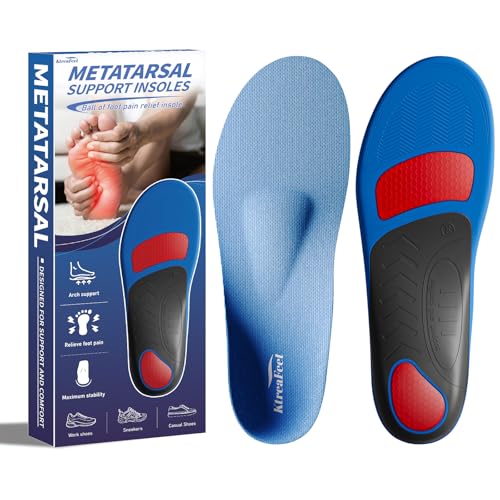
KtreaFeet Metatarsal Insoles
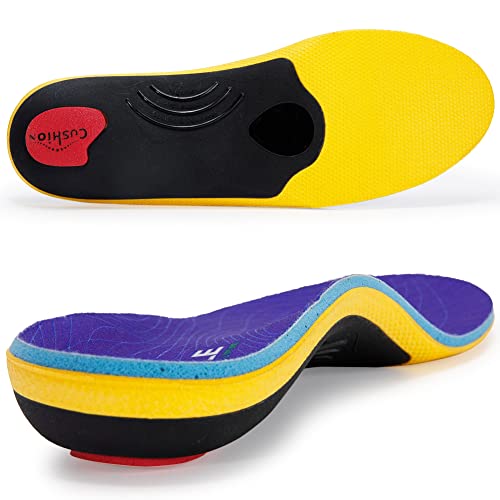
VALSOLE Heavy Duty High Arch Orthotics for Men and Women in Work Boots
Inside Each Recommended Option
PowerStep ProTech MET Full Length Orthotics give you support across the heel, arch, and ball of the foot. You get a standard-height, semi-rigid arch support, deep heel cradle, integrated metatarsal pad, and cushioned foam beneath the heel.
That combination suits commuting, long workdays, and shoes with a removable factory insole. The listed size is men’s 9-9.5 and women’s 11-11.5, so fit matters more here than for a trim-to-fit insert.
What It Does Well
- The metatarsal pad spreads pressure across the forefoot, useful during long walks.
- The structured arch and heel cradle work together for steadier foot positioning.
- Foam heel cushioning softens impact in sneakers and work shoes.
- Full-length coverage supports the entire foot rather than isolating one pressure area.
Trade Offs
- Its semi-rigid structure may feel more substantial than a soft gel insert.
- The specific size means you need to check both length and internal shoe space.
Key Specs
Made For
You benefit most from this insert when you need coordinated arch, heel, and forefoot support in a shoe with a removable insole.
A Better Fit Elsewhere
MUNA Plantar Fasciitis Insoles suit you better when focused arch and heel support in sneakers or boots matters more than a full-length forefoot design.
MUNA Plantar Fasciitis Insoles center on the band of tissue supporting the arch, a common source of heel discomfort. A semi-rigid shell limits excessive arch flattening while the heel cup and cushioning soften each step.
You can move them directly into boots, running shoes, or sneakers without trimming. That makes this a practical choice for someone who wants focused support without replacing a favorite pair of shoes.
What Works In Its Favor
- The semi-rigid shell supports the arch without the hard feel associated with fully rigid inserts.
- A stabilizing heel cup helps keep the foot centered as the arch flexes.
- The ready-to-wear sizing works across several common footwear styles.
Small Caveats
- Its design focuses on arch and heel support, unlike the more comprehensive PowerStep ProTech MET.
Quick Facts
Right Fit For
You benefit most from these insoles when heel discomfort and arch support are your priorities across sneakers, boots, and running shoes.
Consider Something Else When
PowerStep ProTech MET Full Length Orthotics suit you better when a built-in metatarsal pad and heel cushioning are equally important.
Runviara Arch Support Insoles are built for people who spend long hours walking, standing, or working. A firm carbon fiber composite arch structure handles support, while PORON heel cushioning, an enlarged forefoot pad, and layered foam soften impact.
They can be trimmed for a closer fit in work boots, walking shoes, sneakers, hiking shoes, and casual footwear. The honest read is that this is a substantial insert, particularly for someone who needs more stability than a flexible insole provides.
The Value In It
- The carbon fiber composite creates firm support for flat feet and low arches.
- PORON material in the heel helps absorb impact during long shifts.
- Basf Elastopan and EVA layers provide softer cushioning beneath the arch structure.
- A deep heel cup and anti-slip fabric help keep the insert secure.
- Trimming gives you some control over the fit inside work shoes.
Points To Note
- First-time users may notice extra pressure beneath the arch as their feet adjust.
- The firm design is aimed at people over 230 pounds and may feel more structured than other choices here.
- A deep heel cup requires adequate room inside the shoe.
Built With In Mind
You benefit most from these insoles during demanding work shifts, long walks, and extended periods of standing.
Another Choice May Suit
PowerStep ProTech MET Full Length Orthotics suit you better when a specific size and integrated forefoot pad matter more than trim-to-fit flexibility.
OrthoComfoot Breathable Orthopedic Work Boot Insoles combine a rigid polyurethane base with forefoot gel, a heel air cushion, and a deep U-shaped heel cup. You also get a defined 1.18-inch arch support area, giving the insert a clear profile for high-arch needs.
Moisture-wicking fabric suits active use, while the metatarsal padding spreads pressure across the forefoot. This design works best in sneakers, hiking boots, and court shoes that have enough internal space for its layered construction.
Strengths Worth Knowing
- The layered cushioning balances a firm base with softer gel and heel cushioning.
- The 1.18-inch arch profile gives high-arch wearers a defined support point.
Some Limits To Know
- The listed size is specific to men’s size 8 and women’s size 10.
- No trimming is offered, so internal shoe volume deserves a careful check.
The Numbers That Matter
Who Will Love This
You benefit most from these insoles as an active adult who values a pronounced arch profile and layered cushioning in roomy footwear.
Look Elsewhere When
Runviara Arch Support Insoles suit you better when trim-to-fit sizing and a design specifically positioned for people over 230 pounds matter more.
KtreaFeet Metatarsal Insoles prioritize the ball of the foot, giving you a focused option when forefoot pressure is the main concern. The built-in metatarsal pad adds support beneath that area, while the arch structure provides an additional point of support.
Two length choices are listed: size C is 250 millimeters, while size D is 262 millimeters. That makes this a sensible specialty choice for high-arch wearers who want forefoot support without moving to a large multi-component insert.
Positive Takeaways
- The built-in metatarsal pad targets the area where forefoot pressure tends to concentrate.
- Arch support adds stability beyond the forefoot-focused pad.
- Two explicit lengths make it easier to compare with your shoe size.
Points To Keep In Mind
- Use the listed C and D measurements rather than assuming a letter follows standard shoe sizing.
The Right Fit
You benefit most from these insoles when ball-of-foot pressure is your primary issue and your footwear has room for a targeted insert.
Reach For A Different Pick When
MUNA Plantar Fasciitis Insoles suit you better when arch and heel support across boots, running shoes, and sneakers matters more than forefoot targeting.
VALSOLE Heavy Duty High Arch Orthotics are positioned for people over 220 pounds who spend time in work boots. The high-arch support and shock-absorbing approach focus on giving a substantial foot structure a more stable platform during long shifts.
Compared with OrthoComfoot, this choice leans more heavily toward body weight and work-boot use, while OrthoComfoot provides a stated 1.18-inch arch profile and forefoot gel. Treat the weight figure as a design target rather than the only fit decision.
Practical Pluses
- The 220-pound-plus positioning targets substantial support needs.
- High-arch support directly addresses the gap beneath the middle of the foot.
- The work-boot orientation suits demanding footwear environments.
- Shock absorption adds cushioning for repeated steps on hard surfaces.
Trade-Offs To Consider
- The broad positioning covers high arches and flat feet, so you must judge your own foot shape carefully.
- A heavy-duty profile needs enough room inside your work boots.
- Confirm the available size before committing to this option.
Technical Reference
Who Should Grab It
You benefit most from these orthotics as a heavier user who spends substantial time walking or standing in work boots.
Swap It Out When
OrthoComfoot Breathable Orthopedic Work Boot Insoles suit you better when a stated arch height, forefoot gel, and moisture-wicking fabric guide your choice.
What to Match Before You Buy Orthotics
Arch Shape and Support Feel
A high arch does not automatically mean you need the firmest insert available. You want contact without pressure, and semi-rigid support may provide that balance in work shoes while a more flexible design fits snug sneakers. Persistent foot pain deserves an assessment by an appropriate specialist doctor.
Shoe Volume and Insole Length
A full-length orthotic needs room from heel to toe, so you should remove the existing factory insole and check the available depth. Trim-to-fit models offer more adjustment, while fixed sizes require closer attention to both length and width. Shoes with narrow interiors may not accommodate a deep heel cup comfortably.
Your Daily Workload
Standing all day, running, and walking in work boots create different demands. A firmer arch structure favors stability, while layered foam and heel cushioning help manage repeated impact. Think about your longest typical day, not just your most active afternoon.
Two Decisions Worth Getting Right
Mistakes Worth Dodging
Buying solely by the word “orthotic” can leave you with support that does not match your foot shape or shoe. Check arch height, heel depth, insole length, and intended footwear before choosing.
What Separates Premium From Basic
Higher-tier inserts often add firmer support structures, deeper heel cups, or more specialized cushioning. The extra cost is worthwhile when your footwear needs those features, while a simpler design may serve occasional use more sensibly.
Frequently Asked Questions
Do high arches require rigid orthotics?
No, high arches do not automatically require the firmest available support. Semi-rigid or flexible designs can provide useful contact, so compare comfort, shoe fit, and your foot shape instead of assuming more structure is always better.
Which of these orthotics offers the clearest high-arch support?
PowerStep ProTech MET Full Length Orthotics use a standard-height semi-rigid arch, OrthoComfoot provides a stated 1.18-inch profile, and VALSOLE targets high-arch support in work boots. Each has a different intended use and sizing structure.
Can orthotics fit into any shoe?
No, you need to check the shoe’s internal length, width, and depth. Many shoes have removable factory insoles, and the replacement orthotic must fit inside without raising your heel above the sole.
Is a trim-to-fit orthotic always better?
No, trimming gives you more control over length but does not guarantee a better fit. A fixed-size insert can suit you well when its measurements align with both your foot and the intended shoe.
How should I adjust to a firm orthotic?
Increase wear time gradually, especially when a structured arch creates noticeable pressure. Stop using the insert if discomfort worsens, and consult an appropriate specialist doctor when foot pain persists.
Final Verdict
Your best match depends on the job the insert must do. PowerStep ProTech MET offers the most complete support layout, MUNA focuses on arch and heel concerns, and Runviara serves heavier users and demanding workdays. Start with your foot shape, footwear, and typical workload, then choose the insert that supports both without crowding the shoe.
