

Your feet roll inward with every step when you overpronate, which can make ordinary shoes feel tiring or leave your arches feeling unstable. The right orthotic adds structure without forcing your foot into an unfamiliar shape, so daily walks, workdays, and weekend activity feel more comfortable.
Your Options, Compared

MUNA Plantar Fasciitis Arch Support Insoles

WALKROFEET Kids Orthotics for Heel Pain

Aetrex L2200 Men’s Memory Foam Insoles

Superfeet All-Purpose Medium Arch Insoles (Blue)

PowerStep Original Full-Length Orthotics for Mild Pronation
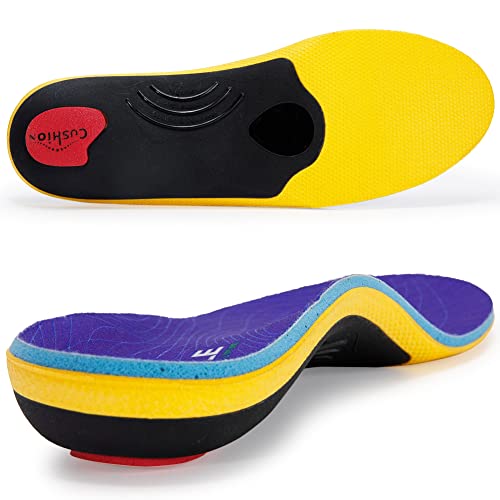
VALSOLE Heavy Duty 220+ lb High Arch Orthotics for Work Boots
More Details On Our Top Picks
The MUNA Plantar Fasciitis Arch Support Insoles take a focused approach to arch support rather than treating every foot the same. A semi-rigid arch shell limits excessive flattening, while the heel cup adds stability around the rear foot.
For someone dealing with morning heel discomfort or spending the day moving between sneakers and boots, that structured middle ground may feel more purposeful than a soft insert. Compared with the Aetrex L2200, MUNA places more emphasis on controlling arch movement rather than cushioning alone.
Where It Helps
- The semi-rigid shell supports the arch without the rigid feel associated with some prescription-style devices.
- A contoured heel cup helps stabilize the heel during standing and walking.
- Graduated cushioning adds comfort where your foot meets the shoe bed.
- No trimming is required, which simplifies daily use and shoe changes.
- The sizing works with boots, running shoes, and sneakers.
Trade Offs To Consider
- The structured arch profile may take a few wears to feel natural, particularly in thin shoes.
Feature Snapshot
Made For
Adults who want targeted arch control for plantar fasciitis discomfort and regularly alternate among sneakers, boots, and running shoes.
Swap It Out When
Aetrex L2200 Men’s Memory Foam Insoles may suit you better when soft cushioning matters more than a firmly guided arch.
Children’s feet change quickly, and a growing foot cannot simply inherit an adult insole without a close fit. WALKROFEET develops these inserts for younger users, with support centered on arch, heel, and ankle discomfort associated with mild to moderate pronation.
That child-specific angle sets it apart from the MUNA and PowerStep choices here, both of which are aimed primarily at adults. You may find this option more useful for school days, playground activity, or a child whose feet tire sooner than adults expect.
Noteworthy Benefits
- The design is intended for children’s smaller foot proportions rather than trimmed-down adult inserts.
- Its support profile addresses arches, heels, ankles, and forefoot discomfort in one insert.
- Children who stand, walk, or run frequently can use structured support throughout the day.
Practical Considerations
- Confirm the child’s shoe size and corresponding insole size before ordering.
- Adult orthotics can be unnecessarily bulky in children’s footwear.
- Persistent pain or unusual gait patterns deserve assessment by a qualified healthcare professional.
Who It Suits Best
Parents looking for a child-focused insert to support mild pronation, heel discomfort, or tired feet during regular school and activity.
Another Choice May Suit
PowerStep Original Full-Length Orthotics for Mild Pronation may be more appropriate for an older teen or adult needing a low-profile insert.
Cushioning and shock absorption drive the Aetrex L2200, making it a practical option for people who spend long periods standing or walking. Memory foam cushions the foot while a cupped heel steadies the rear of each step.
The L2200 also adds Aetrex arch support intended to encourage better mechanical alignment through the foot. That combination feels more accommodating than the MUNA’s semi-rigid shell, although the 0.25-inch profile takes up more room inside a shoe.
A Strong Showing
- Memory foam softens each step while maintaining a supportive insert shape.
- Poron material adds shock absorption for repeated heel strikes.
- The cupped heel cushions and stabilizes the rear foot.
- Arch support targets alignment through the lower limbs.
- The CopperGuard lining works with sneakers, flats, and heels.
Honest Caveats
- At 0.25 inches thick, the insert may leave less space in closely fitted shoes.
- Soft cushioning may not offer the same arch control as the MUNA design.
Quick Facts
Built With In Mind
Men who spend workdays walking or standing and want a soft, supportive insert suitable for several everyday shoe styles.
Where A Sibling Pick Shines
MUNA Plantar Fasciitis Arch Support Insoles offer firmer arch guidance for feet that need more control than cushioning.
Superfeet’s medium-arch profile suits feet that need moderate structure without the pronounced shape of a high-arch insert. The design is intended to stabilize the foot during active routines, from daily walking to travel-filled schedules.
Unlike the ready-sized MUNA, these insoles are trim-to-fit, giving you some control over their footprint inside shoes and boots. The listed range covers men’s sizes 9.5 to 11 and women’s sizes 10.5 to 12.
What Helps Most
- Medium arch support offers a balanced profile for everyday active use.
- Trim-to-fit construction allows adjustment for the available shoe space.
- The structured shape helps stabilize the foot during repetitive activity.
- Synthetic materials provide a practical base for frequent use.
Things To Weigh
- Trim the insole only after following the included fitting instructions.
- Medium support may feel less substantial than the VALSOLE high-arch profile.
At A Glance
The Right Fit
Active adults with medium arches who want adjustable support across walking shoes, casual shoes, or boots.
Look Elsewhere When
VALSOLE Heavy Duty 220+ lb High Arch Orthotics for Work Boots make more sense for heavier users needing pronounced support.
The PowerStep Original is built around a low-profile, full-length shape for athletic shoes, walking shoes, work shoes, and close-fitting dress styles. Its contoured neutral arch and deep heel cradle add support without the extreme height associated with some high-arch orthotics.
That makes it a sensible transition between the cushioned Aetrex L2200 and the more forceful VALSOLE option. The full coverage may feel more substantial underfoot, but its low profile makes it easier to accommodate in tighter footwear.
The Case For It
- The low profile fits more readily inside snug shoes.
- Full-length coverage extends support through the heel and forefoot.
- A contoured neutral arch provides structure for mild pronation.
- The deep heel cradle adds stability during standing and walking.
Points To Note
- Full-length coverage takes up more room than a shorter insert.
- The listed design targets mild pronation rather than pronounced support needs.
Best Suited To
Adults with mild pronation who need broad foot coverage in athletic, walking, work, or fitted casual shoes.
Reach For A Different Pick When
VALSOLE Heavy Duty 220+ lb High Arch Orthotics for Work Boots suit feet needing a more pronounced high-arch profile.
The VALSOLE Heavy Duty design is aimed at people weighing 220 pounds or more who need a pronounced high-arch profile. Its work-boot orientation suits demanding environments where standing, walking, and heavier body mass can make a softer insert feel less substantial.
Compared with Superfeet’s medium-arch model, the VALSOLE offers a stronger visual and design emphasis on high support. The trade-off is suitability: a pronounced profile may feel intrusive for someone with a lower arch or a narrow shoe.
Notable Gains
- The high-arch profile provides substantial structure for users who need it.
- The design is explicitly oriented toward people weighing 220 pounds or more.
- Work-boot compatibility suits demanding occupational settings.
- Shock-absorbing construction targets comfort through repeated steps.
Factors To Consider
- Confirm that a high-arch profile matches your foot shape before ordering.
- Check the shoe’s internal depth because substantial support can reduce available room.
Key Specs
Whose Shelf It Belongs On
Adults above the stated 220-pound threshold who stand or walk extensively and prefer pronounced high-arch support.
A Better Fit Elsewhere
Superfeet All-Purpose Medium Arch Insoles (Blue) offer a more moderate profile for active adults who do not need heavy-duty support.
What to Match to Your Foot Shape and Routine
Overpronation generally describes the foot rolling inward during movement, especially near push-off. The inward roll may be visible in your shoes or associated with arch and heel discomfort, but footwear alone cannot confirm the pattern. A podiatrist or physical therapist can assess your foot structure and gait when the cause is unclear.
Start With the Arch Profile
A medium arch insert gives moderate support, while a high-arch design creates a more pronounced upward contour. Low or neutral profiles suit feet that need less correction. MUNA offers a semi-rigid middle ground, PowerStep uses a contoured neutral arch, and Superfeet provides a trim-to-fit medium profile.
Consider Cushioning and Structure Together
Memory foam is designed to soften pressure, while Poron adds shock absorption beneath the heel and forefoot. These materials make the Aetrex L2200 appealing for long workdays. More rigid shells may control arch movement better, which is the reason to favor the MUNA design for focused plantar fascia support.
Check the Shoe Before the Insert
Full-length orthotics need adequate shoe depth, while a trim-to-fit model gives you more control over the final footprint. Boots and sneakers generally accommodate structured inserts more readily than close-fitting dress shoes. Check the removable insole, available depth, and the manufacturer’s sizing chart before choosing.
Match Support to Your Daily Workload
Teachers, nurses, warehouse staff, and anyone standing for hours may value cushioning and heel stability. Active walkers have different priorities, often favoring balanced support and shock absorption. High-impact routines require enough structure to remain comfortable without creating pressure under the arch.
Practical Checks Before You Order
Wrong Turns To Avoid
Do not choose an insert solely because the listing mentions overpronation. Confirm the arch profile, shoe compatibility, and intended activity first. Avoid trimming an insole before checking the fitting instructions, and do not assume more height means more support.
What Separates Premium From Basic
A higher-priced insert may use a more refined arch shape, layered cushioning, heel stabilization, or specialized sizing. Those additions matter for frequent wear, demanding work, or shoes that need precise adjustment. A basic low-profile insert can still make sense for occasional use in roomy footwear.
Frequently Asked Questions
What are orthotics for overpronation?
They are shoe inserts designed to add arch structure and support while your foot rolls inward. Their suitability depends on your foot shape, gait, and footwear.
Should overpronation insoles feel hard?
Not necessarily. Medium and semi-rigid designs provide structure, while cushioned models soften pressure around the support. Comfort depends on the arch profile and your footwear.
Can orthotics be used in work boots?
Yes, provided the insert fits inside the boot without bunching or crowding the toes. Full-length designs need more interior depth than shorter inserts.
Do I need prescription orthotics for overpronation?
Many over-the-counter options suit mild pronation, but persistent discomfort or an uncertain gait deserves professional assessment. A specialist can evaluate your feet and recommend an appropriate level of support.
Which arch support is best for walking all day?
Choose an insert that combines the arch profile your foot needs with enough cushioning for your typical day. The Aetrex L2200 favors cushioning, while MUNA provides firmer arch guidance.
Final Verdict
The MUNA pair stands out for focused arch control, while the Aetrex L2200 favors cushioning during long workdays. Superfeet serves medium-arch users who value adjustable sizing, PowerStep fits tighter shoes, WALKROFEET focuses on children, and VALSOLE addresses heavier users needing pronounced support. Match the profile to your feet and footwear rather than relying on a general label.
