

Your feet carry more than your body weight during a long shift, especially on concrete floors or while moving between workstations. The right orthotic adds support where you need it, fits your shoes properly, and remains comfortable through repeated hours of standing. These options suit retail workers, healthcare staff, warehouse employees, teachers, and anyone whose workday keeps them on their feet.
The Picks In Brief

Orthostride Full-Length Metatarsal Orthotic Insoles for Work
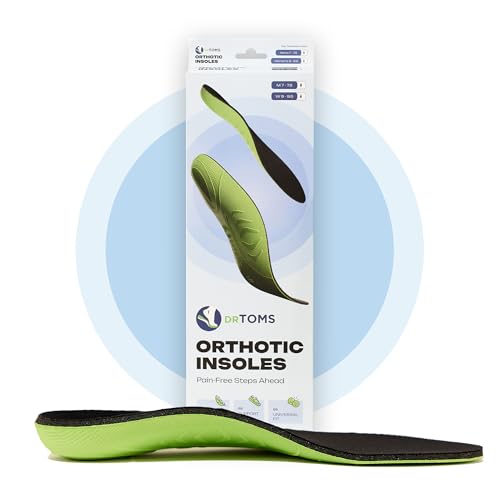
DRTOMS Women’s Orthotic Insoles with Soft Gel Heel, Size 7-7.5

Deepballfeet Metatarsalgia Insoles with Metatarsal Pad

Dr. Scholl’s Heavy-Duty Orthotics for Work Shoes, Men 9.5-10 / Women 10.5-11
Dr. Scholl’s Heavy-Duty Orthotics for Work Shoes, Men 6.5-7 / Women 7.5-8
Dr. Scholl’s Heavy-Duty Orthotics for Work Shoes, Men 7.5-8 / Women 8.5-9
Inside Each Recommended Option
Pressure beneath the ball of your foot can become distracting during a full day on hard flooring. The Orthostride design combines a metatarsal pad, which is a raised cushion positioned under the forefoot, with full-length arch support to distribute pressure across more of the foot.
Its deep U-shaped heel cup, a molded area that surrounds the heel, adds stability around the rear of the foot. The combination feels well suited to people who alternate between work boots and roomy sneakers, although the structured shape may take some getting used to.
Notable Upsides
- Targeted cushioning helps reduce pressure under the forefoot.
- The full-length insert supports the arch and heel together.
- PU foam adds shock absorption during repeated standing.
- Breathable fabric helps manage warmth through long shifts.
Trade Offs
- Roomy footwear gives the insert more space than narrow shoes.
- The molded structure may feel substantial during initial wear.
Quick Facts
Who It Suits Best
These insoles fit people who stand for hours in roomy work boots or athletic shoes and need combined forefoot, arch, and heel support.
Where Another Pick Suits Better
DRTOMS Women’s Orthotic Insoles with Soft Gel Heel suit women in size 7-7.5 who prioritize a softer heel cushion over broad forefoot support.
A soft landing can matter most after your workday has already placed repeated demands on your heels. DRTOMS places a gel-filled section beneath the heel, surrounded by a structured foam foundation that adds cushioning and support without the bulkier shape of some full-length orthotics.
Unlike the Orthostride model, which concentrates a metatarsal pad beneath the forefoot, this pair places its strongest feature at the rear of the foot. The removable design also makes it convenient to move between walking shoes, work shoes, and casual footwear.
What Makes Sense
- The gel heel provides soft cushioning where impact is greatest.
- Structured foam supports the arch while retaining cushioning.
- Easy insertion makes it practical for multiple pairs of shoes.
Practical Considerations
- This listing is limited to women’s size 7-7.5.
- Forefoot cushioning is less targeted than the Orthostride design.
- A close fit in the shoe matters more than cushioning alone.
Made For
These insoles suit women in size 7-7.5 who spend their day walking or standing and want a softer heel cushion with moderate arch support.
Consider Something Else When
Orthostride Full-Length Metatarsal Orthotic Insoles for Work make more sense for people whose discomfort centers on the ball of the foot.
Some insoles spread support across the entire foot, while this Deepballfeet model stays focused on the forefoot. Its metatarsal cushioning is positioned beneath the ball of the foot, with an arch-supporting shape intended to encourage more even weight distribution during walking and prolonged standing.
That narrow focus makes it a sensible choice for people whose discomfort feels concentrated beneath the forefoot rather than around the heel. You have two listed length options, so the product’s fit depends on choosing the correct C or D measurement for your foot.
The Upside
- Metatarsal cushioning targets the area beneath the forefoot.
- Arch support adds broader stability during standing tasks.
Details To Watch
- Option C measures 250mm and option D measures 262mm.
- Measure your foot before choosing between the listed lengths.
Right Fit For
This model suits adults whose main discomfort centers on the ball of the foot and who can match one of the two listed insole lengths.
A Better Fit Elsewhere
Orthostride Full-Length Metatarsal Orthotic Insoles for Work offer more support around the heel and arch for people who need coverage beyond the forefoot.
Work shoes and boots have little room to spare, so the fit of the insole becomes as important as its cushioning. This Dr. Scholl’s version provides full-foot coverage with an energy-returning cushioning design, arch support, and a heavier-duty structure aimed at people who spend substantial time on their feet.
This larger size variant serves men wearing 9.5-10 and women wearing 10.5-11. Compared with DRTOMS Women’s Orthotic Insoles with Soft Gel Heel, it covers more of the foot and leans toward work footwear rather than a removable heel-focused insert.
What Earns Its Place
- Full-length coverage supports the heel, arch, and forefoot.
- Energy-returning cushioning suits frequent standing tasks.
- The heavy-duty shape suits supportive work shoes and boots.
- The listed sizing serves larger-foot wearers.
- Arch support distributes support across the foot.
Worth Noting
- Remove the factory insole to preserve room inside the shoe.
Feature Snapshot
Built With In Mind
This variant suits men in size 9.5-10 and women in size 10.5-11 who need full-length support for demanding work footwear.
Another Choice May Suit
DRTOMS Women’s Orthotic Insoles with Soft Gel Heel suit smaller size 7-7.5 wearers who want a removable insole with a gentler heel cushion.
Smaller work shoes do not automatically need a less substantial insole, but physical space can become the deciding factor. This Dr. Scholl’s size option pairs full-foot coverage with energy-returning cushioning and arch support for men wearing 6.5-7 and women wearing 7.5-8.
It shares the same heavy-duty design as the larger Dr. Scholl’s variants, so the difference comes down to size selection rather than a different support layout. For people in this range, the fit should be checked inside the work shoe to avoid crowding the toe box.
Where It Excels
- Full-length coverage supports the arch and surrounding foot areas.
- Energy-returning cushioning suits repeated standing and walking.
- The support level works well inside structured work footwear.
Small Caveats
- The heavy-duty construction needs adequate shoe volume.
- Choose this size only after comparing it with your shoe’s insole.
Who Will Love This
This option suits men in size 6.5-7 and women in size 7.5-8 who wear supportive work shoes and want full-length cushioning.
Reach For A Different Pick When
Dr. Scholl’s Heavy-Duty Orthotics for Work Shoes in Men 9.5-10 and Women 10.5-11 fit people who need the same design in larger sizes.
Warehouse aisles, workshop floors, and stockrooms combine hard surfaces with hours of repeated walking. This Dr. Scholl’s size option brings full-length support, energy-returning cushioning, and arch support to men wearing 7.5-8 and women wearing 8.5-9.
Compared with the smaller Dr. Scholl’s version, it covers the same foot length range as the largest variant for people between those sizes. The heavy-duty design feels more purposeful than the DRTOMS model when your work shoes need structured support from heel to toe.
Positive Points
- Full-foot support suits demanding work environments.
- Cushioning returns energy as you move through a shift.
- Arch support adds stability across the middle of the foot.
- The mid-range sizing covers common men’s and women’s sizes.
Possible Compromises
- Full-length inserts need more room than slim heel cushions.
- Loose footwear can compromise the insole’s position.
Core Details
The Right Fit
This variant suits men in size 7.5-8 and women in size 8.5-9 who work in structured footwear and need substantial full-length support.
Swap It Out When
Deepballfeet Metatarsalgia Insoles with Metatarsal Pad suit people who need a smaller, more focused forefoot cushion rather than broad work-shoe coverage.
What Matters Before You Choose Your Orthotics
Match the Insole to Your Work Shoes
The insole must fit inside the footwear without lifting, bunching, or crowding your toes. Full-length models need enough shoe volume, while a heel-focused insert may suit dress shoes or roomy sneakers with less interior space. Compare the removable factory insole with the replacement to judge available room.
Identify Where You Carry Pressure
A metatarsal pad cushions the area beneath the ball of the foot, while an arch support targets the middle of the foot. Heel-focused cushioning suits people who feel more pressure after walking or standing in stiff shoes. Choose the area that matches your discomfort rather than adding support everywhere.
Consider the Workday and Material
Foam inserts tend to provide straightforward cushioning, while gel sections add localized softness and structured frames provide firmer support. Workers who move constantly may appreciate a responsive full-length design, while people stationed at one station can prioritize comfort across the heel and forefoot. Your typical footwear and floor surface deserve equal consideration.
Making a Supportive Choice Without Overcomplicating It
Mistakes Worth Dodging
Ignoring the original insole can make a shoe feel crowded, while judging support by arch shape alone overlooks heel and forefoot pressure. Choose the listed size carefully and give a new insole time to feel natural in your actual work shoes.
What Separates Premium From Basic
Higher-tier inserts often add more layers of cushioning, structured heel support, or full-length coverage. Those additions suit people with demanding shifts, heavier body weights, or supportive footwear, while a focused metatarsal or gel-heel design can be enough for lighter-duty use.
Frequently Asked Questions for Orthotics For Standing All Day
How long should new orthotics take to feel comfortable?
Allow your feet several shifts to adjust, especially when the insert includes a molded heel cup or firm arch structure. Start with shorter wearing periods and increase the time as the fit becomes more familiar.
Should orthotics fit snugly inside work shoes?
The insert should sit flat without shifting or creating pressure points. A snug fit helps keep the support aligned with your foot while leaving enough room around the toes.
Do metatarsal pads help with standing discomfort?
Metatarsal pads cushion the ball of the foot and spread pressure across a broader area. They are most relevant when discomfort centers on the forefoot rather than the heel or arch.
Can one insole work in both work boots and sneakers?
Only when both shoes have enough internal room and a similar shape. Full-length designs need more space, so checking the fit in every pair matters during a long workday.
When should persistent foot discomfort be assessed by a professional?
Persistent discomfort, swelling, or changes in walking should be discussed with a qualified healthcare professional. An orthotic may add comfort, but it should not replace an assessment of ongoing symptoms.
Final Verdict
Start with the area that needs support most, then confirm that the insole fits your work shoes. Orthostride leads for balanced forefoot and heel coverage, DRTOMS offers softer heel cushioning, and the Dr. Scholl’s options provide full-length support across three size ranges. Choose the design that feels natural in your actual footwear and suits your daily workload.
