

A full day in work boots can leave your feet rolling inward, aching around the arch, or feeling unstable by the afternoon. Overpronation means the foot turns inward more than a neutral gait during movement, though several foot problems can produce similar symptoms. These insoles offer different levels of arch control, cushioning, and shoe compatibility, making them useful options for workdays, walking, running, and everyday wear.
A Quick View Of The Lineup

MUNA Relief Plantar Insoles

Gviipk Lightweight Foot Insoles

Cadence Orange Orthotic Insoles
Superfeet Easyfit Insoles

PowerStep Pulse Performance Insole
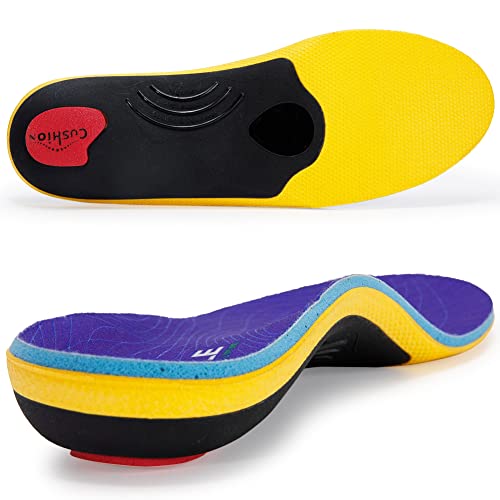
VALSOLE Heavy Duty Plantar Fasciitis Orthotics for High Arches, Flat Feet, and Work Boots
The Strengths Of Each Pick
The MUNA Relief Insole takes a focused approach to the plantar fascia, the band of tissue running along the bottom of the foot. Its semi-rigid arch shell resists excessive flattening without feeling like a completely rigid orthotic, while the heel cup adds stability around the rear of the foot. That combination makes more sense for heel discomfort than adding a thin cushion to an otherwise unstructured insert.
You may find this pair especially practical for active adults who alternate among boots, running shoes, and sneakers. The insole comes sized without trimming, and its arch shape, heel cup, and cushioning work together to distribute support across each step. People who need firmer control will appreciate the structure, while those wanting maximum softness may find it too substantial.
Benefits That Matter
- A semi-rigid arch shell limits excessive arch flattening during long periods of standing.
- The heel cup helps keep the foot centered rather than drifting outward.
- No trimming is required, making the fit easier to compare with your shoe size.
- One design works across boots, running shoes, and sneakers.
Points To Note
- The structured support may feel firmer than the lightweight Gviipk option listed later.
- Check the available size carefully because these insoles are not designed to be cut down.
Quick Facts
Built With In Mind
This insole suits adults seeking focused plantar fascia support across work shoes and sneakers without modifying the insole.
A Better Fit Elsewhere
Choose Gviipk Lightweight Foot Insoles instead when a thinner profile and trim lines matter more than a semi-rigid arch shell.
Gviipk Lightweight Foot Insoles favor a slim construction over the pronounced arch shell used by MUNA Relief Plantar Insoles. A three-point support layout and U-shaped heel cup create a stable base, while thinner foam keeps the insert from taking up excessive room. That profile can be useful in walking shoes, sneakers, work boots, and hiking shoes where internal volume is limited.
For teachers, retail staff, warehouse workers, and anyone spending hours upright, the heel and forefoot cushioning zones help soften repeated landings. Trim lines let you shorten the front for a closer shoe fit, and the design accommodates flat, neutral, and high arches. You may find the lighter construction less noticeable than a rigid insert, though it provides less pronounced structure for severe inward rolling.
Positive Points
- Thin foam makes the insert easier to fit in close-fitting casual shoes.
- Three-point support and a heel cup keep the foot from feeling unsupported.
- Separate heel and forefoot cushioning areas soften both landing and push-off.
- Front trim lines allow adjustment for different shoe lengths.
Small Caveats
- You give up the firmer semi-rigid shell offered by MUNA Relief Plantar Insoles.
- Trimming changes the original length, so keep a second pair uncut while checking the fit.
Feature Snapshot
Made For
This option fits people who stand or walk for hours and want structured support in a relatively slim insert.
Another Choice May Suit
MUNA Relief Plantar Insoles better suit you when stronger semi-rigid support takes priority over a lightweight, trimmable profile.
Cadence Orange Orthotic Insoles use a semi-rigid platform rather than the thinner foam construction found in Gviipk Lightweight Foot Insoles. The defining feature is a cushioned heel area, called a comfort zone, that softens initial impact while preserving rear-foot stability. Foam that conforms to the foot gives the insert a more adaptive feel from heel to toe.
This balance works well for long shifts, daily errands, or walks where you want more structure without an aggressive rigid feel. The listed option fits men’s sizes 9.5 to 10.5 and women’s sizes 10.5 to 11.5, so size availability is an important check. You may find this firmer and more substantial than a casual cushion insert, but less rigid-feeling than the dedicated MUNA Relief Insole.
Bright Spots
- The heel comfort zone cushions impact without abandoning rear-foot support.
- Conforming foam improves the contact feeling through the midfoot and forefoot.
- Semi-rigid support suits everyday shoes better than specialized running equipment.
Worth Noting
- Confirm the listed size range before ordering, especially for split sizes or different shoe styles.
- The structured feel may not appeal to you if your priority is an extremely thin insert.
Core Details
Right Fit For
Cadence fits adults seeking semi-rigid support and a cushioned heel for ordinary daily shoes.
Swap It Out When
Superfeet Easyfit Insoles suit you better when a women’s-specific shape and microsuede surface fit your preferred low-profile shoes.
Superfeet Easyfit Insoles focus on women’s footwear rather than the broader unisex positioning used by several other options. The women’s-specific shape supports the arch and stabilizes the foot, while a plush microsuede top creates a softer contact surface. It appears especially relevant for everyday flats and boots with heels around one inch or less.
Compared with Cadence Orange Orthotic Insoles, the main difference here is the combination of a women’s-specific last and soft upper surface. That combination can make the insole feel more natural in dress shoes and casual boots, particularly during commutes or long periods of walking. The listed size is women’s 6.5 through 8, which narrows the fit considerably.
Strengths Worth Knowing
- The women’s-specific shape better matches the proportions of the listed shoe size.
- Plush microsuede adds a soft surface against the foot.
- Arch support and stabilization suit casual flats and low-heeled boots.
Less Ideal Details
- The listed women’s 6.5 to 8 size range requires a careful size check.
- Boots with heels substantially higher than one inch fall outside the stated use.
Who Will Love This
This insole suits women wearing flats or low-heeled boots who prefer a soft surface with structured arch support.
Look Elsewhere When
PowerStep Pulse Performance Insole offers a better match for runners needing full-length neutral-arch support and dual-layer cushioning.
The PowerStep Pulse Performance Insole takes a full-contact approach, meaning its support covers the entire length of the foot. A firm but flexible arch supports a neutral foot shape, while dual-layer foam manages impact during running and other active movement. Unlike Gviipk’s broad arch-type range, this listing is specifically marked for a neutral arch.
Full-length coverage makes it useful for running shoes and other roomier footwear, and the fabric surface is designed to manage heat, friction, and perspiration. The listed size fits men’s 10 to 10.5 or women’s size 12. You may find the full-foot profile too substantial for a narrow dress shoe, but it gives active users a more complete support platform.
Reasons It Performs
- Full-length support creates a broader platform than a heel-and-heel insert.
- Dual-layer foam balances cushioning with support during active movement.
- The neutral-arch design suits feet that do not need high or low arch positioning.
- Heat- and moisture-conscious fabric suits longer running sessions.
Practical Considerations
- The full-length shape may take more room than the Gviipk Lightweight Foot Insoles.
- Confirm the unusual cross-gender size options before ordering.
Technical Highlights
The Right Fit
This insole best fits runners and active adults with neutral arches who have room for a full-length insert.
Where A Sibling Pick Shines
Gviipk Lightweight Foot Insoles are the better choice for close-fitting shoes where a slim, trimmable profile matters most.
VALSOLE Heavy Duty Plantar Fasciitis Orthotics are built around substantial support rather than a lightweight casual insert. Their listing targets people over 220 pounds, high arches, and flat feet, with specific positioning for work boots. The stated goal is shock absorption through a heavier-duty construction suited to demanding shifts and prolonged standing.
Compared with MUNA Relief Plantar Insoles, the central difference is the intended environment: VALSOLE emphasizes work boots and heavier body weight, while MUNA offers a no-trim design for boots, running shoes, and sneakers. You may find the substantial profile more supportive in a roomy work shoe, though it may take more space than a thin insert in lighter footwear.
What Pays Off
- Heavy-duty construction targets demanding work environments.
- The design addresses both high-arch and flat-foot support needs.
- Work-boot positioning suits jobs involving extended standing and walking.
Possible Compromises
- The robust profile may feel too substantial in narrow or low-volume shoes.
- The weight range of 220 pounds or more makes this a narrower fit than the general options.
Who Should Grab It
This orthotic suits heavier adults who spend substantial time in work boots and need more substantial support.
Reach For A Different Pick When
Superfeet Easyfit Insoles suit you better for women’s flats and low-heeled boots with a softer microsuede surface.
Matching Support To Your Foot And Routine
Start With The Movement Pattern
Overpronation describes inward rolling during a step, but arch shape alone does not confirm it. Watch how your foot lands and moves in the shoes you wear most, and note whether discomfort appears in the arch, heel, forefoot, or knee. Persistent pain or an unusual gait deserves an evaluation by an appropriate specialist doctor.
Match Support To The Shoe
A slim insole can work better in a close-fitting casual shoe, while a full-length or heavy-duty design suits roomier footwear. MUNA Relief Plantar Insoles require no trimming, and Gviipk Lightweight Foot Insoles include front trim lines, so your sizing decision can change the final fit. Check the toe room, heel depth, and insole opening before ordering.
Consider The Workday
Your daily routine determines the practical priority. Teachers, retail workers, and warehouse staff may value cushioning and support that remain comfortable through long standing shifts, while runners may prioritize a full-length neutral-arch platform. The MUNA and VALSOLE options are better suited to structured environments, whereas Gviipk and Superfeet address lighter footwear.
Compare Structure With Flexibility
Semi-rigid support can limit excessive arch flattening, but it may also feel more substantial than a soft insert. Gviipk’s thinner construction takes less room, Cadence combines semi-rigid support with a cushioned heel, and PowerStep uses a firm but flexible neutral arch. Choose based on shoe volume, comfort preference, and the amount of inward rolling you experience.
Common Mistakes And Premium Differences
Mistakes Worth Dodging
Do not select an insole solely because it says “orthotic,” since support type and shoe fit matter just as much. Measure your shoes and confirm the listed size, particularly for split sizes. Avoid trimming an insole unless the manufacturer provides trim lines, and give a new insert time to settle into your footwear before judging the fit.
What Separates Premium From Basic
The main difference is the amount of engineered support and cushioning built into the insert. Semi-rigid shells, shaped heel cups, full-length profiles, and layered foam may suit demanding routines better, while simpler options often prioritize lightness. Pay for a higher-tier design only when its specific construction matches your work schedule, footwear, and support needs.
Frequently Asked Questions
How Do I Know Which Arch Support I Need?
Watch your foot movement and compare how your shoes wear, since visible inward rolling and heel comfort offer useful clues. A specialist doctor can evaluate persistent discomfort or an uncertain gait.
Can Overpronation Insoles Fit Dress Shoes?
Dress shoes with tight interiors favor slim, low-profile inserts such as Gviipk Lightweight Foot Insoles. Full-length and heavy-duty options need more room inside the shoe.
Do All These Insoles Need Trimming?
No, and trimming the wrong one may alter its intended support. Gviipk Lightweight Foot Insoles include front trim lines, while MUNA Relief Plantar Insoles are designed to remain uncut.
Will These Insoles Permanently Change My Foot Movement?
These inserts support your feet while you wear them, but they do not permanently change your gait. Consistent use and an appropriate diagnosis remain more useful than expecting one pair to rewrite your movement.
Should I Wear Overpronation Insoles in Every Shoe?
No, match the insole to the shoe and your activity level. A supportive work-boot insert may be excessive in house shoes, while a lightweight insert may disappear beneath a roomy boot.
Final Verdict
The MUNA Relief Insole makes the strongest case for focused plantar fascia support, while Gviipk serves people who prioritize a thin, adjustable profile. PowerStep suits active schedules, Superfeet targets women’s casual footwear, Cadence balances support with heel cushioning, and VALSOLE addresses heavier-duty work-boot use. Match the construction to your shoes, routine, and comfort preferences rather than choosing on appearance alone.
