

A wall outlet can become inconvenient the moment your CPAP machine, phone, and travel gear need power in a hotel room, campsite, or during an outage. You need enough energy for your machine’s actual draw, the right connection, and a battery you can recharge without adding another complicated device. Dedicated CPAP packs offer simpler setup, while general power stations handle more electronics but demand closer attention to voltage and output.
A Snapshot Of The Selections

EnginStar R300 296Wh Power Station
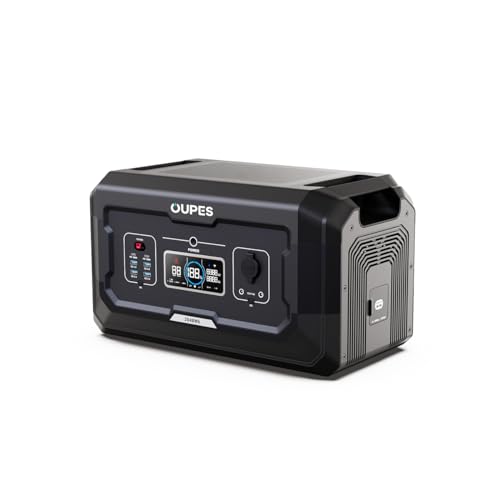
OUPES B2 2048Wh LiFePO4 Expansion Battery for Mega 1/2/3

EASYLONGER ES960 297.6Wh CPAP Backup

EASYLONGER ES960 PRO 297.6Wh CPAP Backup

EASYLONGER ES400 AIR 148Wh CPAP Battery

GENSROCK 300W Pure Sine Power Station
The Strengths Of Each Pick
Power outages rarely arrive with an empty phone, so the EnginStar R300 makes more sense than a narrowly dedicated pack when several devices need attention. Its 296Wh capacity stores energy measured in watt-hours, while the 300W alternating-current output covers a CPAP machine as long as its operating power stays below that limit.
At 9 by 5.5 by 7.5 inches and 6.5 pounds, it is easier to move than the much larger OUPES B2. Pure sine-wave output means the current has a smoother waveform than modified sine-wave power, which can be friendlier to sensitive electronics, though connector and voltage checks remain essential.
The Upside
- Two 110V AC outlets support household-style devices without a separate inverter.
- USB-C, USB-A, and regulated 12V or 24V outputs handle phones, cameras, and smaller electronics.
- Wall, car, and compatible solar-panel charging provide useful recharging options during travel.
- The lithium-ion battery is rated for more than 1,000 charge cycles.
Worth Noting
- A solar panel is not included, so off-grid recharging requires separate equipment.
- Your CPAP’s power requirements and connection must fit both its operating demand and the available output.
Quick Facts
Built With In Mind
You benefit most from this station when your CPAP, phone, and laptop need one shared source of power away from a wall outlet.
Where Another Pick Suits Better
The EASYLONGER ES960 is a simpler choice for anyone who wants CPAP-focused connections and multi-night operation without powering several other devices.
The OUPES B2 takes a different approach from the stand-alone EnginStar R300 by adding 2,048Wh of battery capacity to an existing Mega 1, 2, or 3 system. Lithium iron phosphate, abbreviated LiFePO4, uses a different battery chemistry that is rated here for more than 3,500 cycles while retaining 80% of capacity.
That scale suits an RV, home outage, or off-grid setup where a CPAP represents only one part of the electrical load. Ten outputs and app control make the B2 more versatile, although the 41.8-pound weight keeps it closer to a stationary power system than a bedside companion.
Points In Its Favor
- Expands a compatible Mega system for substantially greater runtime.
- Supports up to 2100W solar input through an Anderson connection.
- WiFi and Bluetooth app access handle status, outputs, and firmware updates.
- Two 100W USB-C ports support higher-demand USB-C equipment.
- Stackable construction expands neatly with other compatible B2 units.
Possible Compromises
- You need a compatible Mega power station because the B2 is an expansion battery.
- Its 41.8-pound weight and large capacity make it impractical for a compact overnight bag.
- CPAP compatibility still depends on matching its required voltage and connection.
Feature Overview
The Right Fit
You benefit most from the B2 when you already own a compatible Mega station and need to power a CPAP alongside household, RV, or outdoor equipment.
Reach For A Different Pick When
The GENSROCK 300W Pure Sine Power Station is more practical for a lightweight camping trip where a CPAP and several small devices are the only priorities.
For a traveler who needs one dependable reserve for the CPAP machine and little else, the EASYLONGER ES960 removes much of the guesswork. Its 297.6Wh LiFePO4 battery is designed to support more than two nights of operation without a humidifier or heated tube, although actual runtime changes with machine settings.
Four cables cover listed ResMed, Philips DreamStation, and Luna G3 setups, making the ES960 more focused than a general power station. Compared with the EnginStar R300, it offers CPAP-oriented convenience but gives up the broader collection of household outputs.
Advantages To Know
- Multi-night capacity reduces the need to recharge after one evening.
- LiFePO4 chemistry supports a long cycle-life rating.
- Included cables simplify connections across several common CPAP families.
Practical Considerations
- Heated tubes are not supported, and the humidifier must remain off for the stated multi-night use.
- Its 297.6Wh capacity exceeds the common 160Wh airline battery limit, so you’ll need to check applicable travel rules.
Who Will Love This
You benefit most from the ES960 when traveling with a compatible CPAP setup that runs without heated-tube support and you want several nights of reserve.
Swap It Out When
The EASYLONGER ES400 AIR is a lighter alternative for a single-night trip where carrying extra capacity adds little value.
The ES960 PRO extends the ES960’s multi-night concept with a broader range of supported outputs and a memory function. Its 12V, 19V, and 24V options are useful because CPAP families do not all use the same connection, while 297.6Wh of LiFePO4 capacity supports more than two nights without the humidifier or heated tube.
That makes it a sensible fit for someone moving between compatible ResMed, Philips DreamStation, and Luna TravelPAP equipment. The trade-off is that it remains a CPAP-focused battery rather than a general camping station, so the included 297.6Wh rating should also be checked against airline restrictions.
Noteworthy Benefits
- Three output voltages cover a broader range of listed CPAP equipment.
- Multi-night capacity supports extended use without a humidifier or heated tube.
- Memory function recalls a previous setup for simpler repeated operation.
- Four cables reduce the need to carry separate leads for supported machines.
Things To Consider
- Heated-tube operation remains outside the stated multi-night configuration.
- The 297.6Wh rating sits above the common 160Wh airline limit.
Core Details
Best Suited To
You benefit most from the ES960 PRO when your supported CPAP equipment uses different voltage requirements across trips or household use.
A Better Fit Elsewhere
The GENSROCK 300W Pure Sine Power Station serves travelers better when the CPAP must share power with cameras, laptops, and other camping electronics.
Carrying a large battery can undermine the point of traveling light, so the EASYLONGER ES400 AIR offers a more restrained 148Wh reserve. Its stated target is a full night of CPAP use for portable machines, with shorter runtime once a humidifier or heater raises the power draw.
Pass-through charging lets the CPAP operate while the battery itself recharges, a useful feature for longer stays where wall power returns intermittently. Four cables support listed ResMed, Philips DreamStation, and Luna G3 machines, though heated tubes are not supported.
Well-Handled Touches
- Smaller capacity suits a one-night reserve more naturally than a multi-night pack.
- Pass-through charging supports continued CPAP use while the battery recharges.
- Four cables cover several common CPAP families.
Small Caveats
- Runtime falls with a humidifier, heater, or higher machine settings.
- Heated tubes are not supported by the listed configuration.
- Your exact CPAP model and connection still need to match the included leads.
Whose Shelf It Belongs On
You benefit most from the ES400 AIR when you need a simple overnight reserve and prefer a smaller pack to a multi-night unit.
Another Choice May Suit
The EASYLONGER ES960 fits travelers better who need more than one night of battery-powered operation away from an outlet.
The GENSROCK 300W Pure Sine Power Station sits between a dedicated CPAP pack and a large home backup system. Its 222Wh battery and 5.5-pound weight make it manageable for camping, while eight outputs let you charge a CPAP alongside smaller devices instead of dedicating the entire reserve to one machine.
The folding handle supports portability, and the 300W pure sine-wave output provides a stable AC option. Compared with the EnginStar R300, it is lighter but offers less stored energy; compared with the OUPES B2, it is far easier to carry but nowhere near as expandable.
Notable Gains
- A 5.5-pound weight keeps the station practical for camping and road trips.
- Eight outputs support several small electronics at once.
- Pure sine-wave AC suits sensitive electronic equipment.
- The folding handle improves handling during travel.
- 222Wh provides a practical reserve for lower-power devices.
Details To Watch
- The listed output count does not identify a dedicated CPAP connector, so check the port types carefully.
- Its capacity is below the 296Wh and 297.6Wh offered by the EnginStar and ES960 models.
At A Glance
Made For
You benefit most from this station when your CPAP travels alongside several smaller electronics and you need more flexibility than a dedicated battery provides.
Look Elsewhere When
The EASYLONGER ES400 AIR is a better fit when your main priority is a compact, CPAP-specific connection for a single night.
What To Prioritize Before You Buy
Start With Runtime Needs
A CPAP without a humidifier usually places a different demand on a battery than a setup with heated tubing or a larger power supply. Start with the number of nights you need to cover, then reduce that target for frequent wall access or travel days where you can recharge.
Match The Connection And Voltage
Dedicated CPAP packs usually include cables for named device families, while general power stations offer broader ports without necessarily including the right lead. Compare your machine’s power requirements, connector, and voltage with every output before packing it.
Account For Recharging And Carrying
Consider the location of your next outlet and the size of your luggage at the same time. A multi-night battery is valuable for remote trips, while a compact 148Wh pack may be enough for a single overnight stay.
Avoiding Costly Category Mistakes
Wrong Turns To Avoid
Do not compare watt-hours and watts as though they measure the same thing; one describes stored energy and the other describes power delivery. Check the CPAP’s power draw, humidifier configuration, connection, and airline limits before choosing a capacity.
What Separates Premium From Basic
A higher-capacity battery earns its place when you need multiple nights, several devices, or fewer opportunities to recharge. A smaller dedicated pack makes more sense for one-night trips where carrying extra weight would be inconvenient.
Frequently Asked Questions
Can A Portable Power Station Run A CPAP Machine?
Yes, provided its output matches the machine’s voltage, connector, and operating power. General power stations need the right adapter, while dedicated packs often include the necessary cables.
Which Option Supports More Than Two Nights?
The EASYLONGER ES960 and ES960 PRO each have 297.6Wh of capacity and support more than two nights without a humidifier or heated tube. Runtime still varies with the machine and its settings.
Can I Take The ES960 On A Plane?
The ES960’s 297.6Wh capacity exceeds the common 160Wh airline limit for spare lithium batteries. You’ll need to follow the applicable rules for your itinerary and packing method.
Do These Batteries Support Heated Tubes?
The listed ES960, ES960 PRO, and ES400 AIR configurations do not support heated tubes. Operating with heated tubing or a humidifier can also reduce battery runtime.
Should I Choose A Dedicated Pack Or General Power Station?
Choose a dedicated pack for straightforward CPAP connections and fewer devices to charge. Choose a general power station for phones, laptops, cameras, and other equipment, provided you match the CPAP to an available output.
Closing Remarks
The EASYLONGER ES400 AIR suits a lightweight one-night setup, while the ES960 and ES960 PRO provide more reserve for extended travel. For a broader mix of electronics, the EnginStar R300 or GENSROCK 300W offers more flexible outputs, and the OUPES B2 serves larger off-grid systems. Your machine’s power needs and the length of your trip should make the final call.
