

A blood pressure monitor earns its place on the counter when it makes a routine check easier, stores useful history, and fits the person taking the reading. Portable models suit travel, shared homes, and anyone who wants more flexibility than a fixed bathroom setup. These seven options cover priorities ranging from simple one-button operation to app-based tracking and family memory.
The Essentials At A Glance
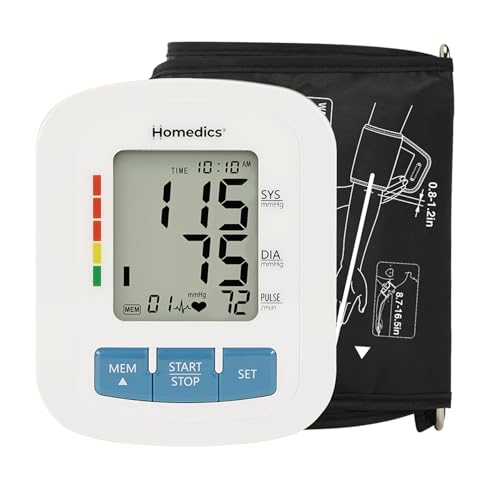
Homedics 300 Series Monitor

Arboleaf No-Wrap Arm-In Monitor

Medline Plus Elite Digital Monitor

Wellue BP2A Bluetooth Monitor
Checkme Bluetooth BP Machine, Black

Checkme Bluetooth BP Machine, Green

Checkme BP2A Bluetooth Upper Arm Monitor
More Details On Our Top Picks
A home check becomes less of a production when the cuff settles into place, the monitor guides you through inflation, and one button starts the process. The Homedics 300 Series takes a practical approach with automatic measurement during inflation, plus a warning when body movement is excessive.
That combination suits someone settling into a morning routine or checking after a busy day. The movement alert gives you a chance to reposition and repeat an unsettled reading, while the large display and one-touch operation keep the device approachable. Its local memory also reduces the need to keep a handwritten log.
Notable Upsides
- Automatic inflation and deflation simplify a daily check.
- The movement detector helps identify a reading disturbed by talking or shifting.
- One-touch operation suits first-time monitor users.
- Storing 60 readings and showing a three-reading average makes trends easier to follow.
Practical Considerations
- The 60-reading memory is assigned to one user, so separate household profiles will not be retained.
- Check that your arm fits the included cuff comfortably before making it a routine device.
Feature Snapshot
Who It Suits Best
This monitor fits an adult who wants a straightforward upper-arm device with local trends and helpful movement prompts.
Where Another Pick Suits Better
The Arboleaf No-Wrap Arm-In Monitor serves shared households better with four separate user profiles and up to 199 readings per person.
The arm-in layout changes the familiar cuff routine. You slide your arm into a built-in barrel, rest your elbow, and press Start instead of wrapping a loose cuff around your upper arm. That reduces placement guesswork, which can be particularly helpful for older adults and people assisting a family member.
Unlike the single-user Homedics 300 Series, this monitor separates records for four people and holds up to 199 readings under each profile. The stated accuracy specification of plus or minus 3 mmHg and the 8.7-to-15.7-inch arm range make it a practical fit for many adults sharing one device.
Points In Its Favor
- The barrel-style cuff simplifies positioning during daily checks.
- Four user profiles keep household readings separated.
- Each profile can retain up to 199 measurements.
- The large display presents pressure, pulse, averages, and a level bar.
- Irregular-heartbeat notifications add context without serving as a diagnosis.
Trade Offs
- There is no Bluetooth, app syncing, or cloud storage, so phone-based organization is unavailable.
- Arms outside the stated 8.7-to-15.7-inch range need a different cuff arrangement.
Quick Facts
Made For
This model is built for shared homes, caregivers, and anyone who values easy cuff placement over app-based records.
Consider Something Else When
The Checkme Bluetooth BP Machine, Black fits people who want phone compatibility and a rechargeable, travel-friendly form.
Having two cuff sizes changes the decision for households with more than one adult. The Medline Plus Elite includes an adult cuff for 8.6-to-11.8-inch arms and a large adult cuff for 11.5-to-16.5-inch arms, so you can select the closer fit instead of stretching one cuff across different sizes.
The carrying case and four AA batteries make it straightforward to move between rooms or pack the monitor for a trip. Compared with the Arboleaf No-Wrap Arm-In Monitor, its memory is smaller at 90 readings, but the included size range and portable case give it a different kind of household value.
Practical Advantages
- Two cuff sizes support a wider range of adult arm circumferences.
- The carrying case keeps the monitor and accessories together during travel.
- Memory for three users and 90 total readings helps organize household history.
- A colored scale beside the LCD makes result levels quicker to interpret.
Small Caveats
- Its 90-reading store is less expansive than the Arboleaf model’s 199 readings per user.
- Select the correct cuff size for comfortable placement; having both sizes does not make them interchangeable.
Core Details
Right Fit For
This monitor suits households that value two included cuff sizes, three user profiles, and a carrying case over extensive per-user memory.
Not Your Match When
The Medline Plus Elite Digital Monitor is less suitable than the Arboleaf No-Wrap Arm-In Monitor when long histories and easier cuff placement matter most.
A 30-second measurement target makes the Wellue BP2A appealing for a quick morning check. Its one-touch operation reduces the number of steps, while intelligent pressurization is designed to deliver consistent systolic and diastolic readings. Bluetooth support also gives the device a more connected starting point than a purely local monitor.
The listing describes the BP2A as clinically validated and cleared for home use, which gives you useful context when comparing its measurement positioning. The honest read is that this is a streamlined option for someone who wants speed and connectivity without the multi-profile storage found in the Arboleaf No-Wrap Arm-In Monitor.
Notable Gains
- One-touch operation keeps the daily sequence short.
- The stated 30-second measurement target fits a fast morning routine.
- Bluetooth connectivity supports a more connected monitoring setup.
Points To Note
- Upper-arm fit remains the practical check to make before relying on a consistent routine.
Who Will Love This
This monitor suits an adult who values a quick, simple workflow and wants Bluetooth in a home blood pressure device.
Look Elsewhere When
The Checkme BP2A Bluetooth Upper Arm Monitor may suit you better when an OLED screen and a 22-to-42-centimeter cuff range are priorities.

Rechargeable power and a phone-like size give the black Checkme model a clear travel advantage. A full charge is stated to last up to three months, so you can keep it in a drawer, suitcase, or overnight bag without replacing batteries every few weeks.
Bluetooth also opens the door to app-based history for iOS and Android phones, while built-in storage lets you review past readings directly on the device. That combination is more flexible than a monitor that stores history only on the unit, although the exact appeal depends on how consistently you use the paired phone.
Reasons It Performs
- A stated three-month charge reduces battery replacement frequency.
- Compact dimensions make packing and daily storage easier.
- App support suits people who prefer phone-based history.
- Built-in storage provides a local way to review prior readings.
Details To Watch
- Recharge the device before a long trip rather than relying on a last-minute top-up.
- Bluetooth convenience depends on having a compatible phone nearby for app use.
Technical Highlights
Built With In Mind
This model fits a traveler or commuter who wants rechargeable power, compact storage, and app-enabled history in one device.
A Better Fit Elsewhere
The Medline Plus Elite Digital Monitor is a better fit for household use because it includes two cuff sizes, three user profiles, and a carrying case.
The green Checkme model centers on a wide adjustable cuff that fits arms from 22 to 42 centimeters, or roughly 8.6 to 16.5 inches. That range covers standard through large adult arms, making cuff fit easier to assess before a purchase, particularly in a home with more than one adult.
One-button measurement takes about 30 seconds according to the listing, and historical information can be reviewed on the machine. Bluetooth connects the readings with a multi-user app for iOS and Android. Compared with the black Checkme Bluetooth BP Machine, the emphasis shifts from compact rechargeable travel toward a broader cuff and family-oriented app workflow.
The Case For It
- The 22-to-42-centimeter cuff supports a broad adult arm range.
- Multi-user app organization suits shared household tracking.
- Local history provides access to previous readings without opening the app.
Factors To Consider
- Measure your upper arm and compare it with the stated cuff range before ordering.
- Phone-based organization is most useful for people who consistently use the paired app.
The Right Fit
This monitor suits families who want adjustable cuff coverage and multi-user app tracking in a home setup.
Another Choice May Suit
The Arboleaf No-Wrap Arm-In Monitor fits households that prioritize easier cuff placement and separate monitor-side profiles for four people.
The OLED display gives the Checkme BP2A a cleaner visual presentation than a standard segmented screen. Its high-contrast output makes the numbers easier to scan during a quick check, while the adjustable cuff covers arms from 8.6 to 16.5 inches, or 22 to 42 centimeters.
Bluetooth pairs the monitor with iOS and Android apps, creating a convenient route to review readings over time. The stated 30-second measurement and one-button sequence keep daily use brief, so the connected features do not add much friction. Compared with the Wellue BP2A Bluetooth Monitor, the visible OLED display is the most obvious design distinction.
Positive Takeaways
- The OLED display improves result visibility.
- The broad cuff range accommodates standard through large adult arms.
- One-button operation keeps the measurement sequence simple.
- App connectivity organizes readings on a compatible phone.
- The stated 30-second timing suits a fast routine.
Worth Bearing In Mind
- Confirm that your arm falls within the 22-to-42-centimeter cuff range before purchase.
At A Glance
Whose Shelf It Belongs On
This monitor belongs on the counter of a connected home that values a polished display, phone-based records, and a broad cuff range.
Reach For A Different Pick When
The Medline Plus Elite Digital Monitor is the stronger choice for households that prioritize two included cuff sizes and a physical carrying case.
What To Prioritize Before Buying A Portable Cuff
Start with cuff fit. An upper-arm monitor needs a cuff that sits securely without restricting your arm, and the stated arm range gives you a useful starting point. Measure your upper arm before ordering, especially when another household member will use the same device.
Next, decide where the readings will live. The Medline Plus Elite Digital Monitor keeps history on the unit, the Arboleaf No-Wrap Arm-In Monitor separates four user profiles, and the app-enabled Checkme options place more emphasis on phone-based records.
Think about setup as well as storage. The arm-in design simplifies placement, while conventional upper-arm cuffs require more attention to positioning. A rechargeable model is convenient for travel, while a carrying case and replaceable batteries may suit a fixed home routine.
Finally, look at the reading display and memory features that you will actually use. A large screen, a three-reading average, separate user profiles, and a motion alert serve different needs. The right combination is the one that supports your routine without adding features you will never open.
Common Mistakes To Avoid
A common mistake is choosing by display size while overlooking cuff fit. A clear screen cannot compensate for a cuff that is too small or placed incorrectly, so check the arm range first.
Another mistake is assuming every connected monitor stores information the same way. Some keep local histories, while others emphasize app records and multiple profiles, so compare how you want to organize readings.
What The Higher Tier Buys
Higher-tier models often add Bluetooth, app support, larger displays, rechargeable power, or more capable memory. Those features matter when you travel, share a device, or want a longer record of changing readings.
The extra capability earns its place only when you use it. A simple one-user monitor with reliable memory can serve a solo routine better than a more elaborate model whose connected features remain unused.
Frequently Asked Questions
What arm size should a portable blood pressure cuff fit?
Choose a cuff whose stated range includes your upper-arm circumference. The models here cover different ranges, from 8.7 inches on the Arboleaf monitor to 16.5 inches on the Medline Plus Elite and Checkme BP2A.
Is Bluetooth necessary for a portable blood pressure monitor?
Bluetooth is useful for organizing readings in a phone app, but it is not required for a device to take and display measurements. Models with local memory can support a straightforward routine without a paired phone.
Which model is easiest for a caregiver to position?
The Arboleaf No-Wrap Arm-In Monitor is designed around a barrel-style cuff that reduces wrapping and placement guesswork. Its separate user profiles also help distinguish records for several family members.
Can I use the same monitor for more than one person?
Some models support multiple profiles, including three users on the Medline Plus Elite and four on the Arboleaf No-Wrap Arm-In Monitor. Always select the correct profile before taking a reading.
What should I do with an irregular-heartbeat notification?
Treat the alert as information rather than a diagnosis, and remain calm during the measurement. Repeat the check with proper cuff placement and discuss persistent notifications with your healthcare professional.
Final Verdict
The Homedics 300 Series Monitor offers the most balanced everyday setup, while the Arboleaf No-Wrap Arm-In Monitor stands out for simple placement and family profiles. App-centered travelers may prefer the rechargeable Checkme Bluetooth BP Machine, Black, and households needing varied cuff sizes can find more support in the Medline Plus Elite Digital Monitor. Match the model to your arm fit, record-keeping habits, and daily routine for a more comfortable choice.
