

A long shift at a warehouse, a full day of walking, or miles of running can leave your feet feeling sore long after you remove your shoes. The right insert adds support, cushioning, and stability where your footwear needs help, but the best shape depends on your arch, activity, and shoe fit.
A Quick View Of The Lineup

Dr. Scholl’s 3/4 Insoles CF340

PowerStep Pulse Performance Insole
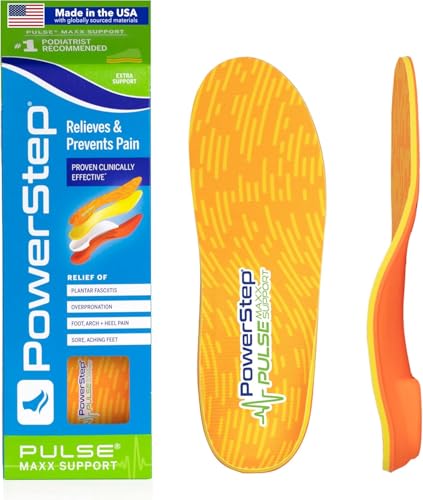
PowerStep Pulse Maxx Overpronation Running Orthotic Insoles M 10-10.5

CRUVHEAL 220+ lbs High Arch Insoles

CRUVHEAL Work Pro Low Arch Insoles L

CRUVHEAL Work Orthotic Boot Insoles XL
Why These Options Stand Out
Three-quarter-length coverage makes this a practical option for shoes with a removable full-length insert. The CF340 model supports the heel and arch while adding cushioning without taking up the entire shoe bed.
For commutes, office days, and casual shoes, that balance feels more useful than an oversized insert. You may find it especially handy when your footwear already has a supportive sole but needs a little extra structure.
What Works In Its Favor
- The shorter profile leaves more room for the toes and may suit shoes with less internal space.
- Arch and heel support can make ordinary shoes feel more structured during extended walking.
- The design works well for daily use rather than a single specialized activity.
Practical Considerations
- Three-quarter-length coverage leaves part of the foot bed uncovered, so it provides less support than a full-length insert.
- Your shoe must have enough room for the insert without lifting the heel out of position.
Feature Snapshot
Who It Suits Best
This insert best suits people who wear everyday shoes with removable insoles and want moderate support without a full-foot insert.
A Better Fit Elsewhere
PowerStep Pulse Performance Insole may suit you better when full-foot coverage and layered cushioning take priority over compact fit.
Unlike the shorter Dr. Scholl’s CF340, the PowerStep Pulse Performance covers the full foot with a neutral-arch design. Total-contact support means the insert extends beneath the complete foot, while the arch remains firm enough to support without feeling aggressively corrective.
Its dual-layer foam and odor-control fabric make this a sensible option for daily walking, travel, and long periods in closed shoes. The stated sizing for men 8-8.5 and women 10-10.5 narrows the fit, so checking your existing shoe size matters.
A Few Strong Suits
- Full-length coverage supports the heel, arch, and forefoot more evenly.
- Dual-layer foam adds cushioning under repeated walking pressure.
- The fabric is designed to manage heat, friction, and perspiration during longer wear.
- Neutral-arch support suits feet that do not need pronounced high- or low-arch correction.
Trade Offs
- A full-length insert needs more room inside the shoe than a three-quarter model.
- The available size shown is specific, so swapping it between differently sized shoes may create a poor fit.
At A Glance
Made For
This model works well for daily walkers with neutral arches who want full-foot cushioning in shoes with room for a complete insert.
Consider Something Else When
PowerStep Pulse Maxx Overpronation Running Orthotic Insoles M 10-10.5 may suit runners needing a firmer shell and more pronounced motion control.
This running-focused model takes a more structured approach than the PowerStep Pulse Performance. Its firmer shell and angled heel are designed for motion control, with particular attention to overpronation, which occurs when the foot rolls inward during movement.
That makes the design most convincing for repeated runs in supportive athletic shoes. You may find the shape too firm for casual shoes or long periods of standing, particularly if you prefer a softer, more flexible insert.
Why It Works Well
- The rigid shell provides firmer control than the neutral Pulse Performance model.
- An angled heel supports alignment during running strides.
- The full-foot construction is intended for advanced running shoes and active movement.
- Polyester construction gives you a clear material specification.
Where It May Fall Short
- The firm shell may feel overly structured for ordinary walking or casual footwear.
- This listing is sized for men 10-10.5 and women 12, so another size is needed for a different fit.
Right Fit For
These insoles best suit runners with overpronation who use structured athletic shoes and want firmer motion control.
Another Choice May Suit
PowerStep Pulse Performance Insole may fit better for neutral arches, everyday walking, and shoes where a softer full-length insert feels more comfortable.
This insert is built around a specific combination: body weight above 220 pounds, a high arch, and footwear used through long workdays. Its 1.4-inch arch section provides a pronounced rise, while the structure is designed to remain stable rather than flatten under heavier loads.
Compared with the softer CRUVHEAL Work Pro model, this option offers stronger arch geometry and plantar-fascia-oriented positioning. The black medium version is intended for people with high arches who need more substantial support in work shoes.
Key Advantages
- The 1.4-inch arch height serves high arches that need a pronounced support profile.
- The construction is designed for body weights above 220 pounds.
- Pressure distribution across the foot can reduce concentration around the heel.
- The structured profile suits demanding work environments and long shifts.
Things To Weigh
- The high arch may feel too steep for neutral or low arches.
- The medium size and substantial arch height require adequate room inside your work shoes.
Key Product Details
Who Will Love This
This model best suits people above 220 pounds with high arches who spend substantial time in supportive work footwear.
Where A Sibling Pick Shines
CRUVHEAL Work Pro Low Arch Insoles L may suit you better for low arches that need gel cushioning rather than a steep 1.4-inch rise.
Low-arch support changes the goal from building a pronounced arch to letting the foot settle into a more natural position. The Work Pro model uses gel pads for added cushioning, which can make it a more approachable choice for work boots with limited room.
A velvet upper adds a softer contact surface and allows air to circulate, while raised massage points provide textured stimulation during long shifts. The low profile is the defining feature here, not simply another version of a high-arch insert.
The Helpful Details
- Low-arch support follows a flatter foot shape without creating a high rise.
- Gel pads add cushioning beneath the heel and forefoot during long workdays.
- The velvet top layer promotes airflow and reduces contact with bare feet.
- Massage points add texture under the feet during extended wear.
Smaller Considerations
- Low-arch users seeking stronger corrective geometry may find this profile too subtle.
- The large size needs a boot with enough internal volume to sit flat beneath the foot.
Built With In Mind
These insoles suit people with low arches who spend long workdays in boots and prefer cushioning over a pronounced arch.
Reach For A Different Pick When
CRUVHEAL 220+ lbs High Arch Insoles may fit better when you have high arches and need a deeper, more structured support profile.
Standing all day calls for more than extra padding, and this model combines several support components. A cushioning layer, shaped arch support, deep U-shaped heel cup, and shock-absorbing pads work together to stabilize the foot during extended shifts.
The heel cup is the main distinction from CRUVHEAL Work Pro Low Arch Insoles L. It surrounds more of the heel to improve positioning, while the blue XL variant is intended for people who need a larger fit in roomy work boots.
Good Reasons To Consider
- The deep U-shaped heel cup gives the heel a more supported position.
- Arch support, cushioning, and shock-absorbing pads provide several layers of comfort.
- The design targets people who remain standing through long working shifts.
- The XL size can suit larger feet that have room for a full boot insert.
Details To Watch
- The deeper heel structure may feel firmer than the gel-focused Work Pro insert.
- Arch support must align with your foot shape, so high and low arches may need different models.
Core Details
The Right Fit
This model fits people who stand for long shifts, wear roomy work boots, and want structured heel and arch support.
Swap It Out When
CRUVHEAL Work Pro Low Arch Insoles L may suit you better when low-arch support and softer gel cushioning matter more than a deep heel cup.
Match the Insert to Your Day
Start With Your Arch Pattern
Neutral arches generally call for balanced support, while high arches benefit from a more pronounced rise. Low arches often work better with a flatter profile and extra cushioning. The labels only tell you the intended shape, so compare the insert with your foot and footwear before settling on a model.
Consider Your Main Activity
Running places repeated impact through the foot, making a firm, motion-control design relevant for overpronation. Work shifts call for stability, cushioning, and a heel that stays positioned. Casual daily wear needs less aggressive geometry, which makes a neutral or compact insert easier to live with.
Let the Shoe Have the Final Say
Shoe volume matters as much as your size. A three-quarter insert fits more styles, while a full-length model offers broader coverage but needs a deeper shoe bed. Remove the current insole and compare lengths, heel shapes, and toe clearance before placing the new one inside.
Before You Swap Insoles
Where Shoppers Go Wrong
Choosing by arch label alone can leave out shoe fit and daily activity, two details that affect how an insert feels. Another common mistake is forcing a full-length model into a shallow shoe. Measure the removable insole and check the heel area before ordering.
What Separates Premium From Basic
Structured shells, deeper heel cups, layered foam, and targeted arch geometry add complexity to an insert. Those features can matter for running or extended standing, but a simpler neutral design may be enough for routine walking. Match the added structure to a specific need rather than assuming more features always feel better.
Frequently Asked Questions
Should I choose full-length or three-quarter-length inserts?
Choose three-quarter-length inserts for shoes with shallow foot beds or limited toe room. Full-length models suit shoes with more internal space and offer broader coverage.
Are neutral arch inserts suitable for everyday walking?
Neutral arch inserts can suit everyday walking because they provide balanced support without a strongly corrective shape. They work best in shoes that fit properly and do not compress the insert.
Which insoles are designed for running?
PowerStep Pulse Maxx Overpronation Running Orthotic Insoles M 10-10.5 use a rigid shell and angled heel for motion control. The PowerStep Pulse Performance Insole offers a softer, more flexible alternative for general activity.
Do work boot inserts need to match my shoe size?
Yes, matching the listed size helps the insert sit correctly under the heel and forefoot. Also check the boot’s internal depth so the insert does not force the foot upward.
Can one pair of inserts work in several shoes?
You can move inserts between similar shoes, but differences in width, heel shape, and internal volume can change the fit. Dedicated pairs reduce the chance of an insert bunching or sitting at an angle.
Final Thoughts
The most useful insert is the one that matches your arch, your activity, and the space inside your shoes. Compact support suits everyday footwear, neutral designs handle regular walking, and firmer structures become more relevant for running or extended standing. Check the size and shape first, then choose the level of support your day actually requires.
