

A hard concrete floor can leave your feet feeling sore long before your shift ends, especially when your shoes lack meaningful arch support. The right insert can add structure, cushioning, and heel stability without changing the way your footwear fits. These options cover everything from high arches to heavier body weights and extended standing work.
How The Shortlist Stacks Up
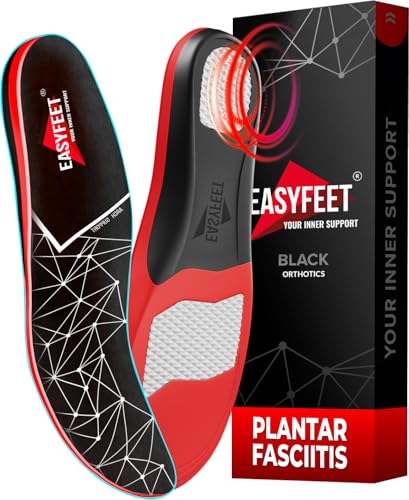
EASYFEET High Arch Insoles

EASYFEET Arch Support Insoles

EASYFEET Work Boot Insoles, 220+ lb High Arch Support, Size M

EASYFEET Premium Arch Insoles

EASYFEET Heavy Duty 220+ lb Insoles
EASYFEET Orthotic Work Insoles
Taking A Closer Look At The Options
Concrete offers little natural give, so your footwear needs to control excess movement without leaving your feet on a hard, unchanging surface. The EASYFEET High Arch Insoles use a firm arch bridge to support high arches and limit inward rolling associated with flat feet. A deep heel cup adds another layer of stability around the heel.
Compared with EASYFEET Arch Support Insoles, this model places greater emphasis on that pronounced arch bridge and heel structure. That makes it a sensible starting point for a warehouse worker, cook, or tradesperson wearing roomier work shoes. The geometry may feel more substantial during your first few shifts, so give your footwear a careful fit check.
What Pays Off
- The firm arch bridge gives high arches a defined support point.
- The deep heel cup helps keep your heel centered during long shifts.
- Pressure distribution makes the design useful for high or flat arches.
Points To Keep In Mind
- A pronounced arch profile may take adjustment in close-fitting shoes.
- Check the available shoe volume before ordering to avoid a cramped fit.
Key Specs
Built With In Mind
You benefit most from this insert when your work shoes have room for a structured footbed and you spend hours alternating between standing and walking.
A Better Fit Elsewhere
EASYFEET Orthotic Work Insoles suit you better when anti-fatigue design for prolonged standing matters more than the pronounced high-arch bridge here.
The EASYFEET Arch Support Insoles combine a high, firm arch with cushioning at the heel and forefoot, two areas that receive repeated impact while walking across a warehouse or standing on concrete. The manufacturer lists shock absorption of up to 43% at those pressure points, while a deep heel cup keeps the rearfoot more settled.
Unlike the EASYFEET High Arch Insoles, this model combines its raised arch structure with more visible forefoot cushioning. That balance makes it useful for people who split their day between walking, standing, and commuting in ordinary shoes. The raised profile may still feel unfamiliar, particularly during the first few hours.
Everyday Advantages
- Heel and forefoot cushioning softens two frequent pressure points.
- The deep heel cup adds rearfoot stability.
- A firm arch supports flat feet, fallen arches, and high arches.
Small Caveats
- Its firm arch may require several shifts before it feels natural.
- Remove the original factory insole to preserve toe room and reduce bulk.
Made For
You get the most versatile setup with these insoles when your footwear combines walking and standing across a typical workday.
Another Choice May Suit
EASYFEET Heavy Duty 220+ lb Insoles are a stronger match for heavier body weights that require more substantial arch support.
Built for work boots and body weights above 220 pounds, this insert adds a cushioning layer plus shock-absorbing heel and metatarsal pads. The metatarsal pad sits beneath the ball of the foot, where pressure can build during long walking routes, while the heel pad targets the repeated impact of hard flooring.
Compared with the EASYFEET Heavy Duty 220+ lb Insoles, this model concentrates more visibly on padded cushioning and a specific Size M fit. The listed size covers men’s 9 to 10.5 and women’s 10 to 11.5. That specificity is helpful, although only one size is shown, so measure your boot length rather than assuming the standard label will fit.
What Works In Its Favor
- Layered cushioning targets both heel and forefoot impact.
- Extra-strong arch support suits body weights above 220 pounds.
- Load distribution helps reduce fatigue during extended work.
- The work-boot shape suits a more structured footwear profile.
Practical Considerations
- The featured Size M covers a narrow portion of the available sizing.
- Measure your boot interior before ordering because a thick insert can affect toe room.
- Its heavier-duty geometry may feel bulkier than a general everyday insole.
Feature Breakdown
Right Fit
You benefit most when you wear structured work boots, weigh above 220 pounds, and spend the day walking as well as standing.
Swap It Out When
EASYFEET Orthotic Work Insoles offer a more general standing-work profile without a listed 220-pound weight requirement.
Warm work areas can make footwear odor an everyday nuisance, and the EASYFEET Premium Arch Insoles add odor control to their high-arch positioning. That combination makes them relevant for food-service workers, production staff, and anyone whose closed shoes remain on their feet throughout the day.
Unlike EASYFEET Arch Support Insoles, this option stands apart through its odor-control feature rather than a more detailed shock-absorption specification. It is a straightforward choice for daily office wear, walking routines, and standing work where you want a more refined look. A close-fitting pair of shoes may have less room for the insert, so check your toe space.
What It Does Well
- High-arch support gives elevated feet a structured platform.
- Odor control adds value in warm or enclosed work shoes.
- The understated design suits both work and everyday footwear.
Less Ideal Details
- The listing provides less detail about its cushioning construction.
- Wide-footed wearers may need more room around the forefoot.
Feature Facts
Who Will Love This
You benefit most in warm workplaces where footwear odor and a high, supportive footbed are both daily concerns.
Look Elsewhere When
EASYFEET Work Boot Insoles, 220+ lb High Arch Support, Size M fit your needs better when padded heel and metatarsal cushioning takes priority.
The EASYFEET Heavy Duty 220+ lb Insoles are built around extra-strong high-arch support for people above 220 pounds. Their shaped anatomy is intended to hold the foot in a controlled position and distribute weight across the insole rather than concentrating it at the heel and forefoot.
Compared with the Size M work-boot option, this model presents a broader heavy-duty concept without tying the listing to one narrow boot-size range. That makes it easier to consider across different work shoes, provided each pair has adequate internal space. The high-arch geometry may take a few shifts to feel natural, particularly in footwear with a thin removable footbed.
What Stands Out
- The extra-strong arch suits body weights above 220 pounds.
- Shaped foot positioning helps manage load during standing work.
- Weight distribution reduces concentration at the heel and ball.
- The broader sizing concept suits more than one type of work shoe.
Trade Offs
- Strong arch geometry may require several shifts to adjust to.
- Thin, close-fitting shoes may lack sufficient internal volume.
- The listing offers less detail about specific heel and forefoot padding.
Built For
You benefit most when you weigh above 220 pounds and need substantial arch structure for long periods of standing or walking.
Reach For A Different Pick When
EASYFEET Arch Support Insoles are a more balanced choice when heel and forefoot cushioning matter more than a heavy-duty 220-pound design.
Standing all day on hard flooring calls for more than a soft surface underfoot; your foot also needs a stable position. The EASYFEET Orthotic Work Insoles use an anti-fatigue, orthotic design aimed at people whose jobs keep them upright for extended periods. Their focus is practical support for tired feet and legs at the end of a demanding shift.
Compared with the EASYFEET Work Boot Insoles, this model makes standing work its central use case rather than tying support to a 220-pound range or one boot size. It can suit warehouse, factory, retail, and food-service footwear with adequate room for an insert. Your footwear will determine whether the profile feels balanced or bulky, so remove the factory insole where possible.
Practical Advantages
- The anti-fatigue format directly addresses prolonged standing work.
- Arch support helps stabilize your foot on an unyielding surface.
- No weight-range restriction appears in the listed design.
Possible Compromises
- A structured footbed needs adequate shoe volume to remain comfortable.
- The design may feel less specialized than the heavier-duty options.
Quick Facts
The Right Fit
You benefit most when your job keeps you standing for long stretches and your shoes have room for a structured work insert.
Where A Sibling Pick Shines
EASYFEET Premium Arch Insoles suit you better when odor control is the deciding feature alongside high-arch support.
What Matters in Inserts for Hard-Floor Shifts
Match the Arch to Your Foot Shape
A high arch usually needs a raised platform that fills the space between the heel and forefoot, while a flatter foot may benefit from firmer resistance to inward rolling. The right shape should feel supportive without forcing the foot into an unnatural position. Start with your shoe type and usual arch profile rather than selecting solely by the word “orthotic.”
Look Beyond Cushioning Alone
Cushioning softens impact, but arch structure and heel stability determine how your foot moves over a long shift. A well-balanced insert combines both ideas. Heel and metatarsal padding can also help in work boots where repeated walking places pressure under the ball of the foot.
Account for Body Weight and Workload
Heavier body weights can create more force through the arch and joints. Insoles designed for loads above 220 pounds use firmer support structures, making them a practical consideration for demanding jobs. Your footwear still needs to hold the insert securely and leave enough room around your toes.
Check the Internal Fit
Remove the original footbed where the shoe allows it, then compare the insert with the shoe’s interior. Measure your foot or boot length before relying on a labeled size. A crowded toe box can change your stance and negate the comfort gained from a supportive insert.
Avoiding Costly Insert Mistakes
Mistakes Worth Dodging
Avoid choosing by foot shape alone, since your shoe, workload, and body weight all affect the result. Ignore inserts that leave your toes crowded, and do not force a pronounced arch into a narrow shoe. Taking a few minutes to check sizing and internal volume prevents most avoidable disappointments.
What Separates Premium From Basic
Premium positioning may reflect stronger arch structures, added cushioning, odor control, or a more refined fit. Those additions matter when your shifts are long or your feet need distinct pressure management. A simpler design can still make sense for lighter workloads and roomier everyday shoes.
Frequently Asked Questions
How long do shoe insoles for standing on concrete all day usually last?
There is no single lifespan that fits every insert, shoe, and work schedule. Replace an insole when its shape becomes visibly compressed, distorted, or uncomfortable in footwear that still fits properly.
Do high-arch insoles help on hard concrete floors?
High-arch insoles can add support and limit unwanted foot movement on an unyielding surface. Their benefit depends on matching your arch shape, body weight, and the room available inside your shoes.
Which insoles are best for people weighing over 220 pounds?
EASYFEET Work Boot Insoles, 220+ lb High Arch Support, Size M and EASYFEET Heavy Duty 220+ lb Insoles are designed for heavier loads. The first offers more specific padding details, while the second provides a broader heavy-duty profile.
Can I use work insoles in safety shoes?
Confirm that the insert fits without lifting the shoe above its intended sole height or crowding the toe area. The Size M work-boot insert is the most specific option, while EASYFEET Orthotic Work Insoles offer a more general standing-work design.
Should I remove the factory insole before adding another insert?
Removing the factory insole usually creates more room and prevents two footbeds from competing inside the shoe. Keep the original insole only when the replacement insert fits comfortably without changing the shoe’s fit or raising the heel excessively.
Final Takeaway
The right insert depends on more than your job title. Match the arch profile to your foot, account for body weight, and leave enough room inside the shoe. EASYFEET Orthotic Work Insoles provide the most direct standing-work approach, while the high-arch and heavy-duty choices suit more specialized needs. Give any new insert several days of real use, then reassess the fit before settling on your daily pair.
