

Your feet carry the full workday while standing still, and flat feet can make that burden feel concentrated around the middle of the foot. The right pair needs more than a soft footbed: fit, arch support, cushioning, and a stable outsole all shape how a shoe feels during long shifts, long errands, and busy service environments.
These six options cover different needs, from women’s walking sneakers to men’s extra-wide shoes and removable high-arch inserts. You’ll find lighter options for travel and walking, roomier designs for wide feet, and inserts for improving the fit of shoes you already own.
The Shortlist At A Glance

Easy Spirit Romy Sneaker

Skechers Go Walk 4 14170

Sof Sole High Arch Full-Length Insole
FitVille Rebound NEO V1 Extra Wide Flat-Feet Sneakers

FitVille Extra Wide Thicker-Cushioning Non-Slip Sneakers
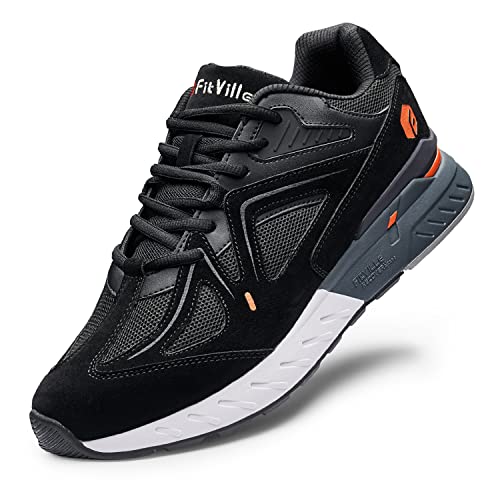
FitVille Rebound Core Extra Wide Flat-Feet Sneakers
More On The Choices That Made The List
Easy Spirit Romy sneaker looks more like a polished walking shoe than a bulky exercise sneaker. Its suede-and-textile upper gives it a dressier appearance, while the cushioned footbed, built-in arch support, and flexible rubber sole suit everyday errands and long stretches on your feet.
Compared with the mesh-forward Skechers Go Walk 4 14170, the Romy offers a more structured, lace-up style that can move from a work shift to errands without looking out of place. For most people with flat feet, the 1.5-inch heel and orthotic-friendly footbed make this a balanced starting point, although the roomiest fit may be more useful than extra height.
Standout Benefits
- Built-in arch support adds structure for feet that feel flat during long shifts.
- The cushioned, orthotic-friendly footbed supports a more comfortable everyday setup.
- Lace-up closure lets you adjust the fit around the midfoot.
- The flexible rubber sole provides traction for commuting, errands, and casual walking.
Trade Offs
- The 1.5-inch heel is modest, but it is less natural than a completely flat sole for some foot shapes.
- Lace-up shoes take a little more time to put on than slip-on styles during a hurried shift.
Key Specs
Made For
You benefit most from this pair in service, retail, or office settings where a supportive sneaker must still look coordinated with your work clothes.
Where Another Pick Suits Better
The Skechers Go Walk 4 14170 suits commuters who prioritize a featherweight feel and breathable mesh over the Romy’s dressier suede-and-textile appearance.
Lightweight construction makes the Skechers Go Walk 4 14170 appealing during commutes that include long walks between transit stops. The breathable mesh upper and soft fabric lining keep the structure uncomplicated, while the responsive midsole and rebound insole provide cushioning beneath each step.
The Easy Spirit Romy sneaker has a more polished upper and lace-up closure, but this Skechers pair places greater emphasis on easy movement. Depending on your workday, that lighter construction may feel more comfortable during extended walking than a structured casual shoe.
Bright Spots
- The lightweight build reduces the visual and physical bulk associated with many walking shoes.
- Responsive midsole cushioning softens impact through the foot’s landing zone.
- The high-rebound insole adds spring beneath your step.
- Breathable mesh helps manage warmth during active commutes.
- Soft fabric lining adds comfort without a bulky collar.
Points To Note
- A very light shoe may feel less substantial than the thickly cushioned FitVille options during stationary work.
Feature Snapshot
Who Will Love This
You benefit most from this pair during days that combine standing with frequent walking, especially across large workplaces, campuses, or retail floors.
A Better Fit Elsewhere
The Easy Spirit Romy sneaker is the stronger fit for a professional wardrobe that calls for lace-up shoes and a less athletic appearance.
The Sof Sole High Arch Full-Length Insole takes a different approach from every shoe in this roundup: it improves footwear you already own instead of replacing the entire shoe. A full-length insert extends from heel to toe, while its high-arch profile gives the middle of the foot a more pronounced shape.
For a narrow or worn work shoe, this could be a practical way to refine the fit without abandoning a favorite pair. The tradeoff is that an insert cannot add the outsole cushioning, upper breathability, or overall structure of a dedicated walking sneaker, so your existing shoes still play a major role.
What Earns Its Place
- The high-arch shape targets feet that need more definition through the midfoot.
- Full-length coverage supports the entire foot rather than isolating the heel or forefoot.
Practical Considerations
- Low-arch feet may find this arch profile more pronounced than they need.
- An insert leaves the outsole and upper of your original shoes unchanged, so a poorly fitting pair will remain poorly fitting.
Best Suited To
You benefit most from this insert when your work shoes fit well but your high arches need more support than the existing footbed provides.
Another Choice May Suit
The Easy Spirit Romy sneaker suits you better when you need a complete shoe with built-in arch support, cushioning, and a secure lace-up closure.
Room is the central feature of the FitVille Rebound NEO V1 Extra Wide Flat-Feet Sneakers. The extra-wide shape and built-in arch-support positioning target feet that feel pinched through the forefoot or unsupported through the middle, particularly during long periods of standing.
Unlike the lighter Skechers Go Walk 4 14170, this model is designed around width and support rather than minimal weight. For most men with broad feet, the practical decision comes down to whether the roomy forefoot improves comfort without allowing the foot to move excessively inside the shoe.
What Helps Most
- Extra-wide construction gives broad feet more space through the forefoot.
- Arch support provides a structured platform for flat-foot positioning.
- The walking-shoe focus suits prolonged standing and everyday walking.
- Heel-comfort positioning makes it relevant to shoppers with heel discomfort.
Honest Caveats
- An extra-wide shoe can feel loose to someone with a standard-width foot, so fit matters more than the size number.
- The pronounced support focus may feel more structured than a neutral, low-profile sneaker.
- Comfort depends on choosing the right length as well as the extra-wide shape.
At A Glance
Right Fit For
You benefit most from this pair when your feet are genuinely wide and standard-width sneakers compress the forefoot during standing shifts.
Look Elsewhere When
The FitVille Extra Wide Thicker-Cushioning Non-Slip Sneakers suit you better when thick cushioning and gym-oriented traction matter more than a pronounced arch-support position.
Thicker cushioning gives the FitVille Extra Wide Thicker-Cushioning Non-Slip Sneakers a softer, more substantial feel underfoot. The extra-wide shape adds room across the foot, while the bouncy construction and non-slip positioning suit gym sessions, active jobs, and days spent moving around a busy workplace.
The Rebound NEO V1 takes a more targeted approach to arch support, making it the stronger choice for shoppers whose main concern is flat-foot structure. This pair makes more sense for people who prioritize a roomy base, generous cushioning, and workout-ready traction over a pronounced arch-support design.
What Makes Sense
- Thicker cushioning provides a softer landing for prolonged standing and walking.
- The extra-wide shape reduces compression across broad feet.
- Bouncy construction adds spring to casual walking and gym activity.
- Non-slip positioning is useful around exercise equipment and busy floors.
Some Limits To Know
- Floor conditions still matter on any non-slip shoe, particularly around moisture or loose debris.
Built With In Mind
You benefit most from this pair during active workdays, gym sessions, and routines that combine long periods of standing with frequent movement.
Swap It Out When
The FitVille Rebound NEO V1 Extra Wide Flat-Feet Sneakers suit you better when structured arch support is the priority rather than thicker cushioning.
Extra-wide proportions are the foundation of the FitVille Rebound Core Extra Wide Flat-Feet Sneakers. The model is positioned for men who need more room around the forefoot and a flatter-foot friendly approach, with particular relevance for long workdays and regular walking.
Its trail-running category placement adds a different angle from the other FitVille walking shoes. Compared with the Rebound NEO V1, the Core presents a broader casual and trail-oriented profile, while the NEO emphasizes arch support and plantar-fasciitis-related positioning more directly.
Everyday Perks
- Extra-wide sizing gives the forefoot room to spread naturally.
- Flat-foot positioning focuses the design on a broader, more supported base.
- Heel-comfort positioning targets a common area of concern for long-shift wearers.
- Trail-running category placement appeals to shoppers who want a sportier walking silhouette.
- The sneaker format works for commuting, errands, and casual active days.
Where It May Fall Short
- The extra-wide fit can feel unnecessarily roomy for someone with a standard-width foot.
- Heel-comfort positioning is a design intention, not a promise that every type of heel discomfort will respond to it.
Technical Reference
The Right Fit
You benefit most from this pair when your priority is extra-wide room in a sporty sneaker built around flat-foot positioning.
Where A Sibling Pick Shines
The FitVille Rebound NEO V1 Extra Wide Flat-Feet Sneakers suit you better when explicit arch support and plantar-fasciitis positioning guide your choice.
What to Look For in Shoes for Long Standing Shifts
Start With the Fit
Foot length alone does not determine whether a shoe will feel comfortable during a long shift. You need enough room through the forefoot without letting your foot slide around, plus a secure feeling through the midfoot. Extra-wide designs are worth considering for broad feet, while standard-width shoes may feel more controlled for narrower feet.
Cushioning and Arch Shape
Cushioning absorbs some of the repeated pressure created by standing, while arch support gives the middle of the foot a defined platform. Orthotic-friendly means the footbed is designed to accommodate compatible inserts, but you still need room for the insert and the shoe’s original footbed. High-arch inserts suit a different foot shape than low-profile, neutral options.
Upper, Outsole, and Work Reality
Your work environment changes the practical decision. Breathable mesh helps during warm shifts, but it may feel less formal than suede or textile. A non-slip outsole can help around a gym or busy workplace, though floor conditions still affect traction. Try shoes near the end of the day with the socks you normally wear, since feet can swell during a long day.
Two Details That Change the Choice
Mistakes Worth Dodging
Avoid choosing from appearance alone. A roomy toe box, supportive midfoot, cushioned footbed, and appropriate outsole all affect comfort differently. Shoes sized too short or too narrow are difficult to adjust later, so compare the fit of your leading options rather than assuming every wide shoe suits every foot.
What The Higher Tier Buys
Higher-cost shoes often invest more in specialized cushioning, upper materials, or supportive construction. The upgrade makes sense when a well-made lower-cost option still leaves your feet compressed or uncomfortable. Paying more does not improve the fit by itself, so confirm width, arch shape, and closure before considering a more specialized model.
Frequently Asked Questions
Are these shoes suitable for flat feet?
The shoes with explicit arch support or flat-foot positioning are the most relevant choices, but comfort depends on your exact foot shape. An extra-wide fit is especially useful when the forefoot feels pinched.
Which option is best for standing for long periods?
The FitVille models with extra-wide construction and substantial cushioning offer the most relevant design features for long shifts. The Easy Spirit Romy sneaker is a more polished option for workplaces where appearance matters.
Can an insole help shoes for flat feet?
A high-arch insert can change the shape and feel of an existing shoe. It works best when the original shoe already fits well and simply lacks the arch contour your feet need.
Should I choose wide walking shoes for flat feet?
Wide shoes add room around the forefoot, while arch support addresses the middle of the foot. Choosing between them depends on whether your main problem is compression, lack of support, or both.
Are lightweight walking shoes suitable for long shifts?
Lightweight shoes can stay comfortable during days with frequent walking, but stationary work may make thicker cushioning more appealing. Consider your movement pattern as well as the total time spent standing.
Final Verdict
The best match depends on where your feet feel most constrained. Easy Spirit suits a polished everyday setting, Skechers favors lightness and breathability, Sof Sole targets high arches in existing footwear, and the FitVille options address extra-wide fit, cushioning, and sporty walking needs. Choose the pair that matches your foot shape and daily movement, then give it a realistic try before committing.
