

A breastfed baby may drink directly at the breast, need expressed milk from a bottle, or be learning to use a cup for water and other drinks. That transition can feel complicated because each container handles milk, spills, cleaning, and feeding differently. The right choice depends on your baby’s age, drinking style, and how much cleanup you want to manage.
A Closer Look At The Lineup

Munchkin Miracle 360 Cups 10/24 oz Green/White

NUK PJ Masks 9 oz Cup

Playtex Baby Sipsters PAW Patrol 9 oz Insulated Hard Spout Cups, 2 Count
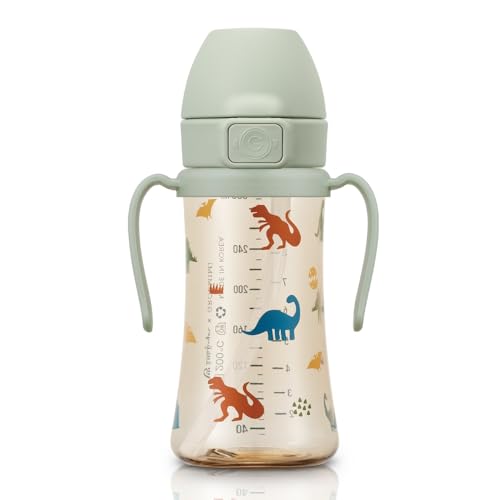
GROSMIMI PPSU Stage 2 Cup 10 oz Dinosaur

GROSMIMI PPSU 6 oz Peach Flower Cup

Thyseed Glass Anti-Colic Bottle 5 oz Extra Slow Flow

Thyseed PPSU Anti-Colic Bottle 5 oz Extra Slow Nipple
More Details On The Seven Picks
A toddler reaching for a grown-up cup does not need one large container for every drink. This set pairs a 10-ounce cup with a 24-ounce version, giving you a manageable amount for short outings and more capacity for long afternoons.
Both cups use a 360-degree drinking rim, so your child can sip from different sides rather than searching for one precise opening. The larger size suits active children and long days out, while the simpler hard-spout cups later in this list may feel more familiar to younger toddlers.
Everyday Perks
- The two capacities let one set serve different ages and drink amounts.
- A spill-proof valve supports carrying, sitting, and walking with the cup.
- The minimal component design makes routine disassembly and washing more approachable.
- The 24-ounce cup reduces the number of refills needed during busier outings.
Things To Consider
- The drinking technique takes practice, so a newly developing toddler may need guidance at first.
- You will need to keep both sizes available for the longest stretch of usefulness.
Quick Facts
Who It Suits Best
Parents of toddlers who need both a compact cup and a larger bottle-style option for family outings.
Where Another Pick Suits Better
The NUK PJ Masks 9 oz Cup is a better fit for a younger twelve-month-old who needs a raised hard spout and insulated construction.
Unlike the Munchkin set’s 360-degree rim, the NUK PJ Masks 9 oz Cup uses a raised hard spout, which gives toddlers a defined drinking target. The spout is designed to resist biting, while the flow-controlled valve helps deliver liquid without the loose flow some open cups encourage.
Its insulated construction is the deciding feature for warm car rides, park visits, and long errands. The two included cups also give you a practical rotation for home and travel, although the 9-ounce capacity suits smaller drinks better than the larger Munchkin option.
Key Advantages
- The raised spout offers a clear target for toddlers learning to drink independently.
- Insulation helps maintain drink temperature during outings that can last several hours.
- The valve controls flow to support a controlled drinking pace.
- A two-pack makes a separate cup available for different locations.
Worth Noting
- Its smaller 9-ounce capacity requires more frequent refills than the 24-ounce cup.
- The spout and valve create more surfaces to clean than a simple open cup.
Feature Snapshot
Made For
Families with a twelve-month-old who prefers a conventional spout and need a cup for warm-weather travel.
Consider Something Else When
The GROSMIMI PPSU Stage 2 Cup 10 oz Dinosaur better suits a toddler already comfortable with a straw.
The Playtex Baby Sipsters pair combines a conventional raised spout with a character design that may encourage a toddler to reach for the cup independently. Each 9-ounce cup uses a flow-controlled valve and double-wall insulation, making it more focused than the plain green-and-white Munchkin set.
For a child drawn to PAW Patrol, that visual appeal can matter as much as the spout shape. You can rotate the two cups between home and a bag, while the listed dishwasher-safe pieces make the transition from bottle to sippy cup less cluttered.
Practical Advantages
- Character graphics give a toddler a more engaging reason to handle the cup.
- The insulated double-wall design supports drinks during indoor and outdoor outings.
- Every component can be washed in the top rack of a dishwasher or by hand.
- Two colors and two cups make it easy to keep one at each regular location.
Practical Considerations
- At 9 ounces, each cup is better for short drink portions than long days away.
- The character theme may matter less to children who do not recognize the characters.
Core Details
Right Fit For
Toddlers who recognize PAW Patrol and are more willing to practice with a familiar character theme.
Not Your Match When
The NUK PJ Masks 9 oz Cup is the simpler choice for families who prefer a raised spout without character-focused styling.
Straw drinking changes the learning curve. This GROSMIMI model uses a cross-cut straw and flip-top lid, so your toddler practices pulling from a straw rather than tilting a hard spout. Compared with the Playtex Baby Sipsters, it offers a more active, hands-on drinking style.
The rotating handles are especially useful for toddlers who turn the cup constantly while walking. PPSU, a durable plastic used in demanding applications, forms the cup and other drink-contact parts, while the Stage 2 straw is firmer to better withstand chewing.
The Practical Payoff
- The cross-cut straw controls flow while your baby learns to sip without tipping the cup.
- Soft 360-degree handles follow the child’s hands and reduce awkward wrist positions.
- The 10-ounce capacity offers more room than the smaller GROSMIMI cup.
- Fully separated parts support thorough cleaning in several ways.
Room For Improvement
- Straw drinking usually needs more instruction than a raised hard spout.
- The larger 10-ounce body takes more bag space than the 6-ounce alternative.
Best Suited To
Active toddlers at least twelve months old who have shown interest in sipping through a straw.
Look Elsewhere When
The NUK PJ Masks 9 oz Cup is easier for a newly weaned toddler who has not established a straw-drinking habit.
Capacity changes the feel of a cup, and the 6-ounce GROSMIMI is noticeably more compact than its 10-ounce dinosaur sibling. That makes it easier for small hands to hold and for diaper bags or stroller organizers to accommodate without taking over the space.
The same cross-cut straw, flip-top lid, and rotating handles preserve the features that matter for independent sipping. Your toddler still practices a controlled straw technique, but the smaller body may feel more manageable once spills and tipping are part of the learning process.
Positive Takeaways
- The 6-ounce size is practical for beginners who take smaller drinks.
- Rotating handles help the cup follow the child’s hands.
- PPSU and food-grade silicone make up the drink-contact components.
- The parts disassemble for cleaning by hand or dishwasher.
Small Caveats
- Smaller capacity means additional refills during longer outings.
- Straw sucking still takes practice before it becomes consistent.
Technical Highlights
Who Will Love This
Small toddlers beginning straw practice who need a lighter, lower-capacity cup than the 10-ounce model.
A Better Fit Elsewhere
The GROSMIMI PPSU Stage 2 Cup 10 oz Dinosaur is the better fit for long outings where fewer refills matter.
Not every breastfed baby moves directly from the breast to a sippy cup. The Thyseed Glass Anti-Colic Bottle 5 oz Extra Slow Flow serves the earlier stage by offering expressed milk through a breast-like nipple, making it more relevant than a cup for newborns.
Its extra slow flow and multiple micro-openings are designed to deliver milk at a steadier pace, which may help during slower feeds. The base vent is designed to keep air separate from milk, and the bottle’s glass construction gives families who prefer it a different material option than the PPSU model in this lineup.
Advantages To Know
- The extra slow-flow nipple suits a newborn or young baby taking milk by bottle.
- Micro-openings help create a smoother, more consistent flow.
- A vented base is intended to reduce bubbles and swallowed air.
- The breast-like shape supports a familiar latch for breastfed babies.
Where It May Fall Short
- This is a milk bottle, not a transition cup for independent water drinking.
- Glass naturally carries more weight than a plastic bottle of the same size.
Built With In Mind
Breastfed newborns and young babies who need expressed milk delivered through a slow-flow bottle nipple.
Skip It When
Your child is ready to practice sipping independently and mainly needs a spill-resistant cup for water.
The second Thyseed bottle offers a lighter alternative to the glass version, using PPSU rather than glass while retaining a 5-ounce capacity and breast-like extra slow nipple. That makes it easier to compare the bottle’s material and weight without changing the intended feeding stage.
Its soft silicone nipple is shaped to support a natural latch, and the milk releases when the baby actively sucks. The vented base is designed to reduce air mixing with milk, which may make this a practical bottle for breastfed babies receiving expressed milk or using combination feeding.
The Value In It
- The breast-like silicone nipple supports an established breastfeeding latch.
- Milk releases in response to sucking for a more paced bottle experience.
- The base vent is designed to reduce gassiness, spit-up, and burping.
- PPSU provides a lighter option than the glass bottle in this lineup.
Points To Note
- The 5-ounce capacity suits early feeding stages rather than longer bottle sessions.
- It remains a bottle, so it does not replace the need for a transition cup later.
Essential Details
The Right Fit
Breastfed babies receiving expressed milk through a bottle, particularly families wanting a lighter PPSU option.
Another Choice May Suit
The Thyseed Glass Anti-Colic Bottle 5 oz Extra Slow Flow is the better fit when a glass bottle is your preferred material.
What Matters Before Your Baby’s First Cup
A transition container should match your baby’s current feeding stage, not simply look appealing. Breastfed babies who still rely on expressed milk need a bottle with a suitable nipple and flow rate. Older toddlers learning to drink independently benefit more from a cup they can grip, tip, or sip from with limited leakage.
Choose the Drinking Method First
A hard spout offers a familiar target and may be easier for a twelve-month-old beginning practice. A straw cup develops a different skill, requiring your child to suck rather than tilt. Watch how your baby drinks before switching styles, since an advanced straw user may still struggle with a spout designed for a different age.
Match Capacity to the Routine
The 6-ounce GROSMIMI is compact enough for small portions and small bags. The 10-ounce GROSMIMI carries more between refills, while the Munchkin 24-ounce cup suits older children and longer days out. Two smaller cups can also give you a useful home-and-travel rotation.
Check Material and Cleaning Together
PPSU is a durable plastic used in demanding applications, while glass offers a different weight and feel. Both GROSMIMI cups fully disassemble and support several cleaning methods. The Playtex pieces also support dishwasher and hand washing, so choose based on the routine you can realistically maintain.
Practical Details That Affect Daily Use
Mistakes Worth Dodging
Do not choose a cup solely because it looks advanced for your baby’s age. A bottle with an extra slow nipple, a hard-spout cup, and a straw cup serve different stages, and mixing them can create unnecessary frustration. Confirm the listed age, capacity, drinking method, and cleaning requirements before buying.
What The Higher Tier Buys
A higher-tier option often adds useful construction details such as PPSU, insulated walls, rotating handles, or a more controlled valve. Those features help only when they match your child’s skills and routine. A simpler cup remains a sensible choice when easy cleaning, familiar drinking, and straightforward handling matter more.
Frequently Asked Questions
Can a breastfed baby use a sippy cup?
Yes, many breastfed babies use a sippy cup for water or other drinks while continuing to receive breast milk from the breast or a bottle. Introduce the cup according to your baby’s age and readiness rather than using it to replace essential milk feeds.
Which cup is easiest for a new toddler?
The NUK PJ Masks 9 oz Cup offers a raised hard spout and flow-controlled valve, making it a practical choice for a twelve-month-old. Your baby will still need time to practice sealing the spout and controlling the sip.
Are straw cups better than hard-spout cups?
Neither style is better for every child. Straw cups reward sucking and are useful for active toddlers, while hard spouts provide a familiar target that some beginners master more quickly.
Are glass baby bottles lighter than PPSU bottles?
Glass bottles generally feel heavier than PPSU bottles of comparable size. The Thyseed Glass Anti-Colic Bottle 5 oz Extra Slow Flow and Thyseed PPSU Anti-Colic Bottle 5 oz Extra Slow Nipple provide the same compact capacity with different material choices.
Should a cup or bottle hold breast milk?
A slow-flow bottle is generally more appropriate for newborn milk feeding, while sippy cups and straw cups are better suited to water and other drinks for toddlers. Follow your baby’s feeding needs and the age guidance listed with the container.
Final Verdict
The right container depends on where your baby is in the transition from breastfeeding to independent drinking. The Munchkin set offers useful size variety, the NUK and Playtex cups suit conventional spout drinkers, and the GROSMIMI choices support toddlers learning to use straws. For milk feeding before cup practice begins, the two Thyseed bottles provide more appropriate slow-flow options. Follow your baby’s cues and choose the simplest design they can use with confidence.
